What a Mining Flame Retardant Conveyor Belt Is
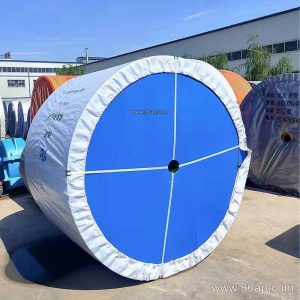
A Mining Flame Retardant Conveyor Belt is a heavy-duty rubber belt built to carry coal, ore, aggregate and other bulk materials while limiting the risk of fire spread along the conveyor line. In practice, it is the same product many plants order as a Fire Resistant Conveyor Belt for mining service. The belting combines a strong fabric or steel carcass with rubber covers that resist ignition and slow flame propagation, so a small heat source on one section is less likely to travel down the entire system.
This is not a general-purpose belt with a flame-retardant label added. Mining duty brings sharp rock, heavy loads, dusty air and, in coal handling, the constant presence of combustible dust. The belt has to keep its strength and cover integrity under those conditions while meeting the fire-safety expectations of the site.
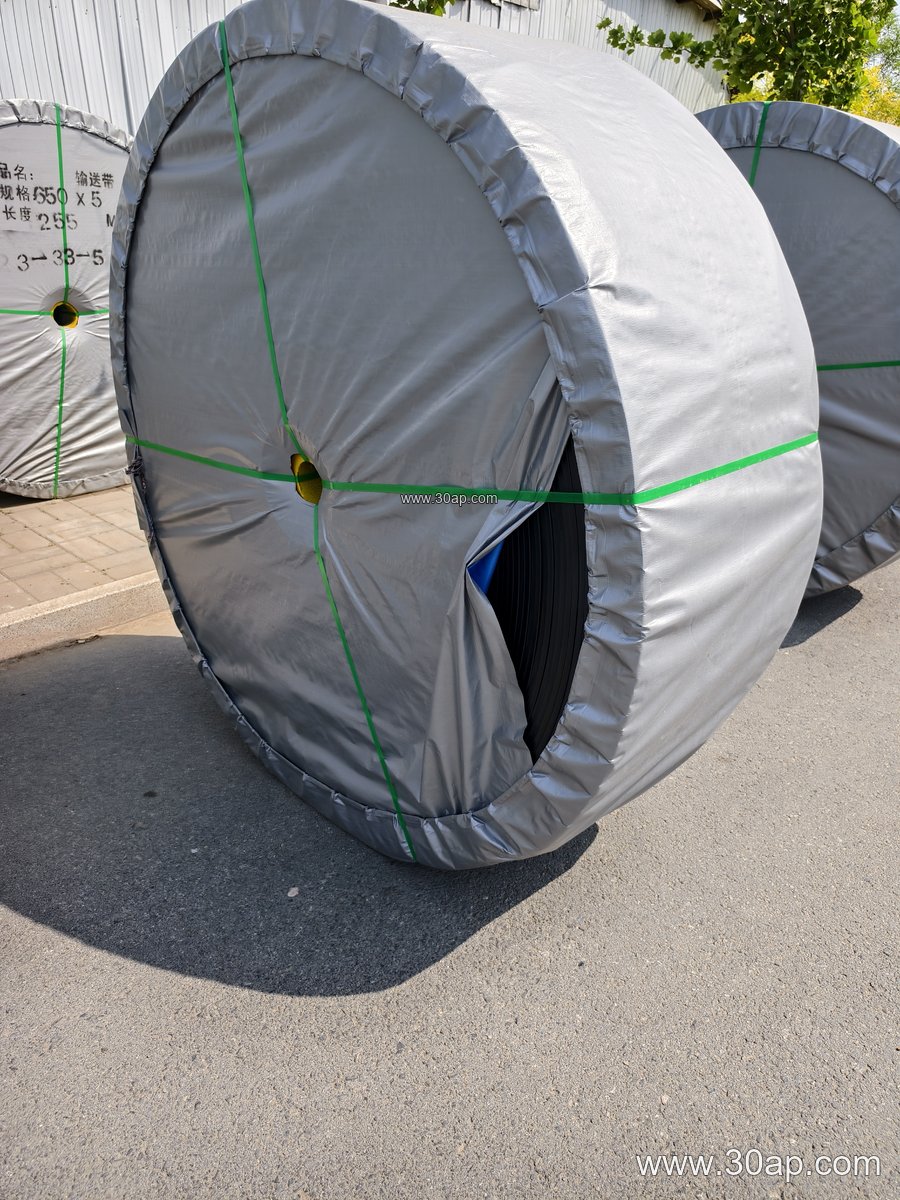
How the Belt Is Built
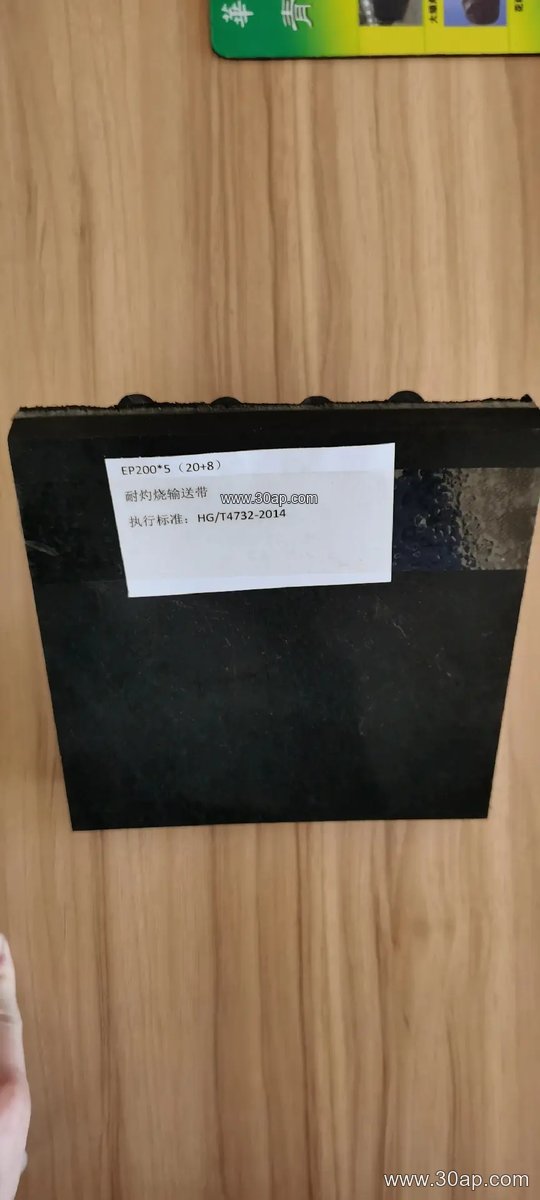
Most mining flame retardant belts use a multi-ply fabric core or a steel cord core. The carcass carries the tensile load, while the top and bottom covers protect it from abrasion, impact and moisture. Common constructions include EP Conveyor Belt carcasses and NN Conveyor Belt carcasses for medium-duty lines, and Steel Cord Conveyor Belt designs where very high strength and long center distances are required. For underground coal work, PVG Conveyor Belt and PVC Conveyor Belt constructions are also widely seen because they combine flame resistance with anti-static behavior.
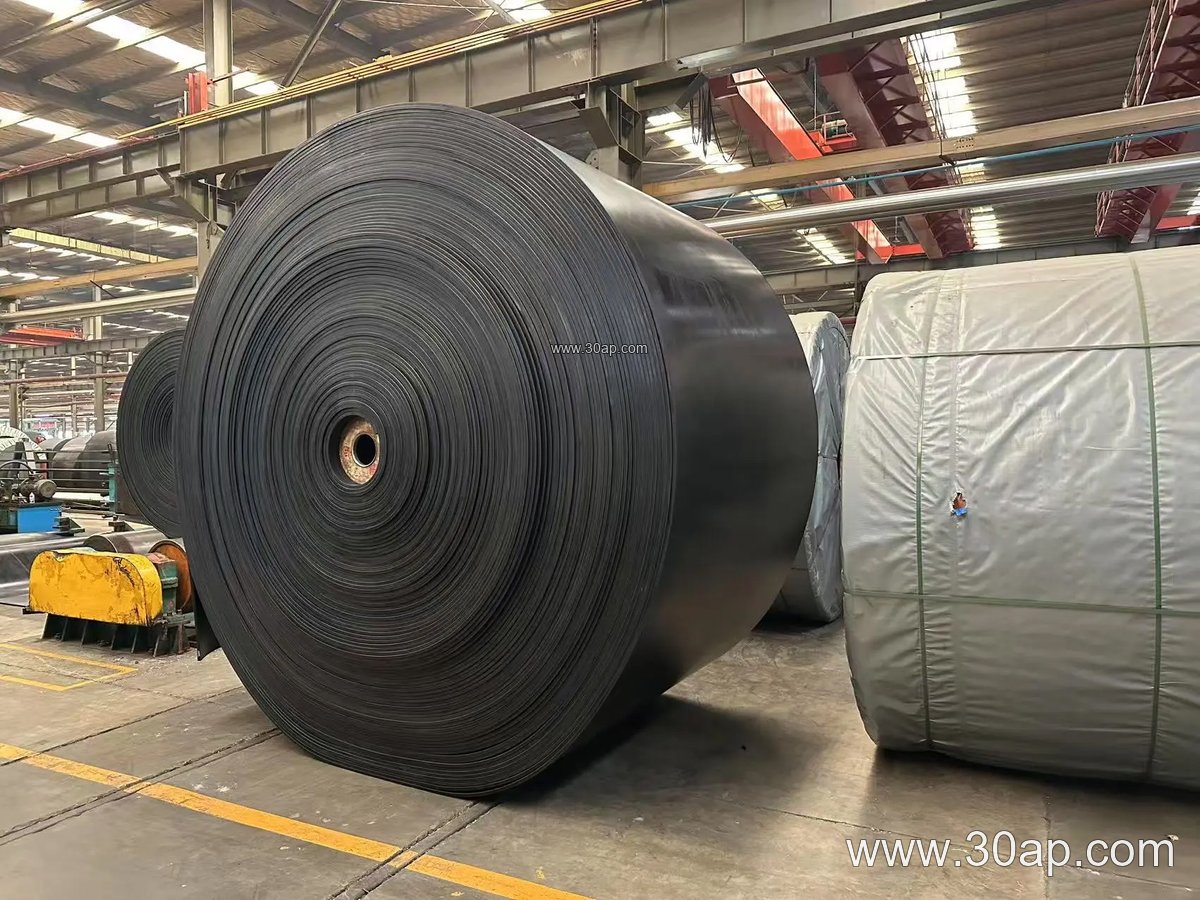
Cover compounds are formulated for flame resistance and, depending on the route, for abrasion resistance, oil resistance or heat exposure. Buyers should confirm the cover grade against the actual material being carried, since a flame retardant compound alone does not guarantee long cover life in an abrasive quarry or a hot clinker application.
Where It Fits on the Conveyor
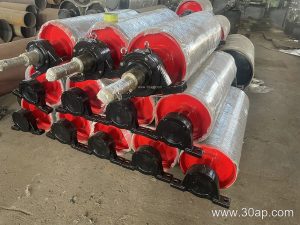
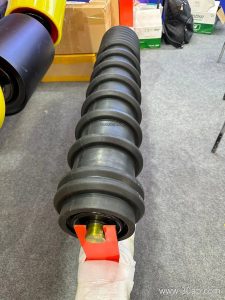
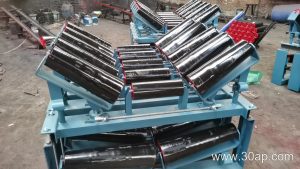
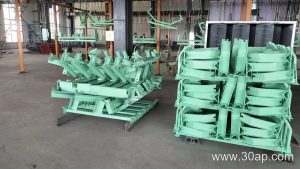
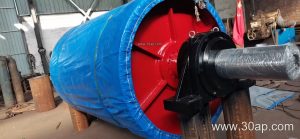
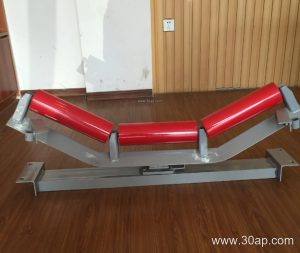
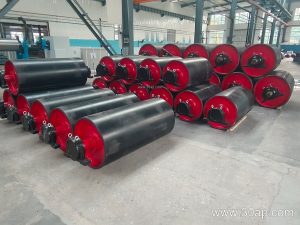
These belts are common in coal mining, underground mining, cement plants, power plants, steel plants, ports and sand making plants. A typical circuit pairs the belt with conveyor pulleys, idler rollers and conveyor brackets, and the belt must track correctly over drive, tail and bend pulleys. Each pulley type has its own role, and none should be substituted for another when specifying a conveyor.
Related equipment choices matter. Impact zones below a crusher may call for impact idler rollers and a thicker top cover, while long overland runs may use a Steel Cord Conveyor Belt to reduce the number of splices. For steep inclines, a Chevron Conveyor Belt or a Corrugated Sidewall Conveyor Belt can be considered, but these are different belt types and do not replace the flame retardant belt on the main haulage line.
Common Specifications and Sizes
Values below are typical reference ranges, not fixed supply promises. Final construction is confirmed by design and by the belt manufacturer.
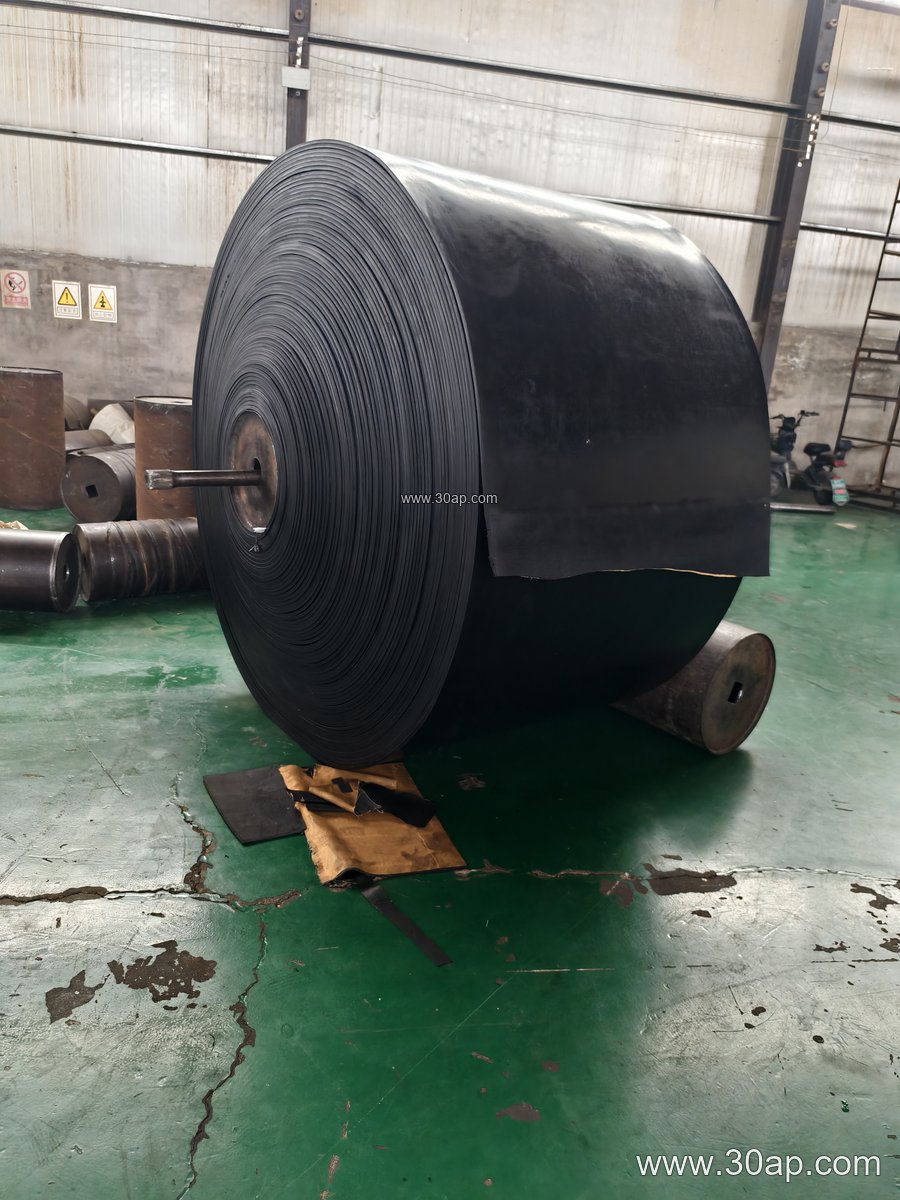
| Parameter | Typical Reference |
|---|---|
| Belt type | Mining Flame Retardant Conveyor Belt, Fire Resistant Conveyor Belt |
| Carcass | Multi-ply fabric core, steel cord core, PVG or PVC solid woven |
| Fabric strength grades | EP200, EP315, EP400, EP500, EP630, EP800, EP1000, EP1250, EP1600, EP2000 |
| Steel cord grades | ST1000, ST1250, ST1600, ST2000, ST2500, ST3150 |
| Belt width | B500, B650, B800, B1000, B1200, B1400, B1600, B1800, B2000 |
| Cover thickness | 3+1.5, 4+2, 5+2, 6+2, 8+3 mm |
| Ply count | Usually 2 to 6 layers for fabric cores |
Belt width and pulley diameter are matched by conveyor design, not by a single fixed rule. A wide belt does not automatically require one specific pulley size, and shaft diameter must be calculated from the actual load case.
Selection and Maintenance Notes
Start with the material, lump size, tonnage per hour, incline and the shortest and longest radius on the route. Then confirm the flame retardant requirement with the site safety team, and check whether anti-static or oil resistant behavior is also needed. Ask for the cover grade, carcass type, ply count and splice method in writing.
- Check belt tracking at the tail and bend pulleys after installation.
- Inspect idler rollers for seized bearings, which can generate heat.
- Keep spillage away from the conveyor brackets and pulley faces.
- Repair cover damage early to protect the carcass from moisture and dust.
- Store spare belting away from direct sunlight and oil.
For more on matching belting with conveyor components, see the resource pages at chinaconveyorbelt.com and review conveyor belt, idler roller and conveyor pulley options before finalizing a specification. A well-matched Mining Flame Retardant Conveyor Belt, supported by sound pulleys and rollers, gives coal, quarry and power plant operators a safer and more reliable haulage line.