What a Tail Pulley Assembly Does
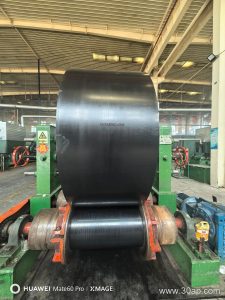
A tail pulley assembly is the return-end pulley group mounted at the rear of a belt conveyor, opposite the drive. It supports and guides the conveyor belt as it completes its loop, and in many layouts it also carries the take-up function that keeps belt tension stable. In a quarry, a coal preparation plant, or a cement clinker line, this assembly is often the quiet component that decides whether the belt tracks cleanly or wanders.
It is not the same as a drive pulley, and it is not a bend pulley. A drive pulley transmits torque; a bend pulley only changes belt direction. The tail pulley assembly closes the loop at the loading end and may combine a pulley shell, shaft, bearings, bearing housings, and a conveyor bracket or tension slide frame. When the take-up is integrated, the assembly also includes guide rails and adjustment screws.
How the Assembly Is Built
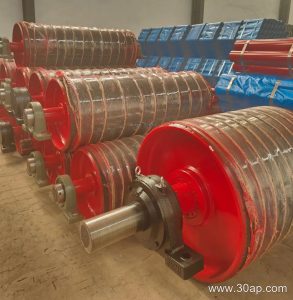
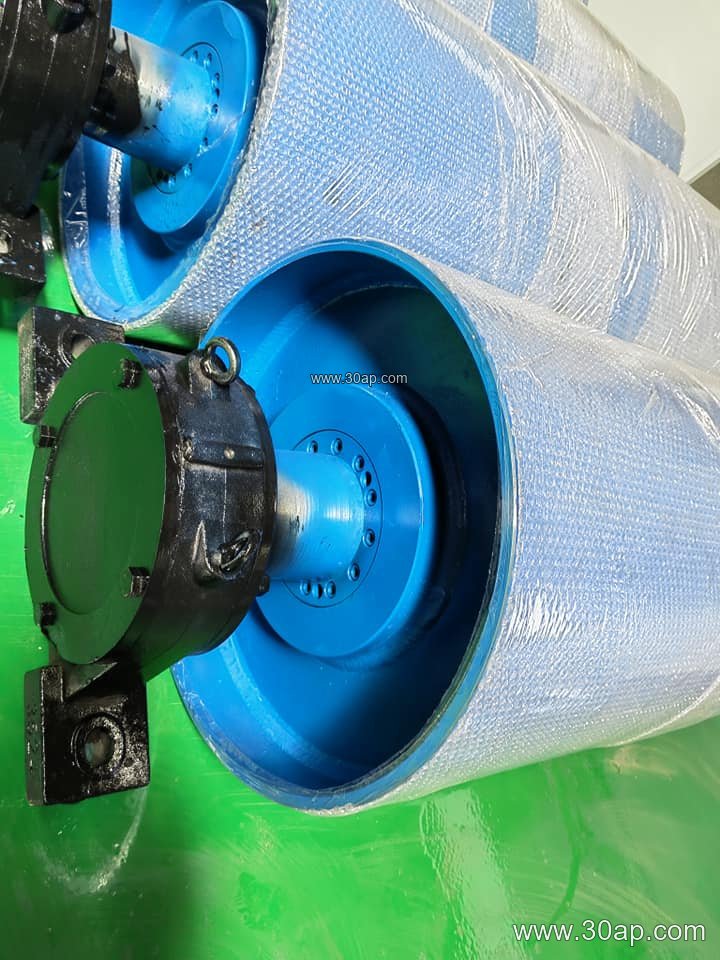
A typical unit starts with a cylindrical shell, either fabricated from rolled steel plate or machined from tube, welded to end discs and a shaft. Shaft ends run in pillow block or flange-type bearing housings, which sit on a conveyor bracket that can be fixed or sliding. Lagging is applied to the shell surface to improve grip and protect the belt.
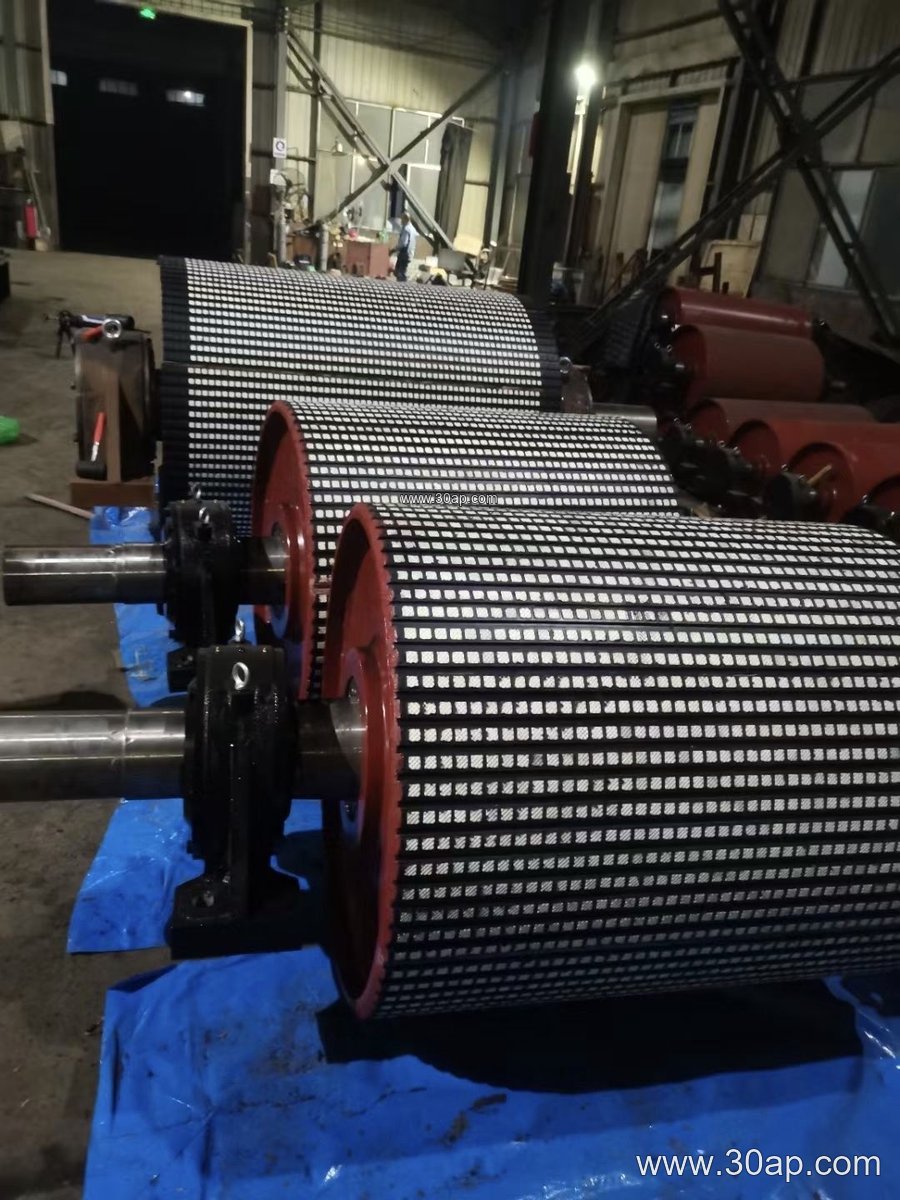
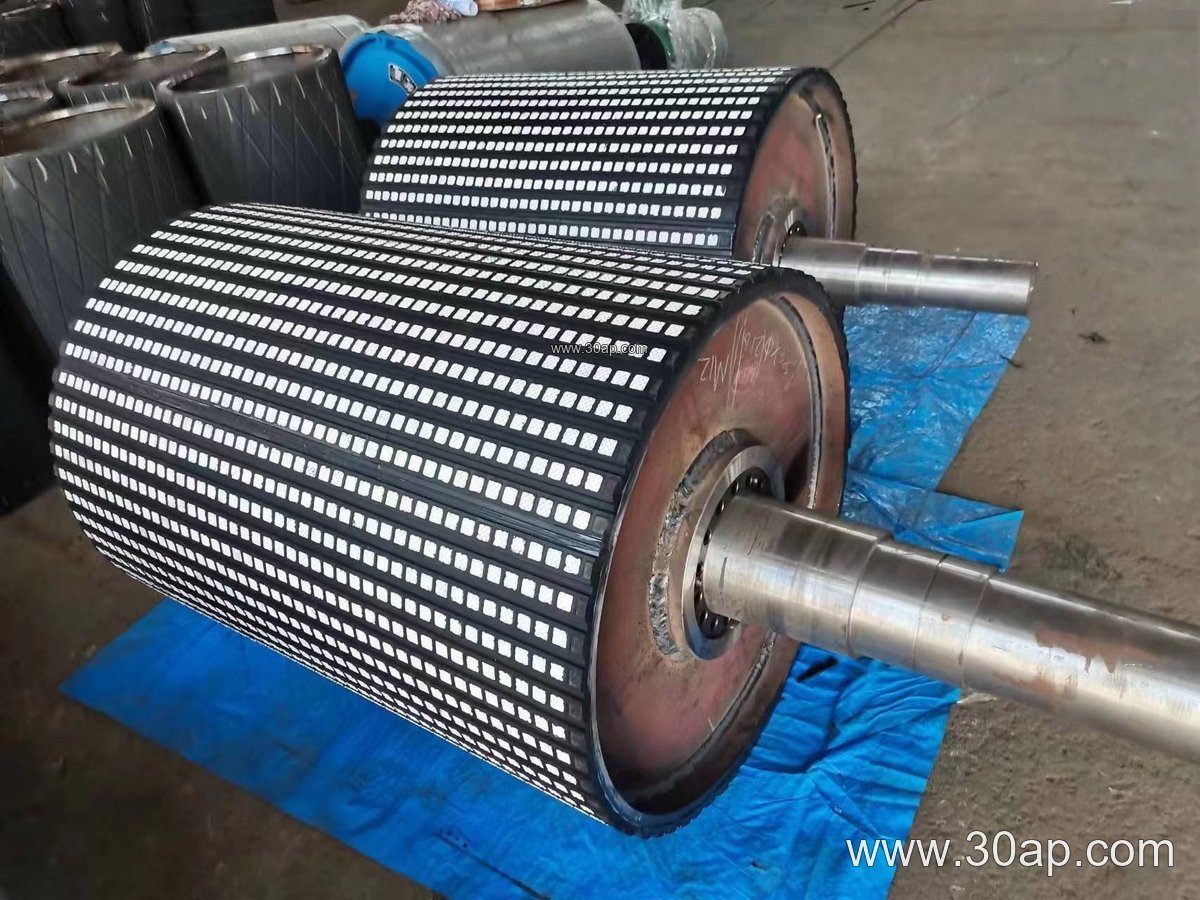
Common surface forms include plain, hot-vulcanized rubber, cold-bonded rubber, diamond lagging, herringbone lagging, ceramic lagging, and flat rubber sheet. Lagging thickness is often 8, 10, 12, 15, or 20 mm depending on duty. In dusty or wet conditions, diamond or ceramic lagging helps shed material and reduce slip. In a sand and gravel line, plain or lightly lagged shells are often enough because the tail pulley is not the main traction point.
Note that a tail pulley works with the conveyor belt, not against it. Its diameter and face width should suit the belt, but one belt width does not lock the pulley to a single diameter. A B800 belt may run with a Ø500 tail pulley in a short conveyor and a larger shell on a long, high-tension line. Shaft diameter is set by torque and load, not by belt width alone.
Where It Fits in Bulk Handling
Tail pulley assemblies appear in stone crushing plants, iron ore and copper ore lines, power plant coal yards, port bulk terminals, fertilizer plants, and grain silos. In a tunnel mucking system, a compact tail assembly at the discharge end keeps the belt centered while the conveyor is repositioned. In a steel plant sinter line, heat-resistant belts may demand a tail pulley with heat-tolerant lagging and generous bearing clearance.
They also matter in recycling and aggregate conveyors, where the belt may carry a chevron or skirted profile. A corrugated sidewall belt or a pipe conveyor belt needs a tail pulley matched to the belt’s cross-section, and the assembly must allow the belt to open or close without pinching.
Common Reference Dimensions
Values below are reference ranges for planning, not fixed supply promises. Final dimensions follow the conveyor design, belt tension, and shaft load.
| Belt width | Typical pulley face width | Common shell diameters |
|---|---|---|
| B400 | about 500 mm | Ø200, Ø250, Ø315 |
| B500 | about 600 mm | Ø250, Ø315, Ø400 |
| B650 | about 750 mm | Ø315, Ø400, Ø500 |
| B800 | about 950 mm | Ø400, Ø500, Ø630 |
| B1000 | about 1150 mm | Ø500, Ø630, Ø800 |
| B1200 | about 1400 mm | Ø630, Ø800, Ø1000 |
| B1400 | about 1600 mm | Ø800, Ø1000, Ø1250 |
| B1600 | about 1800 mm | Ø1000, Ø1250, Ø1400 |
| B1800 | about 2000 mm | Ø1250, Ø1400, Ø1600 |
| B2000 | about 2200 mm | Ø1400, Ø1600, Ø1800 |
Common shaft diameters include Ø50, Ø60, Ø70, Ø80, Ø90, Ø100, Ø120, Ø140, Ø160, Ø180, and Ø200. These are determined by torque, bearing life, and deflection limits.
Matching the Tail Pulley to the Belt
The belt family shapes the choice. A heavy-duty mining conveyor belt carrying iron ore may need a robust shell and abrasion resistant lagging. A flame retardant conveyor belt in an underground coal mining conveyor calls for non-sparking, antistatic considerations and careful bearing sealing. An EP conveyor belt or NN conveyor belt with a fabric core may tolerate a smaller tail diameter than a steel cord conveyor belt running at high tension.
In food or fertilizer plants, an oil resistant conveyor belt or food grade conveyor belt may be used, and the tail pulley should be easy to clean. In cold climates, a cold resistant conveyor belt paired with a tail assembly that allows thermal expansion helps avoid tracking problems. In a crusher conveyor or rock conveyor, impact resistant belt grades and a lagged tail shell reduce wear at the loading zone.
Buyer Checklist
- Confirm the belt width and belt type, whether EP, NN, steel cord, PVG, or PVC.
- State the take-up type: fixed, sliding, screw, or gravity.
- Provide belt tension and shaft load so the shaft diameter can be sized.
- Choose lagging based on dust, water, oil, and heat exposure.
- Check the conveyor bracket interface and bearing housing bolt pattern.
- Plan access for inspection; a tail pulley is easier to service when the bracket allows axial movement.
For an accurate quote, send the belt width, pulley diameter, shaft size, lagging type, bearing style, and mounting position. A tail pulley assembly is a small part of the conveyor, but it keeps the belt, the idler roller train, and the whole structure working together.