What Conveyor Pulley Machining Covers
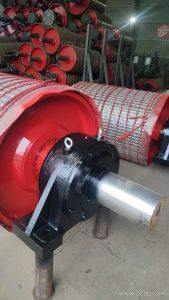
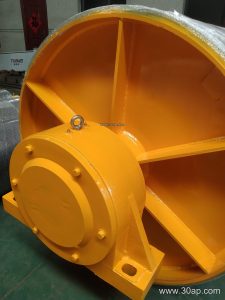
Conveyor pulley machining is the set of turning, boring, drilling, welding and finishing operations that turn a steel shell, shaft and end disc assembly into a true-running drum for a belt conveyor. In a quarry or a cement plant, a poorly machined pulley shows up quickly as belt mistracking, edge wear and vibration. The work is not only about the outside diameter; it also covers shaft journals, keyways, bearing seats, lagging grooves and the concentricity between the shell and the shaft.
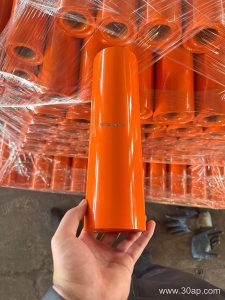
Machining accuracy matters because the pulley is one of the few components that touches the belt across its full width. A drum that runs out of round will load the conveyor belt unevenly, and that load is transferred to every idler roller and conveyor bracket downstream.
How a Pulley Is Built and Machined
A typical drum starts as a rolled steel shell with welded end discs, a through shaft and a hub set. The machining sequence usually runs through these stages:
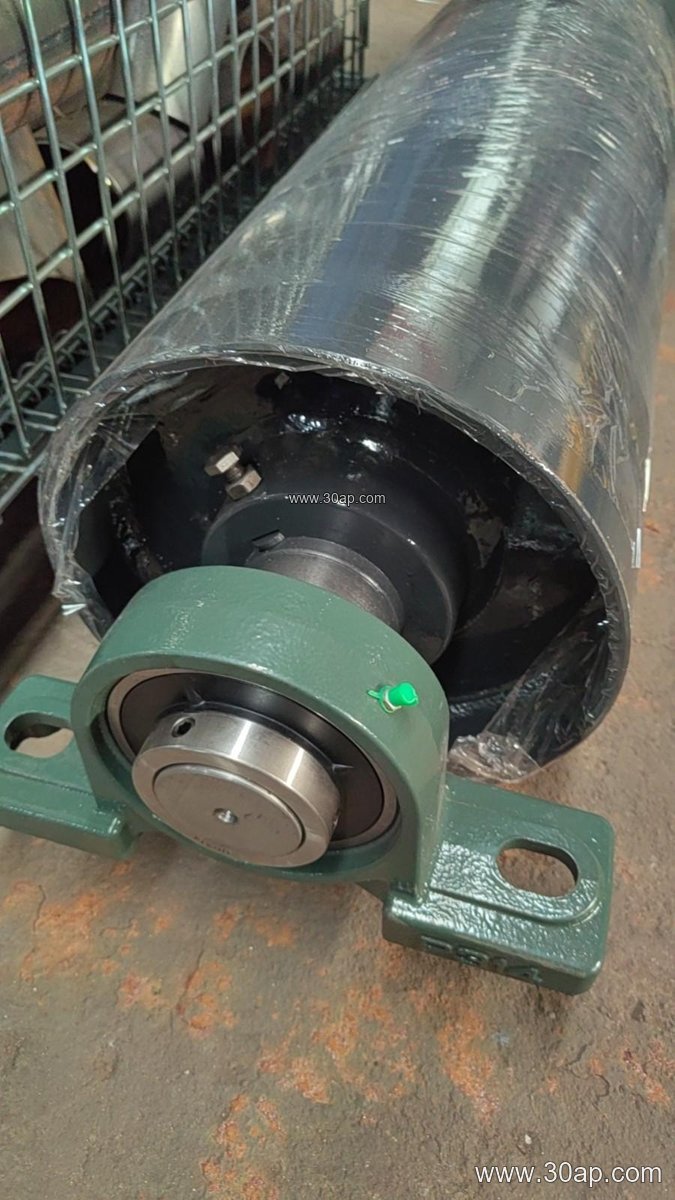
- Rough turning of the shell outside diameter, leaving stock for the finish pass
- Boring of end discs and hubs to accept the shaft
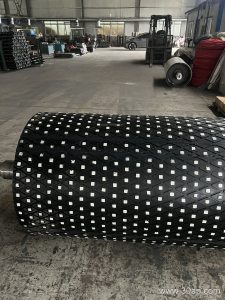
- Drilling and tapping of lagging bolt holes or preparation for vulcanized rubber
- Turning of shaft journals and cutting of keyways for the drive coupling
- Final turning and balancing to reduce runout at operating speed
For a drive pulley, the shaft end may also need a taper or a shrink-disc seat, and the shell may be prepared for a rubber or ceramic lagging. A tail pulley is usually simpler, but its shaft still has to sit correctly in the take-up frames so the belt stays centered.
Where These Drums Are Used
Quarries and aggregate lines use them at the head of a crusher feed conveyor and at the discharge end of a screening deck. Cement plants use them on clinker and raw meal belts, where dust and heat are constant companions. In both settings the drum must cope with abrasive material, so the surface form is often selected together with the belt cover. A high abrasion resistant conveyor belt running over a smooth steel drum may slip; a lagged pulley with diamond or herringbone grooves gives better grip without over-tensioning the belt.
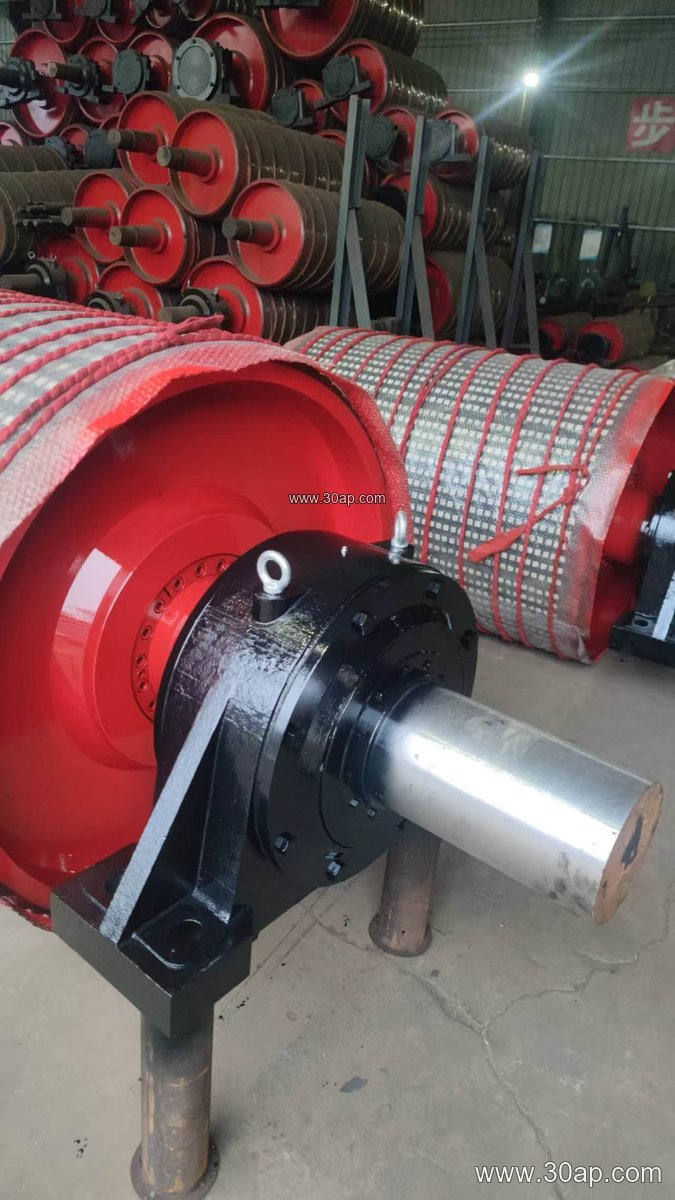
Other industries follow the same logic. A coal mining conveyor belt on an underground system needs flame retardant properties in the belt and careful surface preparation on the drum. A power plant coal line and a port bulk terminal both rely on true-running pulleys to keep tonnage moving.
Common Dimensions and Surface Forms
The table below shows reference data, not a fixed matching rule. Diameter, face width and shaft size are chosen from belt tension, torque and the load case, and the shaft diameter must never be guessed from belt width alone.
| Parameter | Common reference values |
|---|---|
| Belt width | B400, B500, B650, B800, B1000, B1200, B1400, B1600, B1800, B2000 |
| Pulley diameter | Ø200, Ø250, Ø315, Ø400, Ø500, Ø630, Ø800, Ø1000, Ø1250, Ø1400 |
| Face width | Usually wider than the belt, for example about 500 mm for B400 and about 1400 mm for B1200 |
| Shaft diameter | Ø50, Ø60, Ø70, Ø80, Ø90, Ø100, Ø120, Ø140, Ø160, Ø180, Ø200 |
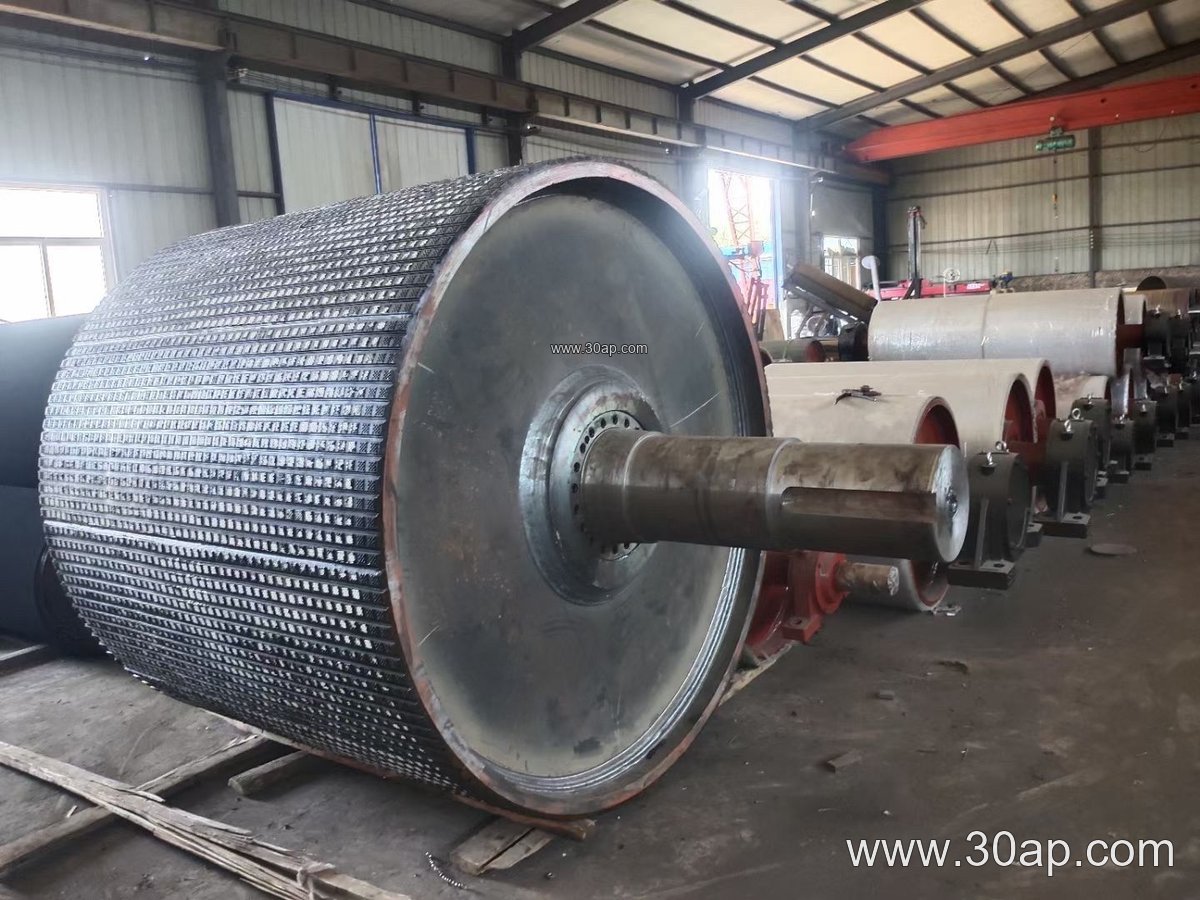
| Surface form | Smooth, hot-vulcanized rubber, cold-bonded rubber, diamond lagging, herringbone lagging, ceramic lagging |
| Lagging thickness | 8, 10, 12, 15, 20 mm |
A typical combination might be written as B1200 × Ø1000 or B800 × Ø500, but many other pairings are possible. The face width is normally a little wider than the belt so the belt does not run off the edge, and the lagging thickness is selected with the duty and the belt cover in mind.
What a Buyer Should Check
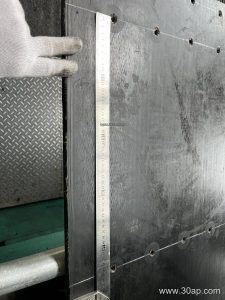
When specifying conveyor pulley machining, ask for the drawing that shows shaft diameter, keyway size, bearing seat tolerance and shell runout. Confirm the lagging type and thickness, and state whether the drum will be used as a drive, tail or bend pulley, because the load direction and the shaft detail differ between them.
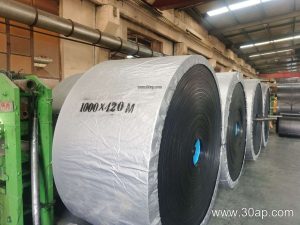
Also match the drum to the belt. A steel cord conveyor belt carries high tension and needs a pulley with enough diameter and a properly machined shaft. A fabric core conveyor belt or an EP conveyor belt may suit a smaller drum, but the final choice still belongs to the conveyor designer. For abrasive ore, an abrasion resistant conveyor belt plus a ceramic lagging is a common pairing; for hot clinker, a heat resistant conveyor belt and a carefully finished drum surface reduce the risk of cover damage.
Finally, keep records of runout and balance checks. A pulley that is machined to size but not checked for concentricity can still shorten belt life and put extra load on every idler roller and bracket in the line.