What an Iron Ore Conveyor Pulley Does
An iron ore conveyor pulley is the rotating drum that drives, tensions, or redirects an ore conveyor belt in a bulk material handling system. In an iron ore beneficiation plant, a sinter plant, or a port stockyard, this component carries the belt load, transmits torque, and keeps the ore conveyor belt tracking correctly under abrasive and often wet conditions. The pulley is not a standalone item; it works with the conveyor bracket, idler roller, and belt to form a complete conveying line.
The most common arrangement is the drive pulley at the head of the conveyor, often called the head pulley, which transmits power to the belt. Tail pulleys, bend pulleys, and take-up pulleys perform different duties in the same circuit, and they are not interchangeable with the drive pulley. Each position has its own load profile and design requirements.
Construction and Surface Options
An iron ore conveyor pulley typically consists of a cylindrical shell, two end discs, a shaft, and hub assemblies. The shell may be seamless steel tube or rolled and welded plate, depending on diameter and duty. The shaft is sized by torque and radial load rather than belt width alone; common shaft diameters include Ø80, Ø100, Ø120, Ø140, and Ø160 mm, but the final value must be confirmed by the conveyor designer.
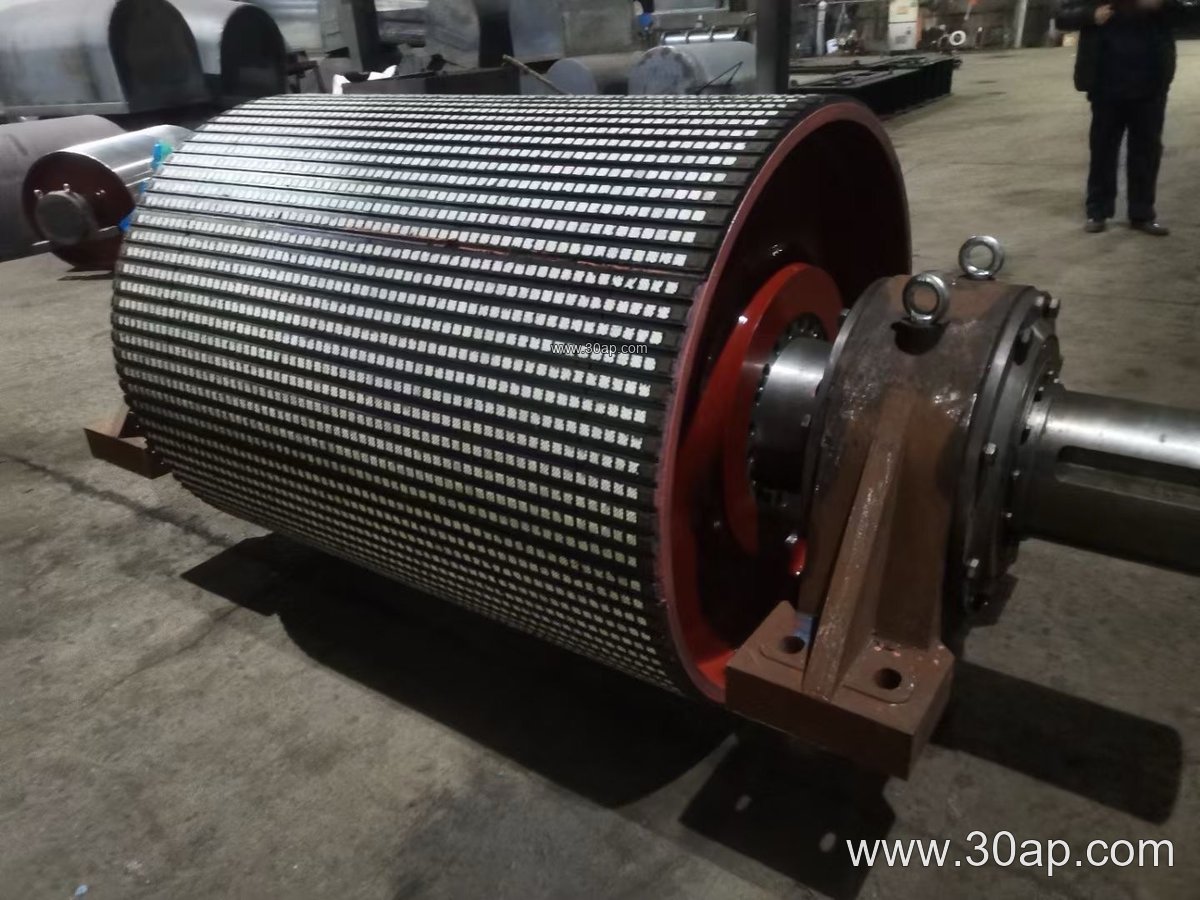
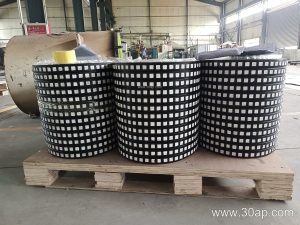
Surface treatment matters in ore handling. A plain shell is used where grip is not critical, while rubber lagging improves friction and protects the shell from abrasion. Common lagging forms include flat rubber, diamond grooving, and ceramic tile lagging. Lagging thickness is often 8, 10, 12, 15, or 20 mm. For high-torque drives and wet ore, diamond or ceramic lagging is frequently chosen to reduce belt slip.
Typical pulley diameters range from Ø250 and Ø315 mm on smaller belts up to Ø1000, Ø1250, or Ø1400 mm on large ore conveyors. Common belt widths include B650, B800, B1000, B1200, B1400, and B1600. A combination such as B1200 × Ø1000 or B1400 × Ø800 appears in real projects, but one belt width does not fix one pulley diameter. The pulley face width is usually slightly wider than the belt, for example about 1400 mm for a B1200 belt.
Where It Fits in Ore Handling
Iron ore conveyors move lump ore, fines, concentrate, and pellets. In a crushing and screening circuit, the head pulley discharges onto a transfer chute, while a bend pulley changes belt direction around a drive station. In a port ship-loading line, large pulleys handle high tension and long center distances. The same component appears in a steel plant sinter line and in a power plant coal yard, though the duty cycle differs.
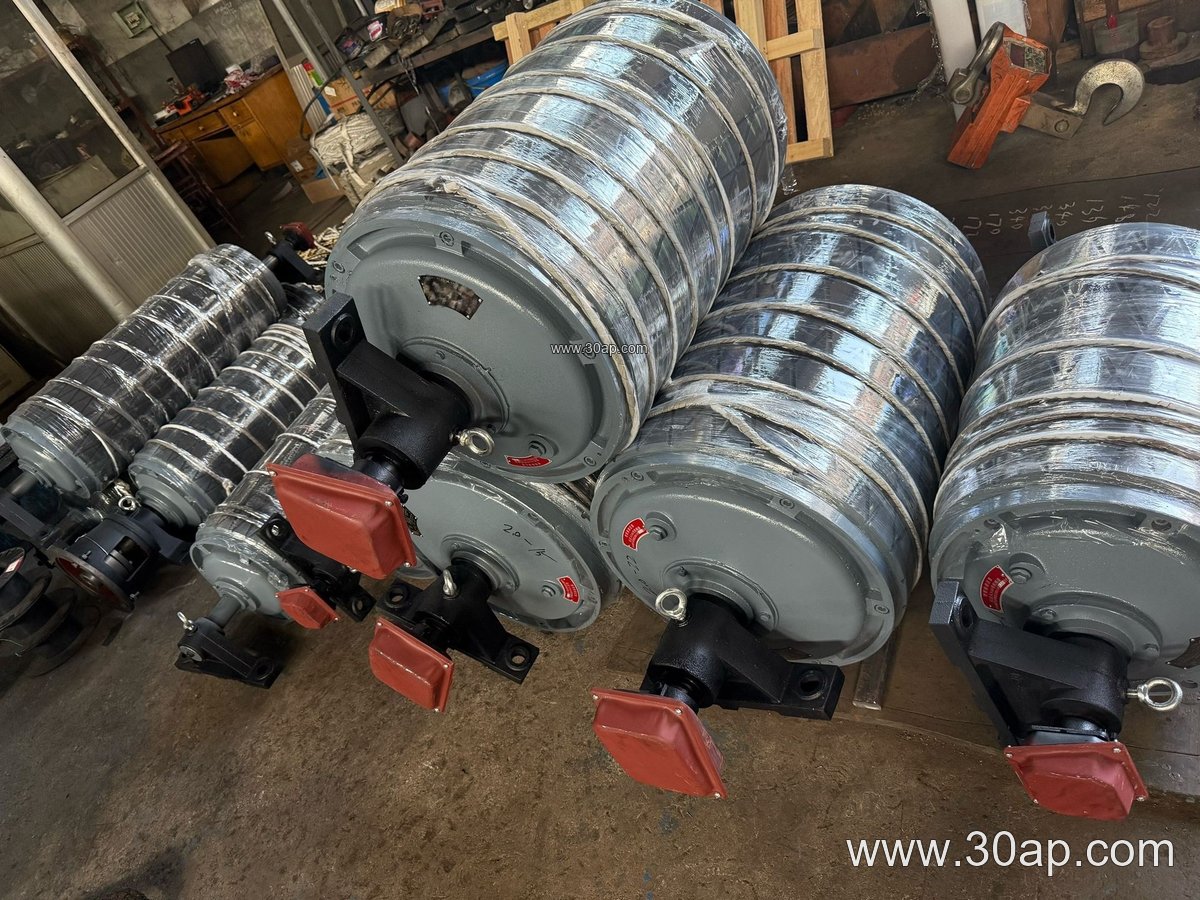
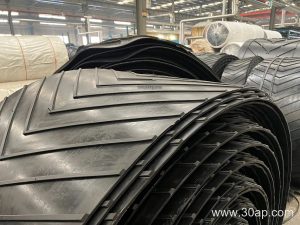
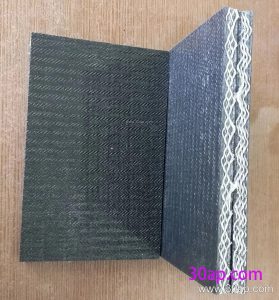
The belt itself must match the pulley. A heavy-duty mining conveyor belt, such as a steel cord conveyor belt or an abrasion resistant conveyor belt, is common on primary ore lines, while EP conveyor belt and NN conveyor belt constructions are used on shorter or lighter runs. The pulley lagging and the belt cover grade should be selected together so that friction and wear are balanced.
Buyer Checklist
- Confirm the pulley position: drive, tail, bend, or take-up. Each is a distinct subtype.
- Provide belt width, belt speed, motor power, and maximum belt tension.
- State the material: lump ore, fines, wet concentrate, or pellets, plus ambient temperature.
- Choose lagging form and thickness for the expected slip and abrasion conditions.
- Check shaft diameter against torque and bearing load, not against belt width alone.
- Confirm pulley face width, bearing centers, and mounting interface with the conveyor bracket.
- Ask for dynamic balance and inspection records where high speed is involved.
Maintenance planning should include periodic lagging inspection, bearing lubrication, and shaft alignment checks. Worn lagging reduces grip and can cause belt slip, especially in wet ore service. A spare pulley or a re-lagging schedule helps avoid unplanned downtime in a quarry, mine, or port terminal.
For more information on matching pulleys with belts, idlers, and brackets, visit conveyor components resources and review the conveyor pulley and conveyor belt data before ordering.