What the Corrugated Sidewall Belt Does
A Corrugated Sidewall Conveyor Belt is a fabric- or steel-reinforced rubber belt with raised corrugated walls along both edges and, often, horizontal cleats between them. The design lets one conveyor lift bulk material at angles that a smooth belt cannot hold, sometimes approaching vertical, without relying on a long inclined run. In practice this belt is also called a sidewall belt with cleats, or a corrugated sidewall and cleat belt, and it is frequently grouped with skirted belt constructions in bulk handling discussions.
The working principle is simple. The corrugated sidewalls form a moving pocket, and the cleats carry the load upward instead of letting it slide back. Because the material is contained between the walls, the belt can travel through tight transitions and over relatively small pulleys compared with a conventional inclined conveyor.
Construction and Typical Build
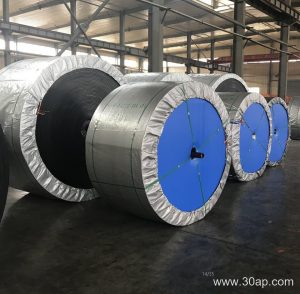
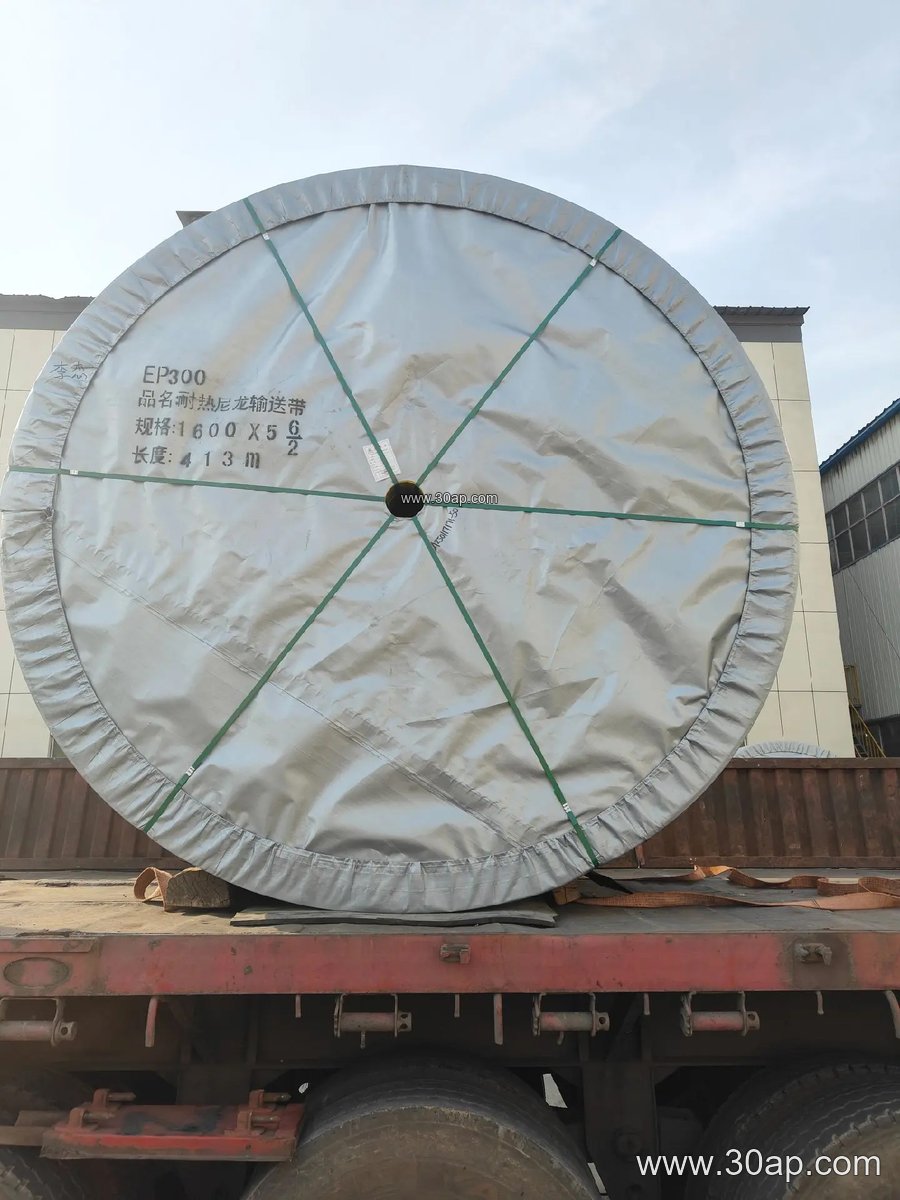
The base belt usually comes from an EP Conveyor Belt or NN Conveyor Belt carcass, with a Fabric Core Conveyor Belt structure for moderate tensions and a Steel Cord Conveyor Belt option where higher strength is needed. Sidewalls are vulcanized to the edges, and cleats are bonded to the top cover at a pitch that matches the material and the incline.
- Base carcass: EP or NN fabric, typically 2 to 6 plies, or steel cord for heavy duty work.
- Sidewall height: commonly 40 mm to 300 mm, depending on load depth and incline.
- Cleat types: T, C, TC and similar profiles, chosen for stickiness and lump size.
- Cover grades: abrasion resistant, heat resistant, oil resistant, flame retardant, cold resistant or anti-static compounds.
Because the walls and cleats are the load-bearing features, the base belt grade matters as much as the profile. A Mining Conveyor Belt specification with a high abrasion resistant cover is common in hard rock duties, while a Flame Retardant Conveyor Belt grade is often requested for coal handling. Buyers should confirm the cover thickness, for example 4+2 mm or 6+2 mm, rather than assuming a standard build.
Where This Belt Fits in the Plant
Steep-angle conveying is common in cement plants, power plants, coal preparation, sand and gravel yards, quarries and mineral processing lines. A Corrugated Sidewall Conveyor Belt can replace a long inclined troughed conveyor plus transfer points, saving floor space in confined layouts. It also suits ship loading, silo feeding and hopper discharge where the material must climb quickly.
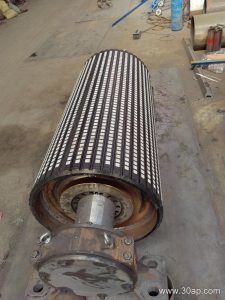
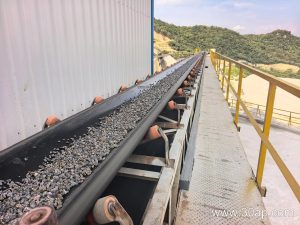
Supporting hardware stays conventional. The belt runs on idler rollers through the horizontal sections, wraps a drive pulley and tail pulley at the ends, and may pass a bend pulley where the route changes. Conveyor brackets and frames must be aligned carefully, because a sidewall belt is less forgiving of misalignment than a flat belt. In dusty coal or quarry service, a skirted conveyor belt is sometimes used on the flat approach, while the corrugated sidewall unit handles the steep lift.
Specification Points a Buyer Should Check
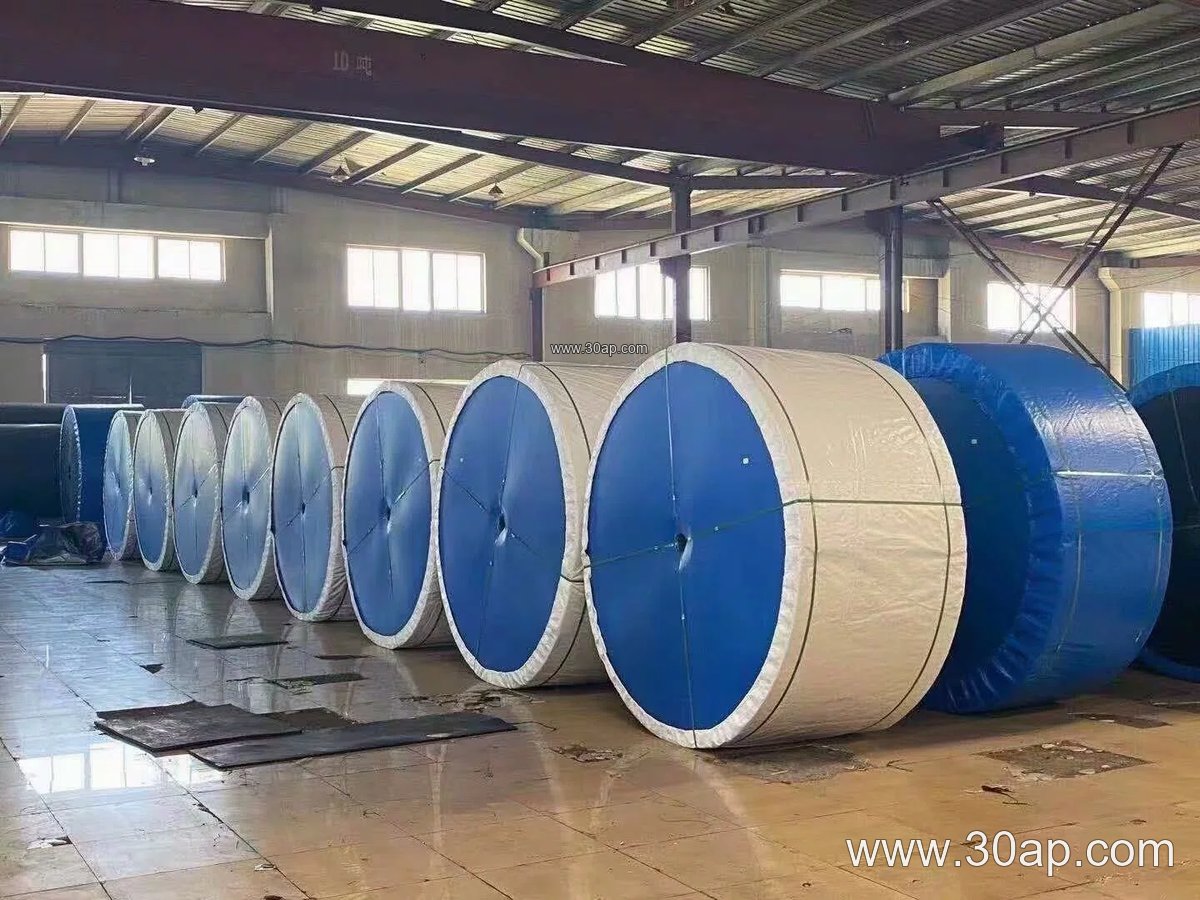
Widths from B500 to B2000 are commonly quoted, with 800 mm, 1000 mm, 1200 mm and 1400 mm among the frequent choices in aggregate and cement work. Strength grades such as EP200, EP400, EP630 and EP1000 appear in fabric constructions, while ST1000 to ST2500 steel cord grades serve heavier duties. The table below shows reference values only; actual supply depends on the manufacturer and the conveyor design.
Reference Data
- Belt width: B500, B650, B800, B1000, B1200, B1400, B1600, B1800, B2000
- Fabric strength: EP200, EP315, EP400, EP500, EP630, EP800, EP1000, EP1250, EP1600
- Steel cord strength: ST1000, ST1250, ST1600, ST2000, ST2500
- Cover thickness: 3+1.5, 4+2, 5+2, 6+2, 8+3 mm
- Sidewall height: commonly 40, 60, 80, 100, 120, 160, 200, 240, 300 mm
- Cleat pitch: commonly 125, 200, 250, 315, 400, 500 mm
Do not treat belt width as a fixed match for one pulley diameter. Drive pulley, tail pulley and bend pulley sizes are set by the conveyor designer from tension, wrap angle and belt stiffness, not from width alone. The same applies to shaft diameter, which must never be guessed from belt width.
Selection and Maintenance Notes
Material size, bulk density, moisture and temperature decide the cleat profile and cover compound. Hot clinker or sinter calls for a Heat Resistant Conveyor Belt base; oily scrap or grain dust may need an Oil Resistant Conveyor Belt cover; cold ports and winter yards favor a Cold Resistant Conveyor Belt grade. In coal mines, flame retardant and anti-static properties are usually specified together.
On the mechanical side, check that the idler roller frames are square, that the conveyor pulley lagging is in good condition and that the belt is not rubbing the skirt rubber. Inspect sidewall-to-base bonds and cleat roots during routine stops, since these are the first areas to show cracking. Keep the belt tracking straight through the bend pulley station, and avoid over-tensioning, which stresses the corrugated walls.
For plants comparing options, a Chevron Conveyor Belt can handle moderate inclines with a simpler structure, while a Pipe Conveyor Belt suits dust-tight routing. For steep, space-limited lifts in mining, cement, power and quarry operations, the Corrugated Sidewall Conveyor Belt remains a practical and widely used choice.