What a Mining Belt Conveyor Pulley Does
A mining belt conveyor pulley is the rotating drum that carries and drives the conveyor belt at key points along a bulk handling line. In a quarry or ore dressing plant, the pulley transfers motion from the drive shaft to the belt, supports the belt at the discharge end, and guides it around bends where the layout changes direction. Because these units sit at the heart of the tension path, their construction and surface condition directly affect belt tracking, belt life, and the energy needed to move material.
The same assembly is often called a conveyor drum or belt pulley. Both terms describe the same product; the difference is only in local naming habits. A drive pulley, a tail pulley and a bend pulley are not interchangeable, however. Each occupies a distinct position and performs a distinct job, so selection must start from the position in the conveyor, not from a catalogue page.
How the Drum Is Built
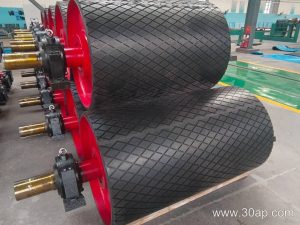
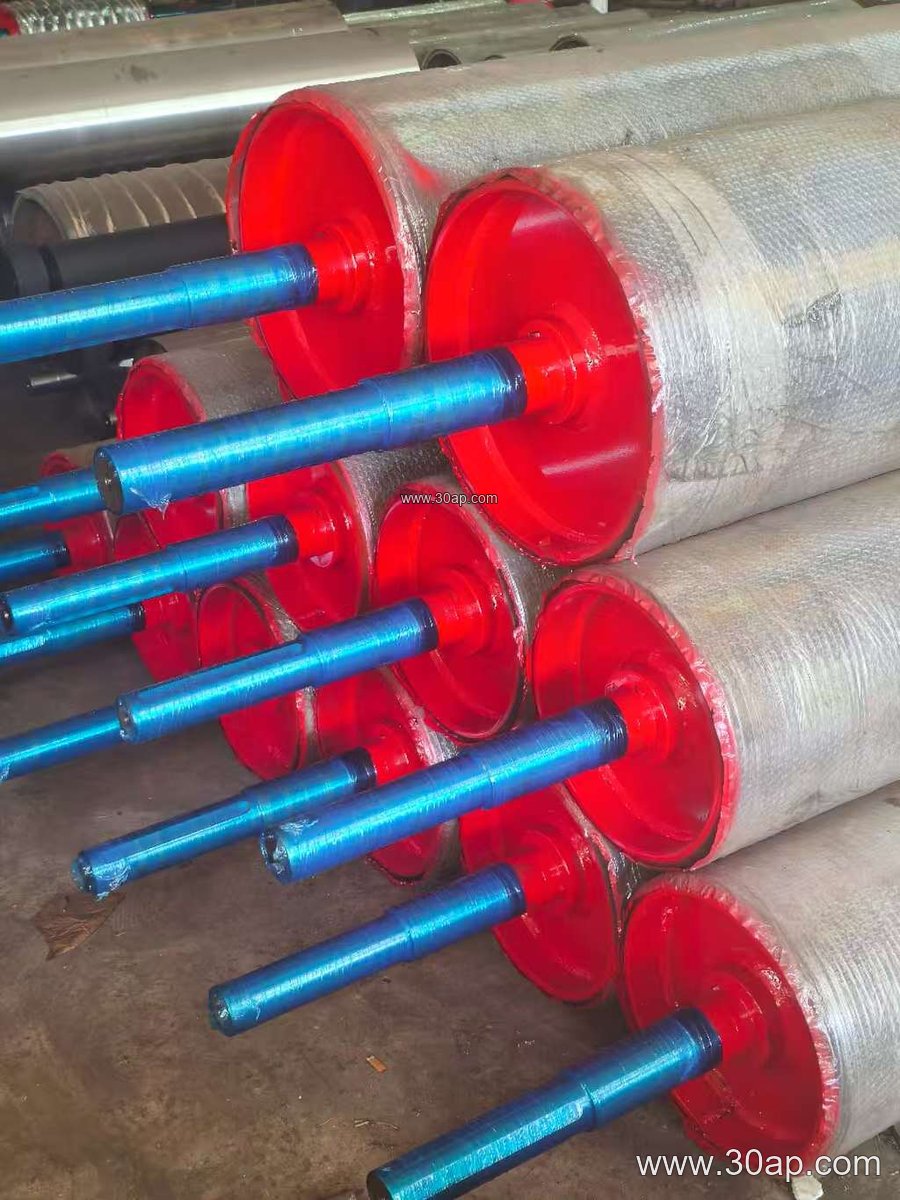
A typical unit combines a cylindrical shell, two end discs, a shaft, and bearing housings mounted on a sturdy frame. The shell is usually rolled from steel plate and machined or balanced so that it runs true at operating speed. The shaft is sized by torque and radial load rather than by belt width alone, so a B800 conveyor and a B1200 conveyor may use very different shaft diameters depending on power and wrap angle.
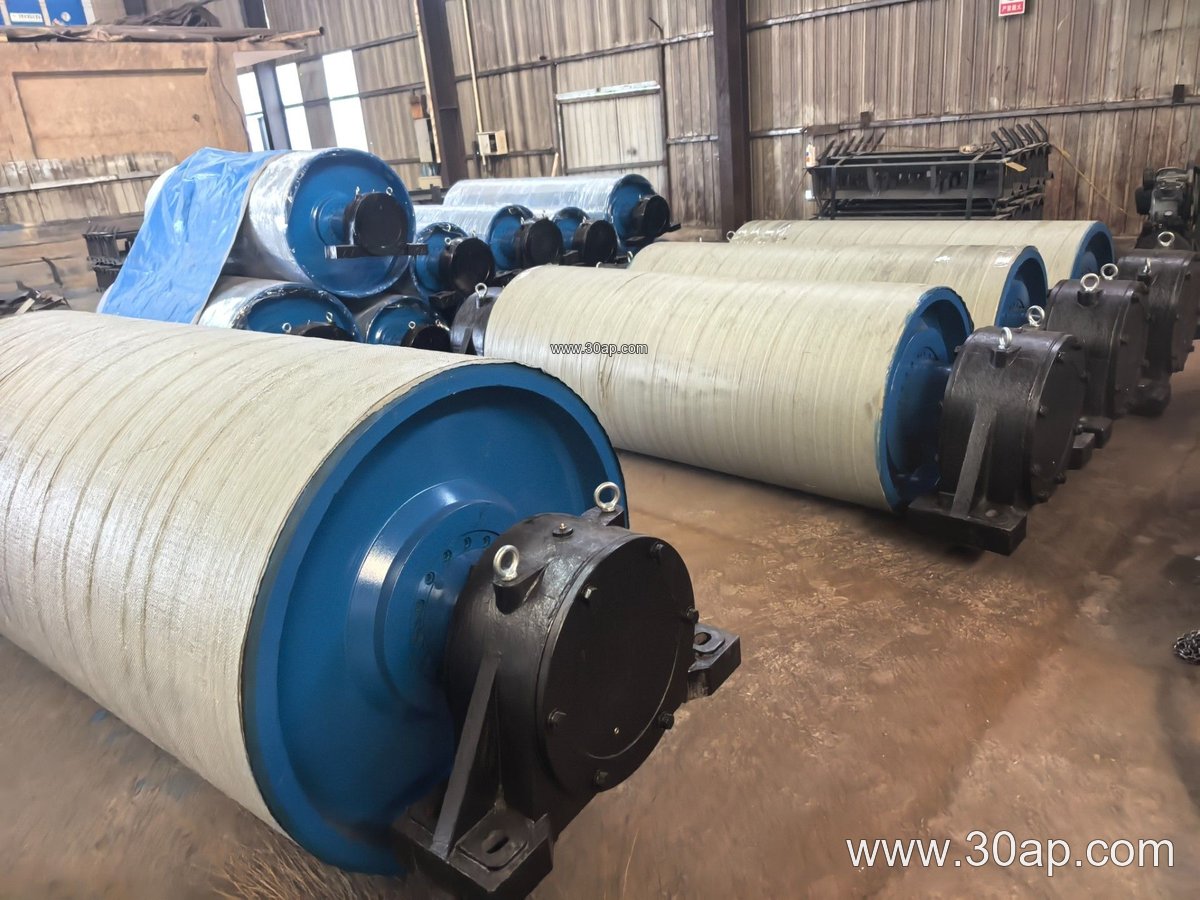
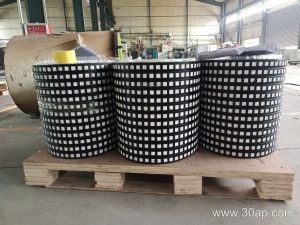
Surface treatment is a major part of the build. Plain finish suits light duty and cleaning-friendly positions. Rubber lagging, applied by cold bonding or hot vulcanising, raises friction on drive pulleys and protects the shell from abrasive carry-back. Diamond or herringbone patterns help shed water and fines, while ceramic lagging is chosen where slip and wear are severe. Common lagging thicknesses are 8, 10, 12, 15 and 20 mm, selected according to duty.
Where It Fits in the Plant
In a quarry or aggregate line, the head pulley discharges crushed rock onto a transfer chute, while the tail pulley keeps the return strand aligned. A bend pulley may steer the belt around a transfer tower, and a take-up pulley maintains tension as the belt stretches. In a coal preparation plant or a power station coal yard, flame retardant and anti-static properties of the belt matter, and the pulley lagging must resist fine abrasive dust. In a cement plant, hot clinker and limestone dust put a premium on heat tolerance and robust sealing.
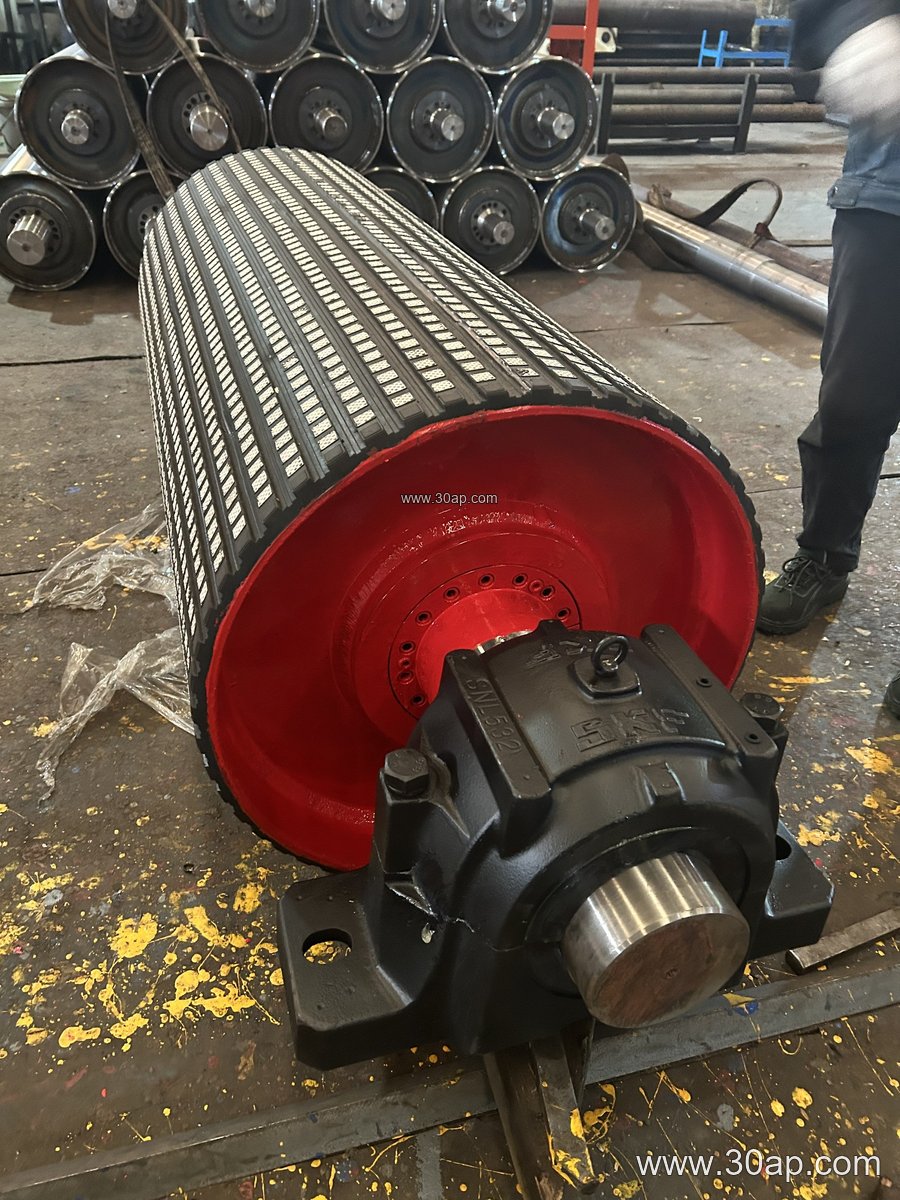
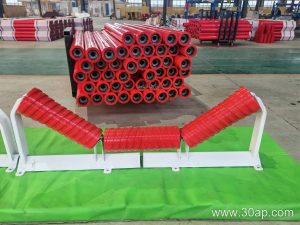
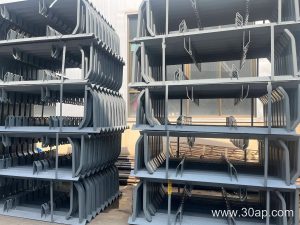
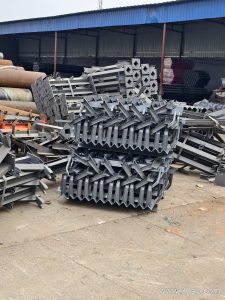
The pulley works together with the conveyor belt, the idler roller sets that support the trough, and the conveyor bracket that anchors the bearing housing. A well-matched system keeps the belt centred; a worn or poorly lagged drum can cause mistracking, edge damage and spillage within weeks.
Common Size References
The table below shows reference combinations often seen in plant layouts. These are examples, not fixed rules, and final dimensions follow the conveyor design.
- B400 belt with about 500 mm face width, drum diameter from Ø200 to Ø315
- B650 belt with about 750 mm face width, drum diameter from Ø315 to Ø500
- B800 belt with about 950 mm face width, drum diameter from Ø400 to Ø630
- B1000 belt with about 1150 mm face width, drum diameter from Ø500 to Ø800
- B1200 belt with about 1400 mm face width, drum diameter from Ø630 to Ø1000
- B1400 belt with about 1600 mm face width, drum diameter from Ø800 to Ø1250
- B1600 belt with about 1800 mm face width, drum diameter from Ø1000 to Ø1400
- B1800 belt with about 2000 mm face width, drum diameter from Ø1000 to Ø1600
Typical shaft diameters include Ø50, Ø60, Ø70, Ø80, Ø90, Ø100, Ø120, Ø140, Ø160, Ø180 and Ø200, but the correct value comes from torque and load calculation. A larger drum diameter generally improves belt fatigue life at high tension, while a smaller diameter saves space in tight transfer points.
Matching the Pulley to the Belt
Belt construction influences pulley choice. A heavy-duty mining conveyor belt with a steel cord carcass needs a generous drum diameter to limit bending stress. An EP conveyor belt or NN conveyor belt with fabric plies tolerates tighter bends but still benefits from adequate face width and clean lagging. Where the belt carries hot sinter or cement clinker, a heat resistant conveyor belt pairs with a drum that allows thermal expansion without binding. In underground coal mining, a flame retardant conveyor belt and anti-static components are usual, and the pulley seals should keep out fine coal dust.
On inclined haulage, a chevron conveyor belt or corrugated sidewall belt may be used, and the pulley face must be wide enough to clear the cleats. For long overland lines, a steel cord conveyor belt running over a large drive pulley with ceramic lagging is a common arrangement.
What Buyers Should Check
Before ordering, confirm the position of the unit, the belt width, the calculated shaft load, the required lagging type and thickness, and the bearing arrangement. Ask for the balancing grade and run-out tolerance, since smooth rotation reduces vibration on the whole conveyor structure. Check that the face width exceeds the belt width sufficiently and that the lagging groove pattern suits the material being carried. Finally, plan a maintenance routine: inspect lagging wear, check bearing temperature, and verify that the conveyor bracket bolts remain tight. A spare drive pulley kept on site can shorten downtime when the primary drum is damaged by a stuck rock or a belt splice failure.