What the Conveyor Frame Does on a Running Line
The conveyor frame is the structural backbone that carries every idler roller, holds the belt at the right profile, and keeps the whole run aligned from loading point to discharge. In a quarry, a cement plant, or a power plant coal yard, the frame is the part that turns a loose collection of rollers into a working conveying system. It is often built as a series of modular sections bolted or welded together, so a long overland line can be assembled, adjusted, and repaired in manageable pieces.
Common names and how they are used
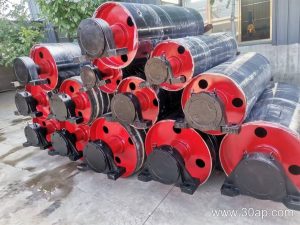
Buyers may see the same item called a conveyor support frame, a belt conveyor frame, or simply a frame section. These are accurate equivalent names for the same structural product. Keep in mind that the carrying frame is not the same as a bend pulley or a tail pulley; those are separate components with their own functions.
How a Frame Section Is Built
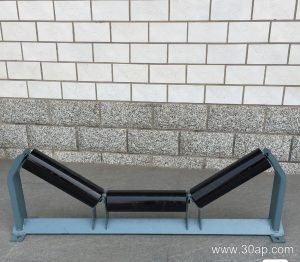
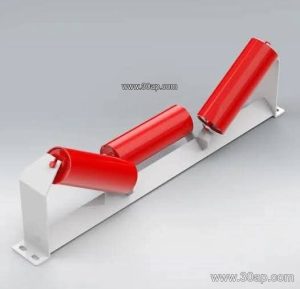
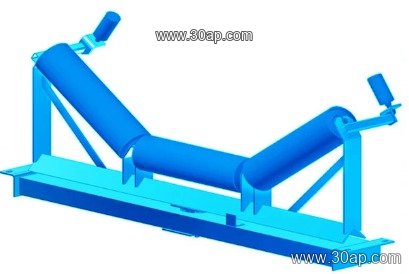
Most frames are fabricated from angle steel, channel steel, or folded steel plate. The cross member holds the idlers at a set trough angle, while the side rails tie the sections together and carry the load down to the legs or foundations. Welded frames suit fixed installations, while bolted frames are easier to ship and replace in underground mining conveyor or tunnel muck lines.
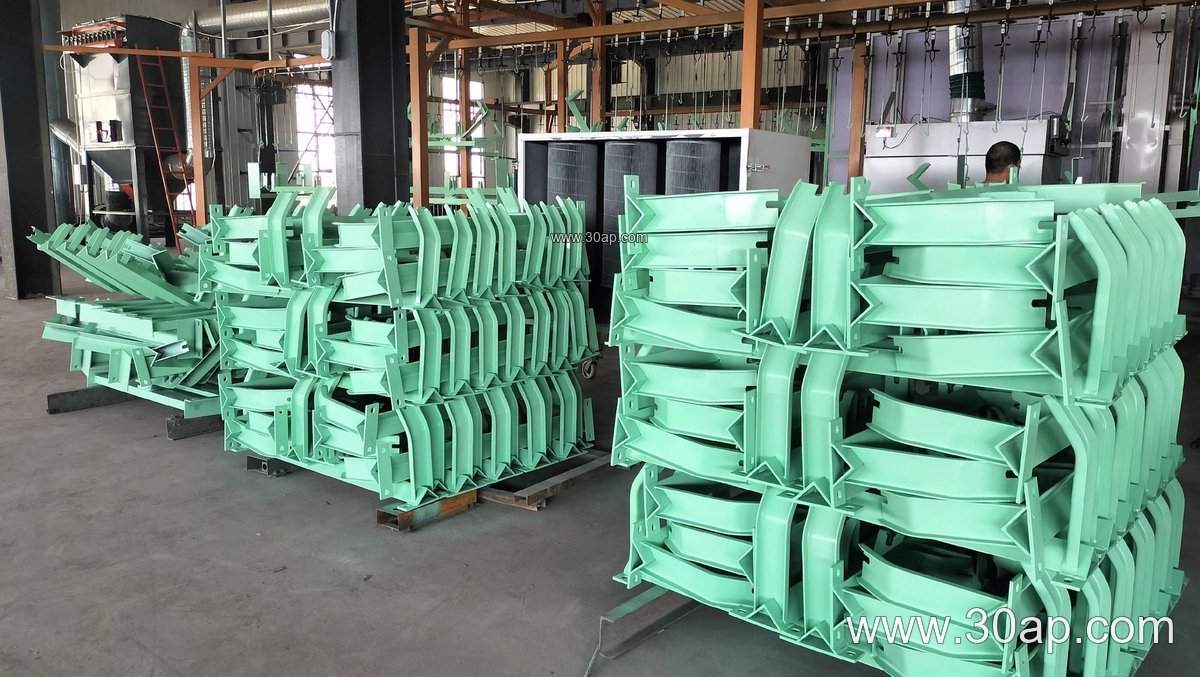
- Side rails and cross beams form the main load path
- Idler mounting brackets set the trough angle and roller spacing
- Legs, foot plates and anchor points transfer force to the ground
- Optional guards and covers protect moving parts and material spillage
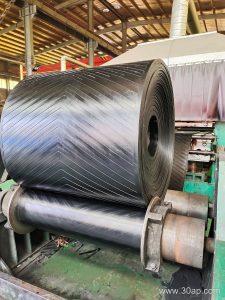
A well-built frame keeps the belt supported evenly, which reduces edge damage and helps a rubber conveyor belt run true. Poor frame alignment is a frequent cause of belt mistracking, so the frame and the conveyor bracket work together as one support system.
Trough Angle, Belt Width and Roller Diameter
The frame design ties three variables together: belt width, trough angle and idler roller diameter. A narrow B650 frame with a 30 degree trough is common in small aggregate lines, while a B1400 or B1600 frame at 35 or 45 degrees appears in high-capacity iron ore and copper ore handling. Roller diameters such as Ø89, Ø108, Ø133, Ø159 and Ø194 are selected by load and belt speed, not by belt width alone. A wider belt does not force one fixed roller size, and one belt width can pair with more than one trough angle.
| Frame reference | Belt width | Trough angle | Typical roller diameter |
|---|---|---|---|
| Light section | B500 / B650 | 20–30 degrees | Ø89 / Ø108 |
| Medium section | B800 / B1000 | 30–35 degrees | Ø108 / Ø133 |
| Heavy section | B1200 / B1400 | 35–45 degrees | Ø133 / Ø159 |
| Large section | B1600 / B1800 | 35–45 degrees | Ø159 / Ø194 |
These values are common reference ranges for design discussion, not fixed supply promises. Hole spacing and cross beam length change with belt width and trough angle, so they should be confirmed on the drawing.
Where the Frame Is Used
In a limestone mine or crushing and screening plant, carrying frames and return frames run under an abrasion resistant conveyor belt that moves blasted rock at high tonnage. In a coal washing plant, flame retardant conveyor belt grades are paired with frames that must stay aligned through frequent starts and stops. Frames also appear in fertilizer granulation lines and grain silos, where a food grade conveyor belt may run on lighter, cleaner sections.
Transition frames near the head and tail guide the belt from flat to troughed profile, while V-return frames support the empty side. Self-aligning frames with slightly forward-tilted rollers, often about 1.5 to 2 degrees, help correct minor mistracking before it becomes a spillage problem.
What a Buyer Should Check Before Ordering
- Confirm belt width, trough angle and roller diameter as a set, not in isolation
- Ask whether the frame is welded or bolted and how sections join
- Check leg height and anchor layout against the site foundation
- Match frame strength to the duty, such as heavy-duty mining conveyor service versus a port ship loading line
- Review corrosion protection for wet or coastal installations
For more on matching frames with belts and rollers, see cnmis conveyor frame guidance and the belt selection notes at cnmis. A frame that fits the belt, the idlers and the ground is the quiet reason a conveyor line stays productive.