What an Underground Mining Conveyor Idler Does
An underground mining conveyor idler is the rotating support that carries the conveyor belt and its load along the structure. In a tunnel or shaft, the belt has to follow a fixed line, handle wet and dusty conditions, and keep material moving without spillage. The idler roller does the quiet work: it holds the belt in shape, reduces friction, and guides the belt back on track. Because the underground environment leaves little room for maintenance crews, the design of these rollers matters as much as the belt itself.
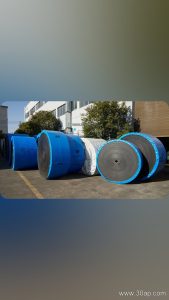
In coal mines, limestone drifts, and tunnel excavation, the conveyor system usually combines a heavy-duty mining conveyor belt with a matched set of troughing and return idlers. The belt may be a flame retardant conveyor belt or an anti-static conveyor belt, while the idlers are chosen for dust, moisture, and impact. All of these parts work as one line, so a weak roller can shorten belt life quickly.
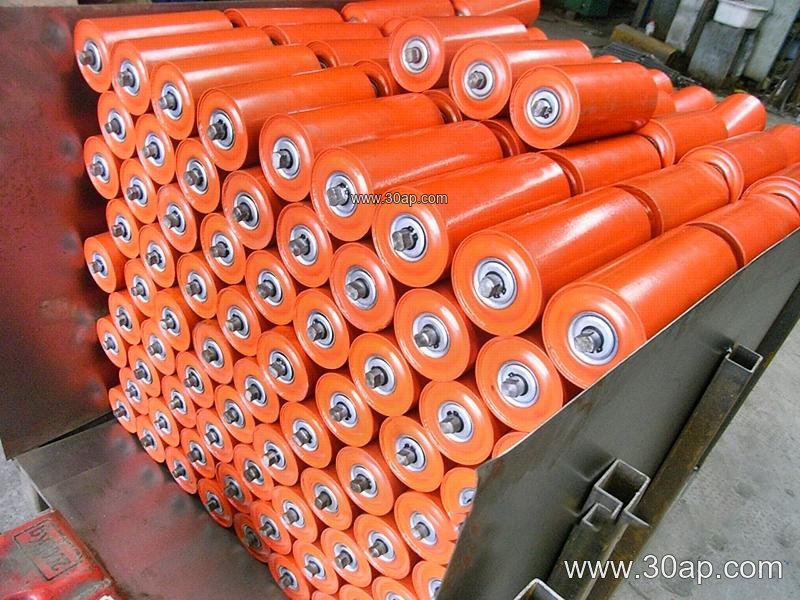
How the Roller Is Built
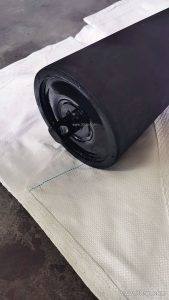
A typical underground mining conveyor idler consists of a steel tube shell, a shaft, bearing housings, seals, and a bearing set. The shell is often a seamless or welded steel pipe, and the surface may be plain steel, nylon, ceramic, or rubber rings depending on the duty. Rubber rings are common on impact idlers at transfer points, where lumps of ore or rock drop onto the belt. Ceramic or nylon surfaces are used where wear or material buildup is a concern.
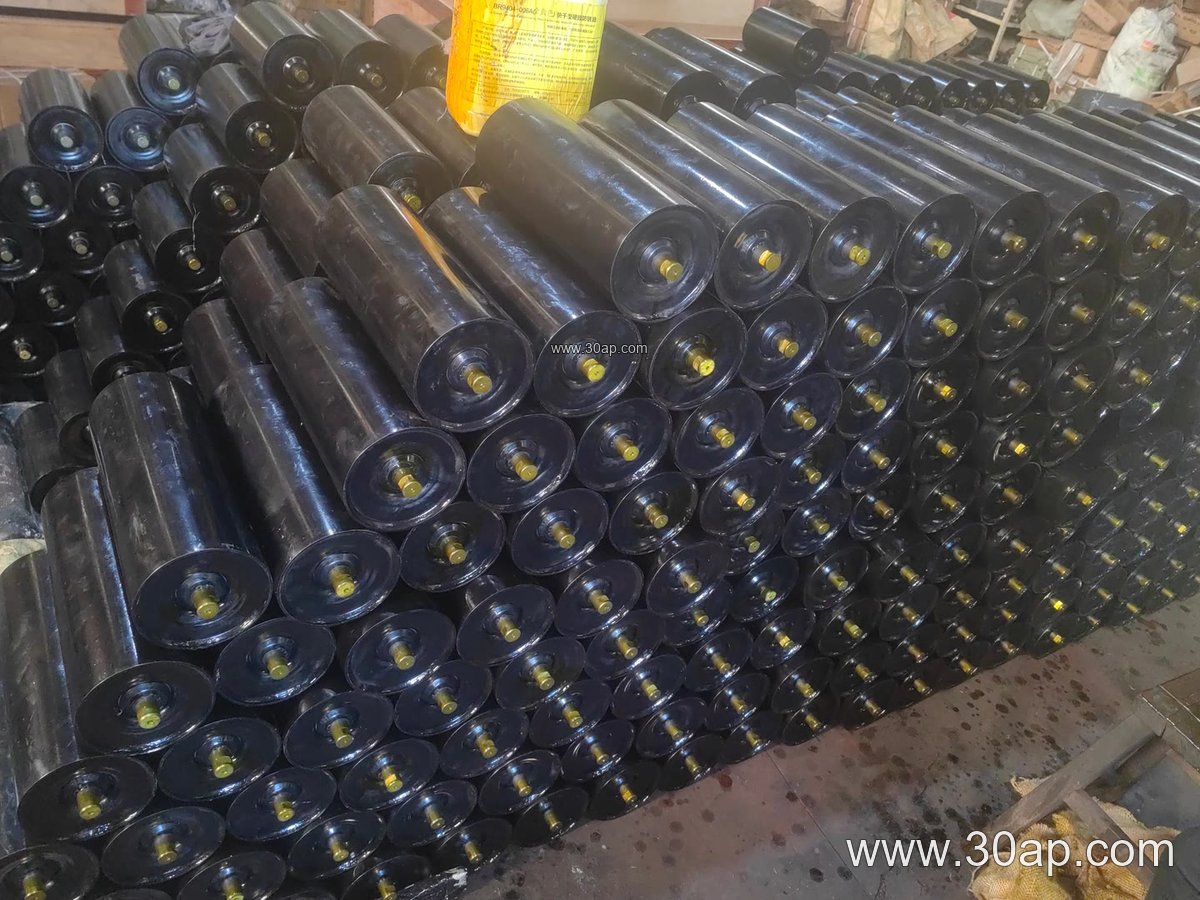
Sealing is the detail that separates a long-service roller from a short-lived one. Underground dust is fine and abrasive, and water can be present in sumps and wet seams. A labyrinth seal with grease retention helps keep grit away from the bearing. Common bearing sizes include 6204, 6205, 6305, 6306, 6308, and 6310, but the bearing is matched to the shaft and load, not to the belt width alone. The shaft diameter is set by the idler frame and the calculated load, so it should never be guessed from belt width.
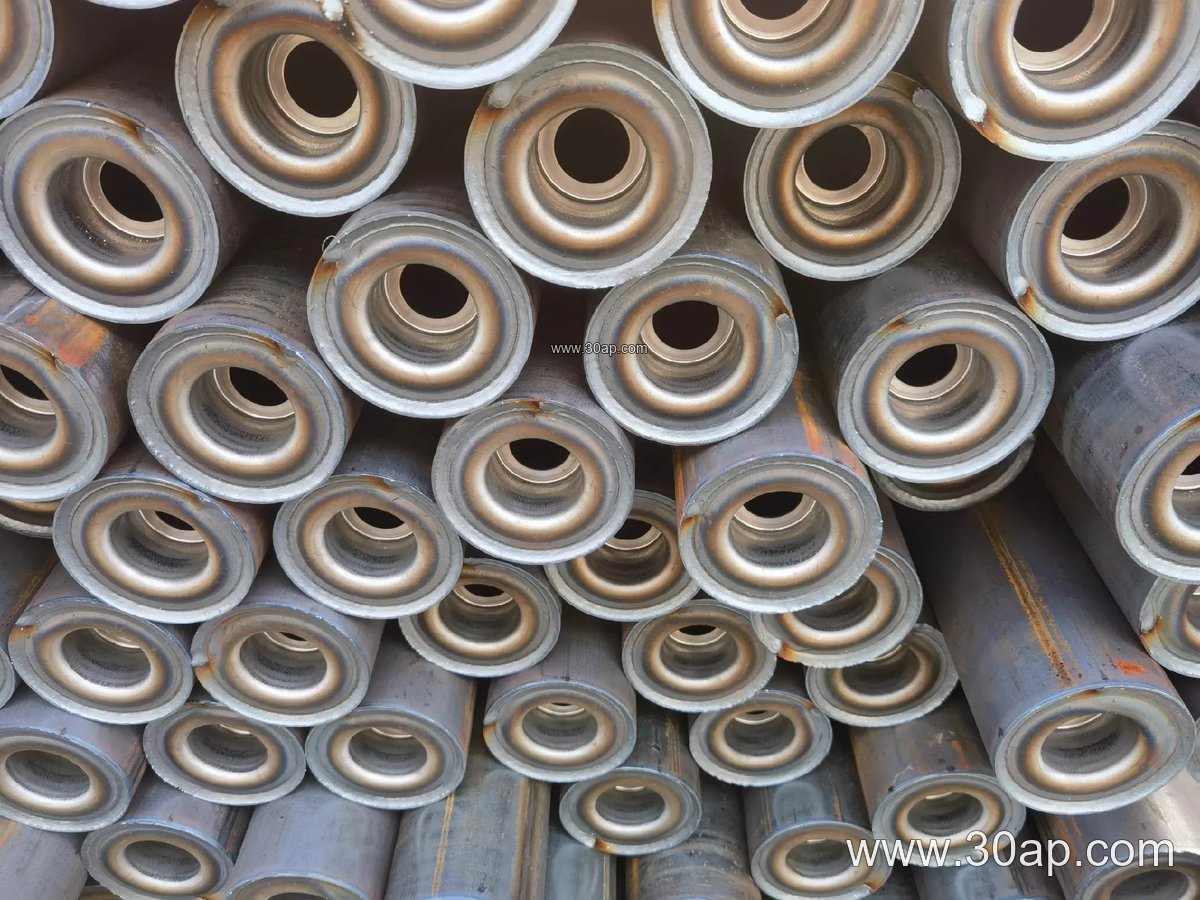
Troughing, Return, and Transition Positions
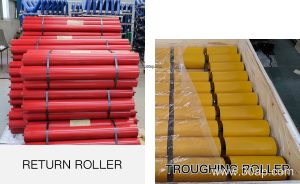
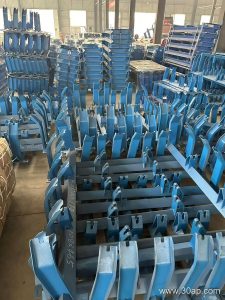
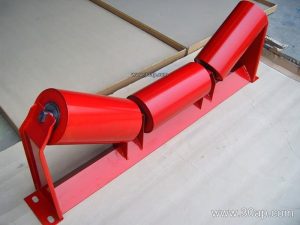
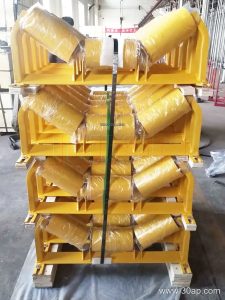
The idler set is chosen by its position on the conveyor. Carrying idlers are usually arranged as a single roll, two rolls, or three rolls in a trough shape. A three-roll troughing set at 20, 30, 35, or 45 degrees holds the bulk material conveyor belt in a deep channel. Transition idlers sit between the tail pulley and the first full troughing set, easing the belt from flat to troughed. Return idlers support the empty belt; flat return rollers, V-type return rollers, and spiral return rollers are common choices. Self-aligning idlers with a slight forward tilt of about 1.5 to 2 degrees help correct belt drift on long underground runs.
Roll length changes with belt width, trough angle, and roll arrangement. The table below shows common examples for three-roll troughing sets; side rolls and center rolls can differ, and final dimensions are set by design.
| Belt width | Common roll length (example) |
|---|---|
| B500 | 200 mm |
| B650 | 250 mm |
| B800 | 315 mm |
| B1000 | 380 mm |
| B1200 | 465 mm |
| B1400 | 530 mm |
| B1600 | 600 mm |
| B1800 | 670 mm |
| B2000 | 750 mm |
Roller diameters commonly range from Ø63 to Ø219, with Ø89, Ø108, Ø127, Ø133, and Ø159 appearing often in mining duties. Larger diameters turn more slowly and suit wider belts and heavier loads. A 1200mm wide conveyor belt may use a different roller diameter than a 650mm belt, but the pairing depends on load, speed, and frame design.
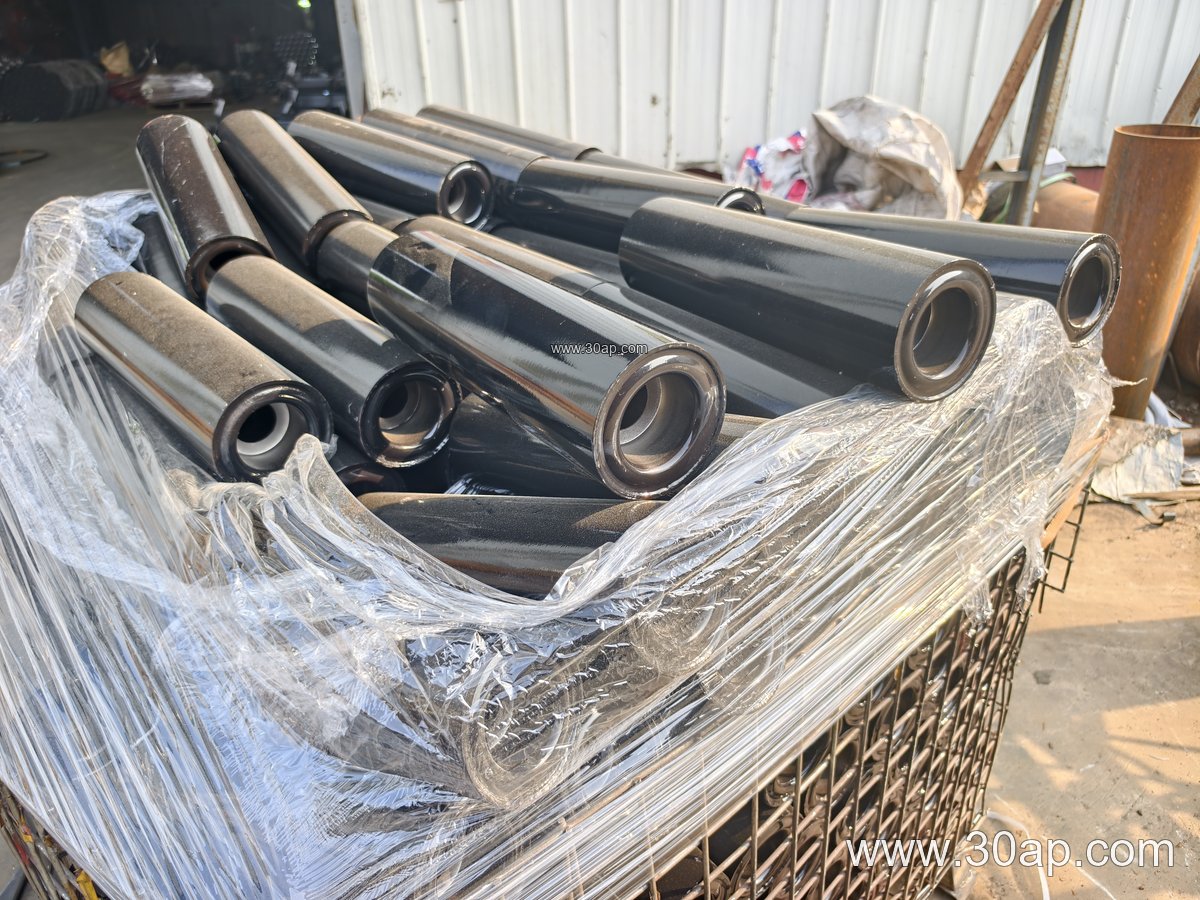
Where These Idlers Are Used
Underground mining conveyor idlers appear in coal drifts, limestone and iron ore tunnels, and tunnel muck lines. A coal mining conveyor belt line usually needs flame retardant and anti-static properties, while a hard rock drift may call for abrasion resistant conveyor belt grades and impact idlers under the loading point. In a cement plant or power plant, similar rollers handle clinker and coal, though the enclosure and dust control differ. The same idler frame may also carry a pipe conveyor belt or a corrugated sidewall belt in a constrained tunnel, but the roller spacing and load rating are recalculated for each case.
What Buyers Should Check
- Confirm the belt width, trough angle, and idler arrangement before ordering.
- Match the roller diameter and shaft to the actual load and frame, not to a rule of thumb.
- Review seal type and bearing size for wet or dusty conditions.
- Check that the roller surface suits the duty: steel for general running, rubber rings for impact, ceramic or nylon where wear or buildup is severe.
- Keep spare rollers, brackets, and conveyor bracket hardware consistent with the installed frame.
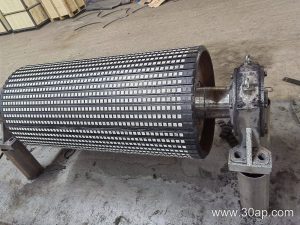
For a reliable underground line, the idler should be treated as part of a system with the belt, the conveyor pulley, and the structure. Buyers who compare roller dimensions, bearing selection, and sealing against the real operating conditions will get longer service from both the idlers and the belt.