What a Conveyor Bracket Really Does
In a belt conveyor, the conveyor bracket is the steel interface between the idler roller and the main frame. It holds each roller at the correct height and angle so the conveyor belt keeps its trough shape under load. Procurement of this component is not a simple matter of ordering a few pieces of angle iron; the bracket must match the belt width, the trough angle, the roller diameter and the frame spacing of the line it serves. A bracket that fits loosely or sits at the wrong angle will let the belt sag, drift or wear unevenly, and no amount of roller quality will compensate.
Buyers in quarry, cement, power plant coal handling and iron ore operations all face the same question: which bracket design suits this conveyor section, and how do we specify it so that the delivered parts bolt straight on?
How the Bracket Is Built
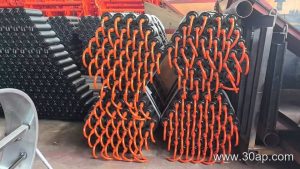
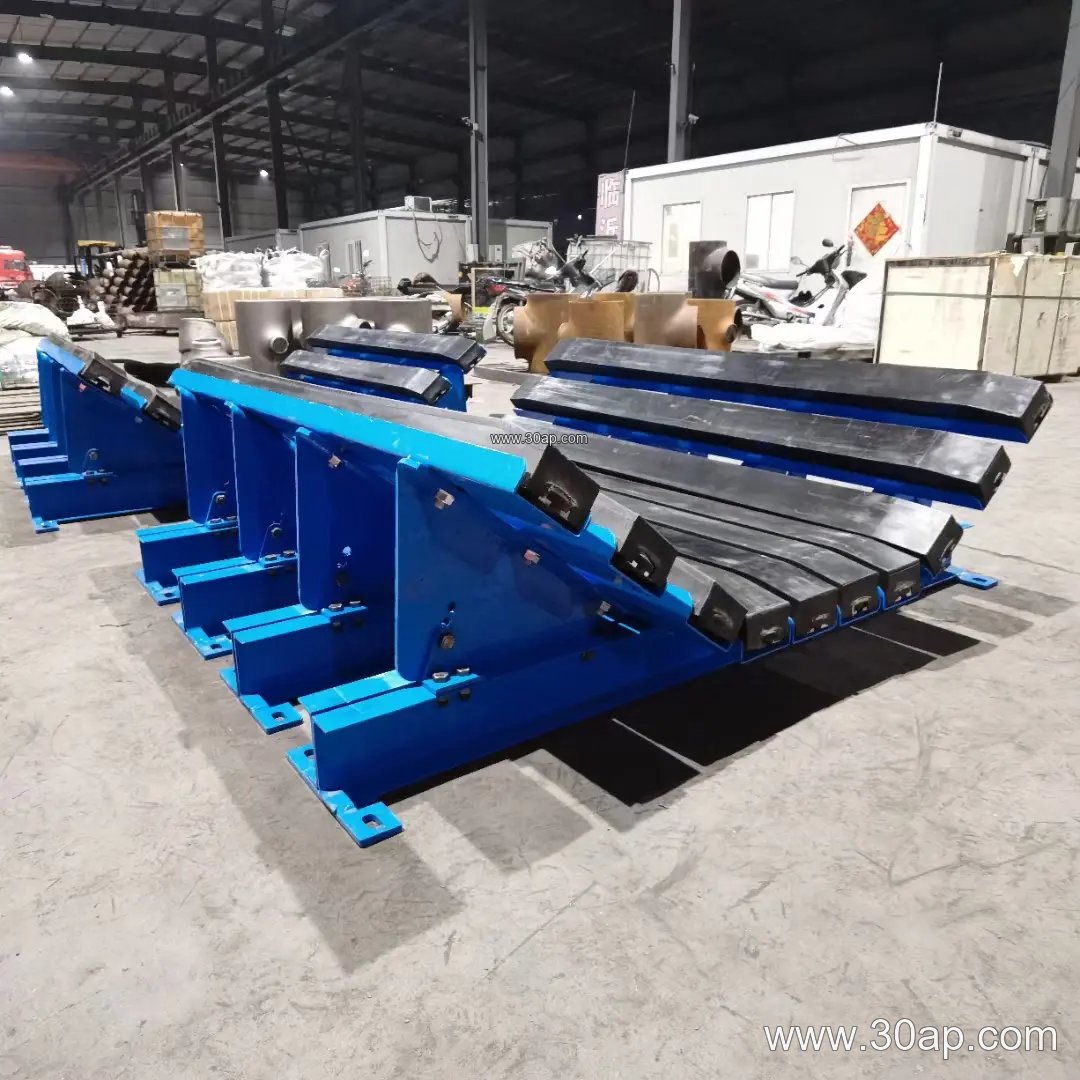
Most conveyor brackets are fabricated from angle steel, channel steel or folded steel plate. The fabrication route matters because it determines stiffness and hole accuracy. A bracket formed from channel steel tends to resist bending better on wide, heavily loaded lines, while folded plate can be lighter where the load is moderate. Welded gussets and stiffeners are common at the corners of troughing brackets, since these points carry the highest moment from the belt and material load.
Mounting holes are usually slotted or elongated to allow field adjustment. The hole pitch and the crossbeam length are not fixed numbers; they change with belt width and trough angle, so they should always be confirmed against the conveyor drawing rather than assumed from a catalogue.
Types and Where They Sit
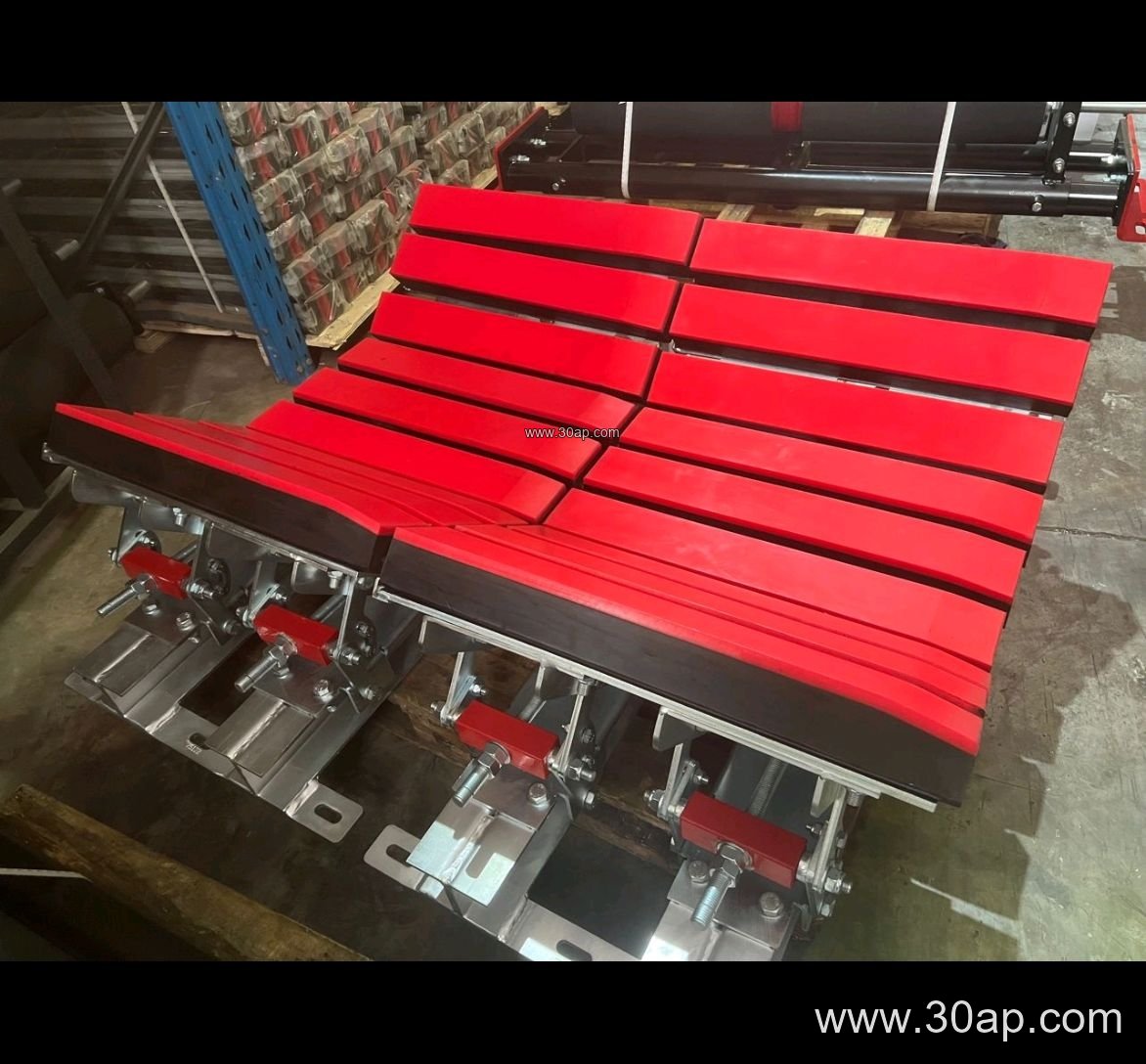
The bracket family is broad, and each subtype has a defined position on the conveyor. Troughing brackets and upper trough brackets carry the loaded side of the belt. Transition brackets sit between the tail pulley and the first full trough station, gradually shaping the belt. Return brackets and flat lower brackets support the empty strand, while V-return brackets help centre the belt on the return run. Impact brackets are placed under loading points to absorb shock, and self-aligning or forward-leaning brackets are used where belt tracking is difficult.
Adjustable brackets allow the trough angle to be set on site, typically between 20, 30, 35 and 45 degrees. Forward-leaning designs commonly use about 1.5 to 2 degrees of lead. These are design options, not universal rules, and the correct choice depends on the material, the belt and the loading conditions.
Matching Bracket to Belt and Roller
Belt width and roller diameter are the two numbers that shape the bracket most directly. Common belt widths run from B500 through B650, B800, B1000, B1200, B1400, B1600, B1800, B2000 and up to B2200. Roller diameters are usually Ø89, Ø108, Ø133, Ø159 or Ø194. A bracket for a B800 line at 35 degrees with Ø108 rollers is a different fabrication from one for a B1200 line at 45 degrees with Ø133 rollers, even though both are troughing brackets.
There is no fixed rule that one belt width can only use one trough angle or one roller diameter. A B1000 conveyor might run at 30 degrees in one plant and 35 degrees in another, and the bracket must be ordered to suit the actual design. What matters is that the bracket, the idler roller and the conveyor belt are specified together.
Procurement Points That Prevent Rework
- Confirm the bracket subtype and its position on the conveyor, not just the belt width.
- Check the trough angle and whether adjustment is required in service.
- Verify roller diameter and the mounting hole spacing against the frame drawing.
- State the material and surface treatment, especially for wet or dusty plants.
- Ask for the crossbeam length and hole pitch as project-specific values.
- Keep spare brackets for transition and impact stations, where failures are most disruptive.
On a coal mining conveyor or a cement plant clinker line, a failed bracket can stop the whole transfer. Buying a few extra units of the same subtype is usually cheaper than an unplanned shutdown.
Working Alongside the Rest of the System
The bracket does not work alone. It carries the idler roller, which in turn supports the conveyor belt. On abrasive duties such as quarry conveyor belts or iron ore conveyor belts, an abrasion resistant conveyor belt reduces wear, but the bracket still has to hold the rollers steady. At transfer points, a impact resistant conveyor belt or a heavy-duty mining conveyor belt may be used, and the bracket beneath must be strong enough for the added load. In underground coal mining, flame retardant conveyor belt and anti-static conveyor belt grades are common, and brackets there should be easy to inspect and replace in confined space.
Where the line uses a pipe conveyor belt or a corrugated sidewall conveyor belt, the bracket layout follows the special frame design of that system, so the drawing should always be the reference. For general bulk material handling, a standard troughing bracket with correctly matched rollers is usually the practical choice.
A Short Checklist Before Ordering
Good conveyor bracket procurement comes down to matching four things: the bracket subtype, the belt width, the trough angle and the roller diameter. Add the frame hole spacing, the material grade and the required quantity, and the order can be produced without guesswork. Whether the plant handles limestone, coal, clinker or aggregate, the principle is the same: specify the bracket as part of the conveyor, not as an isolated piece of steel.