What an Impact Idler Set Does at a Transfer Point
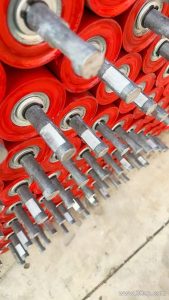
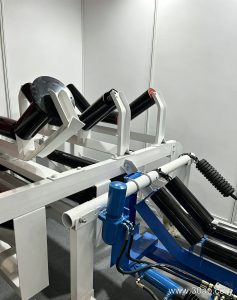
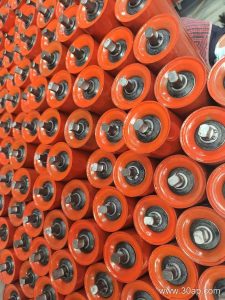
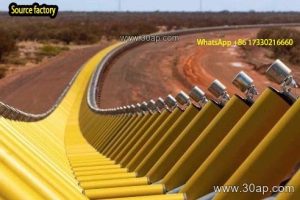
An impact idler set is the group of rollers installed under the conveyor belt exactly where material is loaded. Instead of a plain steel shell, each roller in the set carries rubber rings or a rubber-covered surface that absorbs the energy of falling rock, ore, or aggregate. The set usually sits in a three-roll trough arrangement so the belt keeps its profile while the load lands, and it protects both the belt cover and the frame from repeated hammering. In a quarry, a crusher discharge point, or a power plant coal yard, this is often the first idler group after the chute.
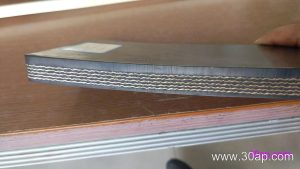
Because the belt takes the hit before the idlers do, pairing the set with a suitably tough belt matters. A heavy-duty mining conveyor belt or an abrasion resistant conveyor belt with a thick top cover will spread the impact over more of the roller surface, which reduces point loading on individual rings.
Construction Details That Affect Service Life
The working parts are simple, but the details decide how long the set lasts. Typical builds include:
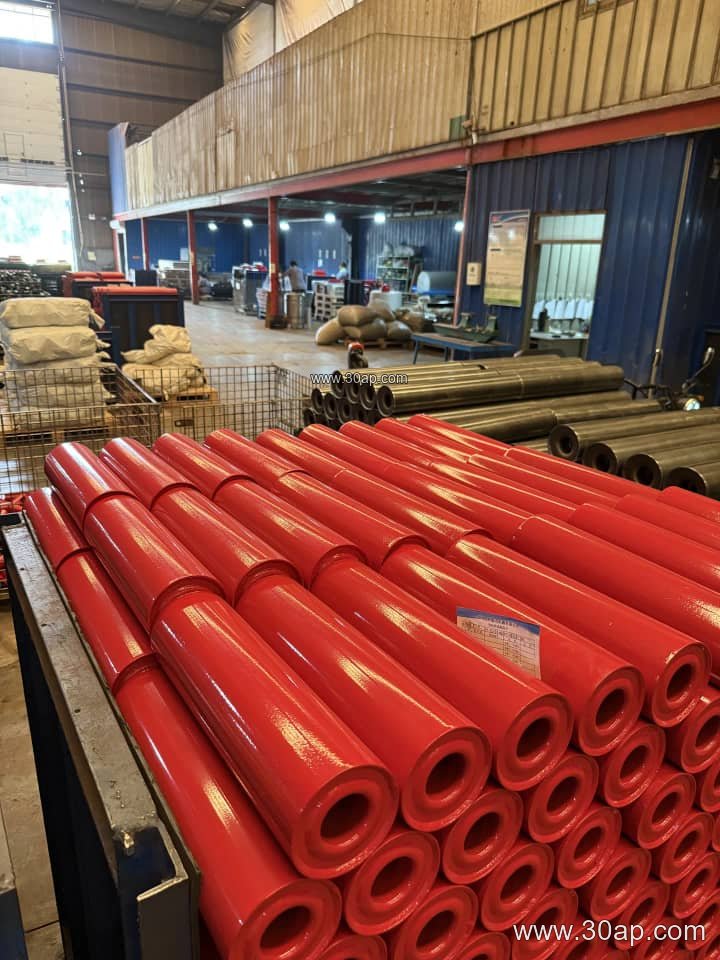
- Roller shell: steel tube with rubber rings slipped over it, or a bonded rubber sleeve; some designs use a resilient disc stack.
- Shaft and bearings: fixed shafts with deep-groove ball bearings, commonly 6205, 6305, 6306 or 6308 depending on roller diameter and load.
- Sealing: labyrinth or contact seals that keep dust and water out, which is critical in crushing and screening plants.
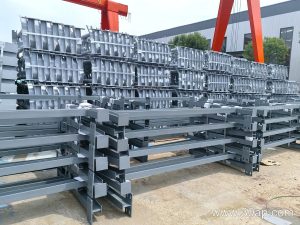
- Frame: a sturdy bracket and cross beam sized for the belt width, since the set must resist vertical shock as well as belt tension.
Roller diameters for impact stations are usually on the larger side of the range, such as Ø108, Ø127, Ø133, Ø159 or Ø178 mm, because a bigger shell gives more room for rubber and a stronger shaft. The conveyor bracket and frame should be matched to the same roller diameter so the belt line stays level with neighbouring trough idlers.
Where Impact Stations Fit on a Conveyor
The usual location is directly beneath the loading chute, with two or three impact sets in series followed by standard trough idlers. In a limestone mine or a sand and gravel line, the set also appears under a belt transfer where one conveyor drops onto another. In cement plants it is common after the primary crusher, and in iron ore or copper ore handling it protects the belt at the head of the receiving conveyor.
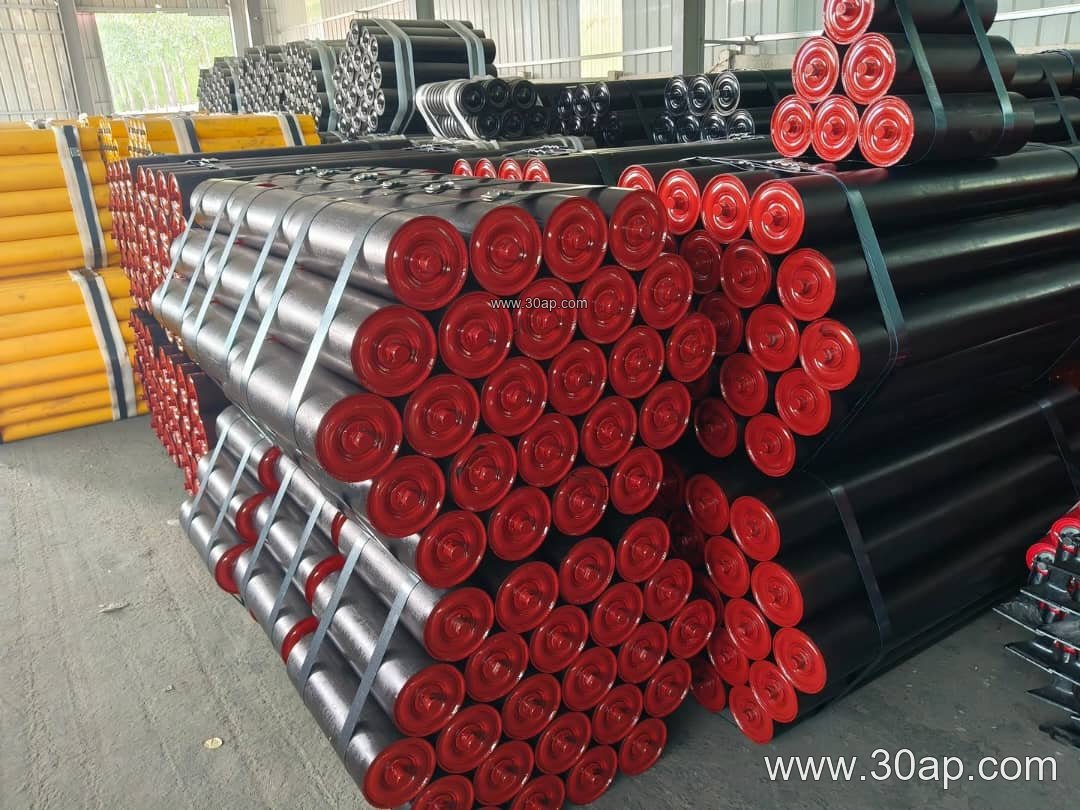
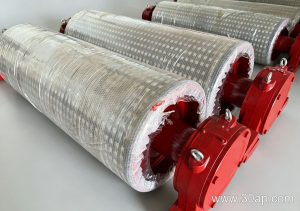
Impact idlers are not a substitute for return idlers, training idlers, or the conveyor pulley at the drive and tail. A drive pulley, a tail pulley, and a bend pulley each do a different job and are not interchangeable with any idler group. The impact set only handles the loading zone.
Common Sizes and Reference Dimensions
The table below shows typical reference values for planning; actual roller length depends on belt width, trough angle, and the idler set design.
| Belt width | Typical three-roll idler length | Common trough angle | Typical roller diameter |
|---|---|---|---|
| B500 | about 200 mm | 20° / 30° / 35° | Ø89 – Ø108 |
| B650 | about 250 mm | 20° / 30° / 35° | Ø89 – Ø127 |
| B800 | about 315 mm | 30° / 35° / 45° | Ø108 – Ø133 |
| B1000 | about 380 mm | 30° / 35° / 45° | Ø108 – Ø159 |
| B1200 | about 465 mm | 30° / 35° / 45° | Ø127 – Ø159 |
| B1400 | about 530 mm | 35° / 45° | Ø133 – Ø178 |
| B1600 | about 600 mm | 35° / 45° | Ø133 – Ø178 |
| B1800 | about 670 mm | 35° / 45° | Ø159 – Ø194 |
Side rollers and centre rollers can differ in length, and a wider belt does not automatically dictate one pulley diameter or one shaft size. Always confirm dimensions with the conveyor design rather than assuming a fixed match.
Belt and Site Considerations for Buyers
At a coal mine or a port terminal handling bulk material, the impact set is often specified together with a flame retardant conveyor belt or an anti-static conveyor belt for safety in dusty areas. In cold climates a cold resistant conveyor belt may be needed so the belt cover does not crack at the loading point, and in food or fertilizer plants a food grade or oil resistant belt may be selected. Where fines and moisture are present, sealed bearings and rubber-ring rollers reduce sticking and drum build-up.
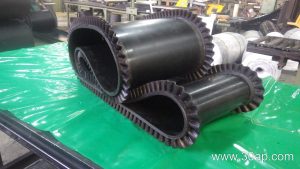
For high-drop chutes, a chevron conveyor belt or a corrugated sidewall belt is sometimes used on the feeding conveyor, and the impact station must be positioned so cleats and sidewalls clear the rollers. This is a layout detail, not a reason to replace the impact set with another idler type.
Selection and Maintenance Notes
Choose the ring hardness and thickness to suit the lump size and drop height; larger lumps and higher drops call for thicker rubber and a larger roller diameter. Check that the frame height matches the adjacent trough idlers so the belt does not step up or down at the loading zone. During service, inspect for worn or missing rings, loose brackets, and seized bearings, and replace damaged rollers as a set where possible to keep the belt supported evenly.
For matching belts and conveyor components, buyers often review options such as EP conveyor belt, steel cord conveyor belt, or multi-ply fabric core conveyor belt alongside the idler specification, since belt stiffness and cover thickness both influence impact performance.