What the Four-Roll Idler Bracket Does
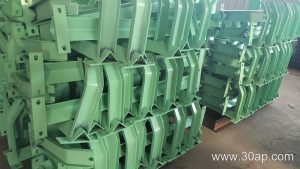
The four-roll idler bracket is the steel support assembly that holds four idler rollers in a fixed arrangement under the carrying run of a conveyor belt. Unlike a three-roll troughing set, the four-roll layout spreads the belt load across a wider arc, which helps keep the belt profile stable when the belt is wide, the material is heavy, or the load is uneven. It is often called a four-roll troughing bracket or four-roller idler frame, and those names describe the same product.
Where does it earn its keep? On a limestone quarry belt that carries run-of-mine rock, the outer rolls take the edge load while the two centre rolls support the spine of the belt. The same principle applies on a cement plant clinker line or a power plant coal conveyor, where a sagging belt can spill material and wear the edges quickly.
How the Bracket Is Built
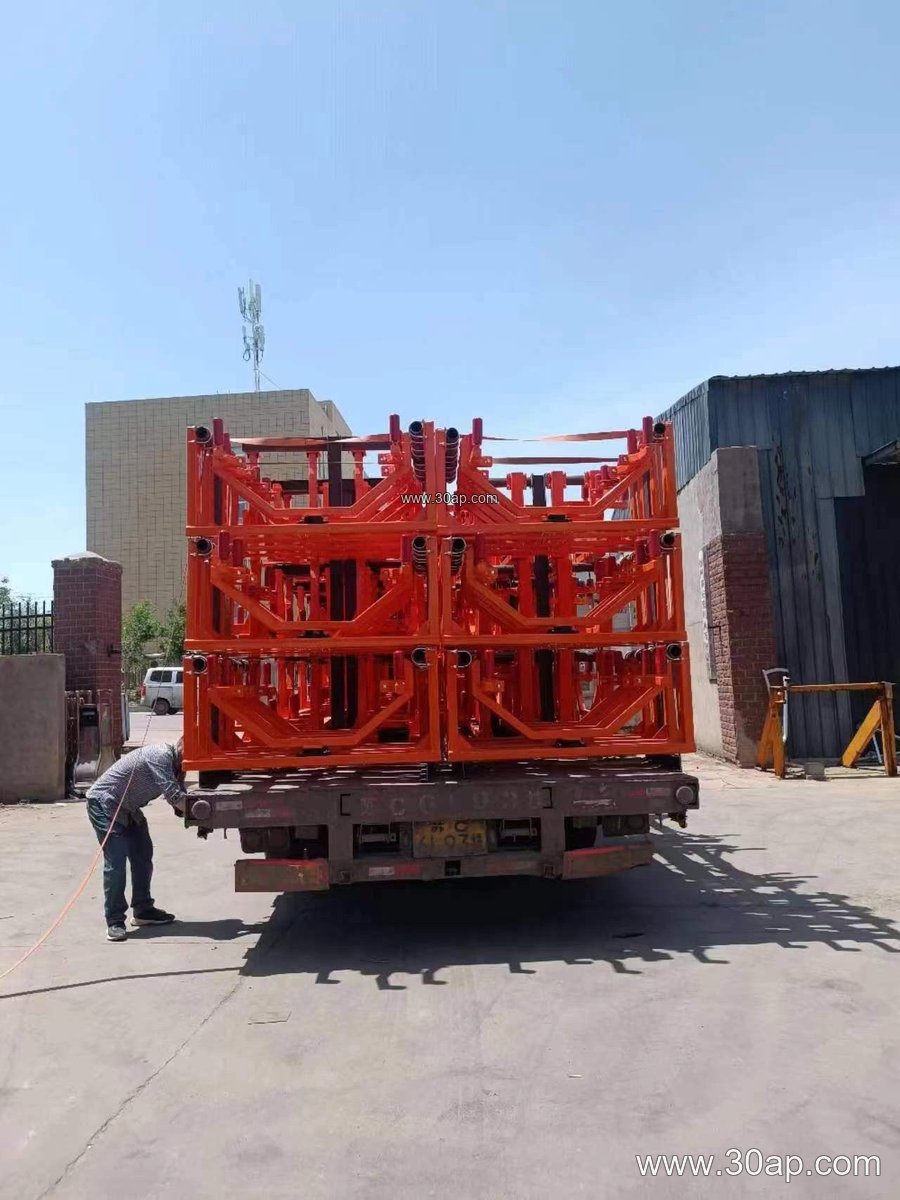
Most four-roll idler brackets are fabricated from angle steel, channel steel, or folded steel plate. The frame has a centre section that carries two short rolls at a shallow angle and two outer arms that carry the longer rolls at a steeper angle. The whole assembly is bolted to the conveyor stringer, so the mounting hole spacing and the crossbeam length are set by the belt width and the trough angle rather than by a single universal number.
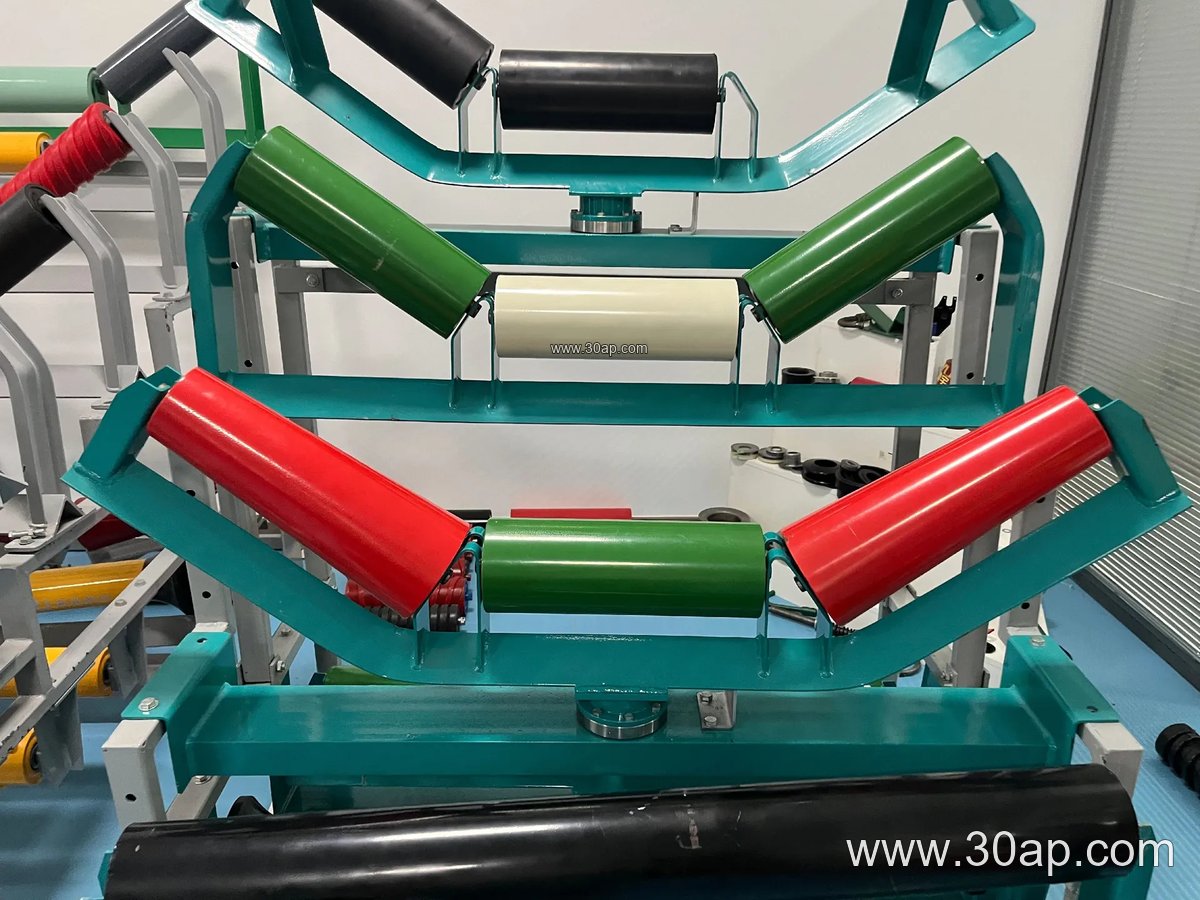
Common materials and finishes include hot-dip galvanised steel for wet or coastal sites and painted carbon steel for indoor coal handling. Roller seats are usually slotted or drilled so that the idler roller shafts sit squarely, and the outer arms may be adjustable to fine-tune the trough profile.
Typical Arrangements and Reference Data
The table below gives reference combinations for a four-roll troughing bracket. These are common ranges, not fixed rules — a B800 belt does not have to use 35 degrees, and a B1200 line may run 30 degrees if the material is fine and the belt is stiff.
| Belt width | Common trough angle | Typical roller diameter | Typical roll count |
|---|---|---|---|
| B500 | 20° / 30° | Ø89 | 4 |
| B650 | 30° / 35° | Ø89 / Ø108 | 4 |
| B800 | 30° / 35° | Ø108 / Ø133 | 4 |
| B1000 | 35° / 45° | Ø108 / Ø133 | 4 |
| B1200 | 35° / 45° | Ø133 / Ø159 | 4 |
| B1400 | 35° / 45° | Ø133 / Ø159 | 4 |
| B1600 | 35° / 45° | Ø159 / Ø194 | 4 |
| B1800–B2200 | 35° / 45° | Ø159 / Ø194 | 4 |
Adjustable versions allow the trough angle to be set between about 20 and 45 degrees on site, which is useful where the belt width is fixed but the material changes seasonally. For a comparison, a three-roll troughing bracket is lighter and cheaper on narrow belts, while the four-roll frame is chosen when a wider, flatter belt profile is wanted.
Where It Fits in the Conveyor Line
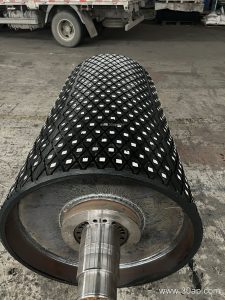
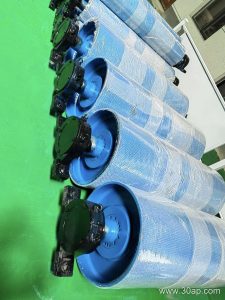
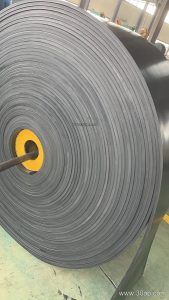
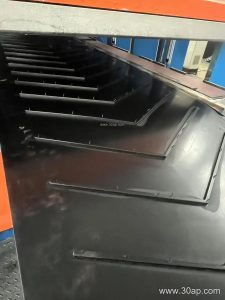
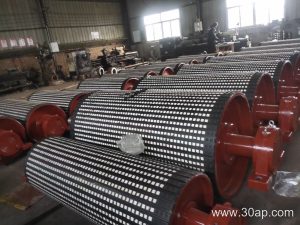
The bracket belongs to the carrying side of the conveyor, not to the drive station. The belt is pulled by the drive pulley, tensioned at the tail pulley, and steered around bend pulleys in the return run — those components are not interchangeable with an idler bracket. The four-roll frame simply holds the belt in a stable trough between those stations. On a coal mining conveyor, the brackets are often paired with a flame retardant conveyor belt and a heavy-duty idler roller set, and on an iron ore terminal they may sit under a steel cord conveyor belt where impact and abrasion are severe.
Buyer Checklist
- Belt width and trough angle — confirm B650, B1000, or B1400 and whether 30° or 45° is required; the bracket geometry follows both.
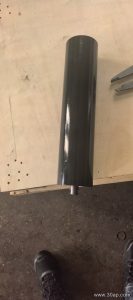
- Roller diameter and shaft — match the bracket seats to Ø108, Ø133, or Ø159 rollers and to the actual shaft, not to a guessed value.
- Mounting hole spacing — measure the stringer bolt pattern; crossbeam length varies with belt width.
- Material and finish — galvanised or painted, and whether the site is a wet washing plant or a dry aggregate yard.
- Adjustability — fixed or adjustable arms, depending on whether the trough angle must change after installation.
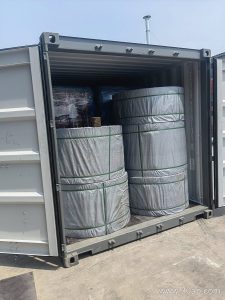
For matching components, the bracket is normally ordered together with the conveyor belt, the idler roller set, and the conveyor pulley schedule so that the whole support line is consistent. A well-matched four-roll idler bracket keeps the belt tracking straight, reduces edge wear, and protects the belt splice from repeated flexing at the trough edges.