What a Conveyor Belt Self-Aligning Idler Does
A conveyor belt self-aligning idler is a training idler designed to keep the belt centered on the conveyor frame. When a belt begins to drift toward one side, the idler responds by pivoting slightly, which steers the belt back toward the middle of the structure. This correction happens continuously and automatically, reducing reliance on manual adjustment and helping protect the belt edges, the conveyor pulley surfaces and the supporting structure.
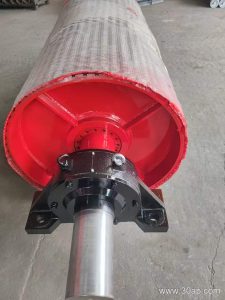
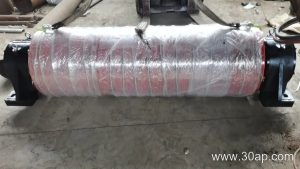
In training systems the self-aligning idler is often called a training idler or aligning roller. It is not a drive pulley, tail pulley or bend pulley, and it does not replace those components; it works alongside them as part of the belt tracking arrangement.
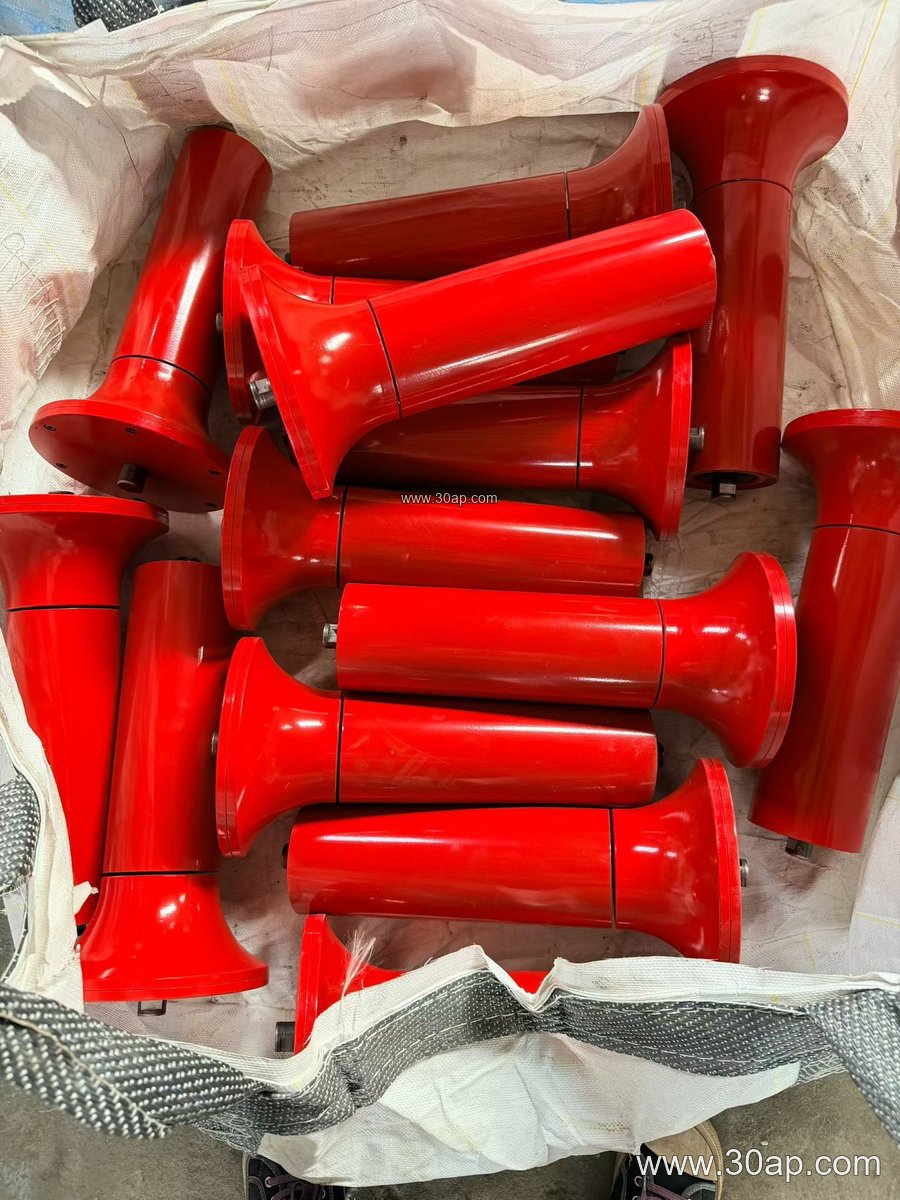
How the Idler Is Built
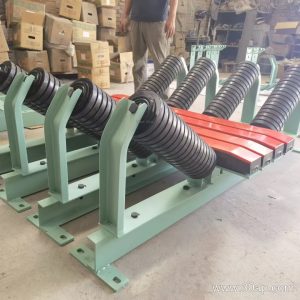
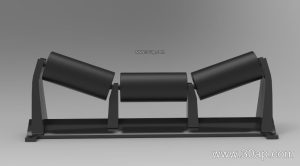
A typical self-aligning idler uses a set of rollers mounted in a pivoting frame. The frame is connected to a vertical shaft or pivot that allows a small rotation when the belt pushes against a side roller. Friction or conical end rollers can provide the steering force. Common designs include friction self-aligning idlers, conical self-aligning idlers and return-side V-type self-aligning idlers.
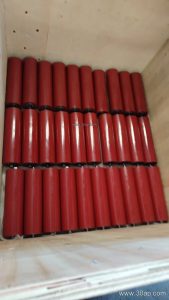
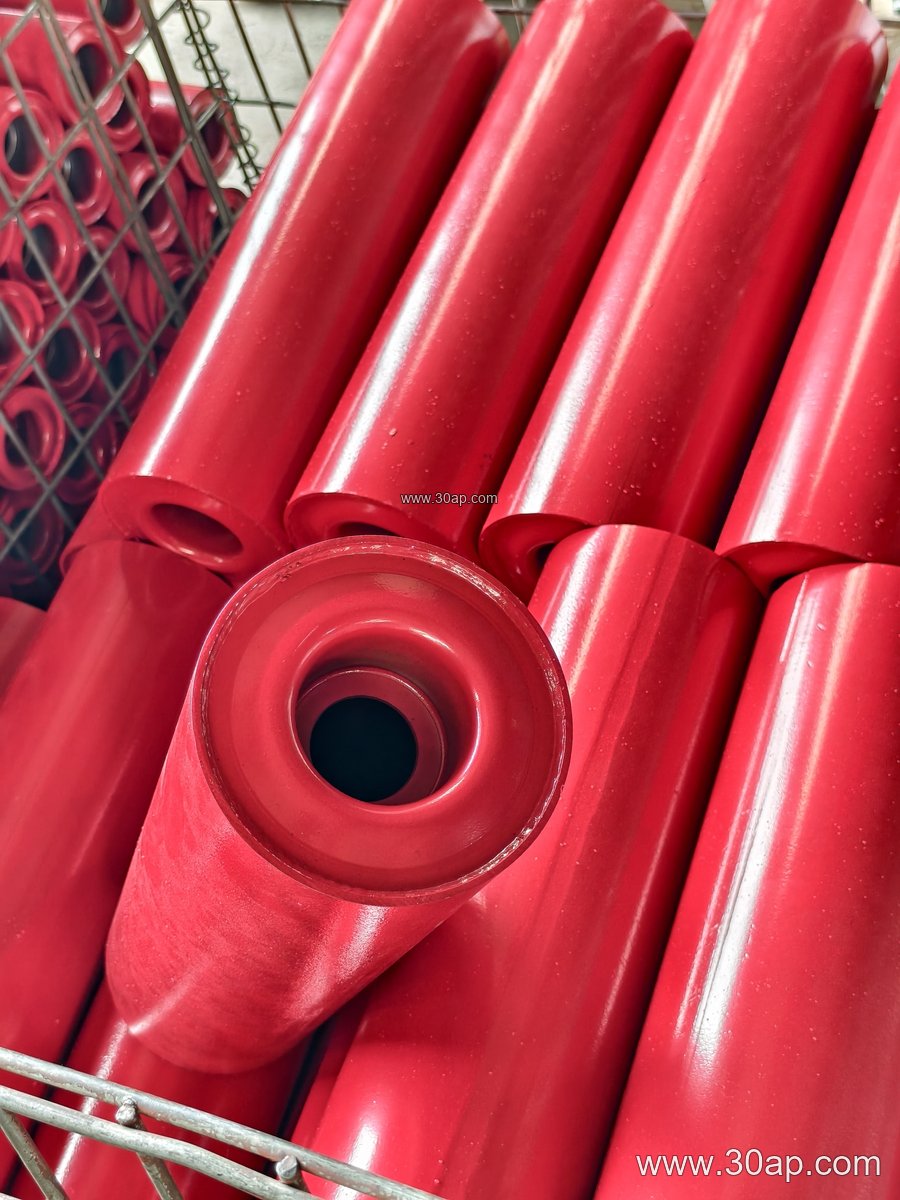
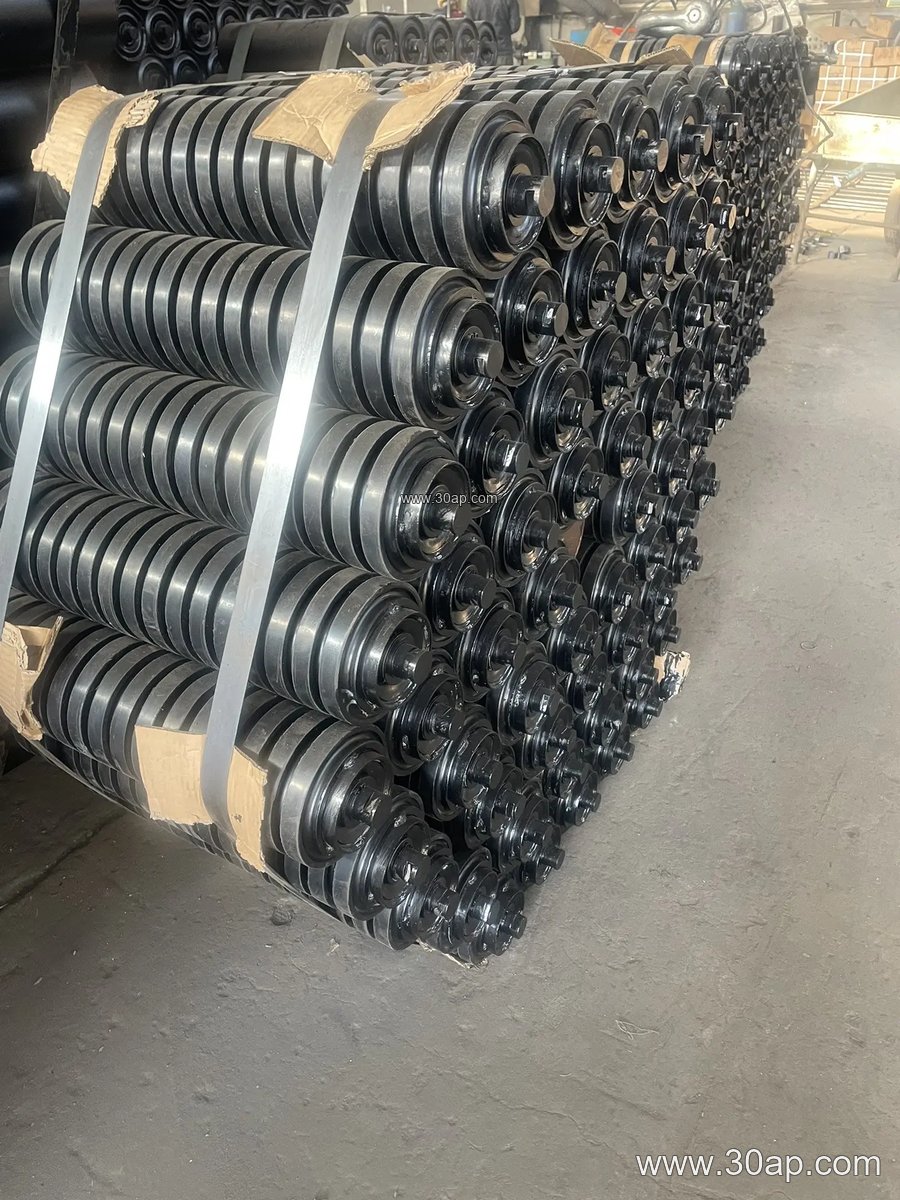
Roll diameters follow the same general range as other carrying idlers, with common sizes such as Ø89, Ø108, Ø127, Ø133 and Ø159 mm. Bearing selections such as 6204, 6205, 6305 or 6308 are matched to load and speed requirements rather than to belt width alone. Roll surfaces may be steel tube, nylon, ceramic or rubber rings, depending on whether abrasion, build-up or belt protection is the main concern.
Where It Fits on the Conveyor
Self-aligning idlers are usually installed on the carrying side at intervals along a long conveyor, and on the return side where the belt is prone to wander. They are common in quarry and aggregate lines, cement plants, power plant coal handling, iron ore and copper ore operations, and port loading systems. A conveyor belt moving crushed rock, clinker or bulk material can shift sideways after loading, so a training idler placed after the loading point is often useful.
They work with the conveyor belt, idler roller groups, conveyor pulley and conveyor bracket assembly. On a troughed conveyor, the self-aligning set may use a three-roll trough arrangement with a 20, 30, 35 or 45 degree trough angle. A slight forward tilt of about 1.5 to 2 degrees is sometimes used in training idlers to encourage centering.
Common Reference Dimensions
The following values are examples for general reference, not fixed matches. Roll length changes with belt width, trough angle and roll arrangement, and side rolls may differ from the center roll.
| Belt width | Typical three-roll idler roll length | Common roll diameter examples |
|---|---|---|
| B500 | about 200 mm | Ø89, Ø108 |
| B650 | about 250 mm | Ø89, Ø108 |
| B800 | about 315 mm | Ø108, Ø127 |
| B1000 | about 380 mm | Ø108, Ø133 |
| B1200 | about 465 mm | Ø127, Ø133 |
| B1400 | about 530 mm | Ø133, Ø159 |
| B1600 | about 600 mm | Ø133, Ø159 |
| B1800 | about 670 mm | Ø159, Ø178 |
Belt widths from B400 up to B2400 are used across different industries. A wide conveyor belt such as a 1200 mm or 1500 mm width needs a matching frame and roll length, but no single belt width is limited to one pulley diameter or one bearing size.
Selection and Maintenance Notes
- Check whether the belt drifts mainly on the carrying side or the return side before choosing a training idler position.
- Match the idler to the belt construction, for example an EP conveyor belt, NN conveyor belt, steel cord conveyor belt or multi-ply fabric core belt, and to the material being handled.
- For dusty or wet conditions, specify sealed bearings and a suitable roll surface; rubber rings can help on impact-prone sections.
- Inspect pivot movement and roller rotation regularly, because a seized roller or stiff pivot reduces the self-aligning effect.
- Keep the belt, idler roller and conveyor bracket aligned during installation; a training idler cannot correct a badly misaligned frame.
For abrasive bulk handling, an abrasion resistant conveyor belt and heavy-duty idlers are often paired, while heat resistant or flame retardant belt grades may be needed in cement, steel or coal mining service. Buyers should confirm roll diameter, shaft size, bearing type, trough angle and mounting dimensions with the supplier rather than assuming a standard combination.