What a Large Drive Pulley Does
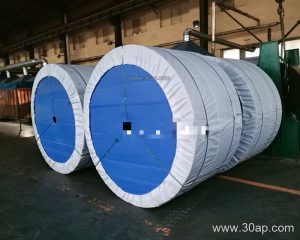
A large drive pulley is the head-end component that transmits motor torque to the conveyor belt through friction between the pulley shell and the belt cover. In heavy-duty circuits such as a copper mine or a limestone quarry, this pulley must handle high tension, continuous loading, and abrasive dust while keeping belt tracking stable. Unlike a tail pulley or a bend pulley, which primarily redirect or tension the belt, the drive pulley is the power input point. Its diameter and lagging are selected together with the belt specification—for example, a steel cord conveyor belt or a high abrasion resistant conveyor belt—because the contact area and friction coefficient directly affect start-up reliability.
Construction and Surface Options
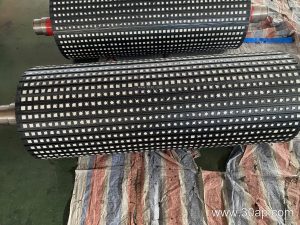
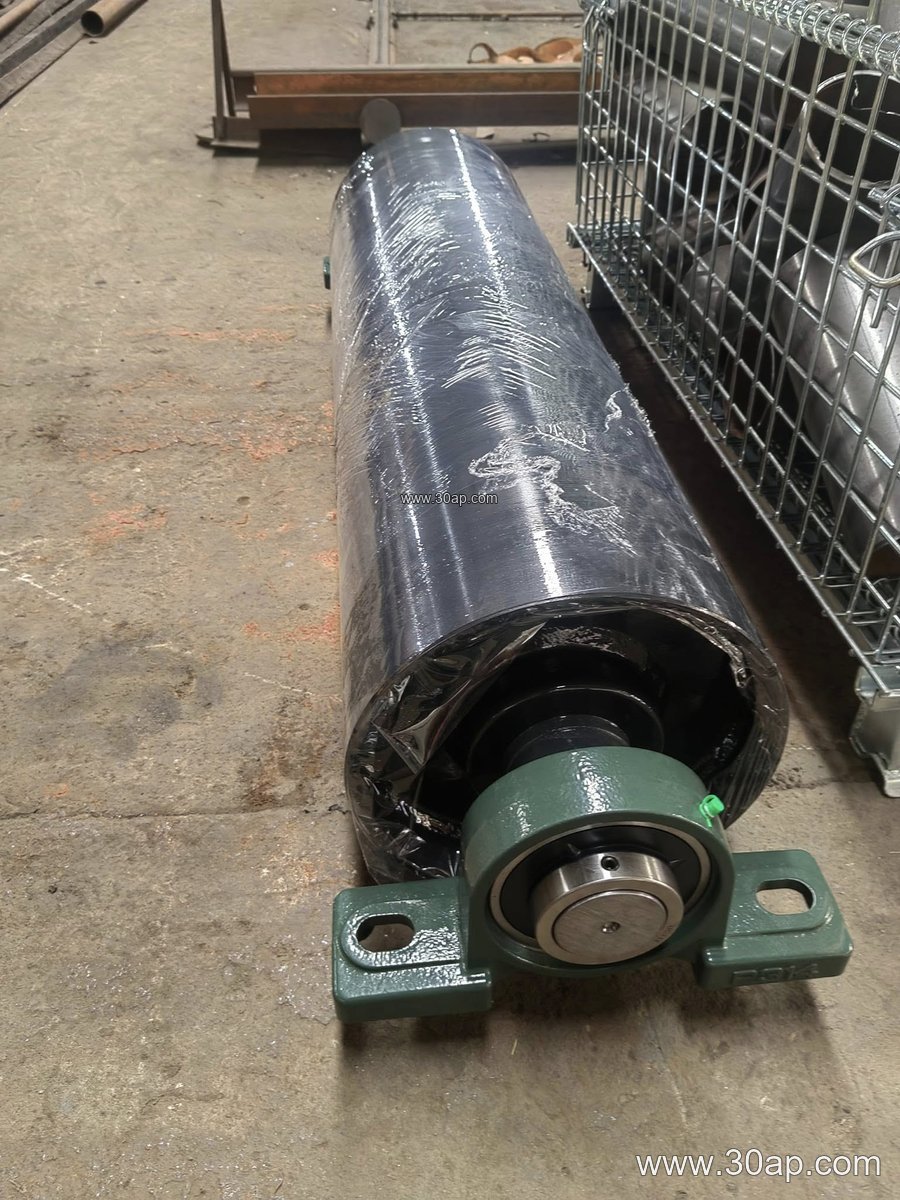
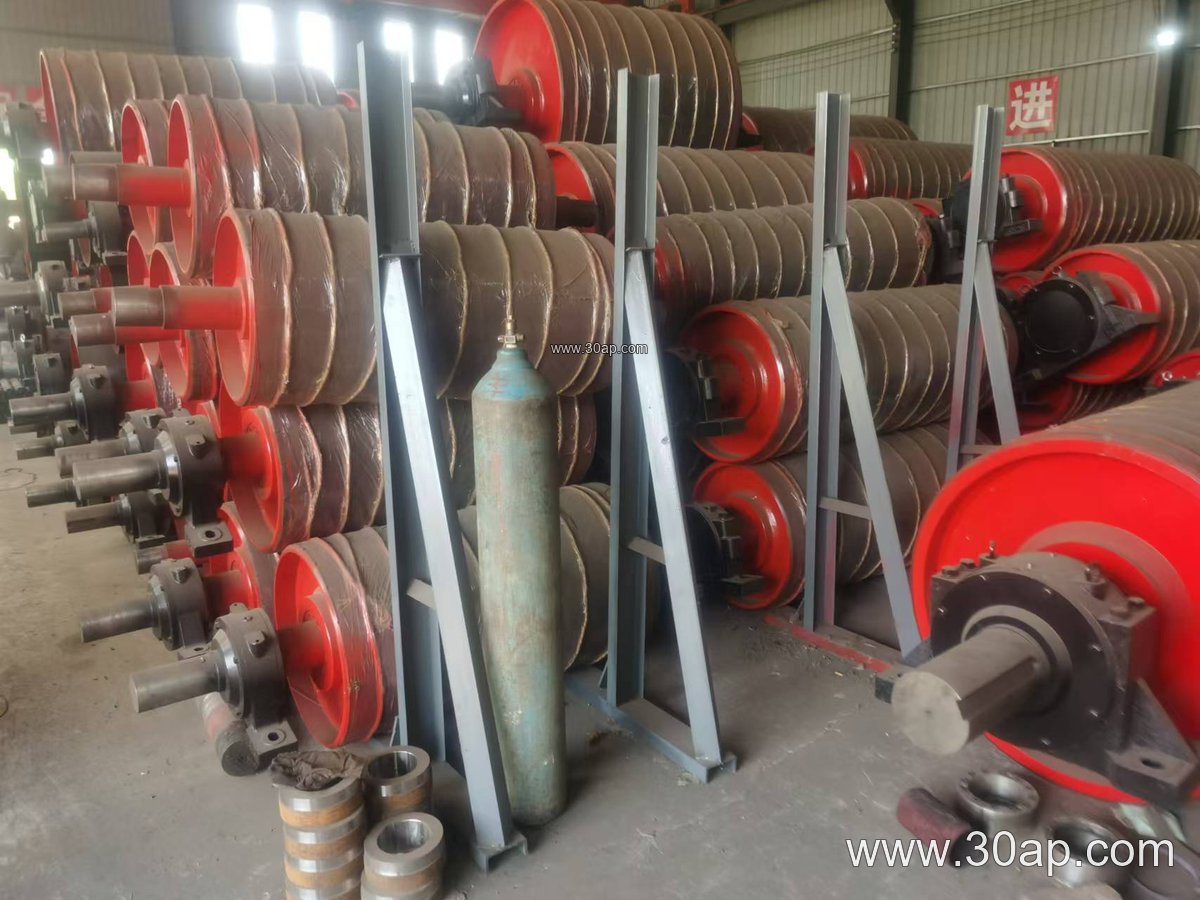
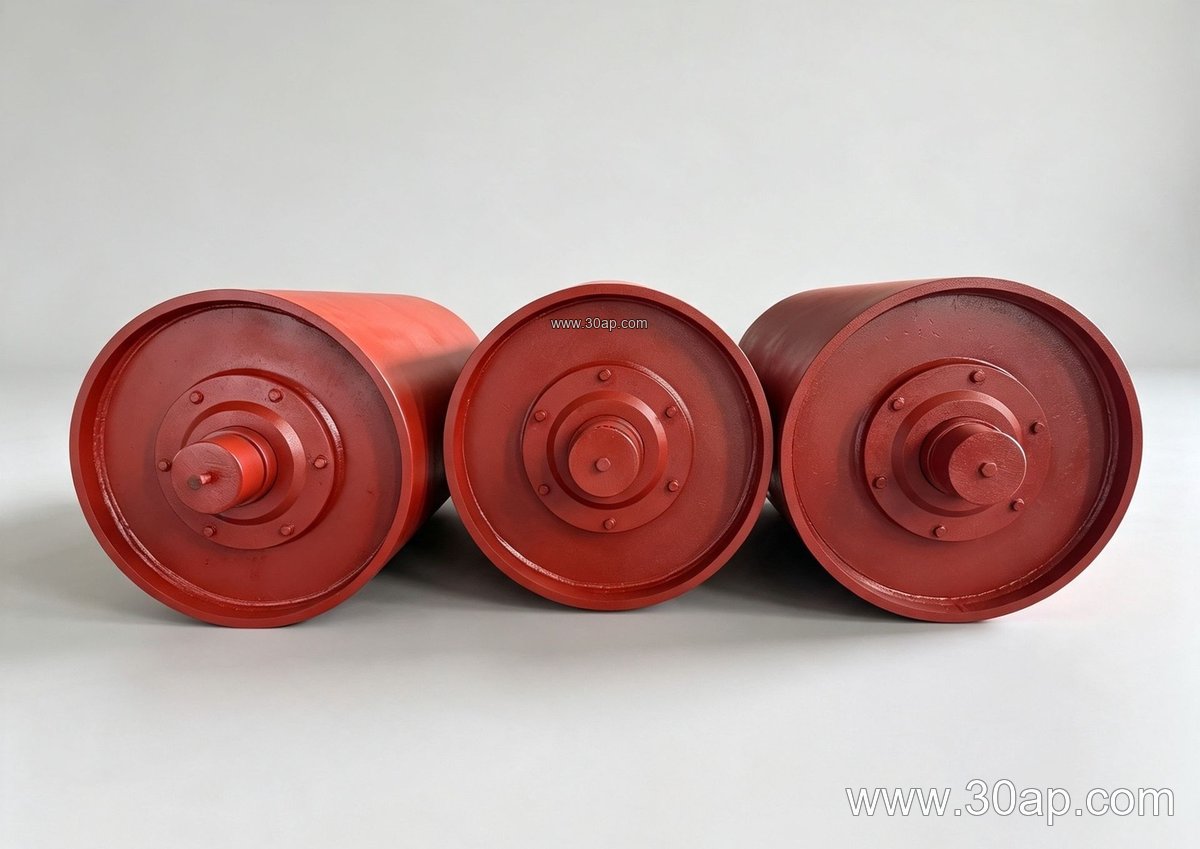
The shell is typically fabricated from rolled steel plate with welded end discs and a machined hub. Common diameters for large drive pulleys range from Ø800 to Ø1600, though smaller or larger units exist depending on belt width and torque demand. Shaft diameters are determined by torque and load, not by belt width alone; typical shaft sizes include Ø120, Ø140, Ø160, and Ø180 for heavy service. Surface treatment matters: plain finish, hot-vulcanized rubber lagging, cold-bonded rubber, diamond grooving, herringbone grooving, or ceramic lagging. Lagging thickness of 10, 12, 15, or 20 mm is common. For a 1200mm wide conveyor belt, a pulley face width around 1400 mm is typical, but the actual combination of B1200 × Ø1000 or B1400 × Ø800 should be confirmed by the conveyor designer.
Where It Fits in the System
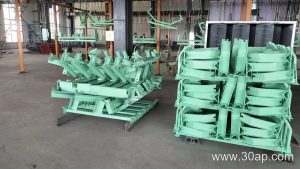
Large drive pulleys appear in primary crushing circuits, overland conveyors, and ship loading systems at ports. In a coal mining conveyor or a power plant coal handling line, they work with flame retardant conveyor belt to move bulk material continuously. In aggregate operations, they pair with a heavy-duty mining conveyor belt and idler roller sets to maintain throughput. The pulley bracket and conveyor bracket must be aligned to avoid edge loading. A common mistake is to treat a drive pulley as interchangeable with a bend pulley; they are not. The drive pulley needs sufficient wrap angle and lagging friction, while a bend pulley mainly changes belt direction with minimal torque transfer.
Buyer Checklist
- Confirm belt width, belt type (such as EP conveyor belt or steel cord conveyor belt), and maximum operating tension.
- Specify pulley diameter and face width as a pair—do not assume one belt width matches only one diameter.
- Choose lagging based on material: ceramic or diamond lagging for wet, abrasive ore; rubber lagging for general bulk handling.
- Verify shaft diameter from torque calculation, not from a catalog table alone.
- Check balance grade and runout tolerance for high-speed or reversible conveyors.
- Plan for maintenance access to lagging and bearings, especially in underground mining conveyor installations.
For reliable performance, match the large drive pulley to the actual belt construction and loading profile. A pulley sized for a 650mm conveyor belt will not suit a 1800mm wide conveyor belt, and a pulley lagged for a food grade conveyor belt is not appropriate for iron ore conveyor service. Work with the conveyor designer to confirm dimensions, and keep spare lagging sheets on hand for scheduled shutdowns.