What a Conveyor Belt Carrying Idler Does on the Line
A conveyor belt carrying idler is the roller assembly that supports the loaded side of the belt, holding it in a stable trough so bulk material can travel without spilling. On a quarry conveyor or a power plant coal handling line, these rollers carry most of the weight of both the belt and the material, which is why their bearings, shell thickness and alignment matter so much. They are often called troughing idlers or upper idlers, and the terms refer to the same component position on the conveyor.
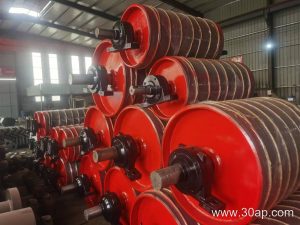
A carrying idler is not a drive pulley, a tail pulley or a bend pulley. Those pulleys transmit motion or change belt direction; the carrying idler only supports and shapes the belt path. Confusing the two during procurement leads to wrong drawings and mismatched brackets, so the distinction is worth keeping clear.
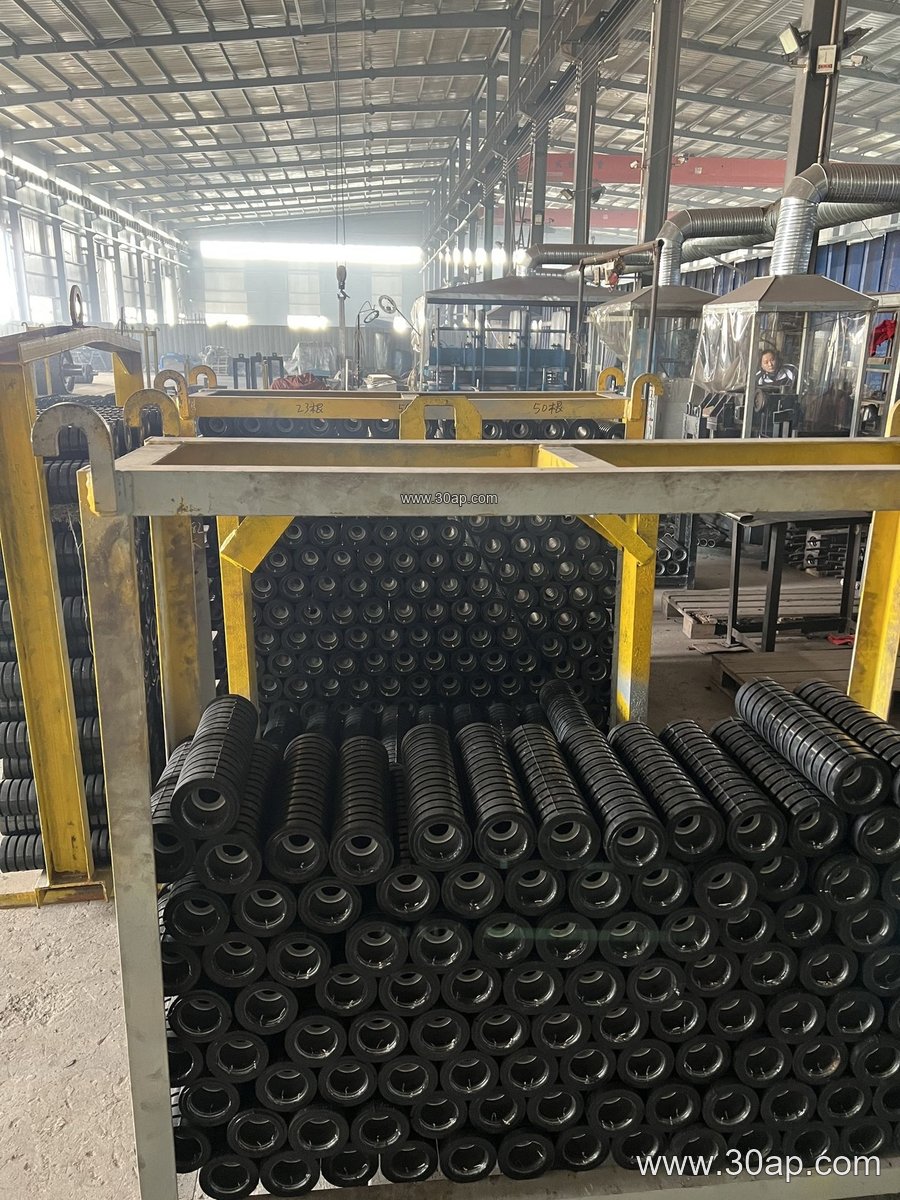
Construction and Common Configurations
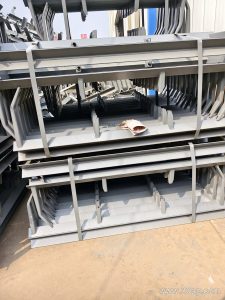
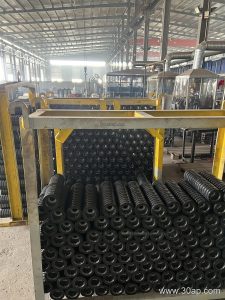
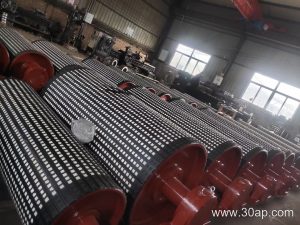
The roller body is usually a steel tube fitted with bearing housings at both ends, sealed against dust and moisture. Shell surfaces can be plain steel for general duty, nylon for lower friction, ceramic for high abrasion, or rubber rings where impact and noise need softening. A typical carrying idler set sits in a three-roll trough frame, with two side rollers angled upward and one center roller flat, all mounted on a conveyor bracket fixed to the stringer.
Trough angle is a key design choice. Common values are 20, 30, 35 and 45 degrees. A deeper trough holds more material and reduces spillage on a fast belt, but it also increases belt edge stress and running resistance. Transition idlers near the head and tail use shallower angles to ease the belt gradually into the trough.
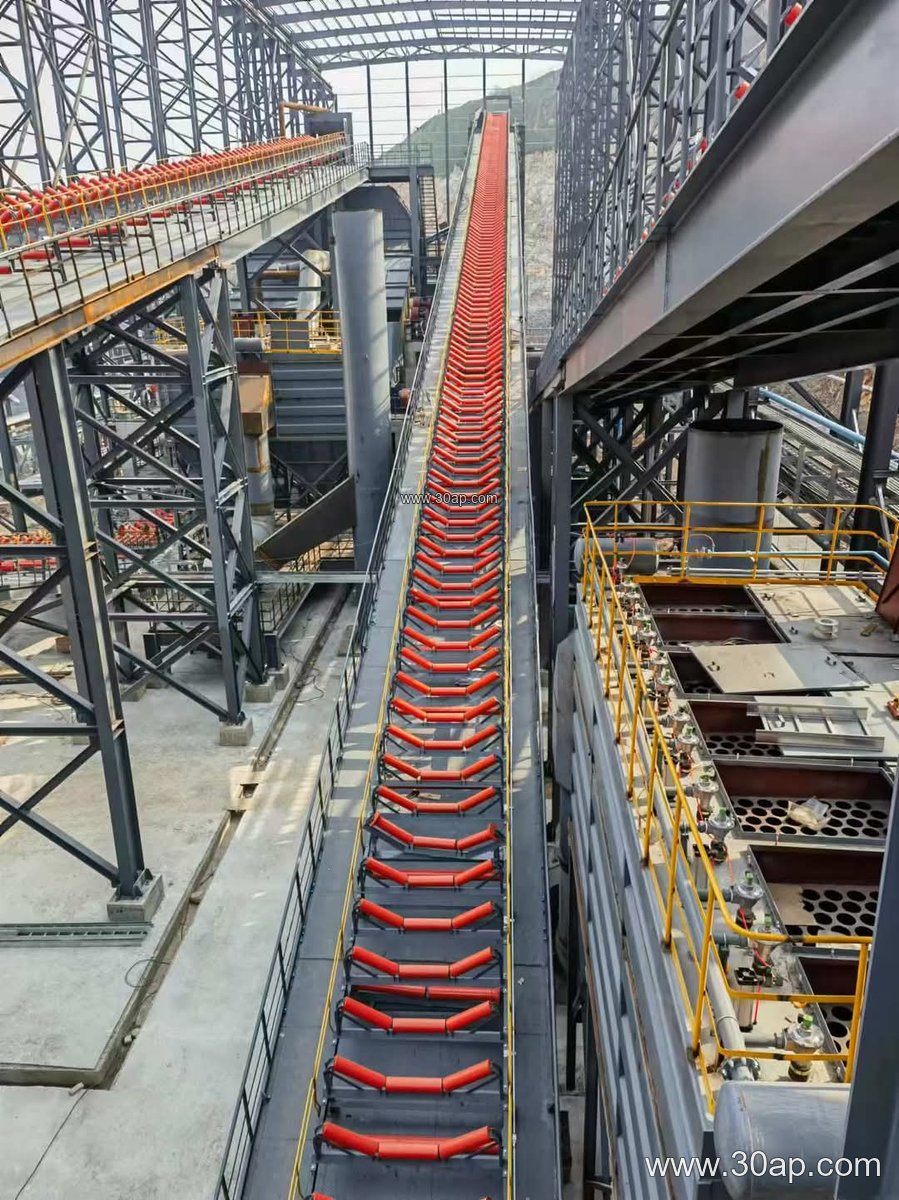
Dimensions Buyers Usually Ask About
Roller diameter and belt width are selected together with belt speed, load and idler spacing. The table below shows common reference values; final sizes are confirmed by the conveyor design, not by a single rule.
| Item | Common Reference Values |
|---|---|
| Roller diameter | Ø63, Ø76, Ø89, Ø102, Ø108, Ø127, Ø133, Ø159, Ø178, Ø194, Ø219 mm |
| Belt width | B400, B500, B650, B800, B1000, B1200, B1400, B1600, B1800, B2000, B2200, B2400 |
| Trough angle | 20°, 30°, 35°, 45°; forward tilt often about 1.5° to 2° for training |
| Shell surface | Steel tube, nylon, ceramic, rubber ring |
| Bearing | 6204, 6205, 6305, 6306, 6308, 6310 |
Roller length follows belt width, trough angle and frame type. For a three-roll trough set, common center roller lengths are roughly 200 mm at B500, 250 mm at B650, 315 mm at B800, 380 mm at B1000, 465 mm at B1200, 530 mm at B1400, 600 mm at B1600, 670 mm at B1800 and 750 mm at B2000. Side rollers may differ, and these figures are examples rather than fixed pairings. A given belt width does not lock in one pulley diameter or one shaft diameter; those come from the full conveyor calculation.
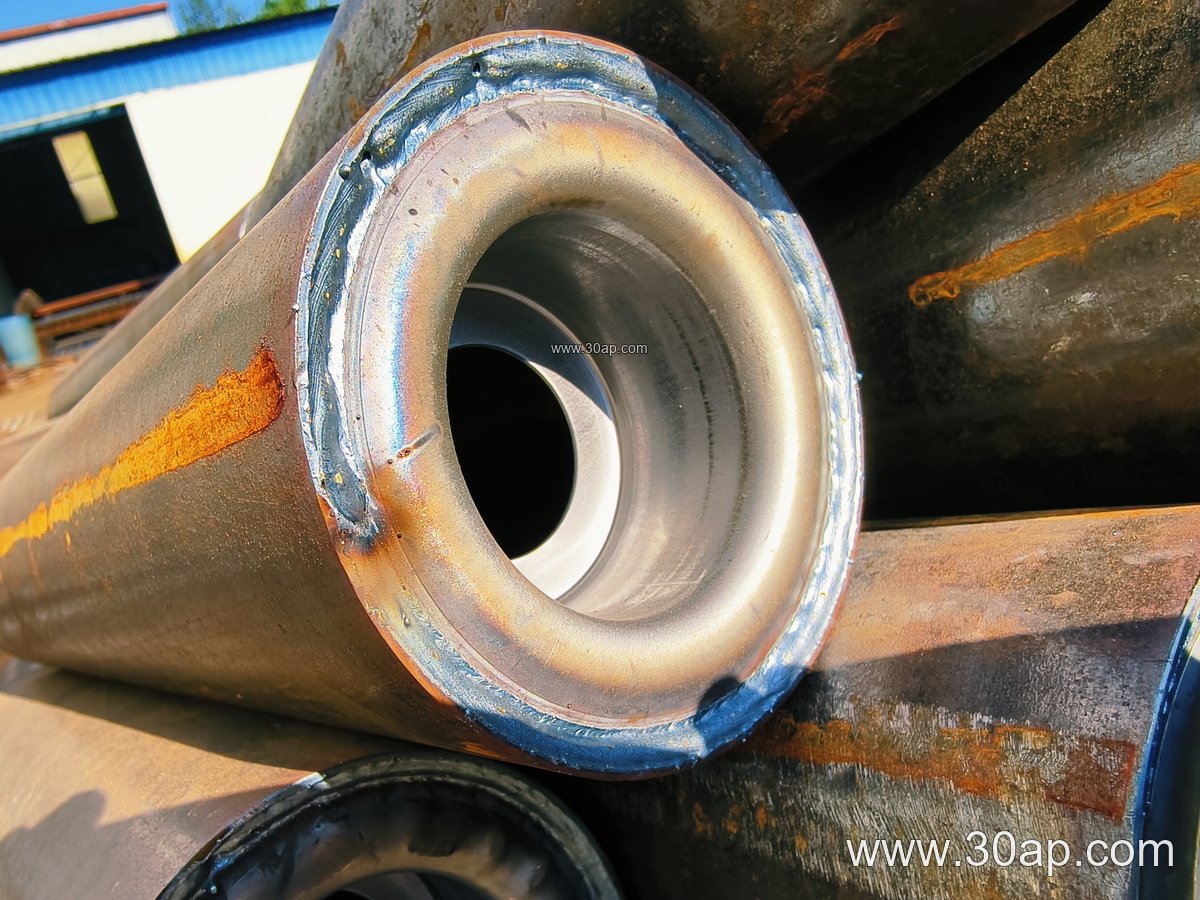
Where Carrying Idlers Are Used
These idlers appear wherever a troughed belt moves bulk material. In a limestone quarry or an aggregate crushing and screening line, they carry crushed rock under high dust and impact. In a cement plant they support clinker and raw meal belts, and in a coal-fired power plant they keep the coal feed moving through long transfer routes. Belt construction varies with the duty: an abrasion resistant conveyor belt for sharp stone, a flame retardant conveyor belt in coal handling, a heat resistant conveyor belt near hot material, or a steel cord conveyor belt where tension and distance are large. Our carrying idler range at www.example.com/tuogun pairs with these belt types across mining, cement and port projects.
Other positions use different hardware. Return idlers support the empty belt underneath, and impact idlers with rubber rings absorb load at transfer points. Those are separate components and should not be ordered as substitutes for the carrying set.
Selection and Maintenance Notes
- Match roller diameter and bearing class to belt speed and load; larger diameters suit heavier duty and higher speeds.
- Confirm frame dimensions, bracket hole spacing and roller length against the actual conveyor drawing before ordering.
- Check seal quality on dusty sites such as a sand and gravel plant; dust ingress is a common cause of bearing failure.
- Inspect for seized rollers, worn shells and misalignment; a sticking idler can damage the belt cover quickly.
- Keep spare sets for critical lines, and align replacement idlers to the same trough angle as the original frame.
A well-chosen carrying idler protects both the belt and the material flow, while a poorly matched one quietly raises power draw and downtime. Review the conveyor belt, idler roller and conveyor bracket data together before committing to a purchase. For related belt and roller references, see www.example.com/shushudai and www.example.com/guntong.