What a Rotating Self-Aligning Idler Does
A rotating self-aligning idler is a training idler mounted on a pivot or swivel base so the roller frame can turn slightly in plan view. When a conveyor belt begins to drift toward one side, the angled rollers of the idler steer the belt back toward the center line. Because the whole assembly rotates, correction happens gradually and continuously rather than through a fixed guide. In a quarry or a coal handling system, this small steering action keeps a loaded belt from rubbing the structure and spilling material.
The same product is also called a self-tracking idler or a swivel training idler. These names describe the same rotating, self-correcting roller set; they are not a different item. A drive pulley, tail pulley or bend pulley is a separate component and should never be treated as a substitute for this idler.
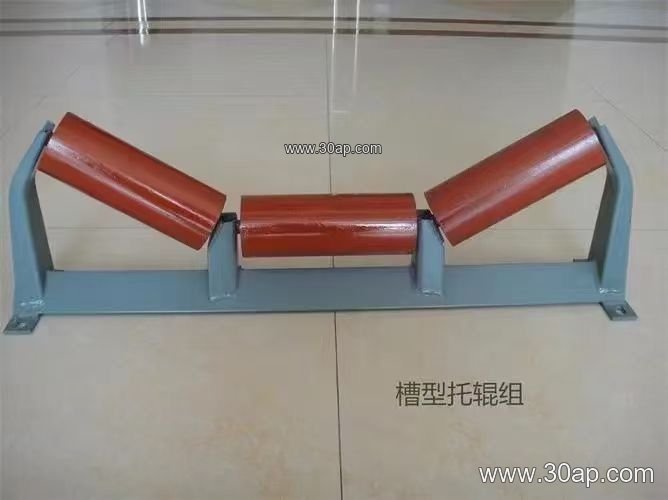
Construction and Working Principle
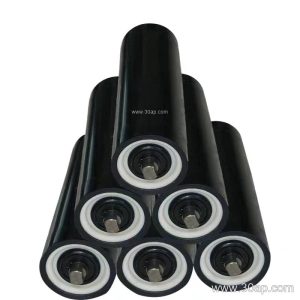
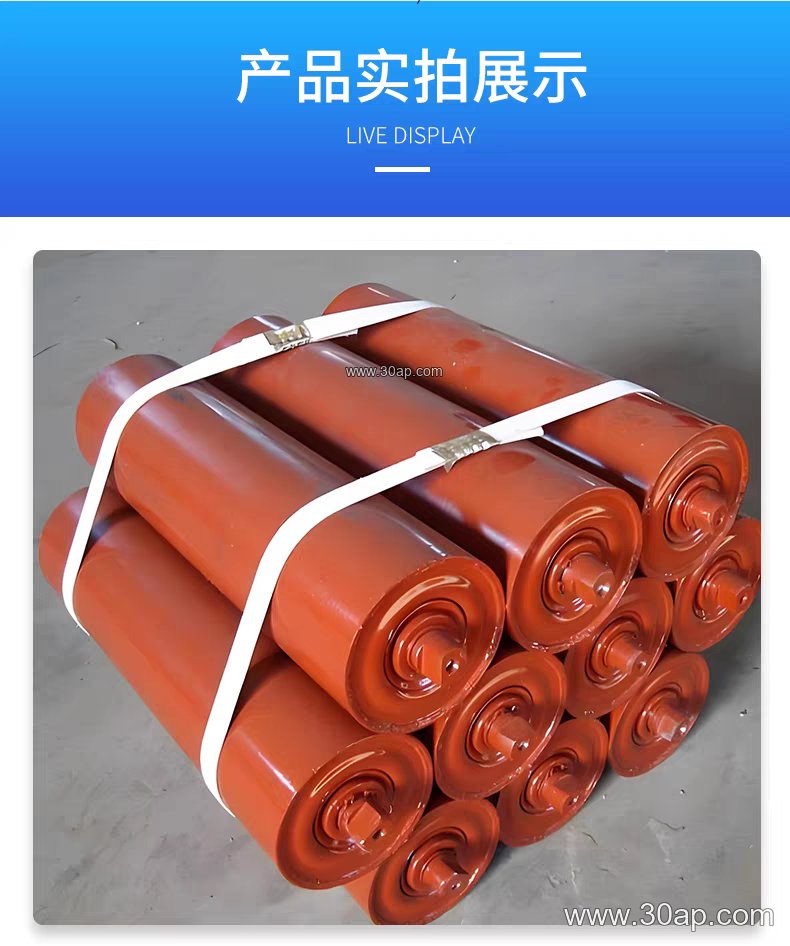
A typical unit combines a roller group, a rotating base, a pivot shaft and a linkage or side guide roller that senses belt edge position. The sensing roller touches the belt edge; when the belt shifts, the linkage turns the frame, and the skewed rollers push the belt back. Common roller surfaces include steel tube, nylon, ceramic and rubber rings, selected to suit the duty. Bearings such as 6204, 6205, 6305, 6306, 6308 and 6310 are often used, but the bearing is matched to load and shaft design, not to belt width alone.
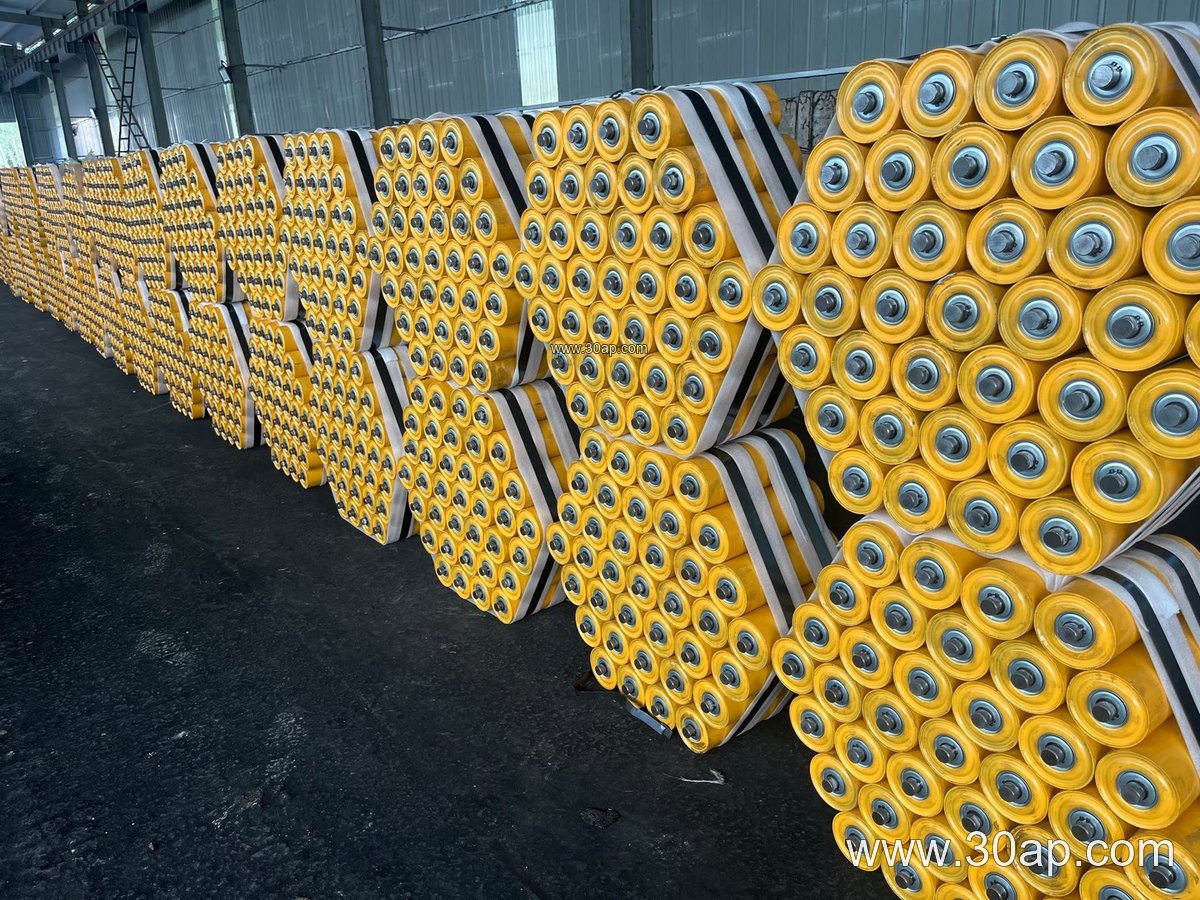
Roller diameter is chosen by load and belt speed. Common sizes include Ø63, Ø76, Ø89, Ø102, Ø108, Ø127, Ø133, Ø159, Ø178, Ø194 and Ø219 mm. Trough angles of 20, 30, 35 and 45 degrees are usual, and a forward tilt of about 1.5 to 2 degrees is sometimes used on training idlers to assist tracking. Roller length follows belt width, trough angle and frame form. For example, a three-roll troughing set commonly uses about 200 mm rollers at B500, 250 mm at B650, 315 mm at B800, 380 mm at B1000, 465 mm at B1200, 530 mm at B1400, 600 mm at B1600, 670 mm at B1800 and 750 mm at B2000. Side rollers and center rollers can differ, so these figures are examples, not fixed pairings.
Where It Fits on the Conveyor
Training idlers are usually installed on the carrying side, spaced along the belt run, and sometimes on the return side as V-type or flat return training sets. They are most useful where alignment is difficult: long overland runs, curves, transfer points and inclined sections. In a limestone mine or a cement plant, a rotating self-aligning idler on the load-carrying strand helps hold a heavy belt in place before material reaches the crusher. On a power plant coal conveyor, the same unit reduces edge wear on a flame retardant conveyor belt and keeps the belt centered through transfer towers.
They are not a cure for poor splicing, uneven loading or misaligned pulleys. A conveyor pulley that is out of square, or a conveyor bracket that has shifted, should be corrected first. The idler then maintains tracking during normal operation.
Matching the Idler to the Belt and Duty
Selection starts with belt width and the belt construction. A fabric core conveyor belt and a steel cord conveyor belt behave differently under side load, and an EP conveyor belt or NN conveyor belt may need different roller spacing. In abrasive service, such as an iron ore or copper ore line, abrasion resistant conveyor belt grades and wear-resistant roller surfaces are worth considering. In coal mining, a flame retardant conveyor belt or PVG conveyor belt may be required, and the idler should suit the same environment.
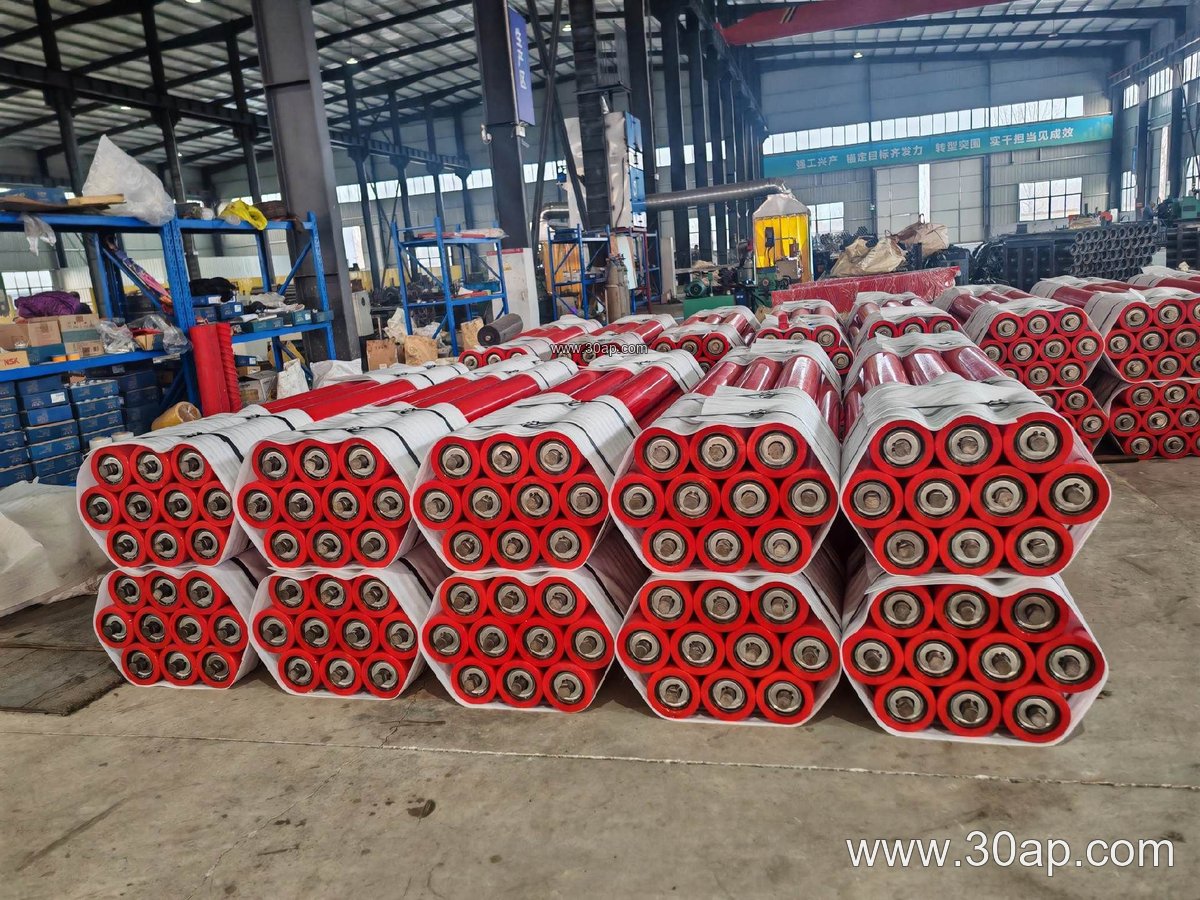
The table below gives reference ranges only. Final dimensions should be confirmed by design.
| Parameter | Common reference |
|---|---|
| Roller diameter | Ø63 to Ø219 mm |
| Belt width | B400 to B2400 |
| Trough angle | 20, 30, 35, 45 degrees |
| Roller surface | Steel, nylon, ceramic, rubber ring |
| Bearing | 6204, 6205, 6305, 6306, 6308, 6310 |
Buyer Checklist
- Confirm belt width, trough angle and whether the idler is for the carrying or return side.
- State the conveyed material and environment, for example dust, moisture or heat.
- Check that the pivot and linkage move freely and that the seal protects the bearing.
- Verify mounting height against the existing conveyor bracket and idler roller line.
- Plan periodic inspection of the sensing roller and pivot, since a sticking base defeats the self-aligning action.
For more conveyor components, see the range at https://www.example.com/self-aligning-idler and related belt and roller pages.