What a Conveyor Leg Does on a Belt System
A conveyor leg is the structural support that carries the idler frames and, through them, the belt and material load. In many plants the leg is the first component to be checked when a belt starts to misalign, because a weak or poorly anchored leg allows the whole idler station to shift under load. The same support is sometimes called a conveyor support leg or conveyor stand leg, and it appears in quarry, cement, and power plant belt lines where steady elevation and easy adjustment matter.
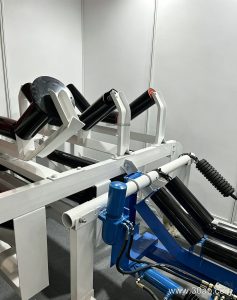
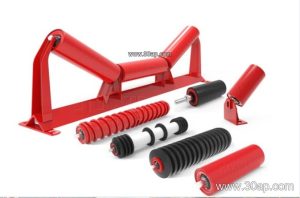
Legs are usually fabricated from angle steel, channel steel, or folded steel plate. A fixed leg holds the idler frame at a set height and槽角, while an adjustable leg allows the operator to change the trough angle or correct small height differences after installation. On a typical 800mm or 1000mm belt line, the leg may be paired with a three-roller trough set and a return bracket, forming a complete idler station.
Construction and Mounting Points
The leg connects to the conveyor bracket through bolted or welded joints. Installation hole spacing and crossbeam length change with belt width and trough angle, so a leg ordered for a B650 line is not a drop-in fit for a B1200 line. Common leg heights follow the belt profile, and the foot may be fitted with a base plate for floor anchoring or a sliding pad for minor position adjustment.
- Material: angle steel, channel steel, or folded plate
- Mounting: bolted to conveyor bracket or welded to the frame
- Adjustment: fixed height or adjustable for trough angle and leveling
- Typical belt widths: B500, B650, B800, B1000, B1200, B1400
When the leg supports a transition idler or a buffer idler station, the load can be higher than on a standard carrying station. In those positions the leg section and base plate are usually sized up to resist vibration and impact from coarse material.
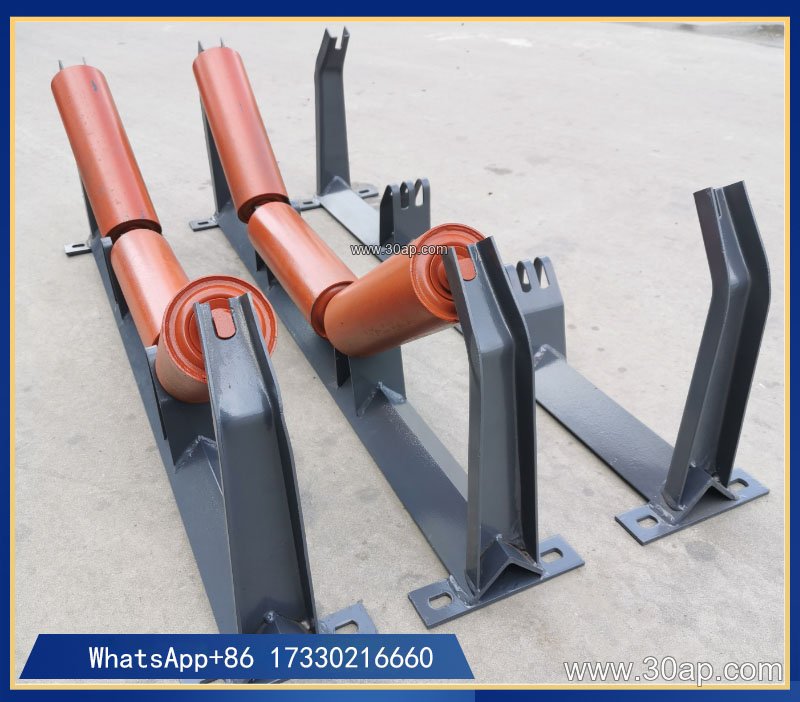
Where Conveyor Legs Are Used
In a limestone quarry, legs support the incline section that lifts crushed rock to the screening building. In a coal handling system at a power plant, they carry the idler frames along the transfer house and the bunker bay. The same support appears in sand and aggregate lines, cement plants, and port loading conveyors. Because the leg is exposed to dust, moisture, and occasional spillage, a galvanized or painted finish is common in outdoor installations.
On lines carrying abrasive material such as iron ore or clinker, the leg and bracket assembly must stay rigid so the idler rollers do not tilt out of alignment. A loose leg can cause the belt to track to one side, which then wears the edge of a rubber conveyor belt or an EP conveyor belt faster than normal.
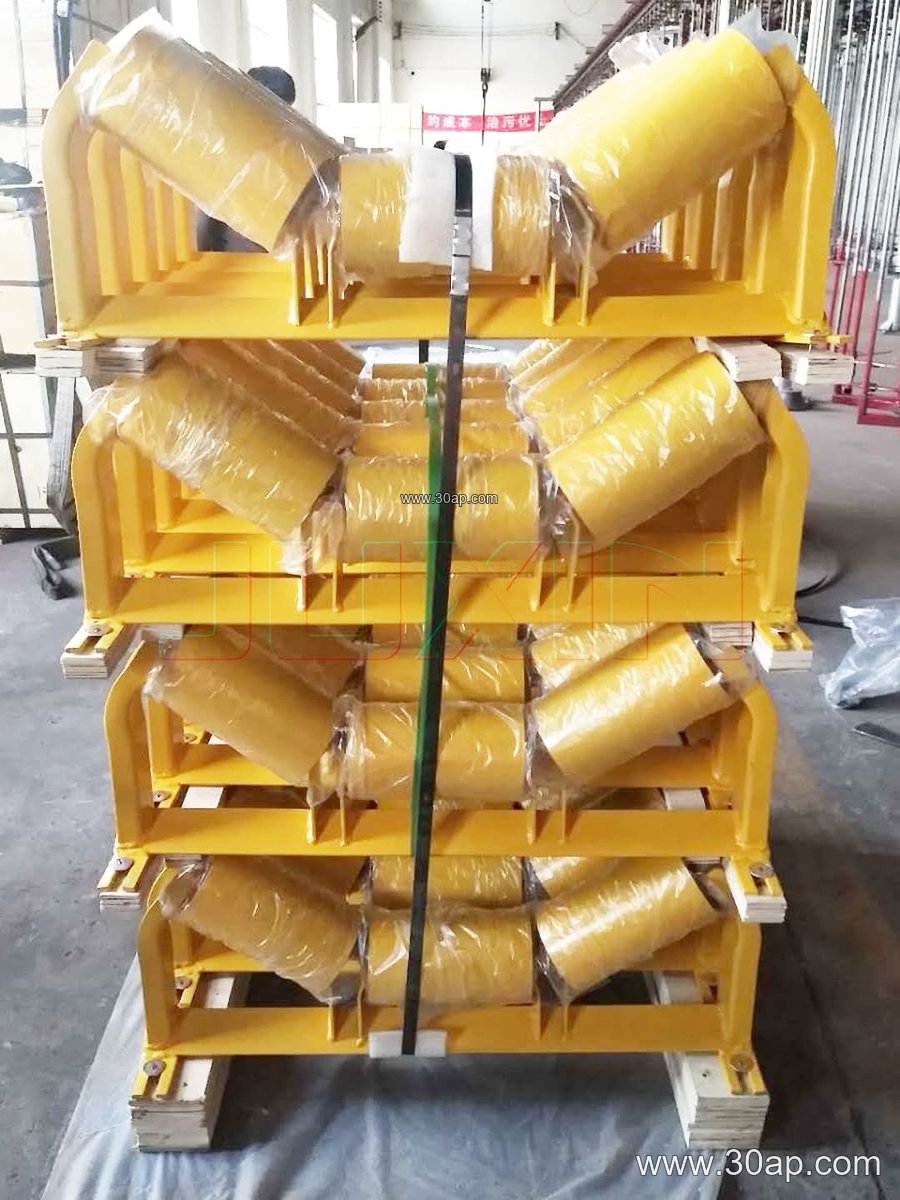
Matching the Leg to Belt Width and Idler Size
Selection starts with the belt width and the required trough angle. A B800 line with a 35 degree trough is a common combination, while a B1200 line may use 45 degree troughing for higher capacity. The idler roller diameter also affects the frame height and the leg top plate: Ø89 and Ø108 rollers are common on narrower belts, while Ø133 and Ø159 appear on wider or heavier stations.
| Belt Width | Common Trough Angle | Typical Roller Diameter |
|---|---|---|
| B500 | 20°–30° | Ø89 |
| B650 | 30° | Ø89–Ø108 |
| B800 | 35° | Ø108 |
| B1000 | 35°–45° | Ø108–Ø133 |
| B1200 | 45° | Ø133 |
| B1400 | 45° | Ø133–Ø159 |
These are reference combinations, not fixed rules. A B800 belt can use a different trough angle or roller diameter when the material and speed require it. The important point is that the leg, bracket, and idler frame are ordered as a set, with hole spacing confirmed against the actual conveyor drawing.
Buyer Checklist
Before ordering, confirm the belt width, the trough angle, the roller diameter, and whether the station is carrying, return, or transition. Check the mounting hole pattern on the existing conveyor bracket and the required leg height from floor to frame. For a coal mining conveyor belt or an underground mining conveyor belt, flame retardant and anti-static properties apply to the belt, not the leg, but the leg finish should still suit the environment.
Ask for the leg material thickness and the base plate dimensions, since these affect stability on long spans. If the line will be modified later, an adjustable leg is easier to re-level than a fixed leg. Finally, keep spare legs and brackets for the stations that see the most impact, such as the crusher discharge and the transfer points.