What an Anti-Impact Idler Does at the Transfer Point
An anti-impact idler is the idler roller placed where material hits a conveyor belt with the most force: under the chute, at the crusher discharge, or at the transfer between two belts. Its job is not to carry the full load along the whole line, but to absorb the first shock of falling rock, ore, or clinker before that energy reaches the belt carcass. In a quarry, a coal preparation plant, or a cement plant, this short section of the conveyor often decides how long the belt lasts.
The same product is also called an impact idler or a buffer idler. These names describe one function, not several different products, and the terms are used interchangeably in conveyor design work.
How the Buffer Roller Is Built
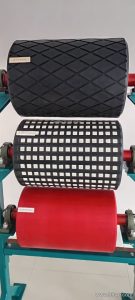
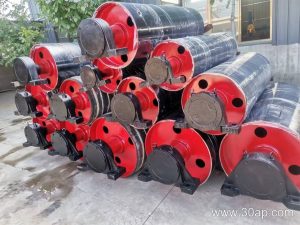
A standard troughing idler uses a steel shell with a bearing at each end. An impact idler keeps that basic frame but adds a compliant layer, usually a stack of rubber rings or a rubber-covered shell, so the roller gives slightly when the load lands. The rubber rings are spaced along the shaft, which lets each ring deflect independently and spreads the shock over several contact points rather than one hard line.
Construction details that matter to buyers include:
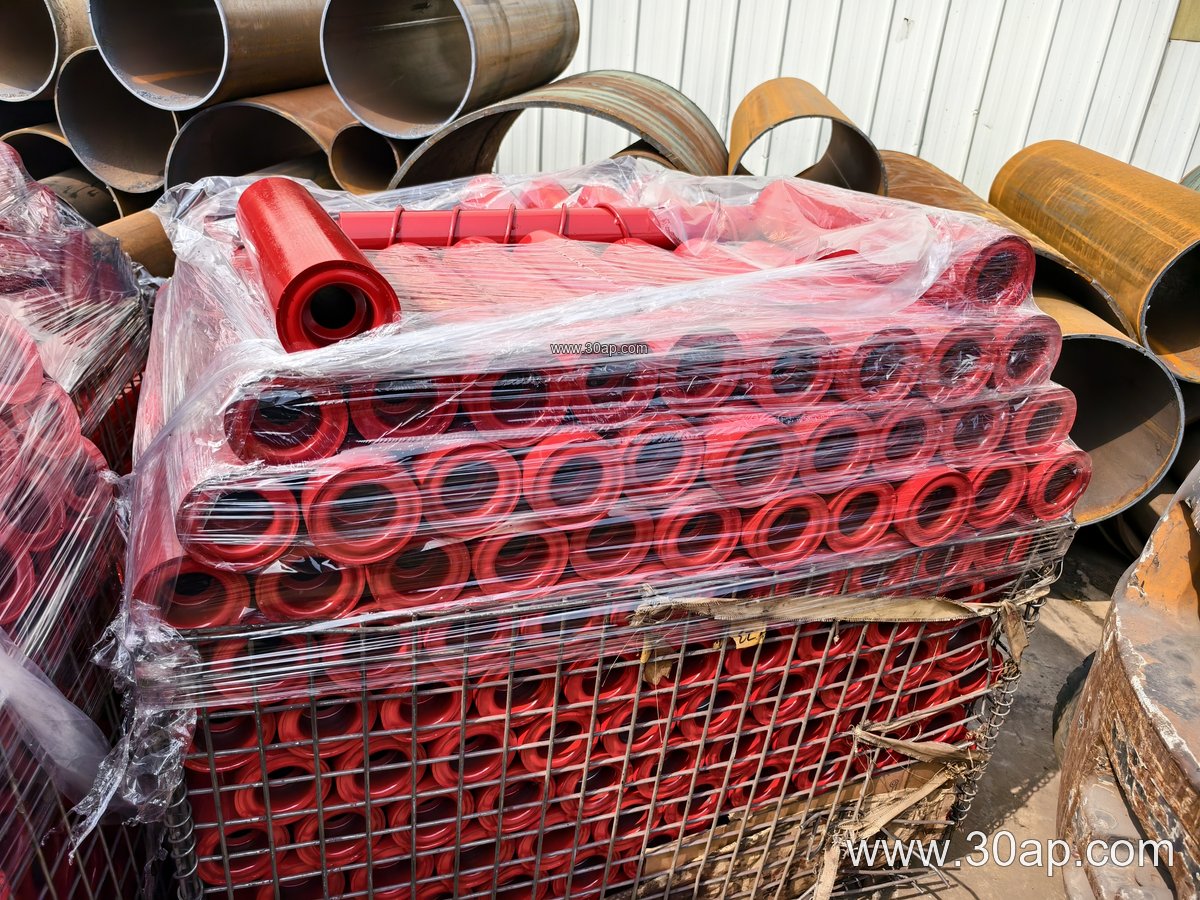
- Ring hardness and thickness, which set how much the roller deflects under a given drop height.
- Bearing selection, commonly 6205, 6305, 6306, or 6308 depending on roller diameter and load, with effective sealing against dust and water.
- Shaft and end-cap strength, since the impact zone sees repeated peak loads rather than smooth rolling pressure.
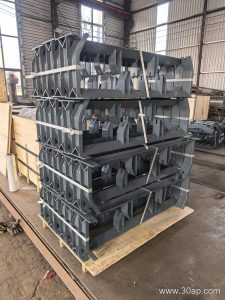
- Frame rigidity, because a flexible frame under the buffer station cancels much of the benefit.
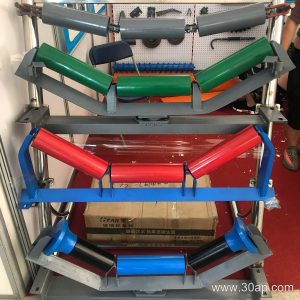
The roller diameter is chosen together with the belt width and the frame height, not from belt width alone. Common impact roller diameters run from about Ø89 up to Ø159 and larger, while the roller length follows the belt width and trough angle. For reference, a three-roll troughing set at B800 typically uses rollers around 315 mm long, at B1200 around 465 mm, and at B1400 around 530 mm; side rollers and center rollers can differ, and these figures are examples rather than fixed matches.
Where Impact Stations Are Needed
Any point where material falls more than a short distance onto a belt benefits from a buffer station. In an iron ore or copper ore handling circuit, the discharge from the primary crusher is a classic location. In a coal mining conveyor or a power plant coal yard, the belt receiving coal from a stacker or a chute also needs cushioning, and a flame retardant conveyor belt is often specified nearby for fire safety. Sand and gravel plants place impact idlers below the screen discharge, where stone drops fast and heavy.
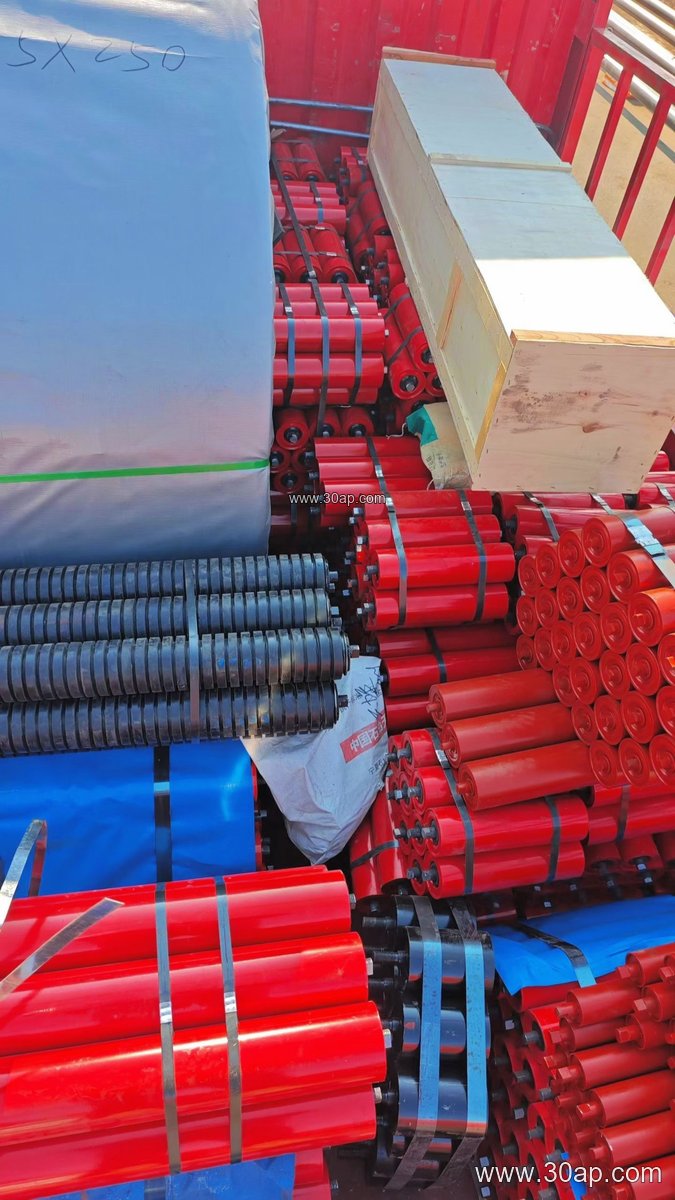
The supporting equipment matters as much as the roller. A worn conveyor bracket or a sagging frame will let the buffer station tilt, and the belt will track poorly even with good rollers. Designers usually set the impact section over a short distance, often a few idler spacing intervals, then transition to standard troughing idlers and finally to the carrying run. The transition idler, not the impact idler, controls the gradual change in trough angle.
Selecting and Maintaining the Right Unit
Selection starts with the drop height, the lump size, and the tonnage per hour. A buffer roller that is too soft will bottom out and transmit shock anyway; one that is too hard behaves like a plain steel roller. Trough angle also affects performance: 20, 30, 35, and 45 degree sets load the belt differently, and the impact station should match the adjacent carrying idlers. Where the material is abrasive, a rubber-covered shell protects the roller surface, while a ceramic or nylon face may suit other duties.
Maintenance is mostly inspection. Check the rubber rings for cuts, hardening, or missing segments, feel for bearing play, and confirm the frame has not shifted after a chute blockage. A seized buffer roller will flat-spot the belt quickly, so rotation should be checked at every shutdown. Matching the buffer section to the belt type, whether an EP conveyor belt, an NN conveyor belt, or a steel cord conveyor belt, helps avoid a mismatch between a stiff carcass and a very soft roller.
For buyers comparing quotations, ask for the ring material and hardness, the bearing size and seal type, the shaft diameter, and the frame drawing. These details separate a real impact idler from a standard roller with a rubber sleeve. Used correctly, a well-built buffer station reduces belt edge damage, cuts downtime at the transfer point, and keeps bulk material moving through the plant.