What a Four-Roll Trough Idler Does on a Conveyor
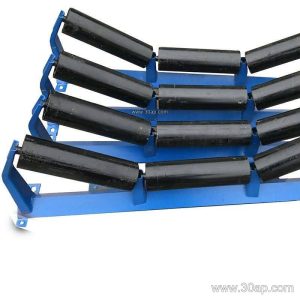
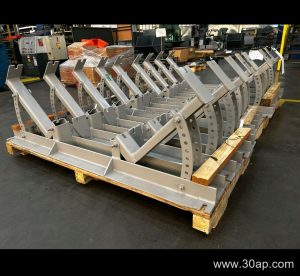
A four-roll trough idler is an upper carrying idler assembly that supports the loaded side of a conveyor belt with four rolls instead of the usual three. The extra roll lets the belt form a deeper, more enclosed trough, so bulk material sits more centrally and spills less at transfer points. In a limestone quarry or a cement plant feed line, that can mean cleaner running and less material working its way under the belt.
This assembly is often described as a four-roll troughing idler or four-roll carrying idler set. It belongs to the troughing family, alongside three-roll and two-roll sets, and it is not a return idler, impact idler or self-aligning idler. Those are separate duties, even when they appear on the same conveyor structure. For the return strand, a flat or V-return idler remains the normal choice.
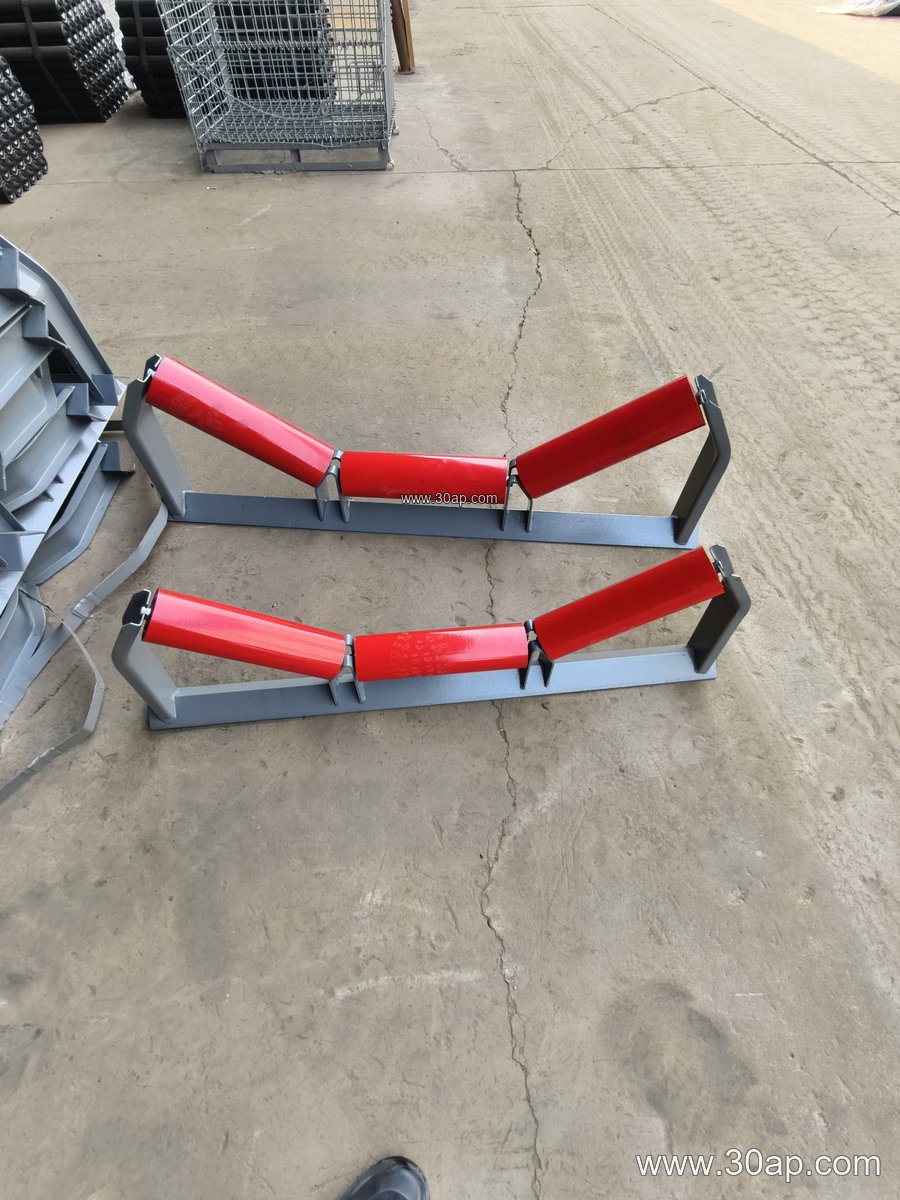
How the Assembly Is Built
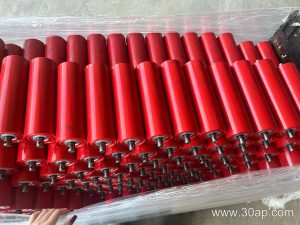
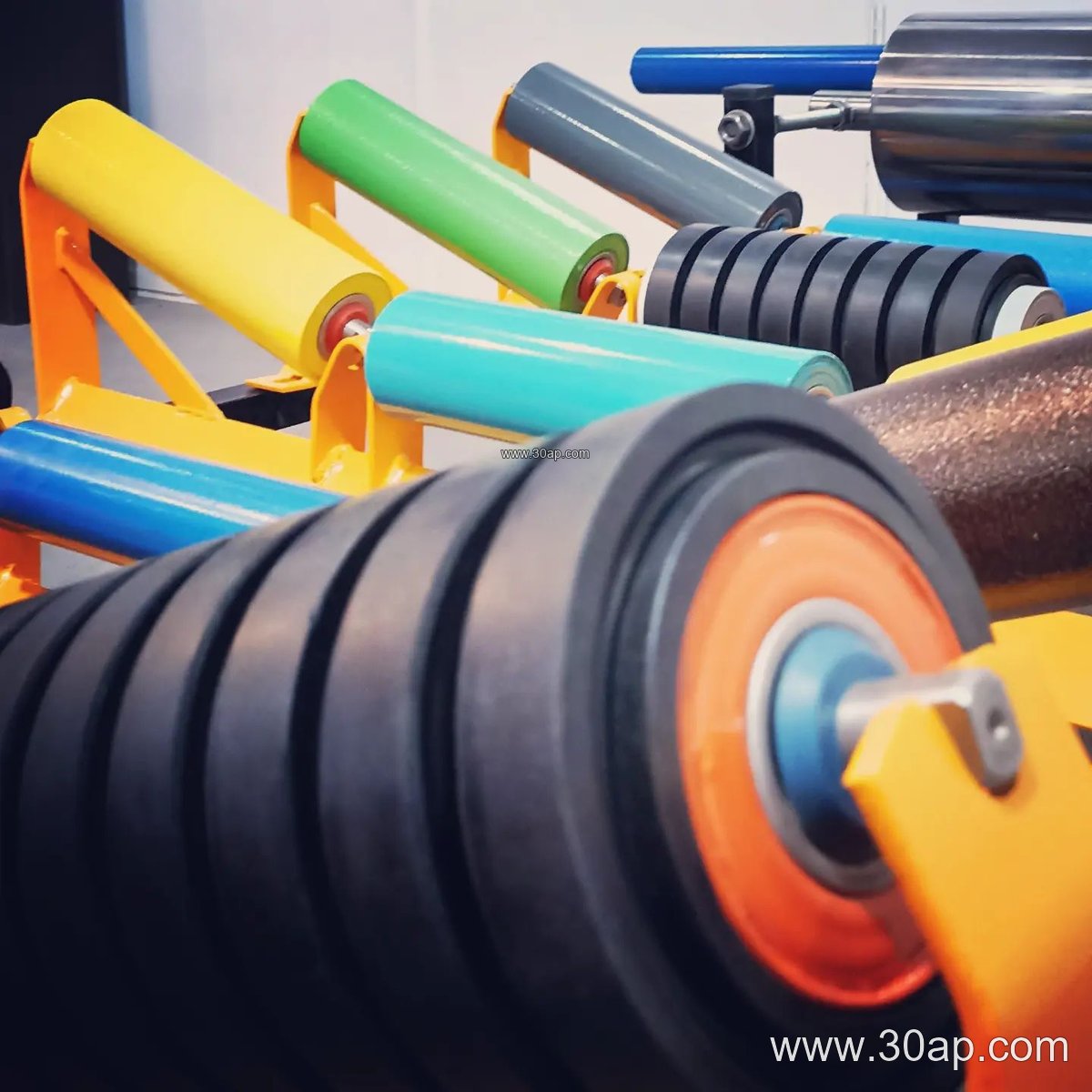
The frame carries four idler rollers arranged to create a wide, curved belt profile. Two outer rolls sit at a steeper angle, while the inner rolls bridge the center of the belt. Roll shells are commonly steel tube, with nylon, ceramic or rubber-ring surfaces available where wear or build-up is a concern. Bearings such as 6205, 6305 or 6308 are typical in idler service, matched to shaft and load requirements by the manufacturer rather than fixed to one shell diameter.
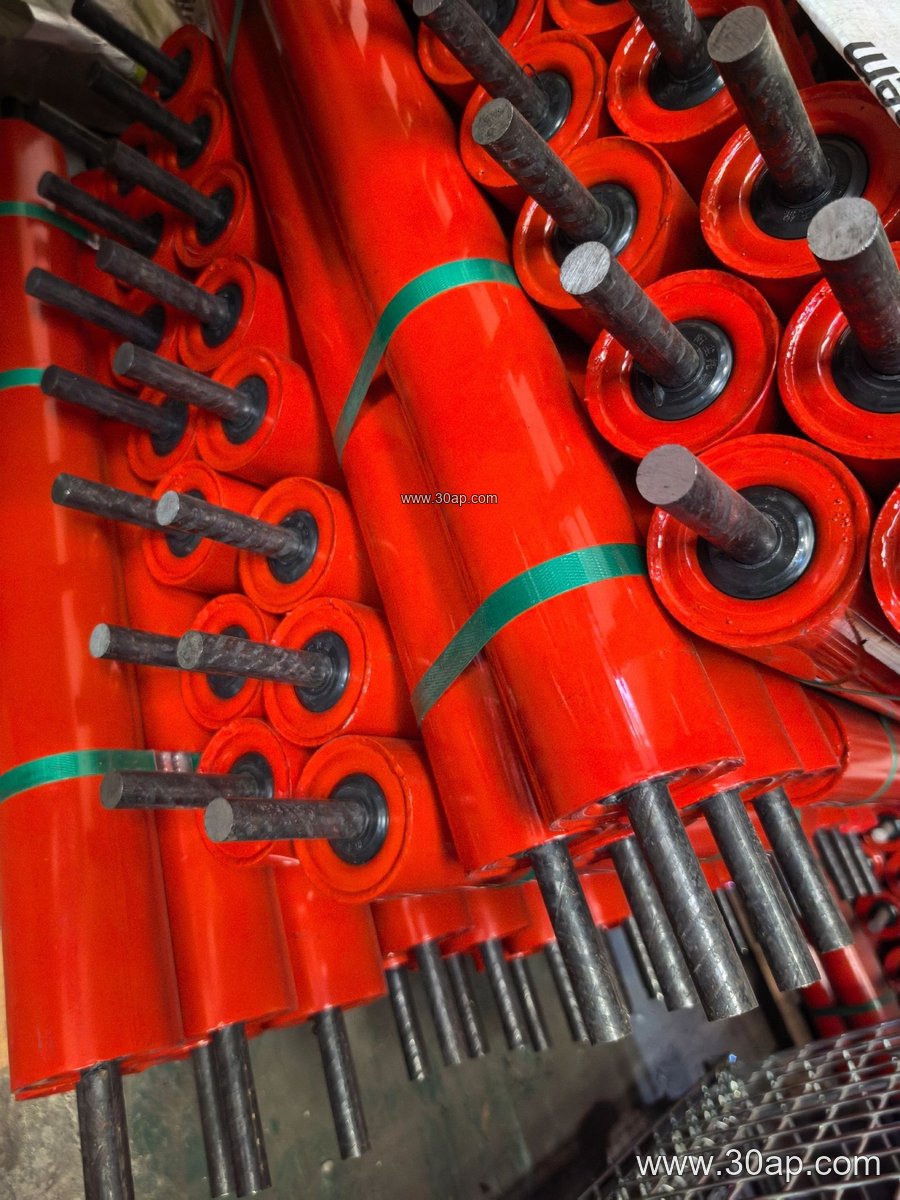
Sealing matters as much as the roll itself. Dust from a crusher discharge or a coal handling system will find any weak point, so labyrinth seals and grease retention are worth checking when comparing offers. The idler roller should turn freely by hand and run true, because a stiff roll drags on the conveyor belt and adds load to the drive.
Where Four-Roll Troughing Fits Best
The deeper trough is most useful where the belt is wide and the material is loose, abrasive or prone to scattering. Applications include:
- Iron ore and copper ore transfer lines where spillage is costly to clean
- Coal mining and wash plant conveyors handling variable lump sizes
- Aggregate and sand production lines with wide belts and high tonnage
- Power plant coal yards and steel plant stockyards
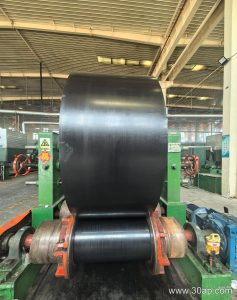
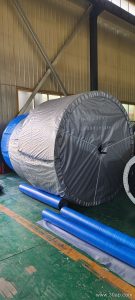
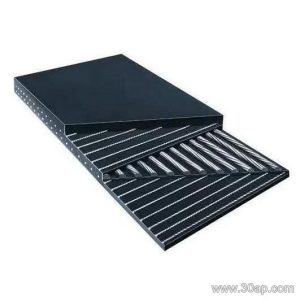
A well-supported belt also helps when the conveyor uses a heavy-duty mining conveyor belt or a thick abrasion resistant conveyor belt, because the load is distributed across more roll contact points. Belt stiffness still matters: a very stiff steel cord conveyor belt may not flex into the deeper profile as easily as a fabric core belt, so the trough shape should be checked against the belt construction.
Reference Dimensions and Roll Layout
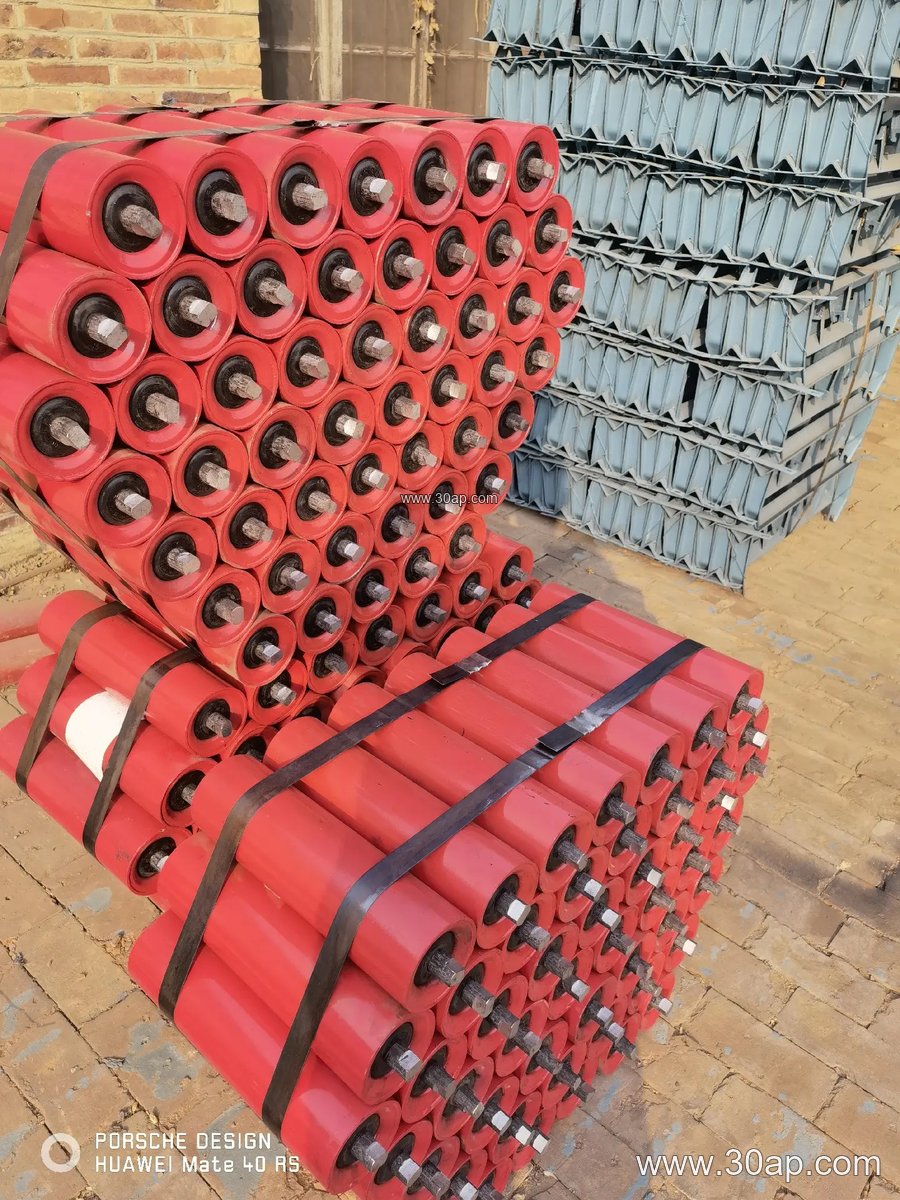
Roll length changes with belt width, trough angle and frame design. The figures below are common examples for three-roll trough sets and are useful only as a starting point when estimating a four-roll layout; the inner and outer rolls of a four-roll assembly can differ from these values.
| Belt width | Typical roll length, three-roll set | Common trough angle |
|---|---|---|
| B500 | about 200 mm | 20 to 35 degrees |
| B650 | about 250 mm | 20 to 35 degrees |
| B800 | about 315 mm | 30 to 35 degrees |
| B1000 | about 380 mm | 30 to 45 degrees |
| B1200 | about 465 mm | 35 to 45 degrees |
| B1400 | about 530 mm | 35 to 45 degrees |
| B1600 | about 600 mm | 35 to 45 degrees |
| B1800 | about 670 mm | 35 to 45 degrees |
| B2000 | about 750 mm | 35 to 45 degrees |
Roll diameters commonly range from Ø89 and Ø108 up to Ø159, Ø178 or larger on heavy frames. A B1200 conveyor does not automatically call for one shaft size or one bearing number; the load, belt speed and frame spacing decide that. Buyers should ask for a dimension drawing showing roll length, shaft end, mounting hole spacing and frame height.
Buying and Maintenance Notes
Before ordering, confirm the belt width, the required trough angle, the frame fixing dimensions and the material being carried. A four-roll trough idler used on a conveyor belt carrying sticky clay may need a different roll surface than one handling dry sinter or cement clinker. Check that the assembly suits the existing conveyor bracket and stringer spacing, since a replacement frame that does not match the bolt pattern creates unnecessary downtime.
During service, inspect for seized rolls, worn shells and damaged seals, and clear spilled material from the frame so the rolls can rotate. Keep a small stock of spare idler rollers for the rolls that wear fastest, usually the outer positions. Replacing one worn roll early protects the belt and keeps the trough profile consistent along the whole conveyor run.