What a Heavy-Load Pulley Does
A heavy-load pulley is the robust drum that transmits drive force, redirects the belt, or maintains tension in high-capacity conveying circuits. Unlike a light-duty idler roller, this component is engineered for continuous shock loading, abrasive dust, and large belt tensions. In a quarry or a limestone mine, the heavy-load pulley often sits at the head end, pulling a thick abrasion resistant conveyor belt across long distances. The same drum style appears in cement plant clinker lines and power plant coal handling, where reliability directly affects throughput.
Core Construction
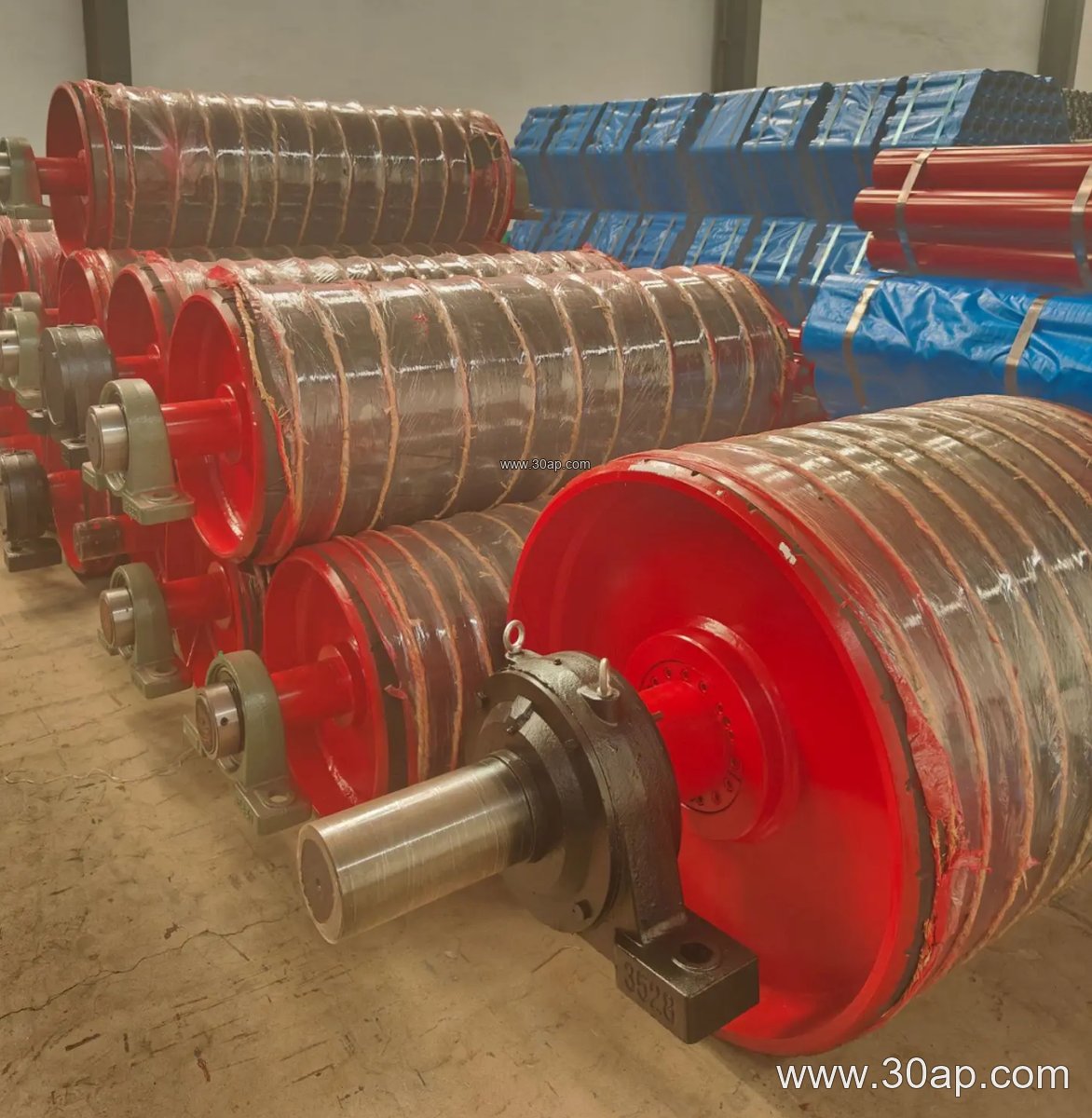
The shell is typically a rolled steel cylinder with machined end discs and a through shaft. Common diameters range from Ø200 mm for smaller tail positions up to Ø1800 mm for large drive applications. Shaft diameters are selected by torque and radial load, not by belt width alone; typical shaft sizes include Ø80, Ø100, Ø120, Ø140, and Ø160 mm, with larger journals for high-tension drives. The pulley face width usually exceeds the belt width to allow for mistracking: for example, a B800 belt often runs on a pulley face around 950 mm, while a B1200 system may use a 1400 mm face.
Surface Options and Grip
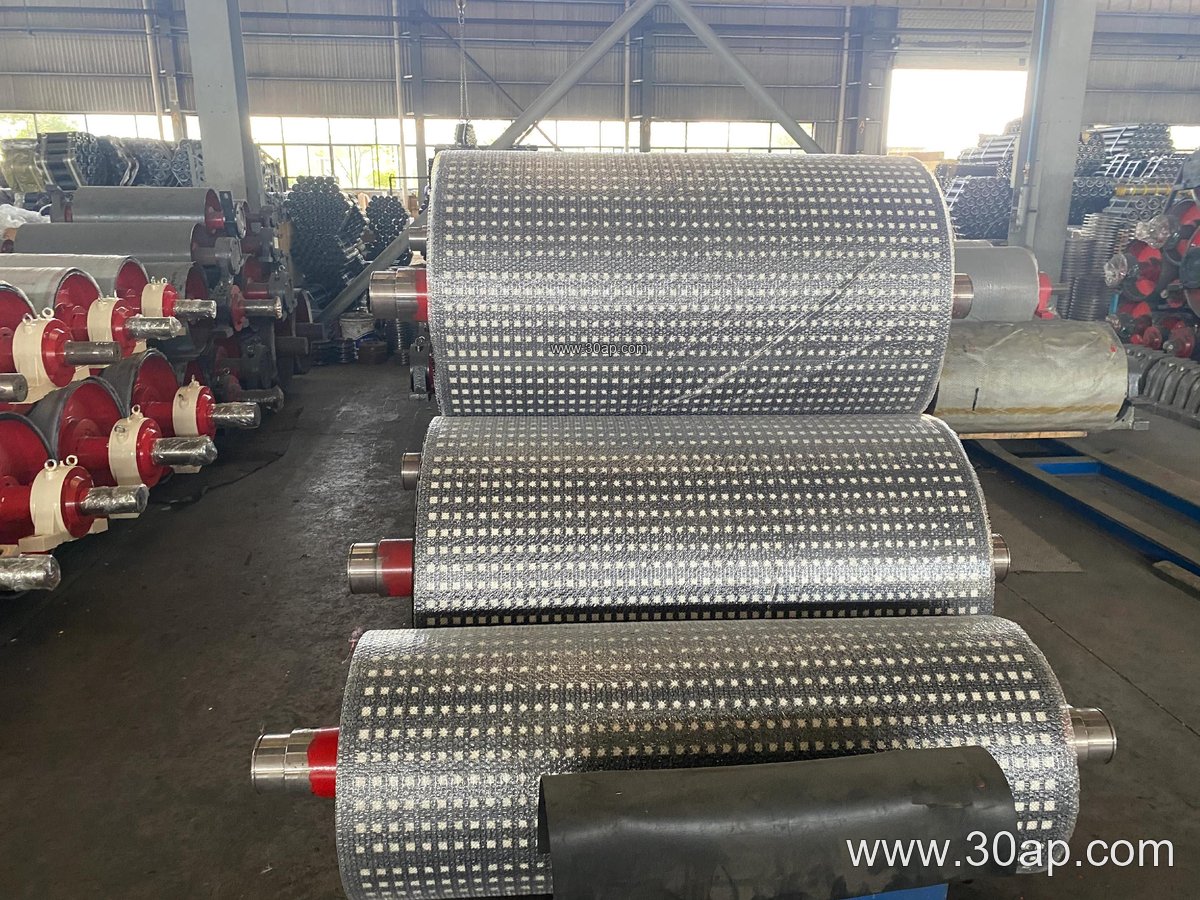
Drive pulleys need friction between shell and belt. Plain finish suits light loads, but heavy-load pulleys frequently use rubber lagging applied by hot vulcanization or cold bonding. Diamond grooving improves water shedding in wet coal or wash plant service, while ceramic lagging offers high wear resistance in iron ore and copper ore operations. Lagging thickness commonly falls between 8 mm and 20 mm depending on the duty. A chevron conveyor belt may demand a different pulley crown, but the pulley itself remains a distinct component from the belt.
Where It Fits in the Conveyor
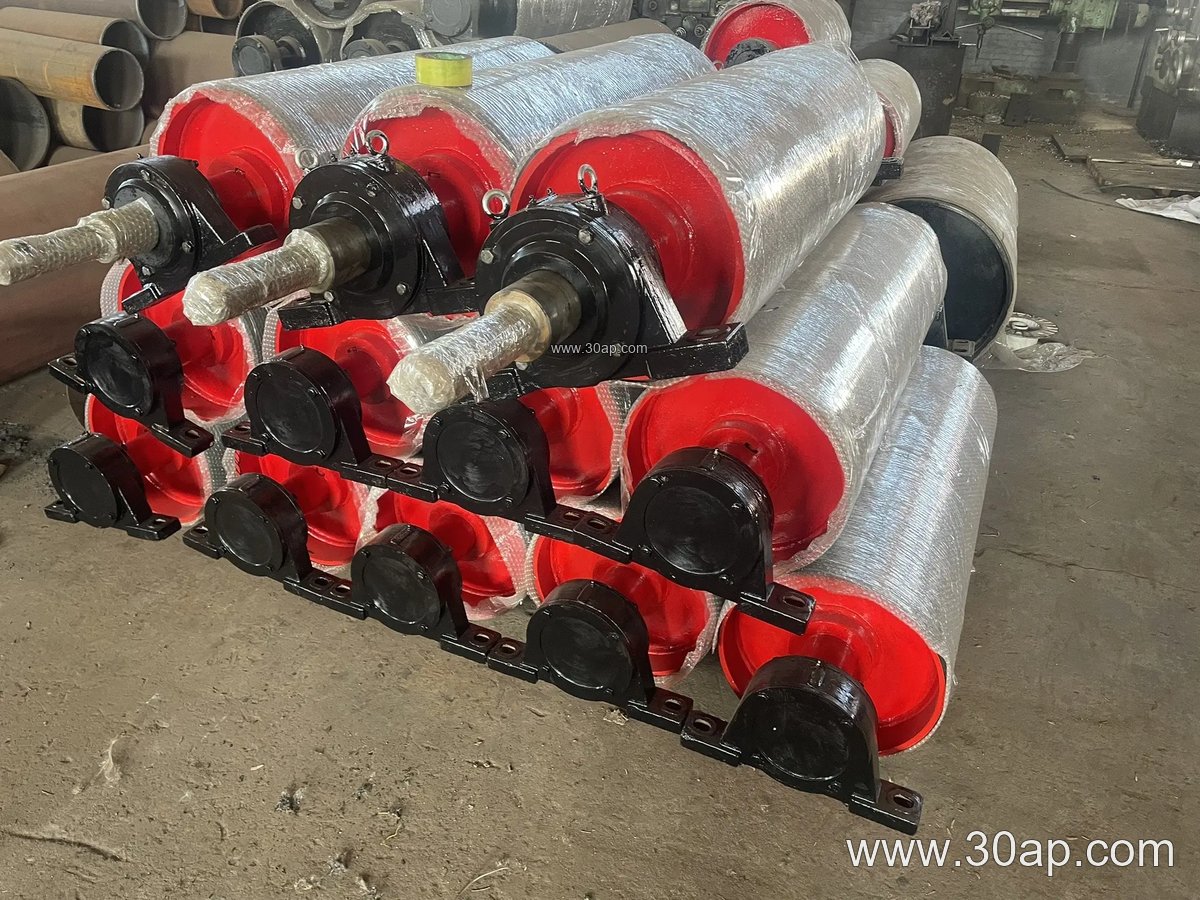
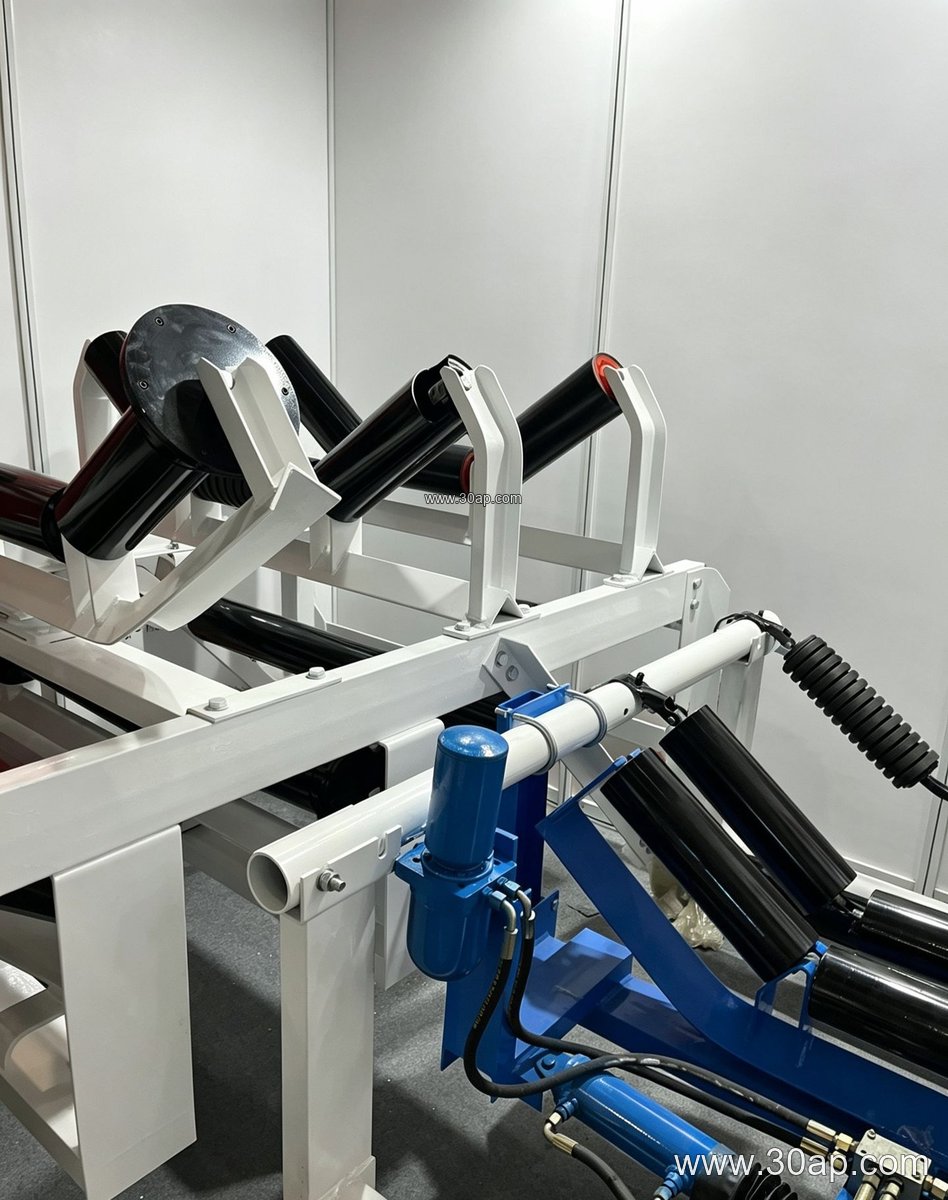
Position determines function. A head or drive pulley delivers power; a tail pulley returns the belt; a bend pulley changes direction; a tension pulley maintains take-up. These are not interchangeable names, and each position imposes different bearing loads. In an underground coal mining conveyor, flame retardant conveyor belt and anti-static conveyor belt requirements mean the pulley must also be earthed and kept free of combustible buildup. In a port ship loading conveyor, the heavy-load pulley may work alongside a steel cord conveyor belt and a series of conveyor idler rollers to move bulk material at high capacity.
Matching the Pulley to the Belt
Belt construction influences pulley design. A multi-ply fabric core conveyor belt or an EP conveyor belt with high modulus demands adequate drum diameter to limit bending stress. For heavy-duty mining conveyor belt with thick covers, larger pulleys reduce flex fatigue. The table below shows common reference combinations, not fixed rules.
- B800 belt — pulley face about 950 mm — common diameter Ø500 to Ø800 mm
- B1000 belt — pulley face about 1150 mm — common diameter Ø630 to Ø1000 mm
- B1200 belt — pulley face about 1400 mm — common diameter Ø800 to Ø1250 mm
- B1400 belt — pulley face about 1600 mm — common diameter Ø1000 to Ø1400 mm
- B1600 belt — pulley face about 1800 mm — common diameter Ø1250 to Ø1600 mm
Do not assume a specific shaft diameter from belt width alone. Torque, belt tension, and bearing span determine journal size. A B1200 × Ø1000 heavy-load pulley in a crusher conveyor may use a Ø160 shaft, while a similar drum on a shorter aggregate conveyor belt could use Ø120.
Buyer Checklist
Before ordering, confirm the belt width, pulley face, drum diameter, shaft diameter, lagging type and thickness, bearing type, and mounting arrangement. Specify the environment: a heat resistant conveyor belt application near a sintering plant may require heat-tolerant lagging, while a cold resistant conveyor belt in a tunnel or winter port needs low-temperature rubber. Check that the pulley drawing accounts for conveyor brackets and frame clearance. For a pipe conveyor belt or corrugated sidewall conveyor belt, special pulley profiles may be needed, but the heavy-load pulley remains the load-bearing drum. Finally, ask for the dynamic balance grade and inspection report, since an unbalanced drum at high speed shortens bearing life.