What a Mining Fire Resistant Conveyor Belt Is
A Mining Fire Resistant Conveyor Belt is a heavy-duty conveyor belt built for underground coal mining and other enclosed material handling systems where a flame source, friction heat, or an electrical fault could ignite the belt. The belt is designed to resist ignition and to limit flame spread, so a small incident does not become a tunnel-wide fire. In practice, buyers meet this product under several equivalent names, including fire resistant conveyor belt, flame retardant conveyor belt, and mining flame retardant conveyor belt. These describe the same family of belting; the mining qualifier simply points to the harsh duty and safety expectations of a mine or coal preparation plant.
Safety performance is only half of the job. The belt must also carry coal, ore, or aggregate at high tonnage, survive impact at the loading point, and run straight on idler roller sets and conveyor pulleys. That balance between fire safety and mechanical strength is what separates a serious mining belt from a general-purpose rubber belt.
How the Belt Is Built
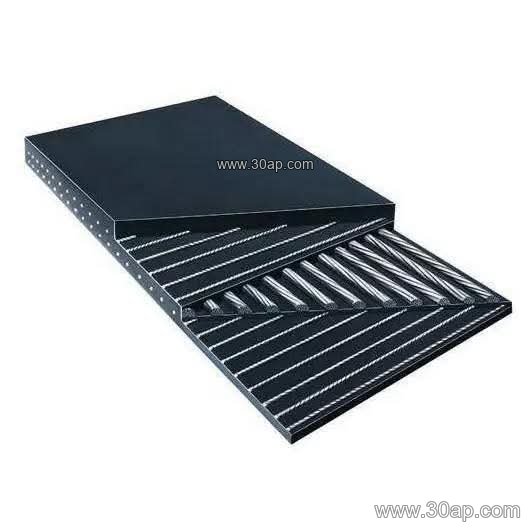
Most fire resistant mining belts use a fabric core or a steel cord carcass, wrapped in rubber covers formulated to resist flame propagation. The carcass provides tensile strength and troughability; the covers protect the core from abrasion, cutting, and moisture.
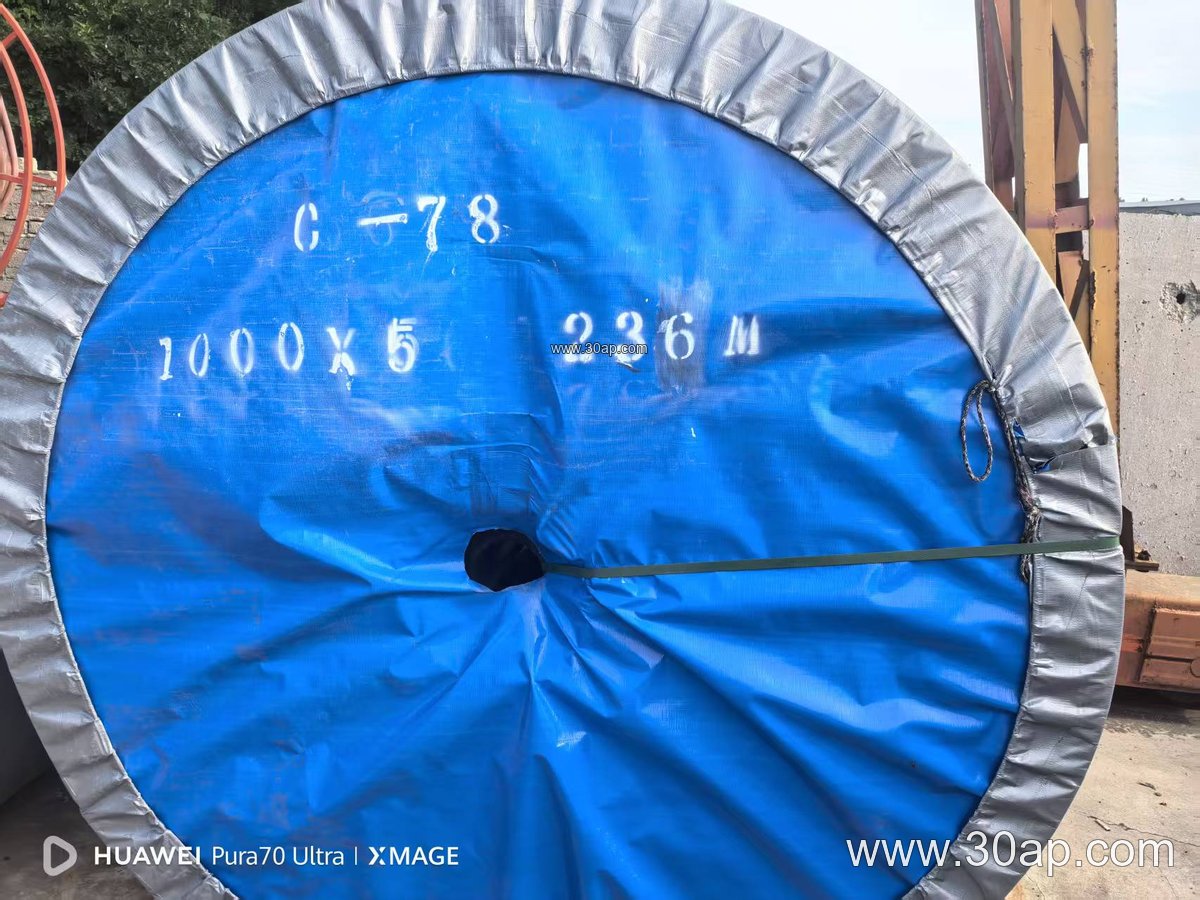
- Fabric core: EP conveyor belt (polyester warp, nylon weft) or NN conveyor belt (nylon/nylon) carcass, usually 2 to 6 plies. These are common where flexibility and troughing matter.
- Steel cord: Steel cord conveyor belt carcass for very long runs and high tension. A steel cord belt can carry enormous loads, but splicing demands specialist equipment and care.
- Solid-woven or PVC/PVG types: PVG conveyor belt and PVC conveyor belt are common in underground coal service, with PVG800S being a frequently referenced grade in that family.
- Covers: flame retardant rubber compounds, often combined with anti-static properties so static charge does not build up on the belt surface.
Cover thickness is normally stated as top plus bottom, for example 4+2 mm, 5+2 mm, 6+2 mm, or 8+3 mm. Heavier covers suit high abrasion and impact points such as crusher discharge and transfer chutes.
Typical Strength and Width Ranges
The table below shows commonly referenced values. These are reference ranges, not fixed supply promises; final selection depends on the conveyor design, load, and site conditions.
| Parameter | Common Reference Values | Notes |
|---|---|---|
| Fabric carcass strength | EP200, EP315, EP400, EP500, EP630, EP800, EP1000, EP1250, EP1600, EP2000 | Higher grades for longer or heavily loaded conveyors |
| Belt width | B500, B650, B800, B1000, B1200, B1400, B1600, B1800, B2000 | Match to tonnage, lump size, and troughing angle |
| Cover thickness | 3+1.5, 4+2, 5+2, 6+2, 8+3 mm | Thicker covers for abrasive or impact-heavy duty |
| Ply count | 2 to 6 plies | Depends on strength grade and belt design |
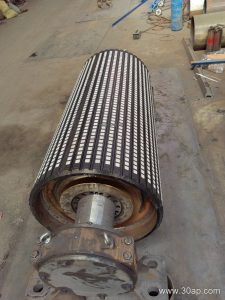
Belt width and pulley diameter are separate design decisions. A 1200mm or 1400mm belt may run on different pulley sizes depending on tension and wrap angle; never assume one width locks in one pulley diameter or shaft size.
Where It Is Used
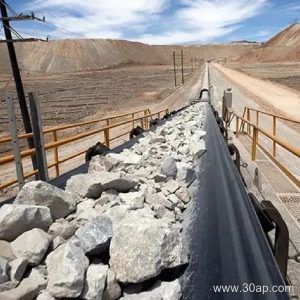
Underground coal mining is the classic application, where the belt runs in a confined roadway and every component, from the conveyor pulley to the conveyor bracket, must support safe operation. The same belt family also appears in:
- Coal preparation plants and power plant coal yards
- Mine drift and incline conveyors feeding stockpiles
- Cement plants handling clinker and raw meal where fire risk exists near hot equipment
- Port and ship loading systems with enclosed galleries
- Sand and aggregate plants where dust and enclosed transfer points raise concern
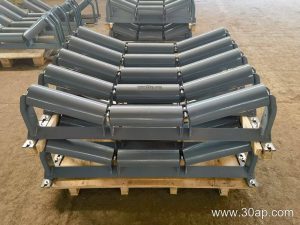
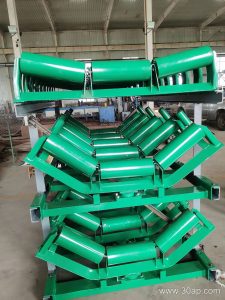
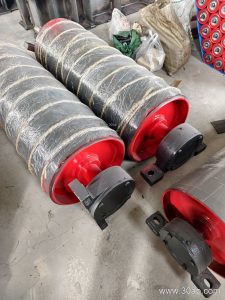
In these settings, idler roller alignment, pulley lagging condition, and belt tracking all influence belt life. A fire resistant belt does not compensate for a misaligned frame or seized roller.
What Buyers Should Check
Start with the duty: material type, lump size, throughput, incline, and the environment (wet, dusty, oily, or hot). Confirm the required fire and anti-static performance with the belt supplier and verify test documentation rather than relying on a product name alone.
Then review the carcass grade and cover thickness against the actual wear points. A crusher discharge may need an impact resistant or high abrasion resistant cover, while a long overland run may favor a steel cord or high-strength EP construction. Also confirm splice method, edge condition, and whether an endless conveyor belt is preferred to reduce joints in critical sections.
Finally, plan maintenance: check pulley lagging, clean rollers, and inspect the belt surface for cuts and cover loss. A well-matched Mining Fire Resistant Conveyor Belt, installed on a properly aligned conveyor, gives mines and processing plants a safer, longer-running material handling line.