What a Conveyor Parts Pulley Does on the Line
A conveyor parts pulley is the rotating drum that carries, drives, or redirects the conveyor belt at key points along a conveyor. In daily plant language it is often simply called a conveyor pulley, and it sits at the heart of the mechanical side of the system, working together with the conveyor belt, idler roller sets, and conveyor bracket assemblies. Whether the line runs in a quarry, a cement plant clinker hall, a power plant coal yard, or a copper ore concentrator, the pulley is the component that transfers motion and keeps the belt tracking under load.
Because different positions do different jobs, drive, tail, and bend pulleys are separate subtypes and are not interchangeable. A drive pulley transmits torque from the gearbox to the belt, a tail pulley forms the return end and helps maintain tension, and a bend pulley changes belt direction without driving. Each has its own design priorities, and treating them as one generic item usually leads to premature wear.
How the Pulley Is Built
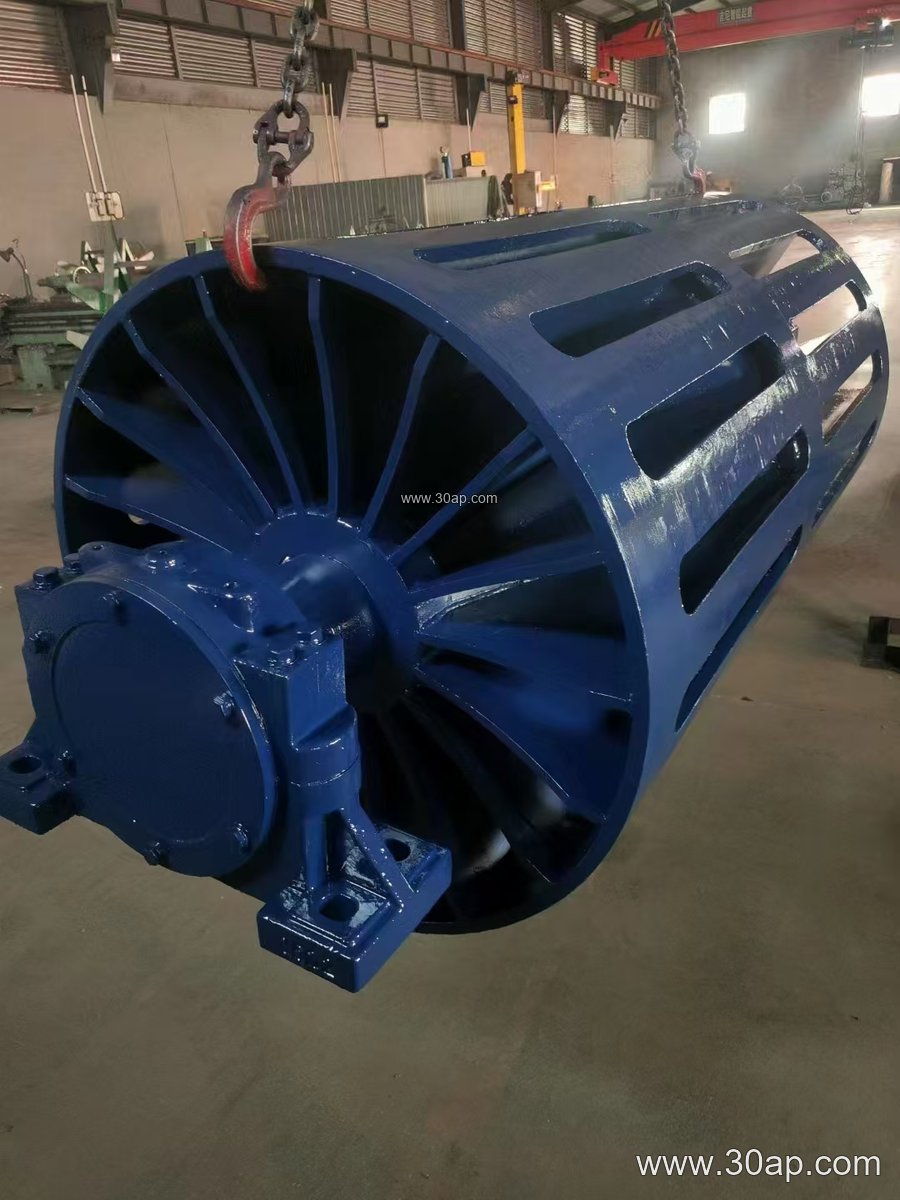
Most industrial pulleys share a common structure: a cylindrical shell, two end discs or hubs, a shaft, and a bearing arrangement mounted in bearing housings. The shell is usually rolled from steel plate and machined at the ends, while the shaft is sized by torque and radial load rather than by belt width alone. Locking elements or keyed connections fix the shell to the shaft, and the whole assembly is balanced before installation.
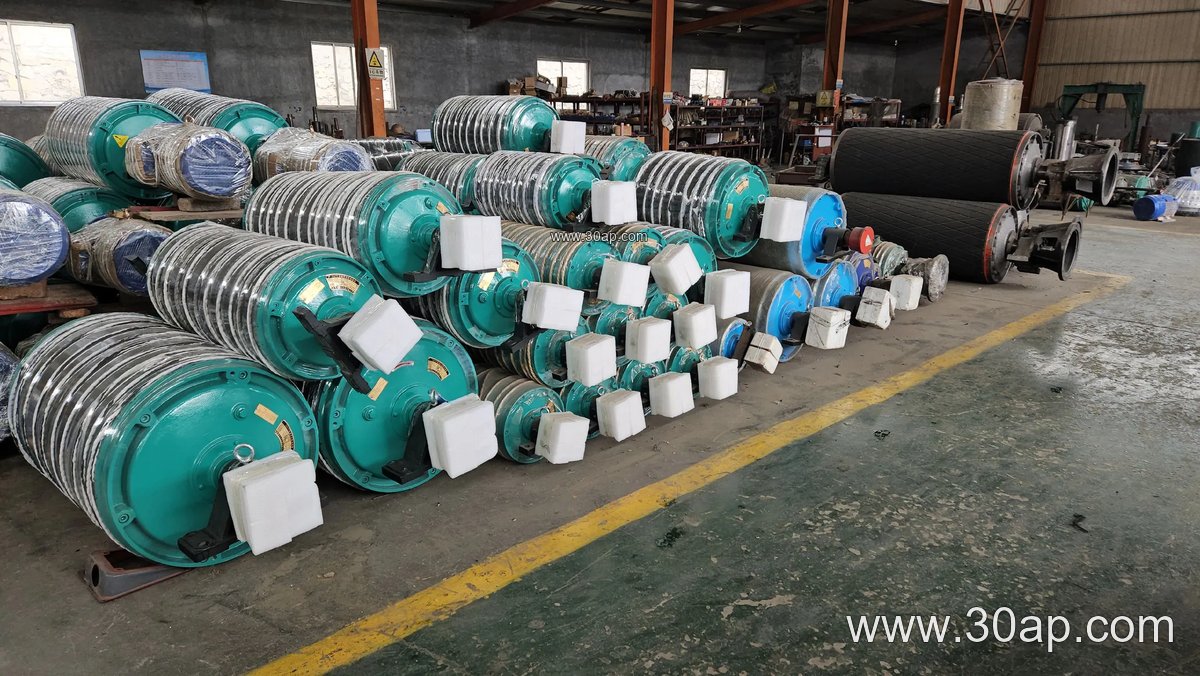
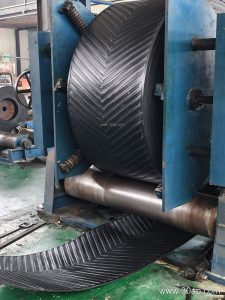
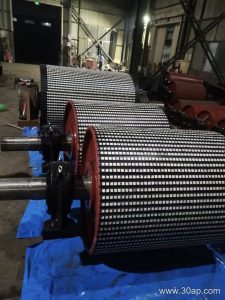
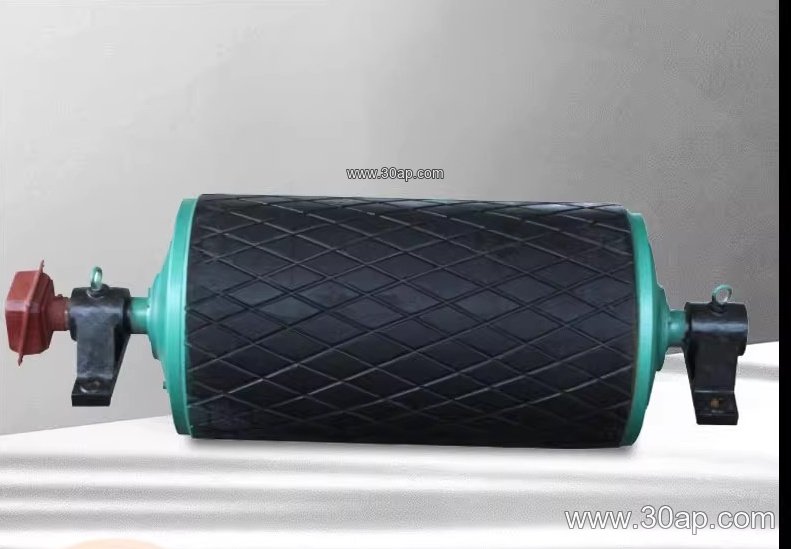
Surface treatment is where many specifications diverge. Plain shell faces suit light duty and simple alignment. Rubber lagging applied by cold bonding or hot vulcanizing improves grip on the drive side and protects the shell from abrasive material. Diamond and herringbone patterns help shed water and fines, ceramic lagging is chosen for high-wear drive positions, and flat rubber is common on non-drive rolls. Lagging thickness is frequently 8, 10, 12, 15, or 20 mm depending on the duty.
Where These Pulleys Are Used
Aggregate and sand plants use them on primary and secondary belts feeding crushers and screens. Coal handling systems in power stations rely on lagged drive pulleys to keep long inclined belts from slipping. In the cement industry they appear on raw mill feed, clinker transport, and additive belts. Port bulk terminals and ship loading conveyors use large-diameter pulleys to reduce belt bending stress. The same components also turn up in fertilizer plants, grain silos, and tunnel spoil handling lines.
On a typical stone crushing line, a B800 × Ø500 drive pulley with diamond lagging may run alongside a B800 tail pulley and several idler rollers, while a heavy-duty mining conveyor may use a B1400 × Ø800 drive unit paired with a bend pulley at the tension station. These combinations are examples only; final selection follows belt tension, wrap angle, and shaft load calculations.
Common Reference Dimensions
Shell width is normally slightly larger than belt width so the belt is fully supported. The table below shows typical relationships, not fixed rules.
- B400 belt — about 500 mm face width
- B500 belt — about 600 mm face width
- B650 belt — about 750 mm face width
- B800 belt — about 950 mm face width
- B1000 belt — about 1150 mm face width
- B1200 belt — about 1400 mm face width
- B1400 belt — about 1600 mm face width
- B1600 belt — about 1800 mm face width
Diameter ranges commonly seen include Ø200, Ø250, Ø315, Ø400, Ø500, Ø630, Ø800, Ø1000, Ø1250, and larger sizes for high-tension installations. Shaft diameters such as Ø50, Ø80, Ø100, Ø120, and Ø160 are selected from torque and bearing life, never from belt width alone. A single belt width can match several pulley diameters depending on wrap angle and belt construction.
Buyer Checklist Before Ordering
Confirm the mounting position first, because a head or drive pulley, a tail pulley, and a bend pulley have different load profiles. Provide belt width, belt type, and whether the belt is a heavy-duty mining conveyor belt or a lighter fabric core conveyor belt, since tension affects shell thickness and shaft size. State the lagging preference and thickness, the bearing type, and the shaft extension needed for the gearbox or coupling.
Check that the pulley face width, diameter, and lagging pattern match the conveyor frame and the conveyor bracket dimensions. Ask for balancing grade, weld inspection, and runout tolerances in writing. During installation, verify alignment with the belt line and check tracking after the first few hours of running. Regular inspection of lagging wear, bearing temperature, and locking element tightness will extend service life and protect the belt from edge damage.