What a Wear-Resistant Lagged Pulley Does
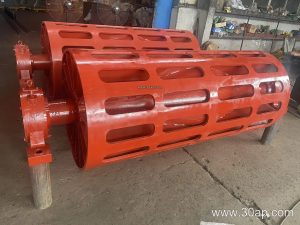
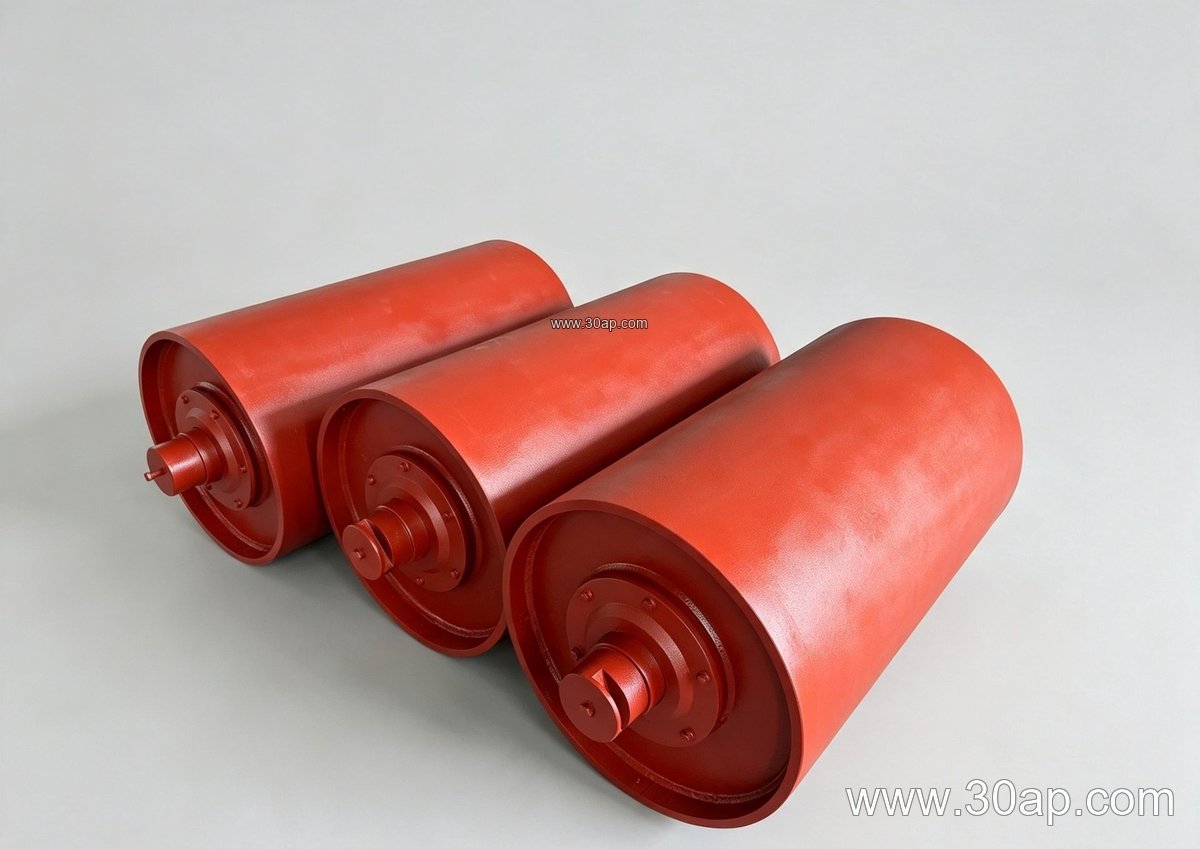
A wear-resistant lagged pulley is a conveyor pulley whose shell is covered with a rubber or ceramic lagging layer designed to survive constant contact with abrasive material. In a quarry, limestone mine or sand and aggregate line, the pulley is often the part that fails first when fines work their way between the belt and the shell. The lagging takes that punishment instead of the steel, and it also raises friction so the belt can be driven without slipping.
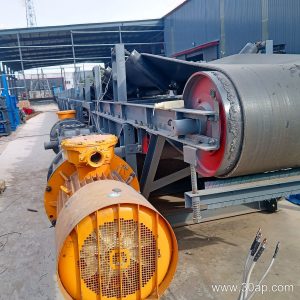
The pulley itself remains a drum with a shaft, hubs and end discs. What makes it a wear-resistant lagged pulley is the surface: a bonded layer that resists gouging, cuts and polishing. Buyers usually meet this product in drive positions on a Stone Crushing Conveyor Belt line or on a Quarry Conveyor Belt carrying sharp rock, but the same construction appears wherever the belt wraps a pulley under load.
How the Lagging Is Built
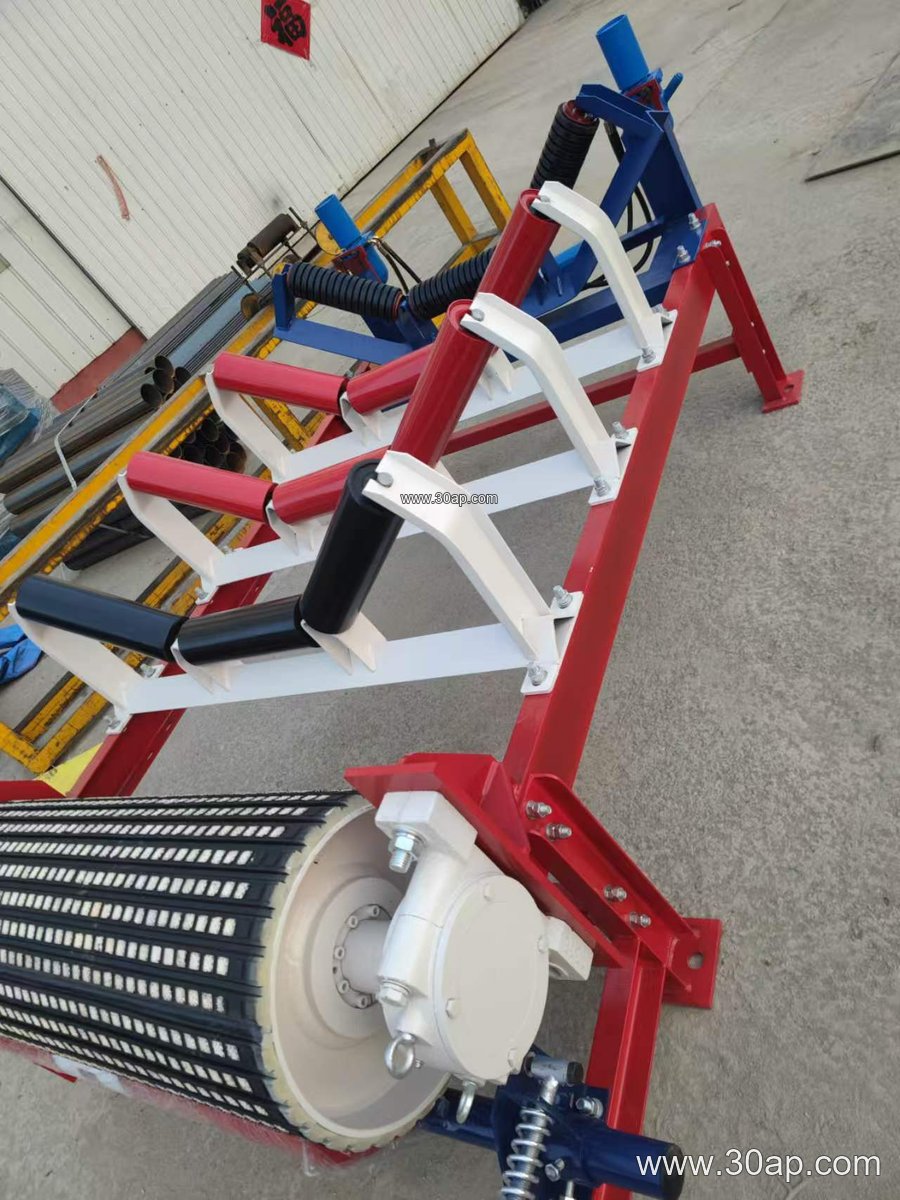
Most units use one of three surface forms. Cold-bonded rubber is economical and common on medium-duty conveyors. Hot-vulcanized rubber forms a stronger bond and suits higher tension and faster belts. Ceramic lagging, with embedded tiles, is chosen where grit and wet conditions cause polishing and slip. Diamond and herringbone patterns are also used to shed water and fines.
- Rubber lagging — 8, 10, 12, 15 or 20 mm thick, plain, diamond or herringbone.
- Ceramic lagging — tiles set in rubber, for high-friction drive duty.
- Plain rubber — used on non-drive positions such as a bend or take-up pulley.
Thickness is not a free upgrade. A thicker layer lasts longer under abrasion but changes the pulley diameter and the belt path, so it must be agreed with the conveyor designer. The shell, shaft and locking assembly must also be sized for the extra wrap friction.
Common Sizes and Surface Options
These are reference ranges, not a fixed catalogue. Diameter and face width are selected from belt tension, wrap angle and shaft load, not from belt width alone.
| Parameter | Common reference values |
|---|---|
| Belt width B | B400, B500, B650, B800, B1000, B1200, B1400, B1600, B1800 |
| Pulley diameter | Ø200, Ø250, Ø315, Ø400, Ø500, Ø630, Ø800, Ø1000, Ø1250 |
| Face width (approx.) | B400 → 500 mm, B650 → 750 mm, B800 → 950 mm, B1200 → 1400 mm, B1400 → 1600 mm |
| Lagging thickness | 8, 10, 12, 15, 20 mm |
| Shaft diameter | Ø50 to Ø200 depending on torque and bearing load |
Typical combinations include B800 × Ø500, B1200 × Ø1000 and B1400 × Ø800. A B1200 belt can run on more than one diameter; the choice depends on the conveyor layout.
Where It Fits on the Conveyor
Position matters. A drive or head pulley needs the highest friction and usually the thickest, most aggressive lagging. A tail pulley sees material impact and fines, so abrasion resistance outweighs grip. A bend or take-up pulley needs a smooth, even surface so the belt tracks well. When comparing, remember that drive, tail and bend pulleys are not interchangeable — each has its own load case, and a wear-resistant lagged pulley specified for one position should not simply be moved to another.
In a coal washing plant or power plant coal yard, a Flame Retardant Conveyor Belt is often paired with lagging that meets the same fire-safety requirements. On a cement plant clinker line, heat and abrasion act together, and a Heat Resistant Conveyor Belt may run over a pulley whose lagging must tolerate warm fines.
Buyer Checklist
- Confirm the pulley position: drive, tail, bend, take-up or snub.
- State belt width, belt type and maximum tension, not just the drum size.
- Choose lagging form by duty: rubber for general abrasion, ceramic for slip-prone drives.
- Check shaft diameter against torque and bearing load; never assume it from belt width.
- Ask how the lagging is bonded and whether it can be replaced on site.
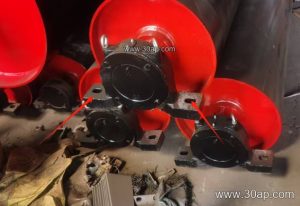
- Match the pulley to the conveyor bracket and bearing housings already in place.
A well-matched unit, running with a straight conveyor belt and free-turning idler rollers, keeps slip and shell wear low. For abrasive ore or aggregate duty, an Abrasion Resistant Conveyor Belt and a properly lagged pulley work as a pair. Details such as face width, lagging pattern and shaft size are best confirmed against the actual conveyor drawing before ordering.