What a Motorized Pulley Is
A motorized pulley is a self-contained drive unit in which the electric motor and gear reducer are built directly inside the pulley shell. Instead of mounting a motor, coupling, and gearbox outside the conveyor frame, the power train sits inside the drum that contacts the conveyor belt. This design simplifies the drive station, reduces exposed rotating parts, and saves floor space. As a type of conveyor pulley, it is often chosen where a compact head-end drive is preferred over a conventional external drive arrangement.
The product is sometimes called a drum motor or an internal drive pulley. These are accurate equivalent names for the same product. In this article, the term motorized pulley refers to that integrated drive unit. It is not the same as a tail pulley, a bend pulley, or a drive pulley that uses an external motor and gearbox. Those are separate components with different functions in a conveyor system.
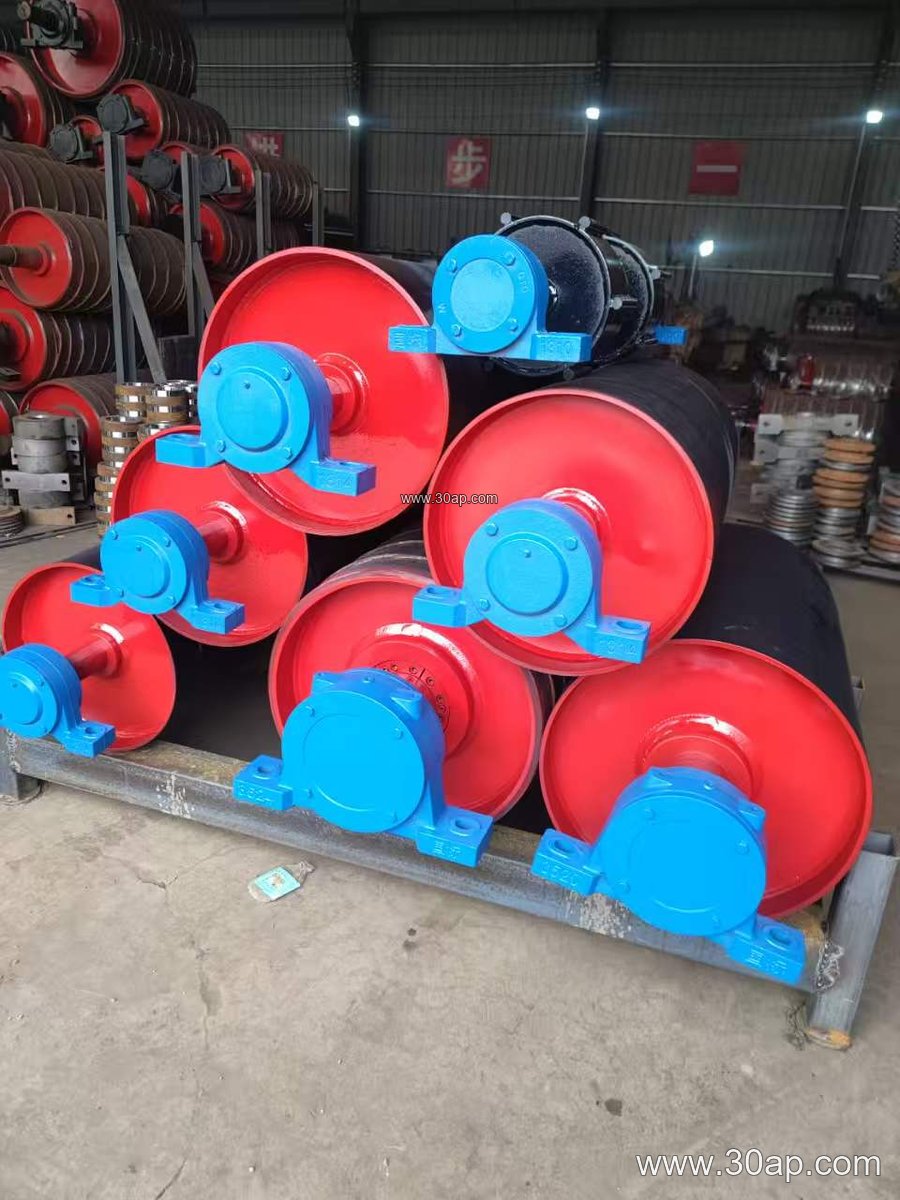
How It Is Built
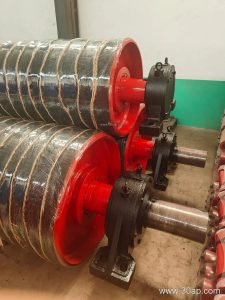
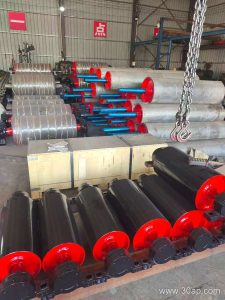
Inside the shell, a motor stator and rotor connect to a planetary or helical gear stage. The output torque turns the shell through a gear hub, while the shell rotates on bearings supported by a fixed shaft. Sealing is critical because dust, water, and fines are common in quarry, cement, and power plant environments. The outer surface may be plain, lagged with rubber, or covered with diamond or herringbone lagging to improve grip. Lagging thickness commonly ranges from 8 mm to 20 mm depending on the duty.
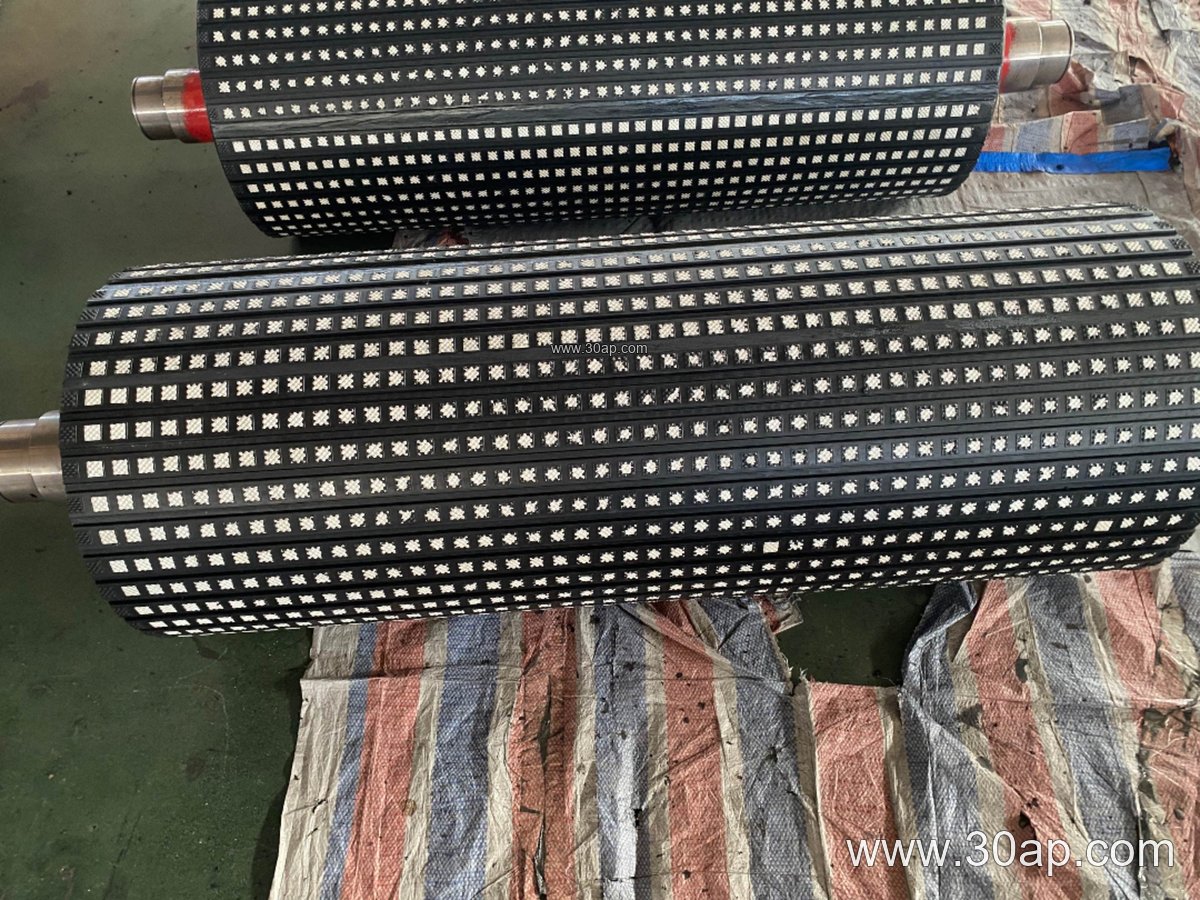
Typical shell diameters for motorized pulleys are in the range of Ø200 to Ø1000 mm, with larger custom units available for heavy-duty work. Drum face width is usually wider than the belt width. For example, a B800 belt may run on a pulley with a face width around 950 mm, and a B1200 belt on a face around 1400 mm. These are reference proportions, not fixed pairings. Shaft diameter is selected by torque and load, not by belt width alone, so a B1000 conveyor might use a shaft sized by the drive calculation rather than by a rule of thumb.
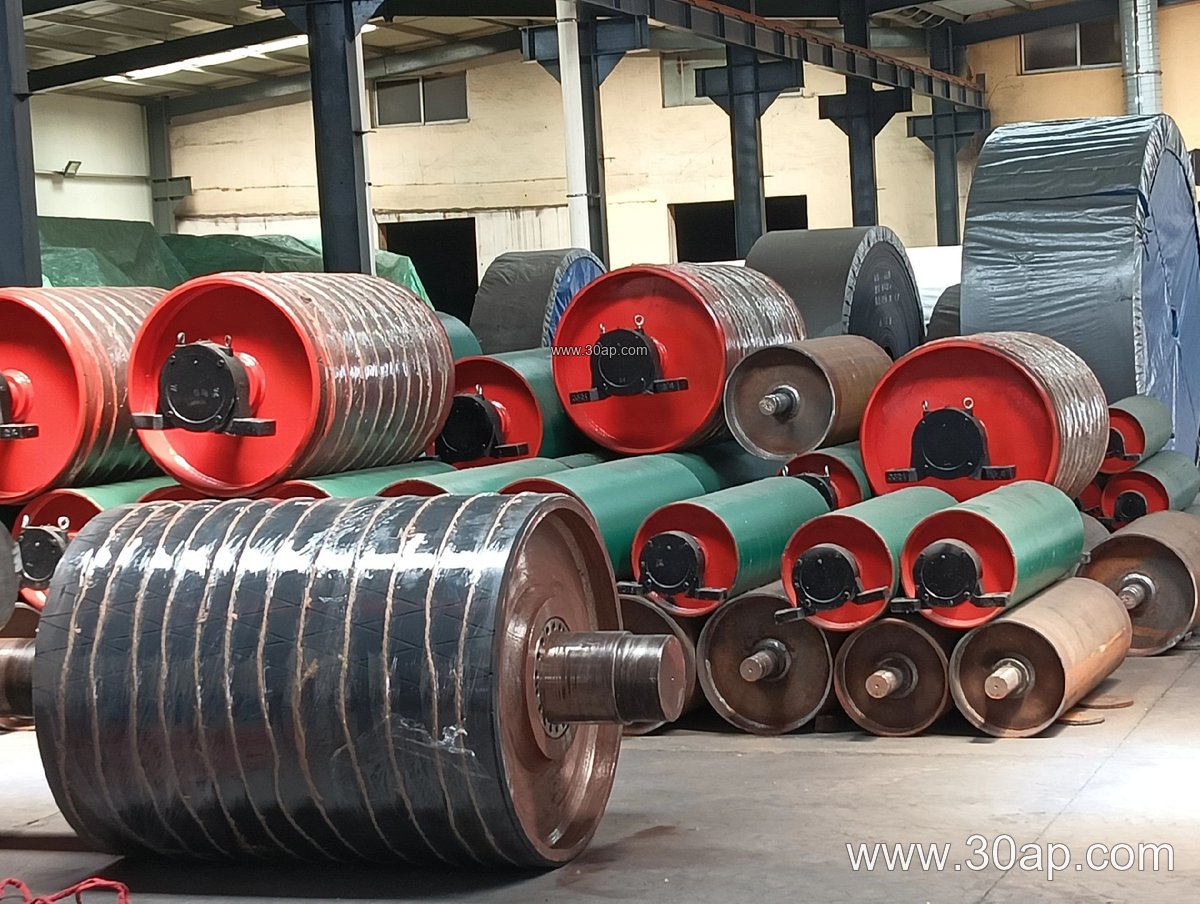
Where It Fits in the Conveyor
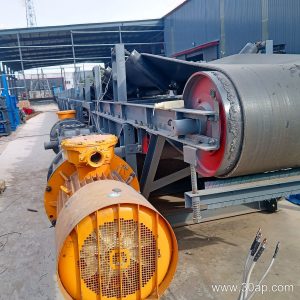
The motorized pulley normally serves as the head drive or discharge pulley, pulling the loaded belt. It can also be used at intermediate drive points in long conveying lines. In a quarry or aggregate plant, it may drive a crusher discharge belt or a screen feed belt. In a power plant coal handling system, it can be the drive for a coal conveyor that carries fuel to the boiler bunkers. In a cement plant, it may run clinker or raw meal transport belts. The compact housing helps in tunnels, transfer towers, and other places where a walkway-mounted motor and gearbox would be difficult to guard.
For comparison, a bend pulley changes belt direction without driving, and a tail pulley supports the return end. A motorized pulley replaces only the drive function in that station. It works with the conveyor belt, idler roller, and conveyor bracket as part of the same system. In dusty or wet conditions, a well-sealed motorized pulley can reduce maintenance points compared with an external drive, but the belt must still be tracked and the lagging must suit the material. For abrasive ore or rock, a rubber lagged surface helps; for oily or sticky materials, the lagging choice should be discussed with the pulley supplier.
Buyer Checklist
Before selecting a motorized pulley, confirm the belt width, the required belt speed, the duty cycle, and the starting torque. Check the available space at the head end and the method of mounting to the conveyor bracket. Ask for the lagging type and thickness, the shell diameter, and the shaft size in the quotation. For a B650 or B800 belt, a pulley in the Ø315 to Ø500 range is common, but the final diameter depends on the gearbox rating and belt wrap. For a B1400 belt, a larger shell such as Ø800 or Ø1000 may be needed to transmit torque without excessive belt stress.
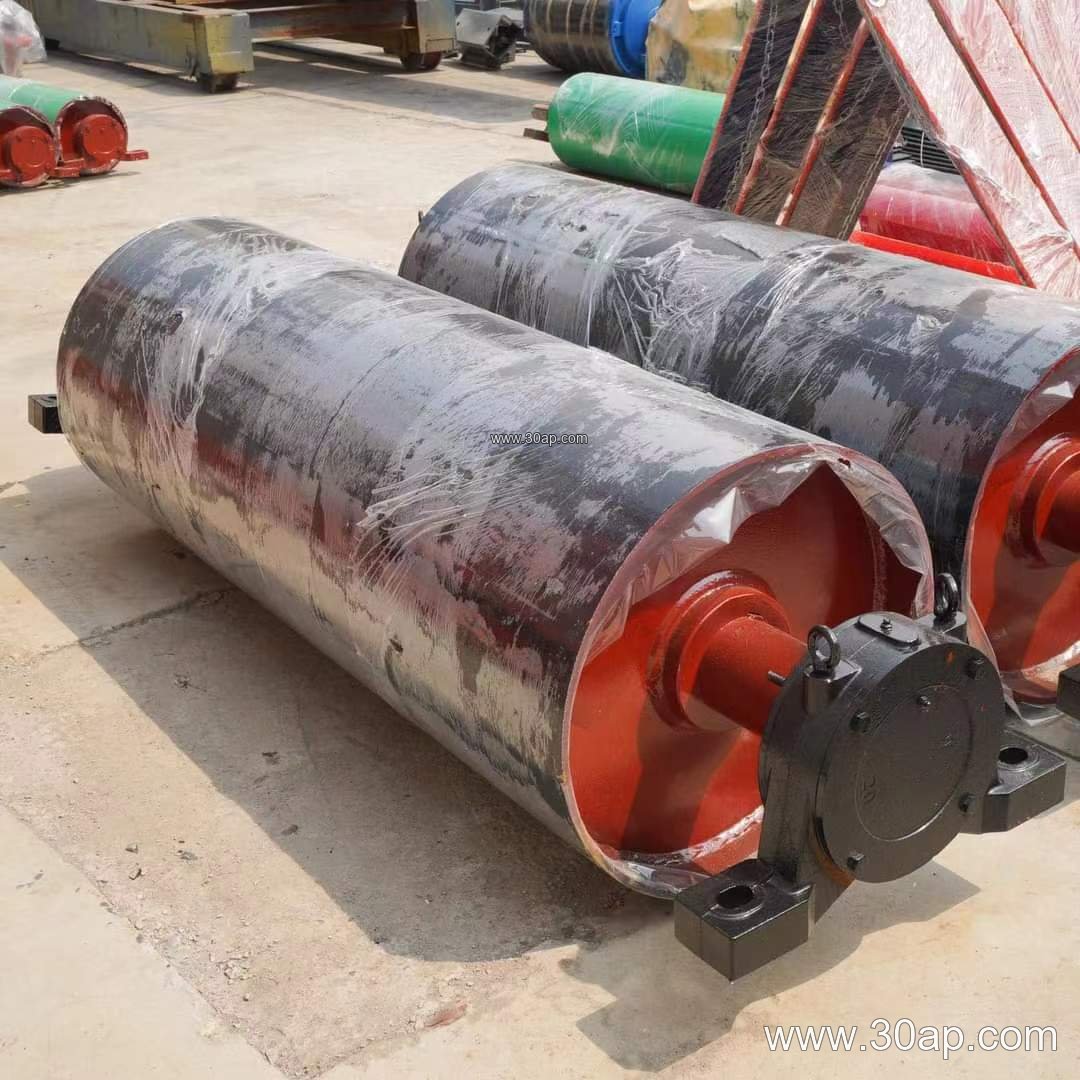
Also review the environmental conditions. In a coal mining conveyor or underground mining conveyor, flame retardant and anti-static properties may be required for the belt, and the pulley seals should resist fine coal dust. In a port or ship loading conveyor, salt air and moisture call for appropriate surface protection. The motorized pulley itself does not replace the need for a suitable conveyor belt, such as an EP conveyor belt, steel cord conveyor belt, or heat resistant conveyor belt, depending on the material temperature and abrasion level.
Maintenance is simpler in some ways because there is no external chain or coupling, but internal gears and bearings still need periodic inspection. Keep the lagging clean and check for belt misalignment. Record the pulley model, shell diameter, face width, and lagging thickness so replacement parts can be ordered correctly. For more information on conveyor pulleys and related components, visit www.example.com/conveyor-pulley or www.example.com/motorized-pulley. A motorized pulley can be a practical drive solution when the conveyor layout is tight and the duty is well defined.