What an NN Conveyor Belt Is
An NN Conveyor Belt is a fabric-core rubber belt built on nylon (polyamide) warp and weft cords. In the trade it is also called a nylon conveyor belt or an NN fabric core conveyor belt, and it belongs to the wider family of multi-ply fabric core belts. The nylon carcass gives the belt high tensile strength, strong fatigue resistance and good flexibility, which is why it is a common choice for long horizontal runs and for systems that start and stop under load.
Buyers often compare it with an EP Conveyor Belt, which uses polyester warp and nylon weft. Both are fabric-core designs, but nylon stretches more under tension and absorbs shock better, while polyester tends to hold its length more firmly. The right pick depends on the conveyor layout and the material being moved.
How the Belt Is Built
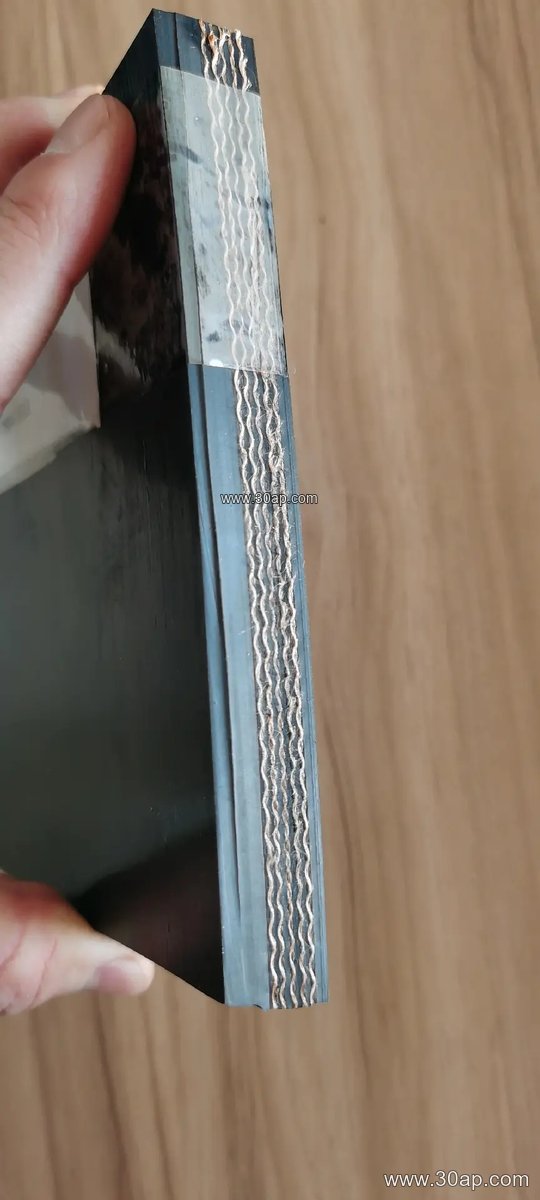
The carcass is made of two to six plies of nylon fabric, bonded with rubber friction and skim coats, then protected on both faces by cover rubber. Cover thickness is usually written as top plus bottom, for example 4+2 mm or 6+2 mm. A heavier cover suits sharp, abrasive rock; a thinner cover suits clean, fine bulk material.
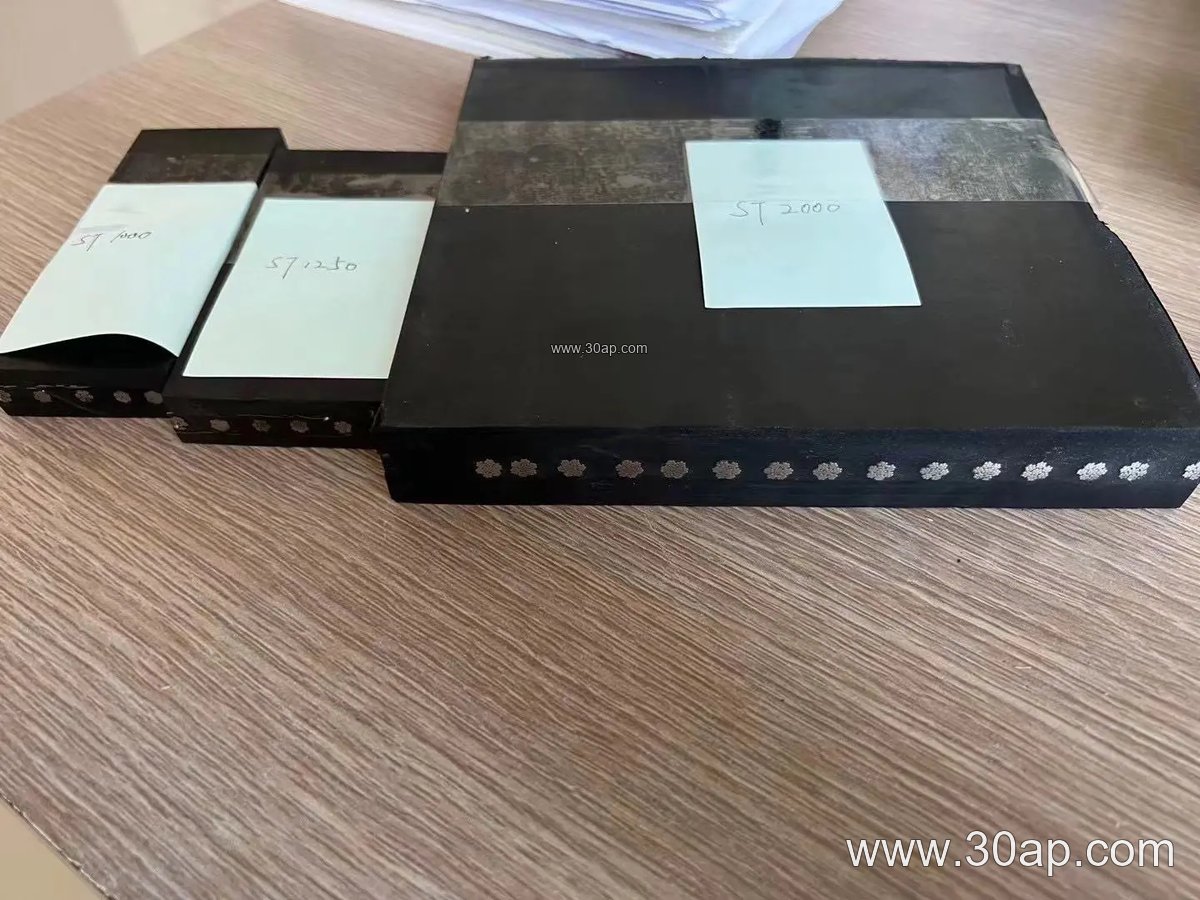
Edge construction matters too. Cut edges are common for general work, while moulded edges reduce the risk of ply separation in wet or dusty service. On top of the carcass and covers, the belt can be supplied with special compounds for heat, oil, flame, cold or static control.
Common NN Grades and Reference Data
NN grades describe the nominal tensile strength of the carcass. Values below are reference data only; actual construction is confirmed per design and per manufacturer.
- NN100, NN200, NN300 and NN400 are frequently used in aggregate, sand and light-to-medium ore duty.
- Higher grades such as NN500 and above are chosen when the same belt width must carry a heavier load or span a longer centre distance.
- Typical belt widths include B500, B650, B800, B1000, B1200 and B1400, with wider builds available for large plants.
- Cover combinations such as 3+1.5, 4+2, 5+2, 6+2 and 8+3 mm are common, and 2 to 6 plies are typical.
Remember that belt width and pulley diameter are matched by conveyor design, not by a fixed rule. A wider belt does not automatically require one specific pulley size, and shaft diameter is set by the pulley manufacturer from the actual load case.
Where It Works Well
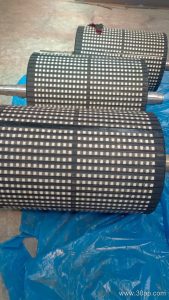
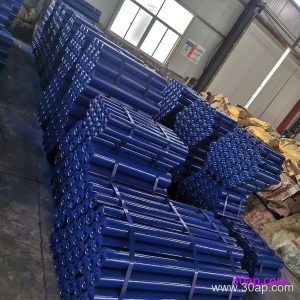
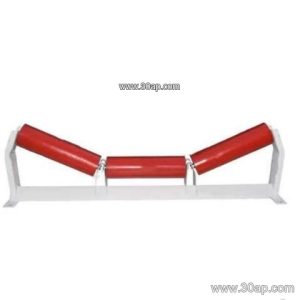
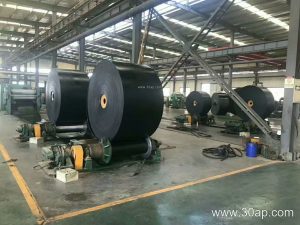
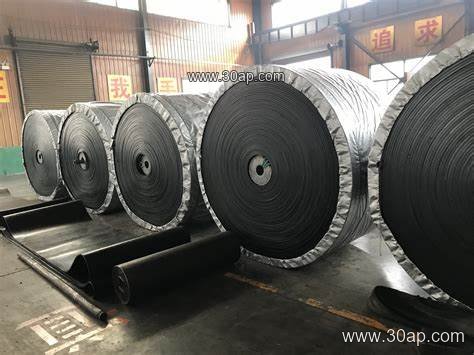
You will see this belt in mines, coal preparation plants, cement works, power stations, quarries, sand and gravel yards, steel plants and port bulk terminals. It handles crushed stone, clinker, coal, ore, sand, fertiliser and similar loose material. In a typical transfer line the belt runs over idler rollers, wraps the head and tail conveyor pulleys, and is held by a conveyor bracket and frame structure.
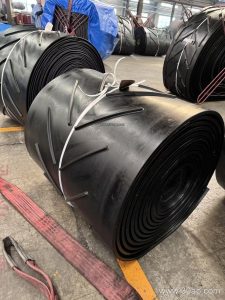
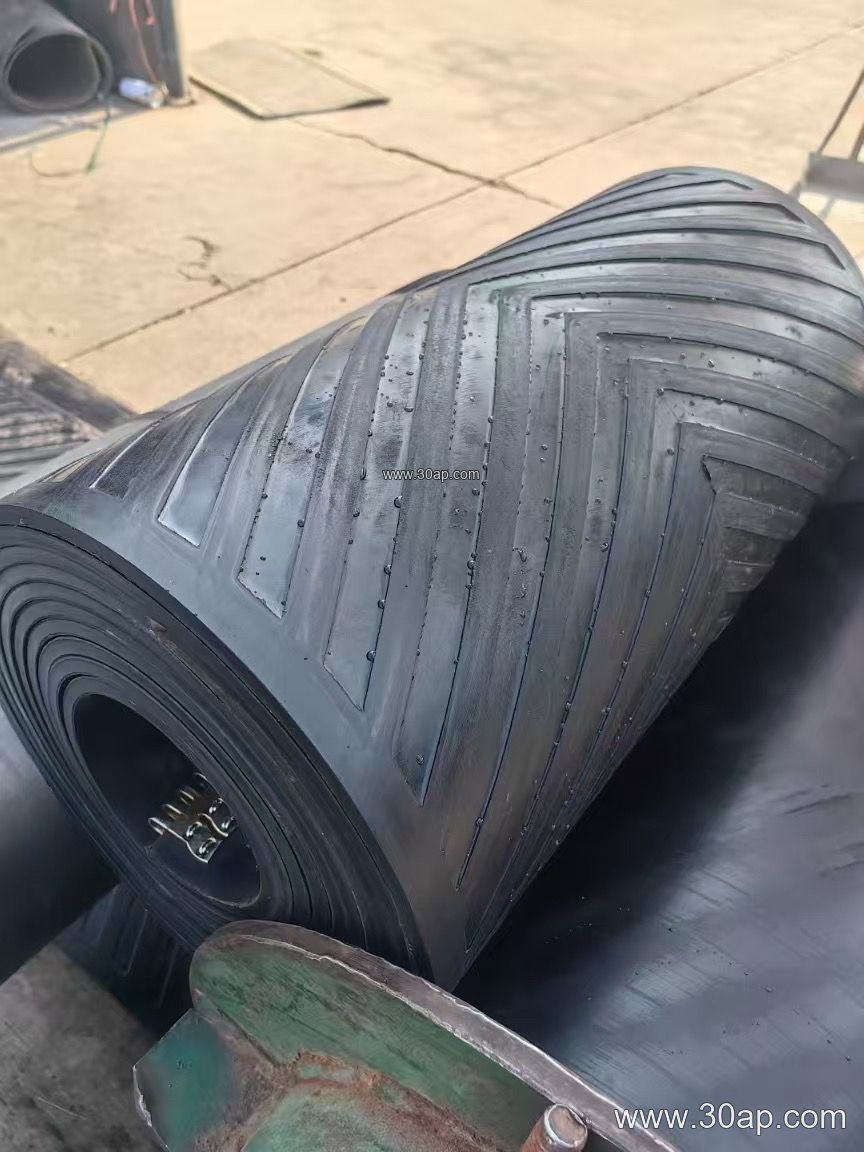
For special routes, other constructions may be more suitable: a Chevron Conveyor Belt or Corrugated Sidewall Conveyor Belt for steep inclines, a Pipe Conveyor Belt for dust-tight curves, and a Steel Cord Conveyor Belt for very high tension and long distance. These are different products, not substitutes for an NN belt on the same duty.
Choosing the Right Specification
Start with the material: lump size, density, moisture, temperature and abrasiveness. Then check the conveyor geometry, tonnage per hour, trough angle and drive arrangement. From there, select the NN grade, ply count, cover thickness and cover compound.
- Sharp rock or recycled concrete: consider an abrasion resistant cover and a robust carcass.
- Hot clinker or sinter: a heat resistant cover helps protect the carcass.
- Coal or dusty enclosed galleries: flame retardant and anti-static properties are often requested.
- Cold outdoor sites: a cold resistant compound keeps the belt flexible.
- Oily or chemical exposure: oil resistant or acid resistant covers reduce swelling and cracking.
Ask for the splice method, because vulcanised joints and mechanical fasteners have different strength factors. Also confirm roll length, edge type and marking so the belt matches the conveyor frame and the existing pulley faces.
Installation and Maintenance Notes
Alignment is the first defence against edge wear. Check that idler rollers sit square to the belt line, that the tail and bend pulleys are level, and that the take-up has enough travel. Keep the belt tracking straight during the first runs, and re-tension after the initial stretch of the nylon carcass.
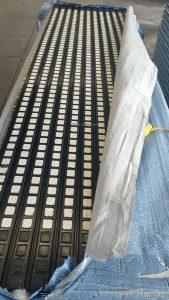
Inspect covers for cuts, ply separation and exposed fabric. Clean spillage from return rollers, and check that the conveyor pulley lagging is not worn smooth. Store spare rolls indoors, off the ground, and rotate stock so the rubber does not take a permanent set.
For more belt, idler and pulley guidance, visit www.beltconveyorparts.com and review options before ordering.