What a Custom Conveyor Pulley Is
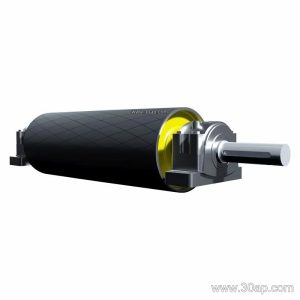
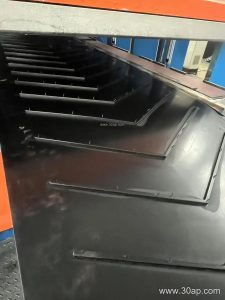
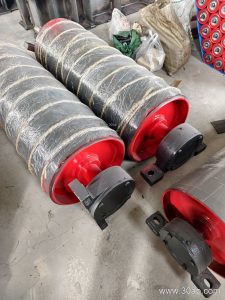
A custom conveyor pulley is a built-to-order drum that drives, redirects, or tensions the belt on a conveyor. Unlike a catalog item, it is engineered around the specific belt width, load profile, and space constraints of one conveyor line. These pulleys are common in quarry, cement, and coal mining operations where standard sizes rarely fit the frame. They work together with the conveyor belt, idler roller, and conveyor bracket to keep material moving without slippage or premature wear.
Construction and Key Components
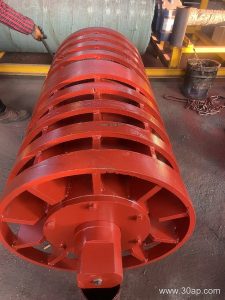
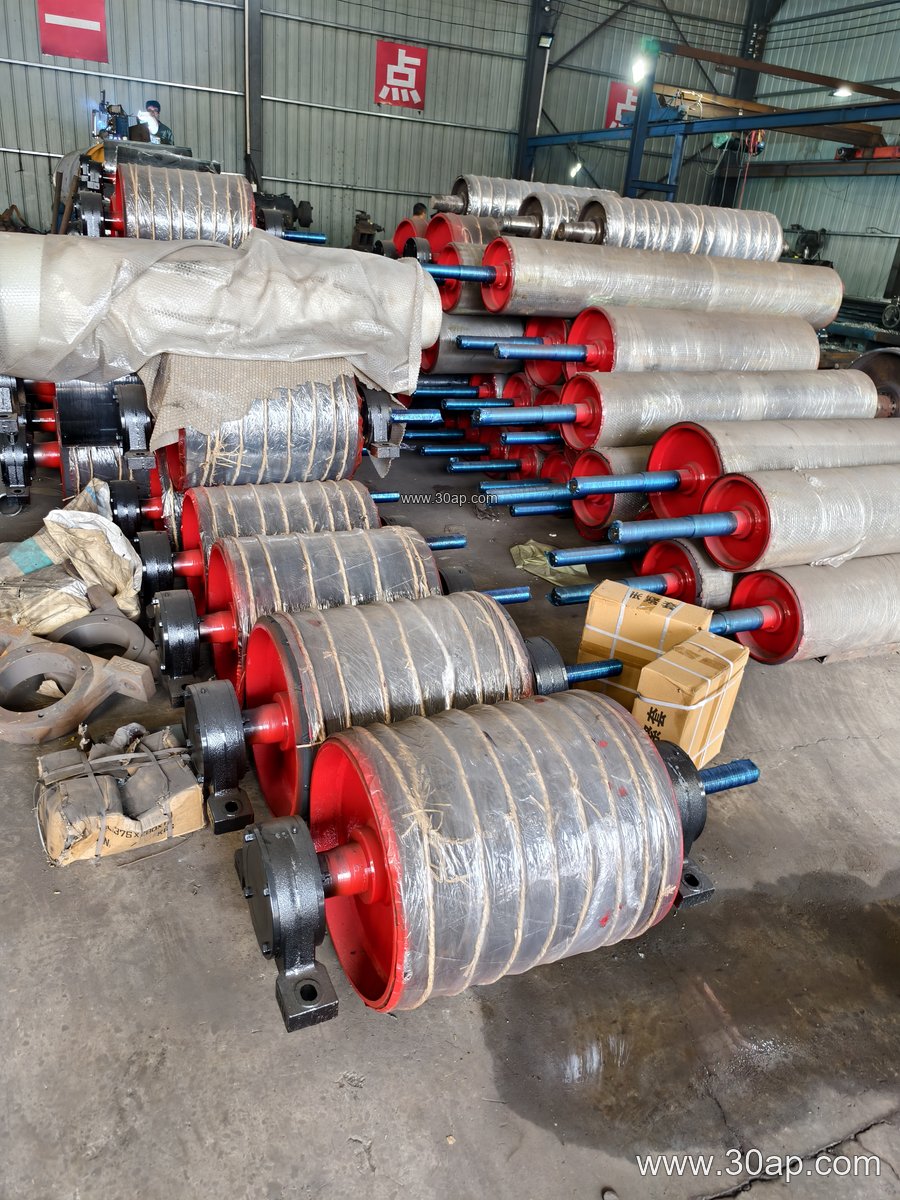
The pulley body typically consists of a steel shell, end discs, a shaft, and bearing housings. The shaft diameter is determined by torque and radial load, not by belt width alone—so two conveyors with the same belt width can use very different shaft sizes. Common shaft diameters include Ø50, Ø60, Ø70, Ø80, Ø90, Ø100, Ø120, Ø140, Ø160, Ø180, and Ø200 mm. The shell is often machined for balance and then covered with a lagging material to improve grip.
- Shell: rolled steel tube, sometimes with a slight crown to help belt tracking.
- Shaft: sized per design torque; keyed or shrink-fitted to the end discs.
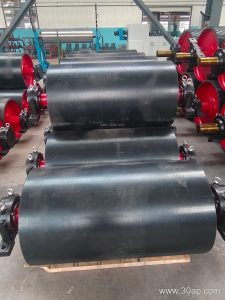
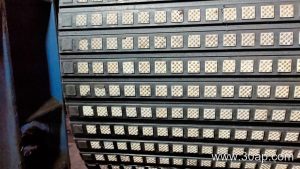
- Lagging: plain, rubber, ceramic, or diamond pattern, with thicknesses from 8 mm up to 20 mm.
- Bearing assembly: pillow block or flanged housings with grease nipples for maintenance.
For dusty or wet conditions, sealed bearings and corrosion-protected shafts are frequently specified. The conveyor bracket that holds the pulley must match the bearing housing footprint and allow for take-up adjustment where needed.
Common Applications Across Industries
Custom conveyor pulleys appear in many bulk material circuits. In a limestone quarry, a head pulley drives a 1200mm wide belt carrying crushed rock. In a coal mining operation, a tail pulley with rubber lagging tensions a flame retardant conveyor belt underground. Cement plants use bend pulleys to route clinker belts around tight transfer points, while power plants rely on drive pulleys for coal feeders. The same component also shows up in sand and aggregate lines, fertilizer handling, and port ship-loading systems. Each location places different demands on abrasion resistance, belt grip, and bearing protection.
Matching the Pulley to the Conveyor Belt
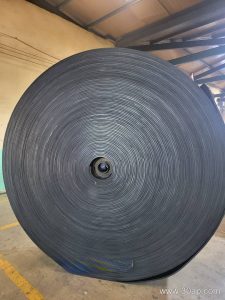
Belt width and pulley face width are related but not identical. The pulley face is usually a little wider than the belt to allow for mistracking. For reference, a B400 belt often pairs with a face around 500 mm, a B800 with about 950 mm, and a B1200 with roughly 1400 mm. These are typical starting points, not fixed rules. The belt type also matters: a heavy-duty mining conveyor belt or steel cord conveyor belt may require a larger diameter to reduce bending stress, while a lightweight EP conveyor belt can run on a smaller drum. When selecting a custom conveyor pulley, share the belt construction, tension, and speed with the manufacturer so the shell, shaft, and lagging can be sized together.
Surface Options and Their Role
Lagging choice affects grip and wear life. Plain steel is used in clean, low-tension positions. Rubber lagging—applied as cold-bonded sheet or hot-vulcanized—improves friction on drive pulleys. Diamond or herringbone patterns help shed water and fines, which is useful in wash plants and outdoor conveyors. Ceramic lagging offers high abrasion resistance for head pulleys handling sharp rock. Thickness typically ranges from 8 mm to 20 mm depending on the duty. A tail pulley may use plain rubber or a slight crown to assist tracking, while a bend pulley often runs with smooth lagging to minimize belt edge stress.
Buyer Checklist for Custom Conveyor Pulleys
Before ordering, gather the following details to avoid mismatches:
- Belt width and required pulley face width.
- Belt type and tension—whether it is a fabric core conveyor belt, steel cord, or heat resistant conveyor belt.
- Shaft diameter and bearing center distance, confirmed by the conveyor frame drawing.
- Lagging type and thickness, plus whether a crown is needed.
- Operating environment: dust, water, temperature, and access for maintenance.
Also confirm the mounting position—drive, tail, bend, or take-up—because each has different load and tracking behavior. A custom conveyor pulley built to these inputs will integrate smoothly with the idler rollers and brackets already on the line, reducing downtime and belt wear over the long run.