What a Driving Pulley Does on a Conveyor
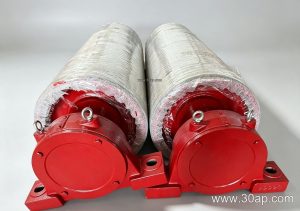
A driving pulley, often called the head pulley or drive drum, is the rotating shell that transfers motor torque to the conveyor belt. It grips the belt on the carrying side, pulls the loaded strand toward the discharge end, and returns the empty strand to the tail. Because it is the power input point of the conveyor, its diameter, lagging, and shaft design matter more than any other single drum in the system.
In a quarry or a limestone mine, the drive drum usually sits at the head of the line, close to the crusher feed. In a coal-fired power plant it may be installed indoors on a coal handling conveyor, where dust and fine particles demand a well-sealed bearing housing. Wherever it runs, the driving pulley is matched to the belt it moves, whether that belt is a heavy-duty mining conveyor belt or a lighter EP conveyor belt on an aggregate line.
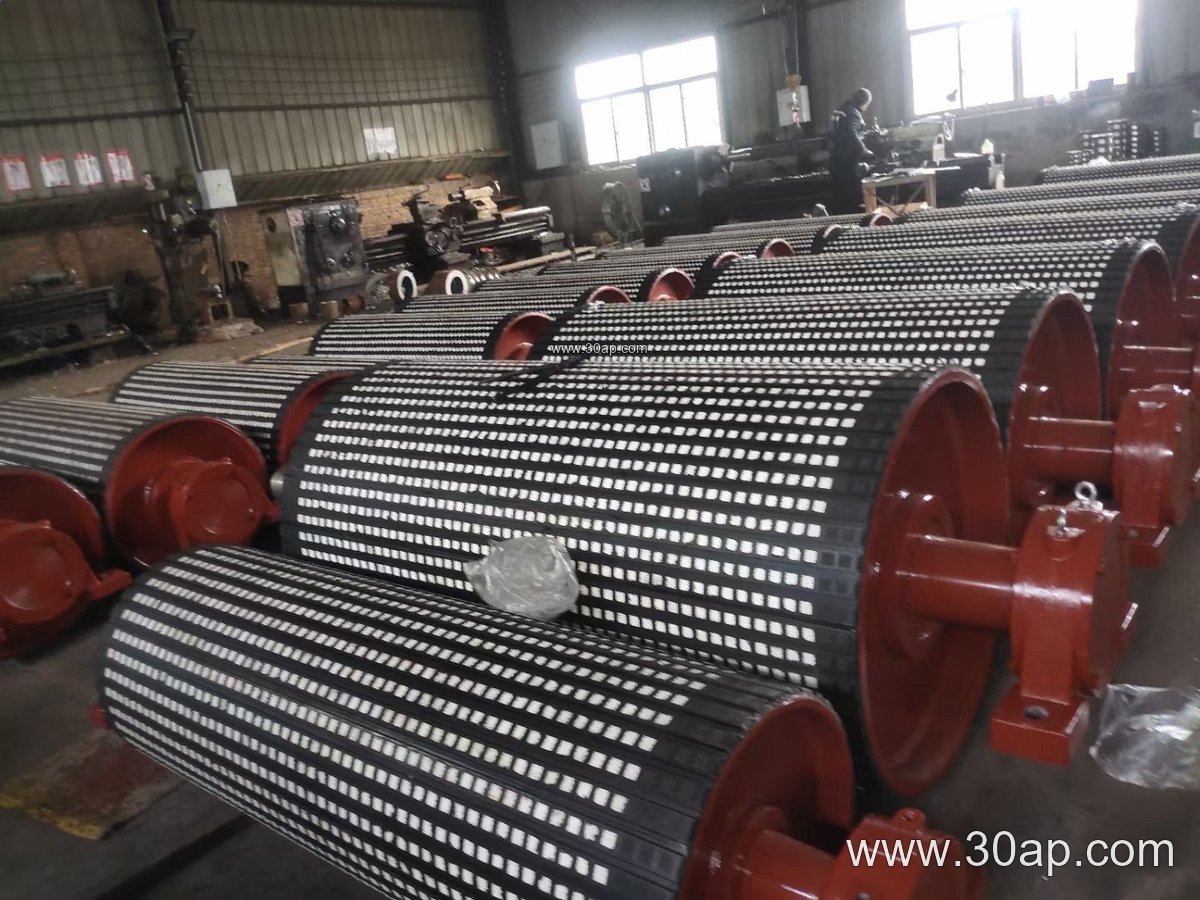
How the Drive Drum Is Built
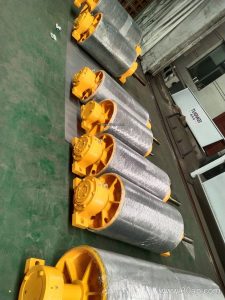
The core is a steel cylinder, machined and balanced, with end discs welded to the shell and hubs keyed to the shaft. The shaft is sized by torque and radial load rather than by belt width alone; common shaft diameters range from Ø50 up to Ø200 on larger units, and the final value is set by the conveyor designer. Bearings are mounted in pillow blocks or a split housing, and the whole assembly is fixed to the conveyor bracket or frame.
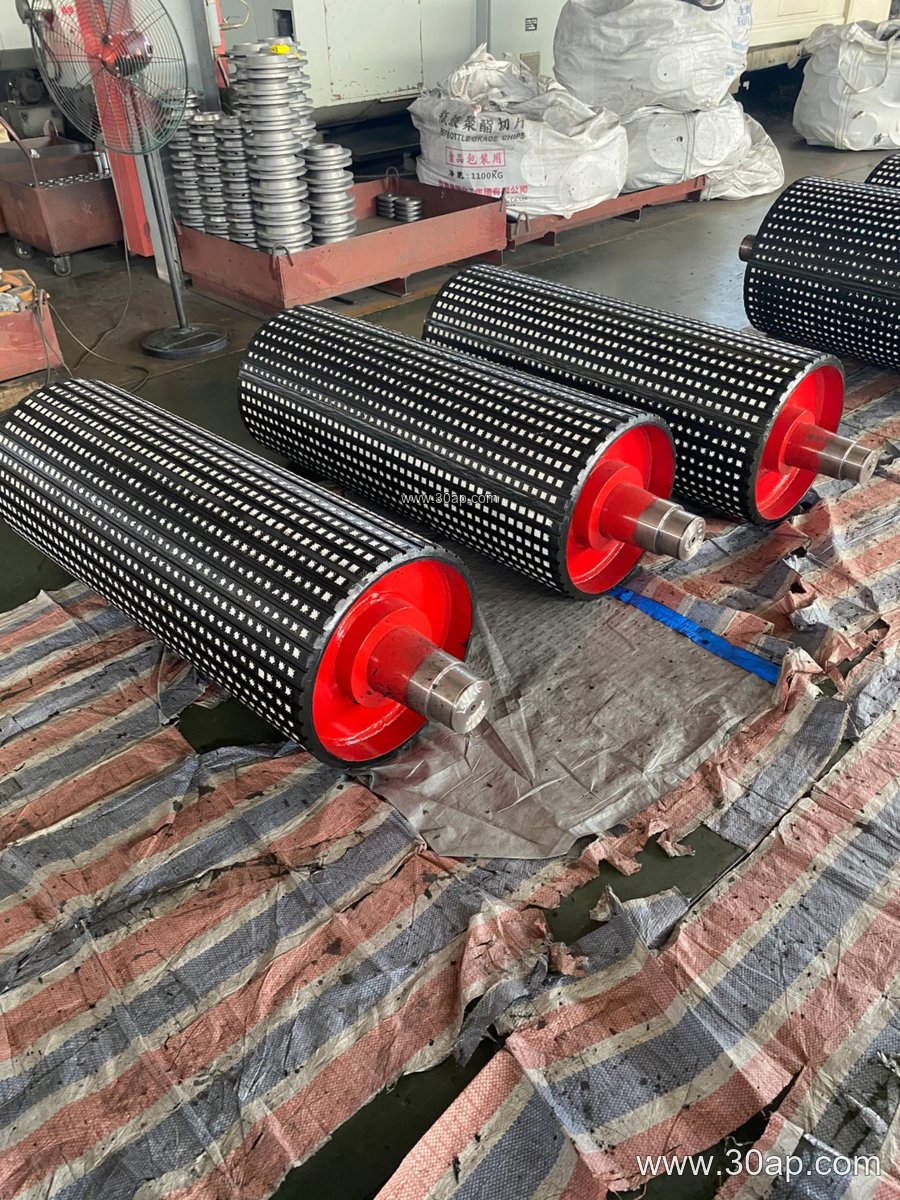
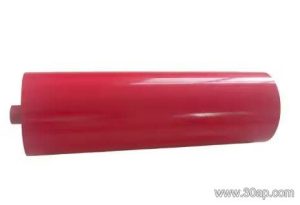
The outer surface is where grip is created. A plain finish is used on light duty lines, while cast rubber, cold-bonded rubber, hot vulcanized rubber, diamond groove, herringbone, and ceramic lagging are chosen for higher traction or wet conditions. Lagging thickness is typically 8, 10, 12, 15, or 20 mm. On a belt carrying wet sand from a wash plant, diamond lagging helps water escape; on a dry cement clinker line, a smooth or lightly grooved surface may be enough.
Common Shell and Face Dimensions
These combinations appear in catalogues and project drawings as reference points, not as fixed rules. A given belt width can be paired with more than one drum diameter depending on tension and wrap angle.
- B800 belt with Ø500 drum, face width about 950 mm
- B1000 belt with Ø630 drum, face width about 1150 mm
- B1200 belt with Ø1000 drum, face width about 1400 mm
- B1400 belt with Ø800 drum, face width about 1600 mm
- B1600 belt with Ø1250 drum, face width about 1800 mm
The shell face is normally wider than the belt so the belt can track without rubbing the frame. Diameters of Ø200, Ø250, Ø315, Ø400, Ø500, Ø630, Ø800, Ø1000, Ø1250, Ø1400, Ø1600, and Ø1800 are common in the field.
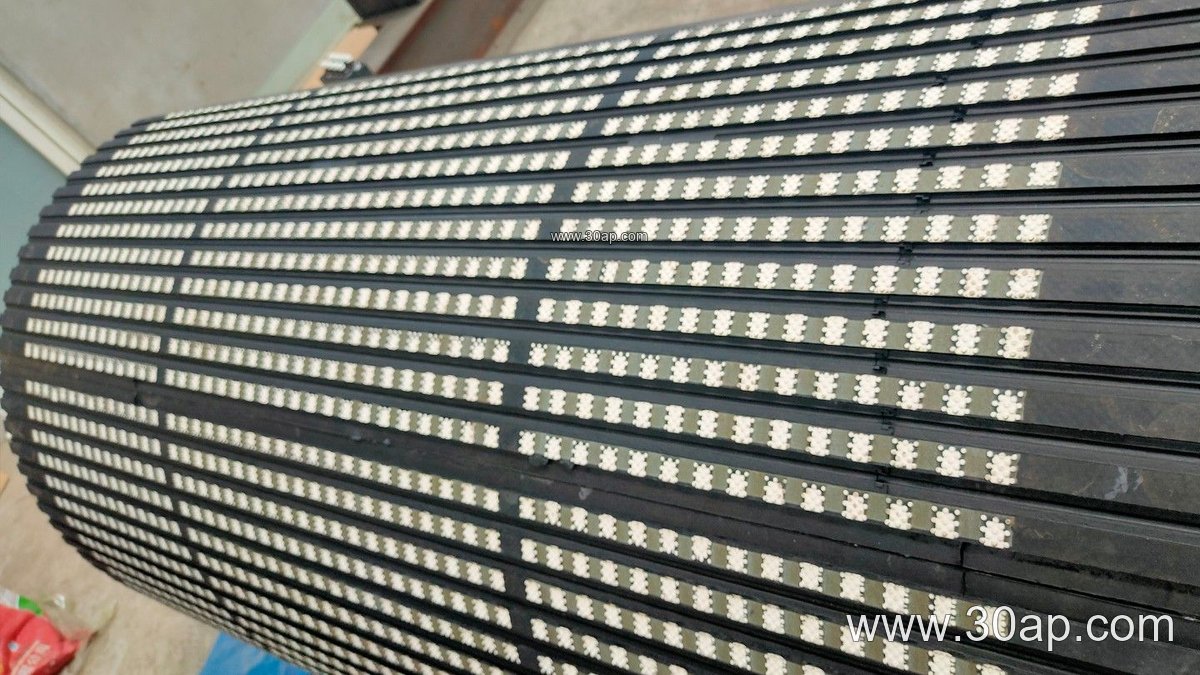
Where It Fits in Different Industries
In a sand and gravel plant, the drive drum at the head of a screen feed conveyor works with a fabric core conveyor belt and a set of troughing idler rollers. In an iron ore or copper ore operation, a larger drum with thick ceramic lagging may drive a steel cord conveyor belt over long distances. The same principle applies in a cement plant, a fertilizer granulation line, or a grain silo gallery, though the drum size and lagging pattern change with the material and the belt type.
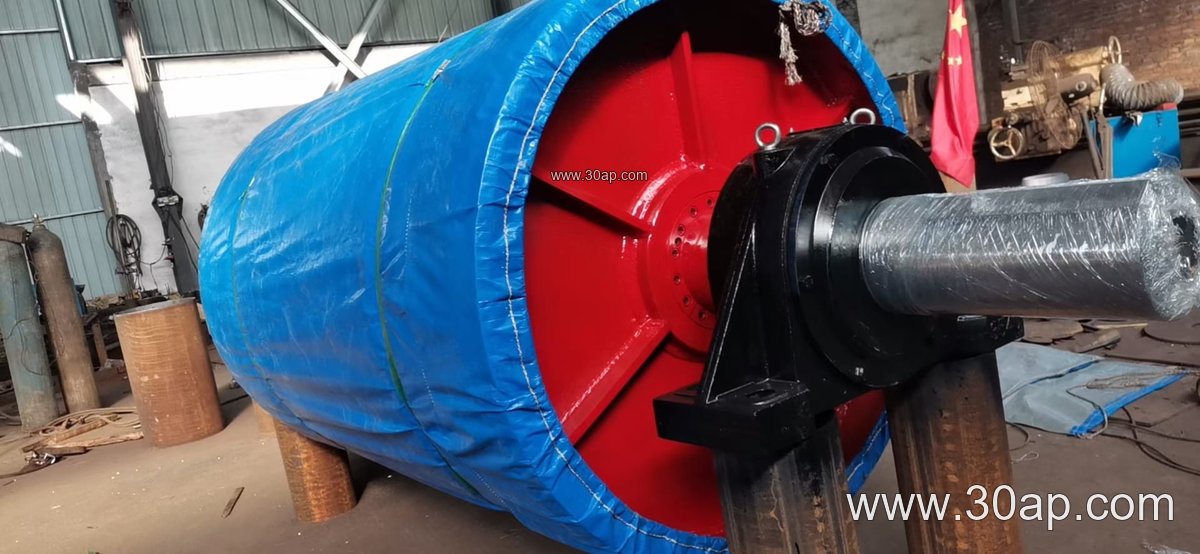
The drive position also matters. A head-end drive pulls the belt and keeps the loaded strand in tension, which suits most bulk material conveyors. A drive placed at the tail or in the middle of a long overland line needs careful coordination with the take-up and with the bend pulley that redirects the return strand. These are different components and should not be swapped in a specification.
Buyer Checklist Before Ordering
Start with the belt data: width, type, and tension. Confirm whether the line uses an abrasion resistant conveyor belt, a heat resistant conveyor belt, or a flame retardant conveyor belt, because lagging and bearing protection may change. Then confirm the drum diameter, face width, shaft diameter, keyway, bearing type, and lagging pattern. Ask for the balancing grade and the welding inspection record if the drum is large.
During installation, check alignment with the tail pulley and the conveyor bracket, verify belt tracking at low speed, and inspect lagging wear after the first weeks of running. A well-chosen driving pulley keeps torque transfer steady and extends the life of the belt and the idler roller set around it.