What a Return Self-Aligning Idler Does
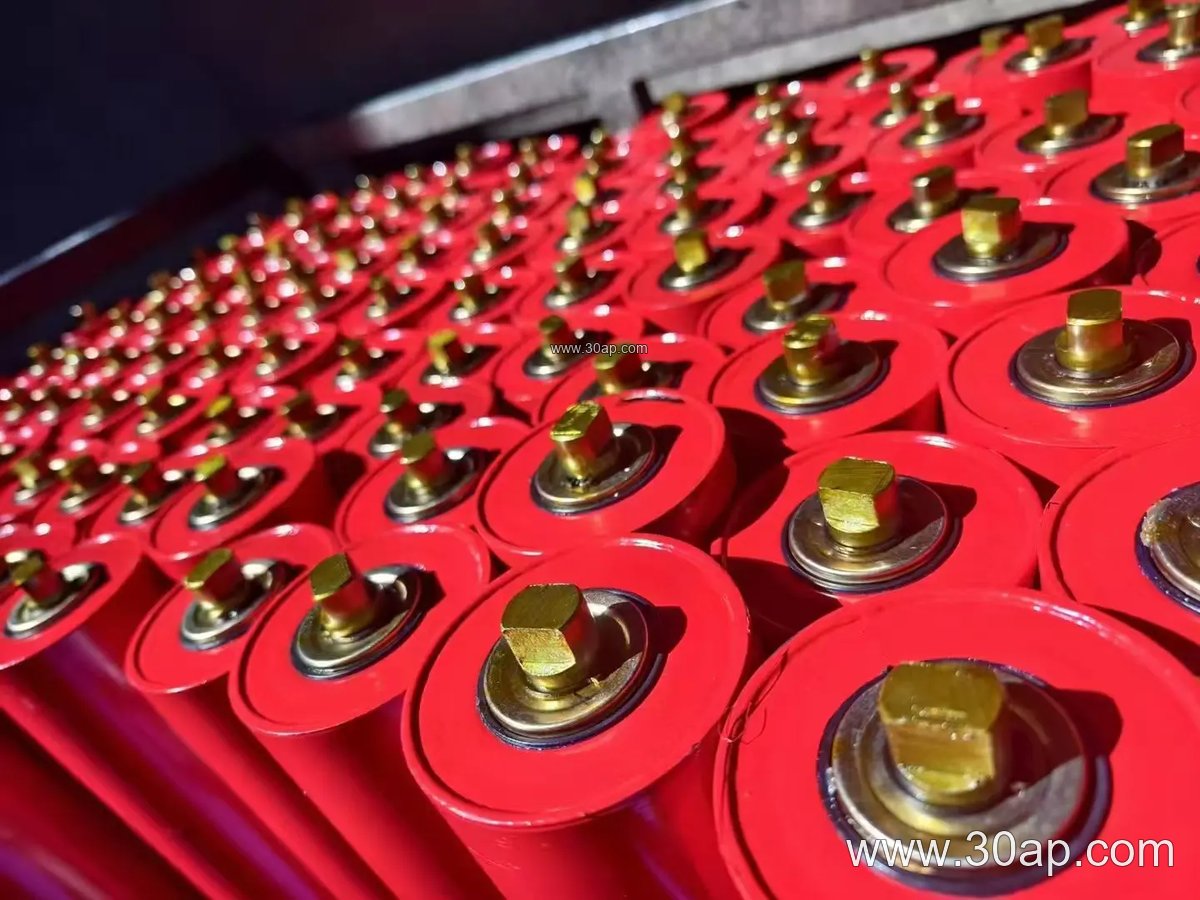
A return self-aligning idler is a training idler mounted on the return strand of a conveyor. Its job is to keep the belt centered as it travels back to the tail pulley. Unlike a standard flat return idler, this idler is built to pivot or skew slightly when the belt drifts, creating a corrective force that steers the belt back on track. In a quarry, a cement plant, or a coal handling system, even a small misalignment can cause edge damage, spillage, and premature wear on the conveyor belt and idler roller. The return self-aligning idler addresses this by acting as a passive steering device.
This component is sometimes called a self-training return roller or a return belt training idler. Those names describe the same product. It is not a drive pulley, tail pulley, or bend pulley; those are conveyor pulleys with entirely different functions. A return self-aligning idler is a rotating roller assembly, not a pulley.
Construction and Working Principle
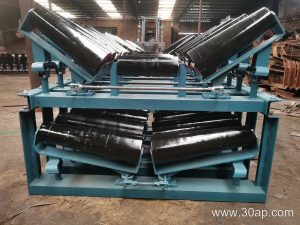
The typical design uses a pair of rollers mounted on a pivoting frame or a single roller with a central pivot. Vertical guide rollers or side rollers sense the belt edge. When the belt shifts to one side, it contacts a guide roller, which causes the idler frame to rotate slightly around its pivot. This skew changes the contact angle between the roller and the belt, generating a lateral force that nudges the belt back toward the center. Once aligned, the idler returns to its neutral position.
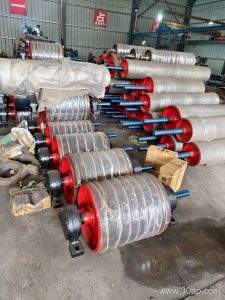
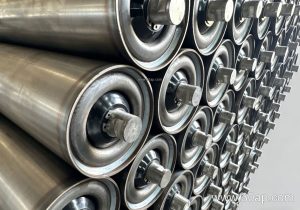
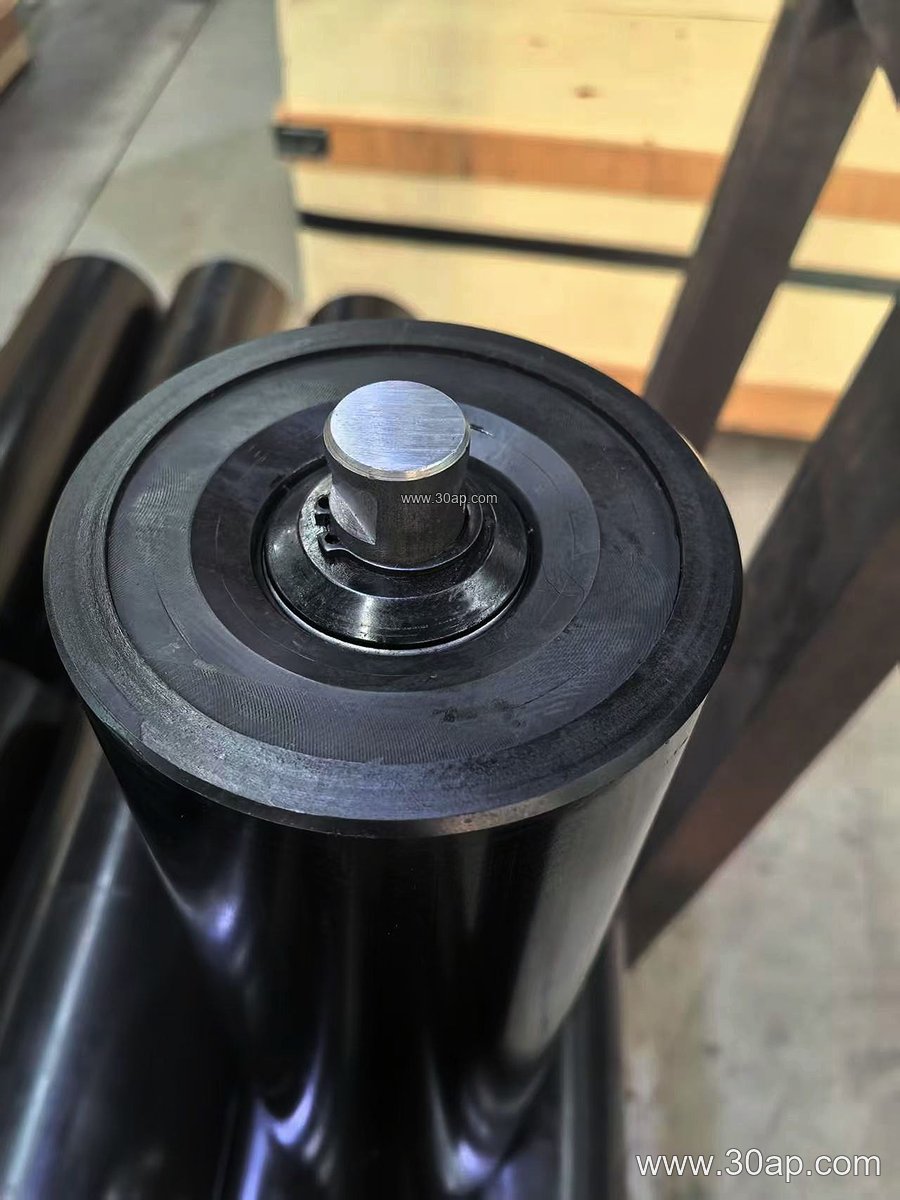
Common roll diameters for return self-aligning idlers include Ø89, Ø102, Ø108, Ø127, and Ø133 mm. Larger diameters such as Ø159 or Ø178 mm may be used on high-tonnage lines. The roller shell is usually steel tube, sometimes with a rubber or polyurethane lagging for grip and noise reduction. Bearing sizes often fall in the 6205, 6305, 6306, or 6308 range, depending on load and roll diameter. These are reference examples, not fixed pairings. The shaft and bearing housing are sealed to keep out dust and water, which matters in aggregate, mining, and power plant environments.
Where It Fits on the Conveyor
Return self-aligning idlers are installed on the return run, usually after the drive pulley and before the tail pulley. They are most effective when placed at intervals along the return strand, especially where the belt is prone to wander due to off-center loading, structure misalignment, or side winds. In a coal mining conveyor or a limestone quarry line, a few training idlers on the return side can reduce edge wear and prevent the belt from rubbing against the frame.
They are not a substitute for proper alignment of the conveyor pulley, the conveyor bracket, or the loading point. A return self-aligning idler works best as part of a complete tracking strategy. On the carrying side, a troughing self-aligning idler may be used for similar correction, but the return version handles the flat or catenary return belt.
Selection and Sizing Notes
Buyers should match the idler to the belt width and the return strand configuration. Common belt widths include B500, B650, B800, B1000, B1200, B1400, B1600, and B1800. The idler roll length is usually close to the belt width minus a margin, but the exact dimension depends on the frame design. A return self-aligning idler for a 1000 mm belt will not be the same as one for a 650 mm belt. The table below gives indicative roll diameters and bearing references; actual selection should follow the conveyor designer’s specification.
| Belt Width (mm) | Common Return Roll Diameter (mm) | Typical Bearing Reference |
|---|---|---|
| B500 | Ø89 | 6205 |
| B650 | Ø89 / Ø102 | 6205 / 6305 |
| B800 | Ø102 / Ø108 | 6305 / 6306 |
| B1000 | Ø108 / Ø127 | 6306 / 6308 |
| B1200 | Ø127 / Ø133 | 6308 |
| B1400 | Ø133 / Ø159 | 6308 / 6310 |
| B1600 | Ø159 / Ø178 | 6310 |
These values are common examples, not universal rules. A heavy-duty mining conveyor belt may require a larger shaft and bearing than a light-duty aggregate line using the same belt width. The return self-aligning idler should be selected with the belt tension, load, and environmental conditions in mind. For abrasive conditions, such as iron ore or copper ore handling, a roller with wear-resistant shell and good sealing is preferred. In a coal mining conveyor, flame retardant and anti-static properties may be relevant for the belt, but the idler itself is typically steel or rubber-lagged.
Maintenance and Buyer Checklist
Inspect the pivot mechanism regularly. Dust and fines can clog the pivot, preventing the idler from self-aligning. Check the guide rollers for flat spots or seizure. Worn guide rollers reduce sensitivity and may cause the idler to overcorrect. Lubrication intervals depend on the bearing type and seal design; sealed-for-life bearings need less attention, but still require visual inspection.
When ordering, specify the belt width, return strand arrangement, roll diameter, bearing type, and any surface treatment. Mention the conveyor environment: a cement plant may need extra dust protection, while a port handling bulk material may need corrosion-resistant finishes. Do not assume that a return self-aligning idler from one supplier will interchange with another without checking shaft and bracket dimensions. The conveyor bracket and mounting holes must match the idler frame.
A well-chosen return self-aligning idler reduces belt edge damage, extends the life of the conveyor belt, and lowers the risk of sudden downtime. It is a small component with a clear role in keeping the return strand centered and the whole conveyor running smoothly.