What Conveyor Bracket Fabrication Covers
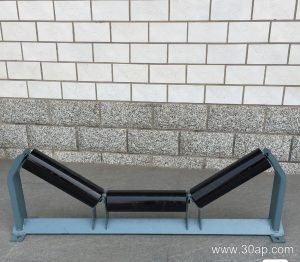
Conveyor bracket fabrication is the discipline of cutting, bending, welding and finishing the steel frames that hold idler rollers in the correct position under a conveyor belt. In a quarry, a cement plant or a power plant coal yard, these brackets are the quiet link between the structure and the rotating parts. A well-built bracket keeps the trough angle steady, spreads the load from the belt and material into the stringer, and allows a roller to be changed without disturbing the rest of the line. The same fabrication workshop may produce troughing brackets, return brackets, impact brackets and self-aligning brackets, but each follows its own drawing and its own set of tolerances.
How the Fabrication Process Runs
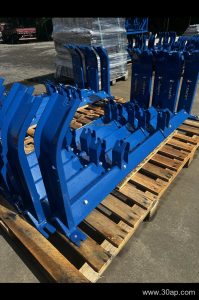
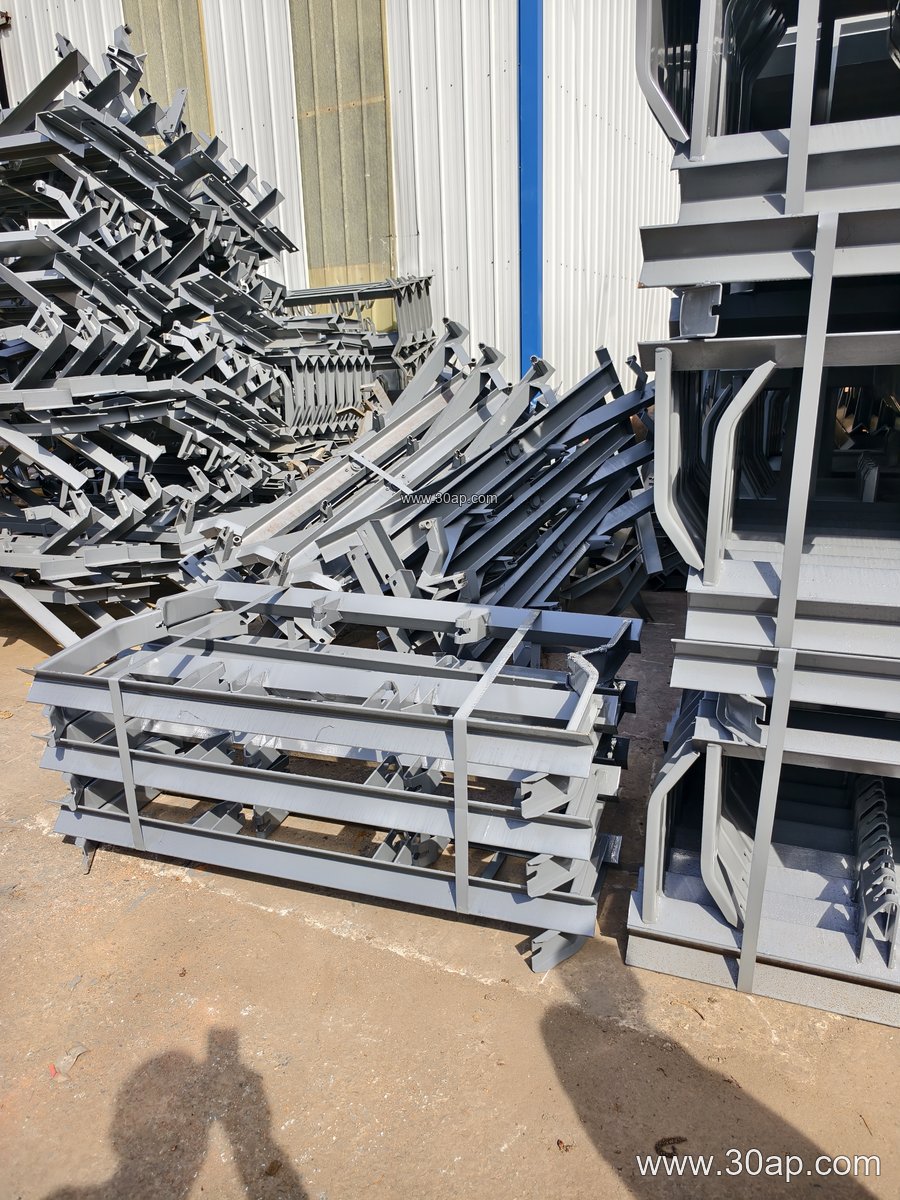
Most brackets start as angle, channel or folded plate. The choice is usually driven by span and load: a light 500mm or 650mm line may use folded plate, while a 1400mm or 1600mm heavy-duty line often calls for channel sections. The steps are straightforward but unforgiving of shortcuts.
- Cutting to length, with holes marked from the drawing rather than from the roller.
- Pressing or rolling the trough profile to the required angle.
- Jig welding so that the two side arms sit in one plane and the centre line stays true.
- Drilling or punching roller slots, then deburring.
- Surface preparation and painting, or galvanizing where the environment demands it.
Welding distortion is the main enemy. A bracket that twists by a few millimetres will make the roller sit off-line, and the belt will then track toward one side. Checking squareness on a flat table after cooling is more valuable than any post-paint touch-up.
Matching the Bracket to Belt Width, Trough Angle and Roller Diameter
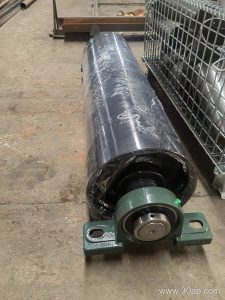
Buyers often ask for a bracket by belt width alone, but the drawing needs three inputs: belt width, trough angle and roller diameter. Common belt widths include B500, B650, B800, B1000, B1200, B1400, B1600, B1800, B2000, B2200. Trough angles of 20, 30, 35 and 45 degrees are all in use, and adjustable brackets allow the angle to be changed on site within that range. Roller diameters of Ø89, Ø108, Ø133, Ø159 and Ø194 cover most duties. A B800 line at 35 degrees with Ø108 rollers is a typical medium-duty arrangement, while a B1200 line at 45 degrees with Ø133 rollers suits a higher tonnage. There is no fixed rule tying one belt width to one angle or one roller size, and mounting hole spacing and beam length change with each combination.
Fixed, Adjustable and Special-Purpose Brackets
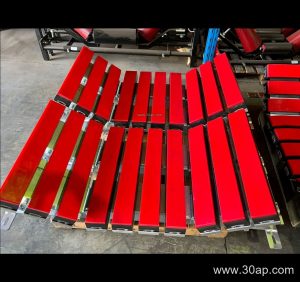
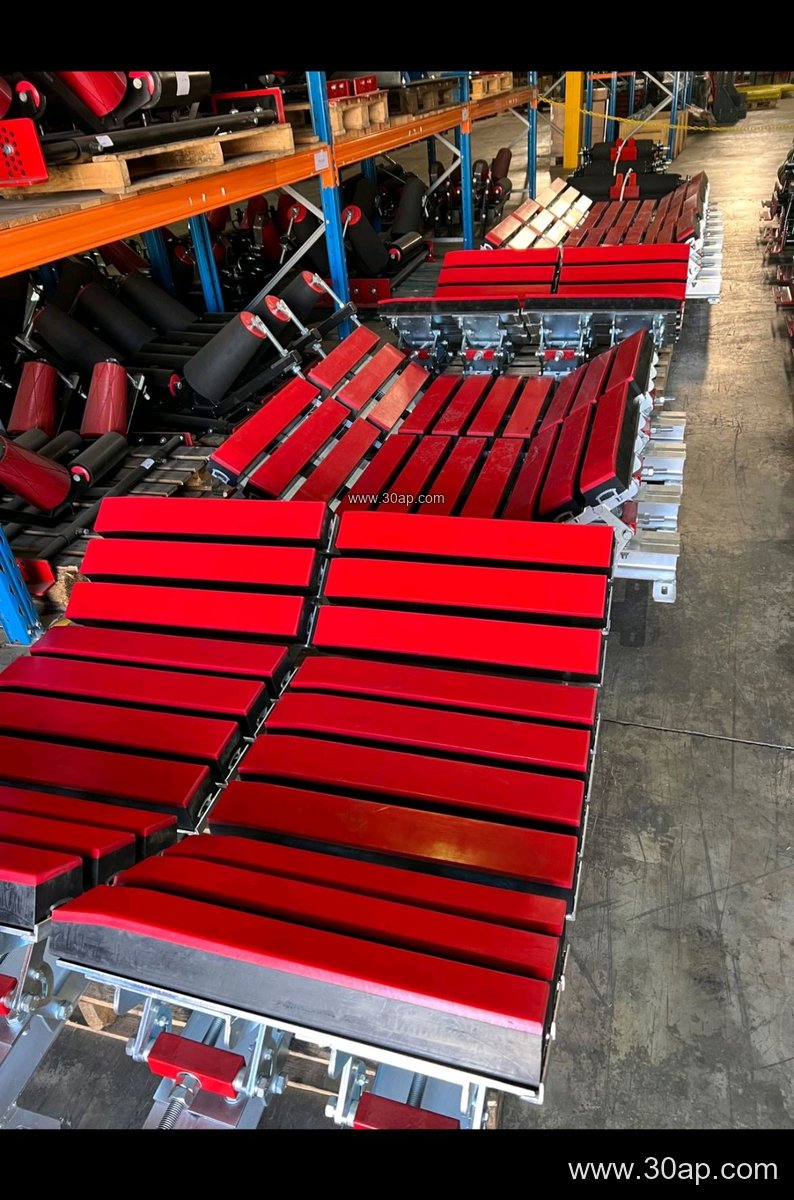
A fixed bracket is welded to one trough angle and is the cheapest and stiffest option. An adjustable bracket uses slotted arms or bolted segments so the same frame can serve 30 or 35 degrees, or be fine-tuned when a belt misbehaves. Impact brackets under a crusher discharge carry closely spaced rollers and need extra ribbing. Self-aligning brackets pivot to steer a wandering belt, and V-return brackets support the return strand in a shallow V. Each of these is a distinct subtype and should be specified as such; a return bracket is not a substitute for a troughing bracket, and a drive pulley is never an interchangeable name for a tail or bend pulley.
Where Fabricated Brackets Are Used
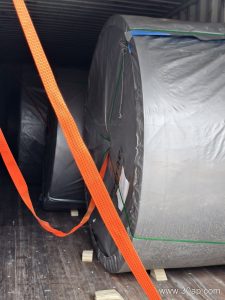
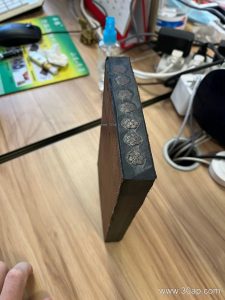
In a limestone quarry, troughing brackets carry a 1000mm abrasion resistant belt through the primary crushing stage. In a coal handling plant, flame retardant and anti-static belts run on brackets that must resist fine dust and occasional washdown. A cement plant uses heat resistant belts near the kiln and standard EP or NN fabric core belts elsewhere, with brackets sized to the stringer spacing. The bracket itself does not touch the material, but its accuracy decides how long the belt and idler roller last.
Buyer Checklist
- Supply a drawing or state belt width, trough angle, roller diameter and mounting hole pitch.
- State the environment: dusty, wet, corrosive or high temperature, so the finish is right.
- Ask for the steel section used, not just the bracket weight.
- Confirm whether the bracket is fixed or adjustable.
- Check that spare brackets match existing hole spacing before ordering a batch.
Good conveyor bracket fabrication is measured in millimetres and in years of service. Get the frame square and the angle right, and the belt, the roller and the structure will all do their jobs with less attention. More guidance on matching brackets with belts and rollers is available at chinabeltconveyor.com and via guidconveyor.com for roller and pulley details.