What a Cast-Welded Pulley Is
A cast-welded pulley is a conveyor pulley whose shell is produced by casting and then joined to a fabricated hub and shaft assembly through welding. In many bulk handling plants this drum is simply called a cast-welded drum or cast-welded conveyor pulley, and it sits at the heart of the belt loop, transferring motion and guiding the conveyor belt along its path. Unlike a fully machined or all-welded light-duty drum, the cast shell gives the pulley a dense, wear-tolerant surface, while the welded structure keeps the overall assembly adaptable to different shaft and bearing arrangements. On a quarry conveyor or a cement plant clinker line, that combination often means fewer shell replacements over the working life of the conveyor.
How the Pulley Is Built
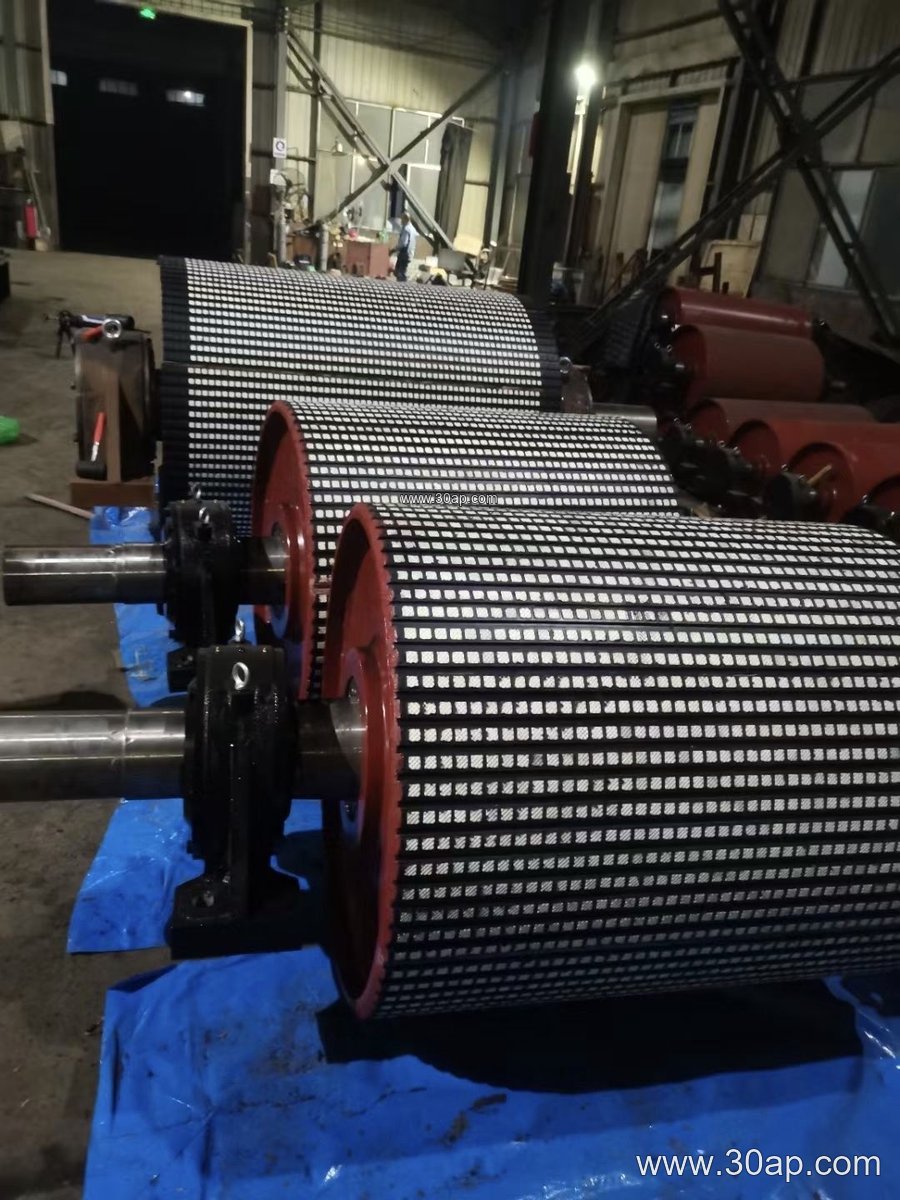
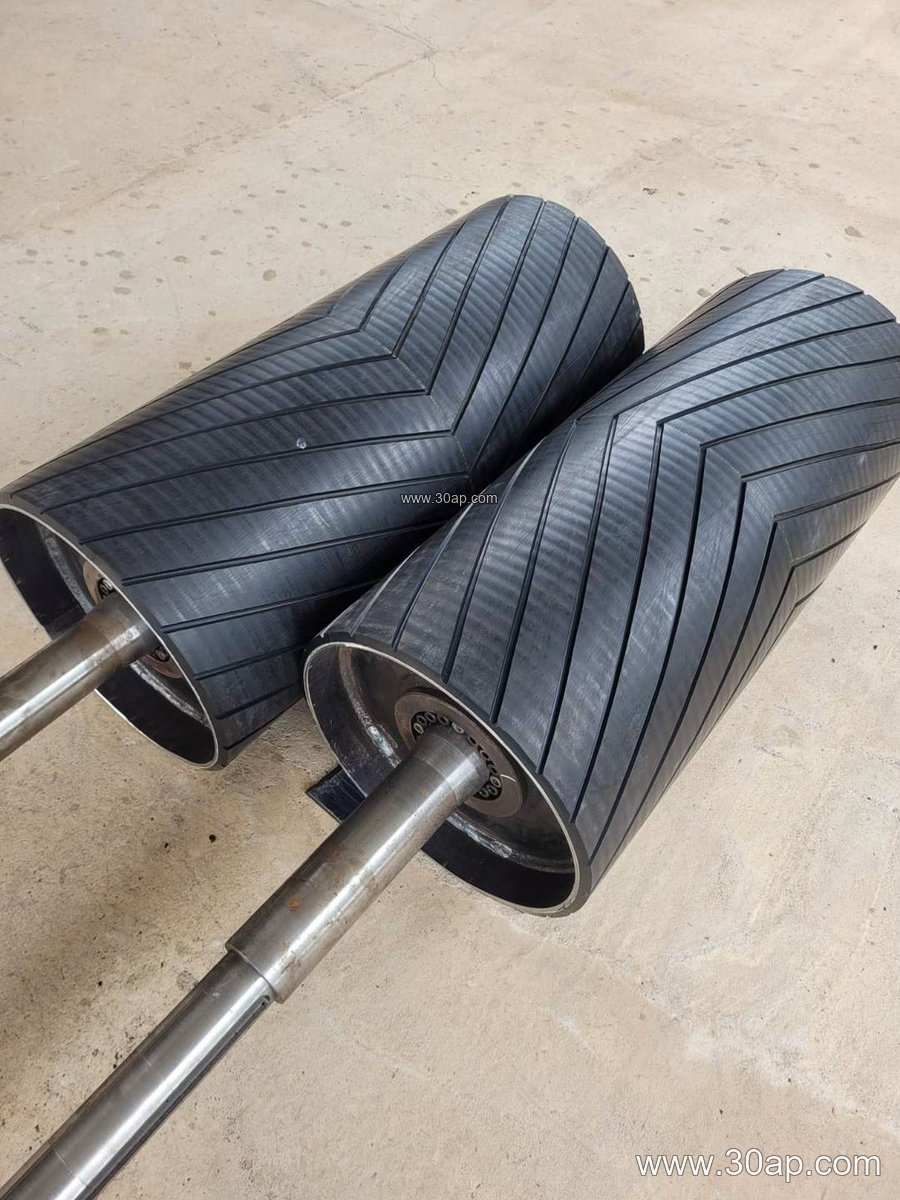
The shell is cast in a foundry, then machined on the outside to a true cylindrical profile. Hubs are welded to the shell ends, and the shaft is fitted or welded into the hub assembly depending on the design. After welding, the pulley is machined again to control concentricity and runout, because an out-of-round shell will cause belt tracking problems and shorten the life of the conveyor belt. Surface treatment follows: plain finish, cast rubber, cold-bonded rubber, hot vulcanized rubber, diamond grooving, herringbone grooving, ceramic lagging, or flat rubber sheet. Lagging thickness commonly falls in the 8, 10, 12, 15, and 20 mm range, selected according to grip requirements and the abrasiveness of the material being carried.
Where It Fits on the Conveyor
The position on the conveyor changes what the pulley is asked to do, and the same cast-welded construction can serve several duties:
- Drive or head pulley, transmitting torque from the gearbox to the belt
- Tail pulley, guiding the belt at the loading end
- Bend or snub pulley, increasing wrap angle around the drive drum
- Tension pulley, maintaining belt tension in the take-up zone
- Take-up or pressure pulley in specific layouts
These are separate duties. A drive pulley and a bend pulley are not interchangeable, because torque transmission and wrap angle requirements differ. Plant engineers in coal washing plants, power station coal yards, and aggregate crushing circuits usually specify each position independently. A cast-welded drum used as a tail pulley may carry a plain or lightly lagged surface, while a drive position often needs diamond or ceramic lagging for grip.
Typical Dimensions and Combinations
Belt width and pulley diameter are selected together but not locked to one another. Common belt widths include B400, B500, B650, B800, B1000, B1200, B1400, B1600, B1800, B2000, B2200, and B2400. Shell face width is usually a little wider than the belt, for example B800 with roughly 950 mm face, or B1200 with roughly 1400 mm face. Diameters commonly range from Ø200 up to Ø1800 depending on belt tension and wrap requirements. Real combinations such as B800 × Ø500, B1200 × Ø1000, or B1400 × Ø800 appear in plants, but no single belt width forces one diameter.
| Belt width | Typical shell face | Common diameter range |
|---|---|---|
| B500 | about 600 mm | Ø250 to Ø500 |
| B800 | about 950 mm | Ø315 to Ø800 |
| B1000 | about 1150 mm | Ø400 to Ø1000 |
| B1200 | about 1400 mm | Ø500 to Ø1250 |
| B1600 | about 1800 mm | Ø630 to Ø1600 |
Shaft diameter is determined by torque and load, not by belt width alone. Common shaft sizes include Ø50, Ø60, Ø70, Ø80, Ø90, Ø100, Ø120, Ø140, Ø160, Ø180, and Ø200, and the final value should come from the pulley designer.
Matching the Pulley to the Belt and the Job
A cast-welded pulley performs best when the belt and the drum are treated as one system. An abrasion resistant conveyor belt running over a ceramic-lagged drive pulley in an iron ore plant will grip better and last longer than a plain drum paired with a smooth belt. In a coal mining conveyor, a flame retardant conveyor belt is usually specified alongside fire resistant lagging and anti-static components. For long overland lines, a steel cord conveyor belt may call for a larger drive pulley diameter to limit bending stress. Where material is wet or sticky, a herringbone or diamond pattern helps shed carryback. In food or fertilizer handling, a food grade or oil resistant belt may be paired with a stainless or rubber-lagged drum. Matching the surface form to the belt cover and the conveyed material is more important than chasing a single nominal size.
Buyer Checklist
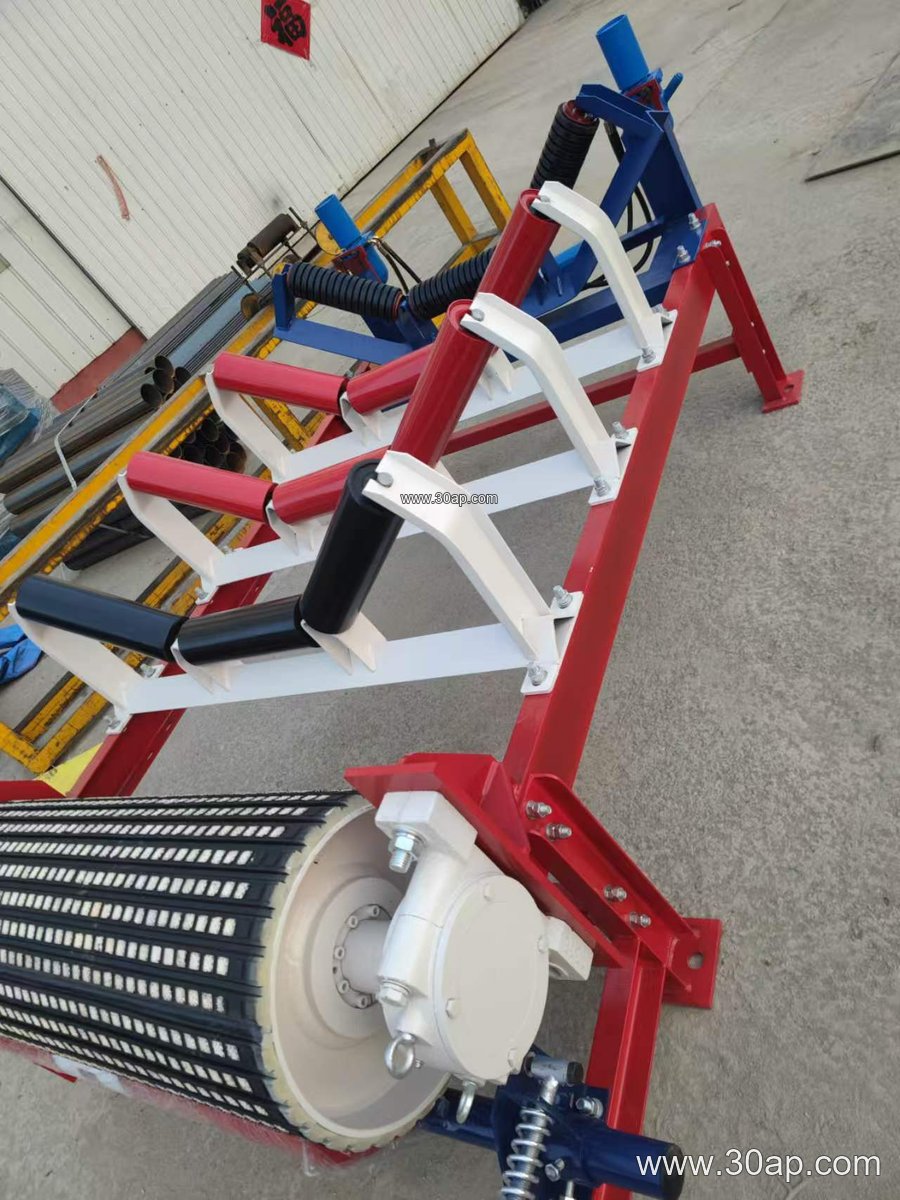
Before ordering, confirm the belt width, the required diameter, the shaft size and bearing type, the lagging form and thickness, and the position on the conveyor. Ask whether the drum is a drive, tail, bend, or tension unit, because that changes the design. Check the welding and machining records if traceability matters. Also confirm that the pulley face suits the conveyor belt tracking and that the conveyor bracket and idler roller layout will not create interference. A well-specified cast-welded pulley, matched to its belt and its duty, keeps a quarry, coal preparation plant, or power station conveyor running smoothly for years.