What a Mining Conveyor Pulley Does
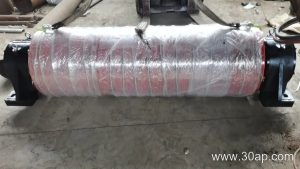
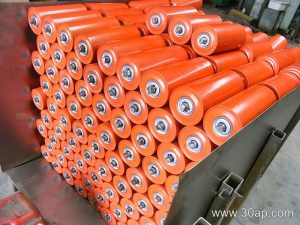
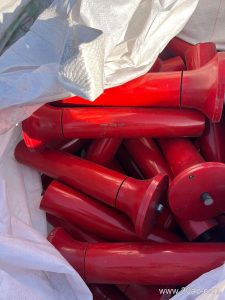
A mining conveyor pulley is the rotating drum that carries and drives the belt on a bulk handling conveyor. In a quarry, a coal preparation plant or an ore transfer station, the pulley transfers motion to the belt, holds tension and sets the belt path. It is a different component from an idler roller, which supports the belt along the carrying run. A conveyor pulley works with the conveyor belt, the frame and the conveyor bracket to keep the system tracking and turning reliably under heavy loads.
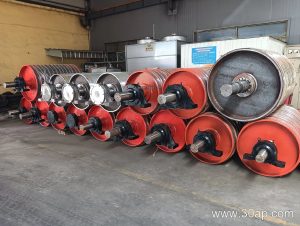
The pulley is usually described by its duty position. A drive pulley (also called the head pulley) transmits torque from the gearbox to the belt. A tail pulley sits at the loading end and returns the belt. A bend pulley changes belt direction where the layout needs it. These roles are not interchangeable, even when the drums look similar.
How the Drum Is Built
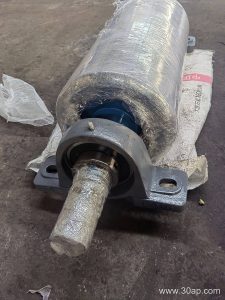
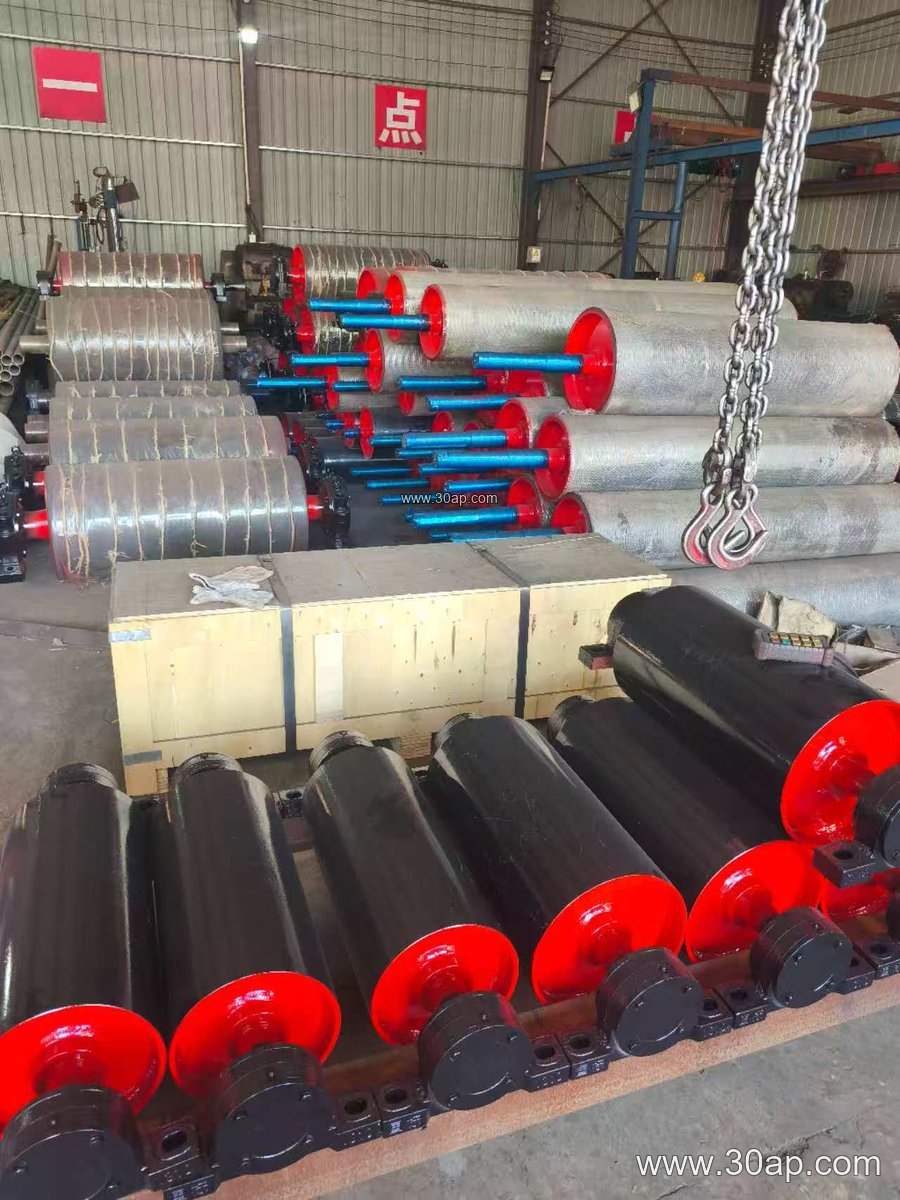
A typical unit combines a steel shell, end discs, a shaft, bearing housings and a lagging surface. The shell is machined and normally wider than the belt so the belt is supported across its full width. The shaft diameter is chosen from torque and load, not from belt width alone. A B1200 conveyor, for example, might run with a shaft in a range of sizes depending on the drive duty and belt tension.
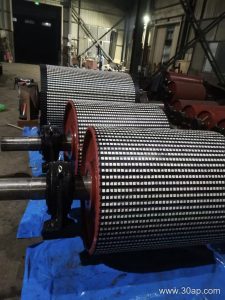
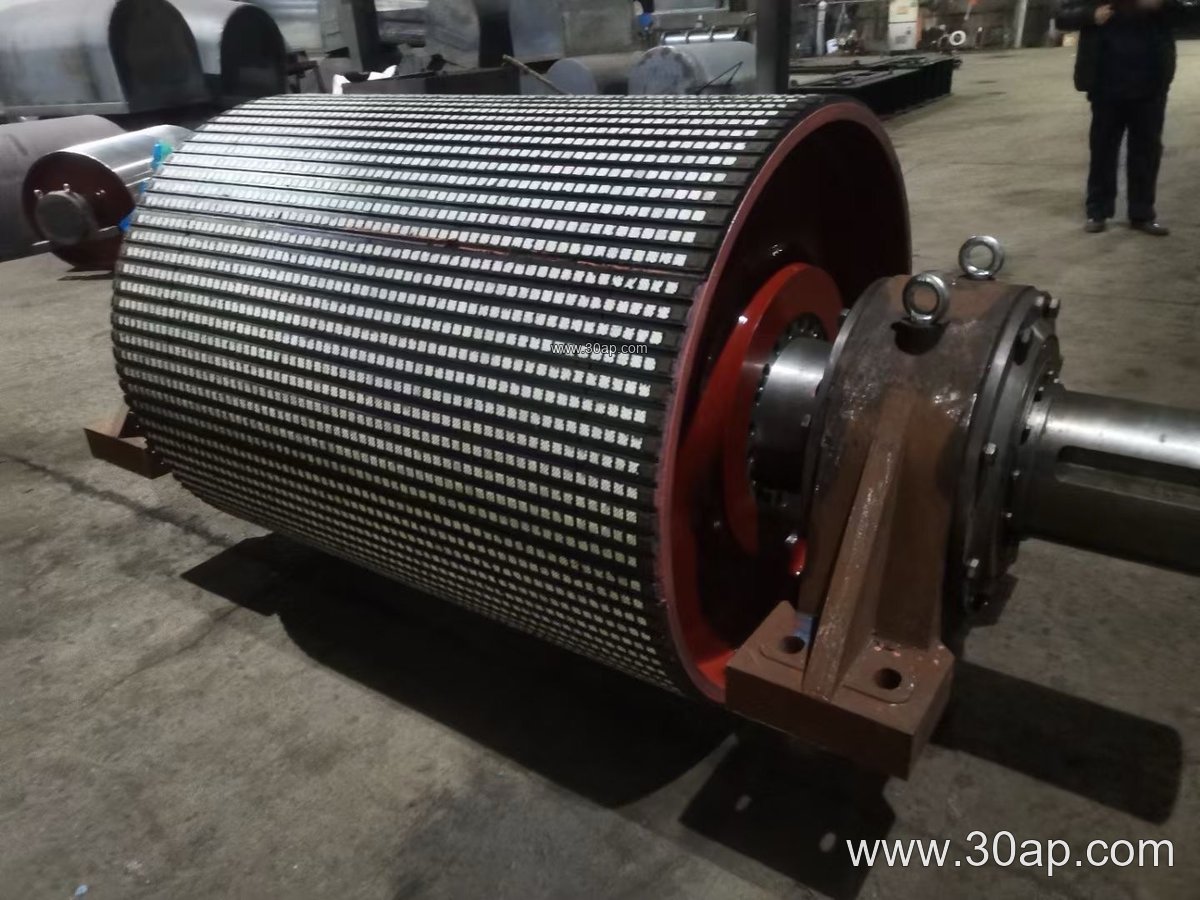
Lagging protects the shell and improves grip. Common surface forms include plain, hot vulcanized rubber, cold bonded rubber, diamond lagging, chevron lagging and ceramic lagging. Cover thickness commonly runs at 8, 10, 12, 15 or 20 mm. For a wet, gritty coal stream, diamond lagging may help with water drainage, while ceramic lagging may suit high slip risk on a drive drum.
Common Dimensions and Layout Reference
The table below shows reference combinations often seen in design drawings. These are examples, not fixed pairings or supply promises.
| Belt width | Typical drum face width | Reference diameter | Example duty |
|---|---|---|---|
| B650 | about 750 mm | Ø400 to Ø500 | tail pulley, aggregate line |
| B800 | about 950 mm | Ø500 to Ø630 | bend pulley, cement plant |
| B1000 | about 1150 mm | Ø630 to Ø800 | head pulley, power plant coal feed |
| B1200 | about 1400 mm | Ø800 to Ø1000 | drive pulley, iron ore transfer |
| B1400 | about 1600 mm | Ø800 to Ø1250 | main drive, copper ore conveyor |
| B1800 | about 2000 mm | Ø1000 to Ø1400 | heavy-duty head end, port loading |
Face widths are normally wider than the belt. Shaft sizes such as Ø100, Ø120, Ø140, Ø160 and Ø180 appear in medium and large drums, but the final figure follows the torque calculation. A wider belt does not automatically mean a proportionally larger shaft.
Where It Fits in the Plant
In a crushing and screening circuit, a drive pulley pulls the belt away from the crusher discharge, while a bend pulley guides the return strand around a transfer tower. In a coal washing plant, flame retardant and anti-static belt grades are common, and the pulley lagging should resist fine slurry. In a limestone quarry, abrasion is the main enemy, so a high abrasion resistant conveyor belt paired with a well-lagged drive drum can reduce slip and wear. In a steel plant sinter line, heat resistant belt grades may be used, and the pulley bearings need protection from hot dust.
The pulley also has to match the belt type. A steel cord conveyor belt with low elongation behaves differently from a multi-ply fabric core belt, so take-up travel and drum diameter should be checked together. Skirted or corrugated sidewall belts need clearance at the pulley to avoid edge damage. Pipe conveyor belts place different demands on the bend and tail positions.
Buyer Checklist
- Confirm the duty position first: drive, tail, bend, take-up or snub. Each has a different load profile and lagging requirement.
- State belt width, belt type and belt tension. A PP or EP fabric belt and a steel cord belt may call for different drum diameters.
- Ask for the lagging form and cover thickness, and match them to material conditions.
- Review the shaft diameter against the actual torque, not the belt width alone.
- Check bearing selection, sealing and lubrication access for the site environment.
- Confirm face width and frame clearance so the drum fits the conveyor bracket and does not foul the belt edge.
Maintenance is mostly about alignment and surface condition. Worn lagging reduces grip and can lead to belt slip, especially on a wet incline. Checking pulley squareness, bearing temperature and lagging wear at scheduled stops helps avoid unplanned downtime. For more on matching drums with belts and rollers, see the product pages at beltconveyorpro.com.