What a Striped Lagged Pulley Does on a Conveyor
A striped lagged pulley is a conveyor pulley whose shell is covered with a rubber or ceramic lagging that carries a raised striped pattern, usually a diamond or herringbone layout. The stripes are not decoration. They channel water, fines and dust away from the contact patch so the conveyor belt keeps grip on the drum, and they help the pulley run cleaner in wet or muddy conditions. In a quarry or a sand and gravel line, that difference shows up quickly: a plain drum can slip once the surface film builds up, while a striped lagged pulley keeps driving the belt.
This drum is normally a drive pulley, but the same striped lagging can be fitted to a tail or bend position where traction and self-cleaning matter. Drive, tail and bend pulleys are not interchangeable, so specify the duty position when ordering.
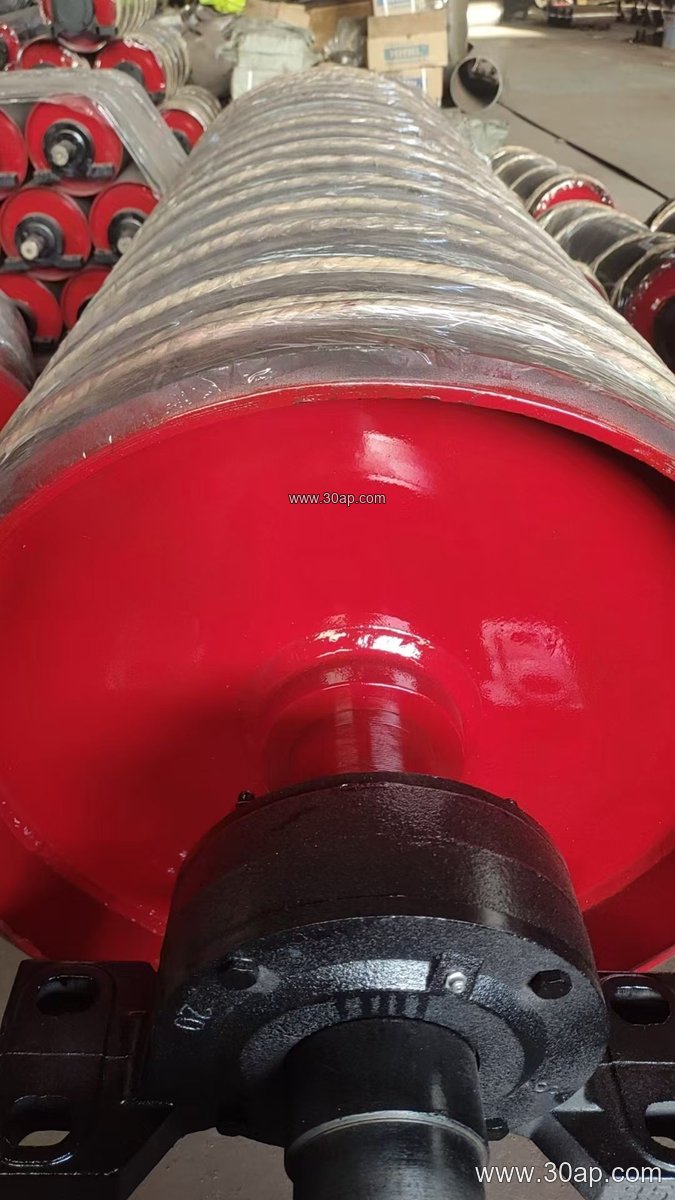
How the Drum and Its Lagging Are Built
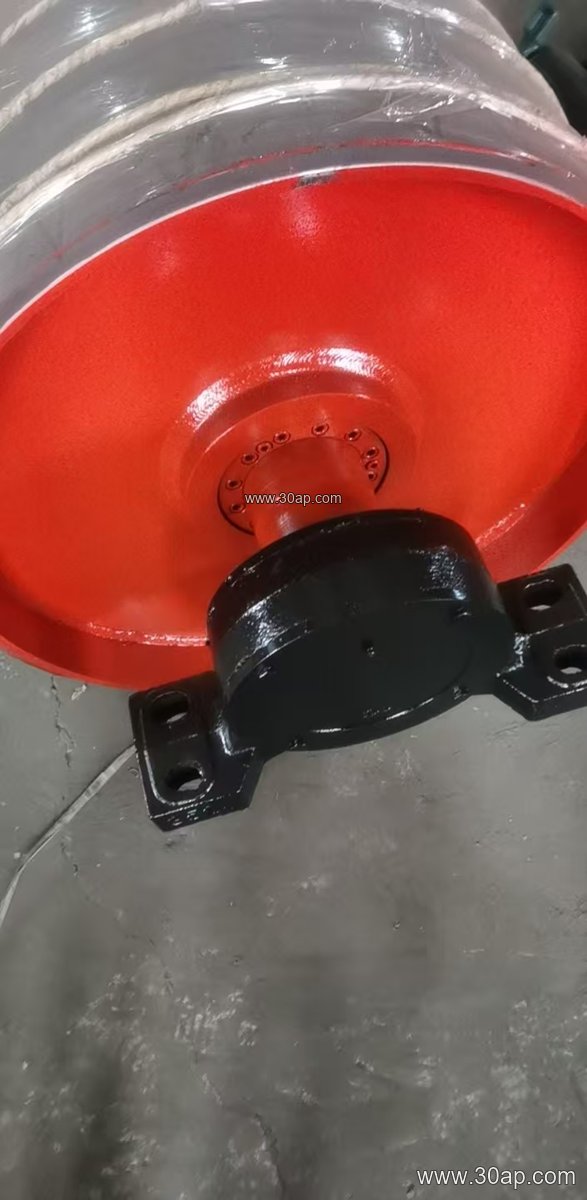
The core is a welded steel shell with end discs and a shaft, machined so the lagging sits flat. Lagging is applied in one of several ways: hot vulcanized rubber, cold bonded rubber, cast rubber, or ceramic tiles set in a rubber matrix. The striped pattern is cut or molded into the surface, and the grooves between the stripes are what give the drum its cleaning action.
Typical surface options include diamond lagging, herringbone lagging and ceramic lagging; plain lagging is also available where a smooth face is preferred. Common lagging thicknesses are 8, 10, 12, 15 and 20 mm, with the thicker grades used on heavy-duty drives in mining and cement plants. The shell face is usually wider than the belt it carries, so a B800 belt generally runs on a drum face of about 950 mm, and a B1200 belt on roughly 1400 mm.
Reference Sizes Buyers Commonly Ask About
The table below is a reference range, not a fixed catalogue. Final dimensions follow the conveyor design, torque and load.
| Item | Common reference values |
|---|---|
| Belt width (B) | B400, B500, B650, B800, B1000, B1200, B1400, B1600, B1800, B2000 |
| Pulley diameter | Ø200, Ø250, Ø315, Ø400, Ø500, Ø630, Ø800, Ø1000, Ø1250, Ø1400 |
| Lagging thickness | 8 mm, 10 mm, 12 mm, 15 mm, 20 mm |
| Shaft diameter | Ø50, Ø60, Ø70, Ø80, Ø90, Ø100, Ø120, Ø140, Ø160, Ø180, Ø200 |
| Example combinations | B800 × Ø500, B1200 × Ø1000, B1400 × Ø800 |
Note that no single belt width locks in one pulley diameter. A B800 line may run a Ø400 drum on a short tail and a Ø630 drum on the head, depending on wrap angle and belt tension. Shaft diameter is set by torque and bearing load, not by belt width alone, so it must come from the drive calculation.
Where It Fits in the Plant
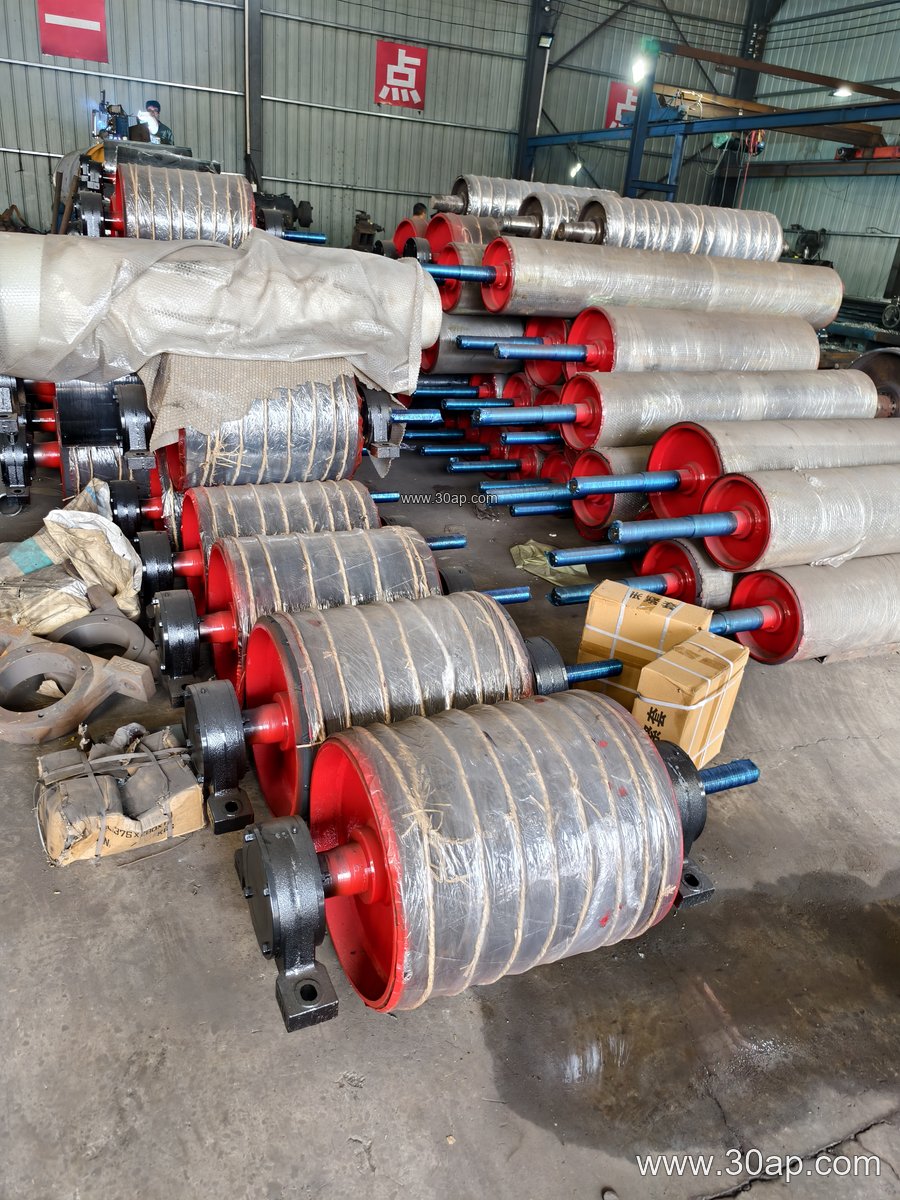
Striped lagging earns its place in wet, dusty and abrasive service. In a coal preparation plant or an underground coal mining conveyor, the drum face stays cleaner and the belt tracks better. In a cement plant, the same drum handles clinker dust on the head end. Aggregate and crusher discharge lines often use a striped lagged pulley on the drive because spillage and wash-down water are routine.
The drum works alongside other components: a conveyor pulley at the head, idler roller sets along the carry side, and a conveyor bracket holding the bearing housings. Matching the lagging to the belt matters. A heavy-duty mining conveyor belt with high tension needs a firm, thick lagging, while a lighter EP conveyor belt on a short transfer may be fine with 10 mm rubber. In dusty food or grain service, keep the striped pattern shallow enough that material does not pack into the grooves.
Selection and Maintenance Notes
- Confirm the duty position: drive, tail, bend or take-up. Each has a different traction and wrap requirement.
- Match lagging thickness and pattern to the belt and the material. Herringbone or diamond stripes shed water; ceramic lagging suits high-abrasion ore and rock duty.
- Check belt width against drum face width, allowing the usual margin on each side.
- Inspect the stripe grooves at each shutdown. Packed material or worn stripes reduce grip long before the rubber is fully worn.
- Keep the drum balanced and the bearings greased; an out-of-balance striped lagged pulley wears its lagging unevenly.
For a reliable quote, send the belt width, pulley diameter, shaft size, lagging type and thickness, and the position in the conveyor. Suppliers of conveyor pulley, idler roller and conveyor bracket can then match the drum to the rest of the line without guesswork.