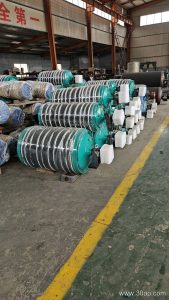
What a Large-Diameter Conveyor Pulley Does
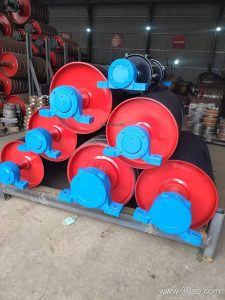
A large-diameter conveyor pulley is the drum that turns the belt at a transfer point where loads, belt tension and wrap angle are demanding. In a quarry, a power plant coal yard or a cement clinker line, the pulley diameter is chosen together with the belt construction, not in isolation. The larger the drum, the gentler the bending cycle on the belt carcass, which matters when a steel cord conveyor belt or a thick multi-ply fabric core belt runs at high tension.
The same product is often called a large-diameter drum pulley or heavy-duty conveyor pulley. Drive, tail and bend positions are different duties: a drive pulley transmits torque, a tail pulley returns the belt, and a bend pulley only changes direction. They are not interchangeable, and a large-diameter bend pulley should not be ordered as a substitute for a drive pulley.
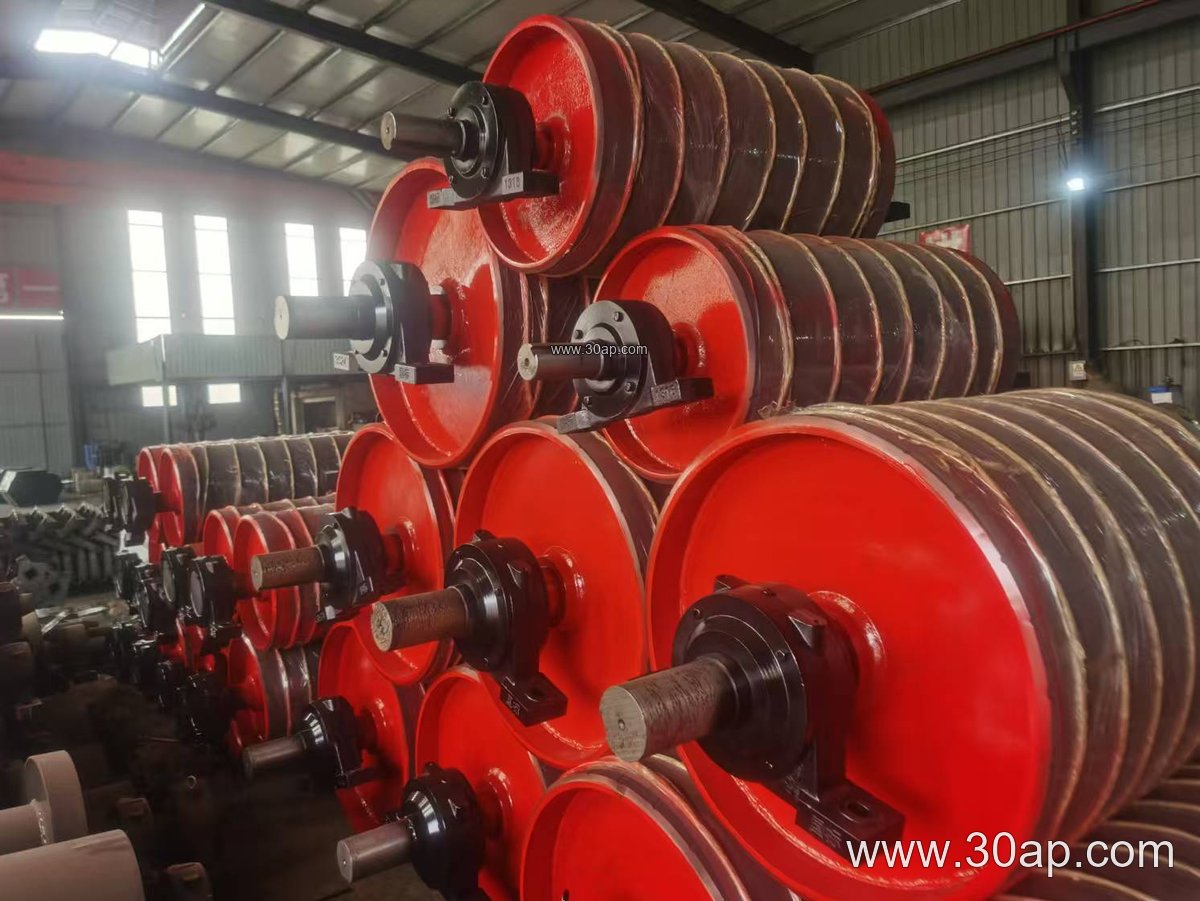
Construction and Surface Options
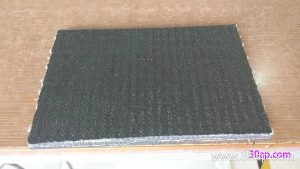
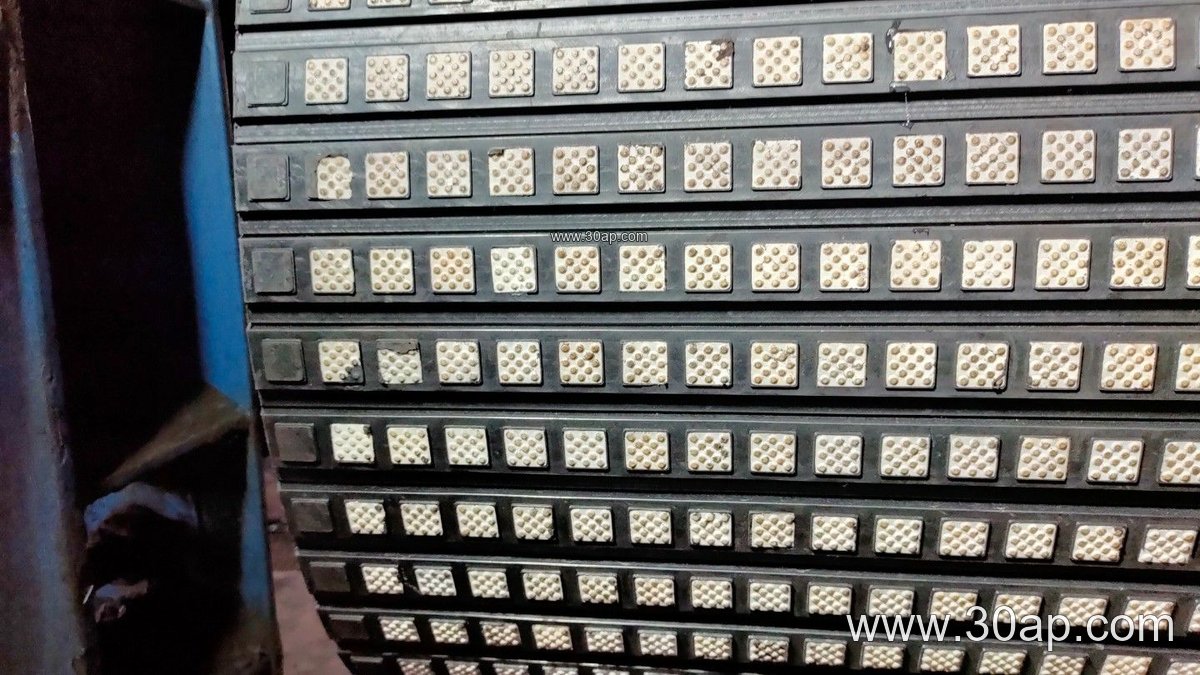
Most units use a welded steel shell with end discs, a shaft, bearing housings and a lagging layer. Common surface forms include plain, hot-vulcanized rubber, cold-bonded rubber, diamond lagging, herringbone lagging and ceramic lagging. Lagging thickness is frequently 8, 10, 12, 15 or 20 mm, selected for grip and wear rather than appearance.
Shaft diameter is determined by torque and bearing load, not by belt width alone. Typical shaft sizes range from Ø50 to Ø200 mm, and a Ø1000 mm drum may carry a shaft sized by the drive calculation. Buyers should ask for the duty condition, belt tension and starting torque before accepting a shaft size.
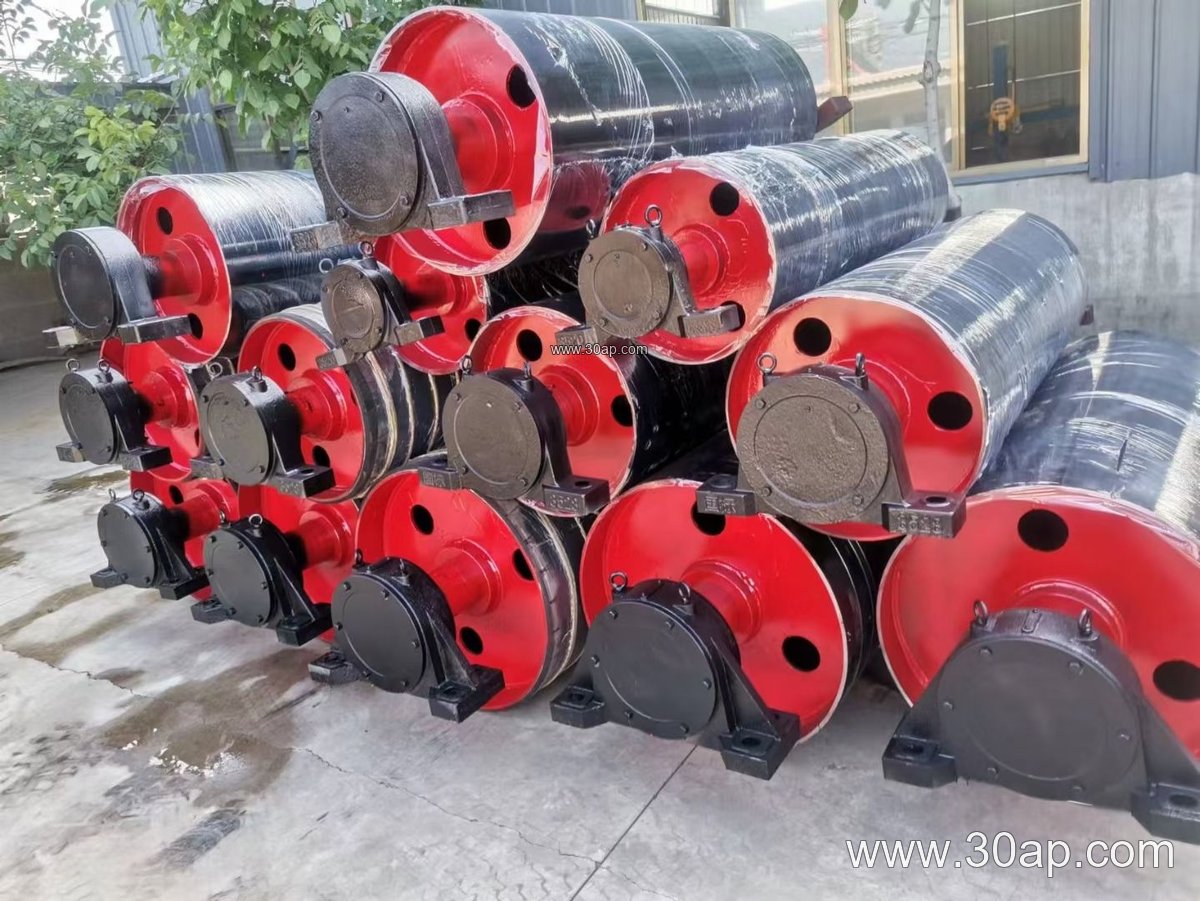
Common Diameter and Width Combinations
The table below shows reference combinations, not fixed rules. A given belt width can work with more than one drum diameter.
| Belt width | Approx. face width | Example diameter |
|---|---|---|
| B800 | 950 mm | Ø500 |
| B1000 | 1150 mm | Ø630 |
| B1200 | 1400 mm | Ø1000 |
| B1400 | 1600 mm | Ø800 |
| B1600 | 1800 mm | Ø1250 |
| B1800 | 2000 mm | Ø1400 |
These values are indicative. Final sizing depends on belt type, speed, wrap angle and the load carried by the conveyor bracket and bearing assembly.
Where Large Drums Fit in the Line
In an iron ore or copper ore terminal, a large-diameter head pulley at the discharge end reduces belt stress where the belt leaves the drum at speed. In a coal mining conveyor, flame retardant conveyor belt and anti-static conveyor belt grades are common, and the drive drum must match the belt’s cover and tension rating. In aggregate and crusher circuits, an abrasion resistant conveyor belt pairs with a lagged drum to limit slip under wet, gritty conditions.
For long overland routes, a steel cord conveyor belt such as ST1600 or ST2000 needs a drum diameter large enough to keep cord bending stress within design limits. Fabric constructions like EP200 or NN300 may run on smaller drums, but a large-diameter pulley is still preferred at the head end of a high-capacity line feeding a ship loader or stockyard.
Buyer Checklist
- Confirm the position: drive, tail, bend, take-up or snub. Each has a different load profile.
- State the belt type, for example EP conveyor belt, NN conveyor belt or steel cord, plus cover grade and thickness.
- Provide belt width, speed, capacity and starting torque so the shaft and bearing can be sized.
- Choose lagging by condition: diamond or herringbone for wet slip, ceramic for severe abrasion, plain for light duty.
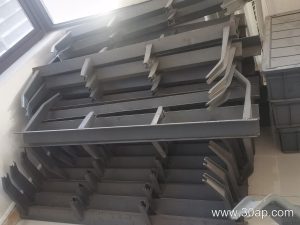
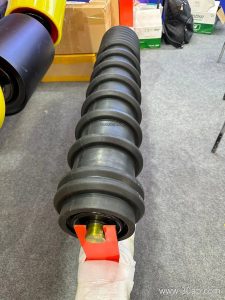
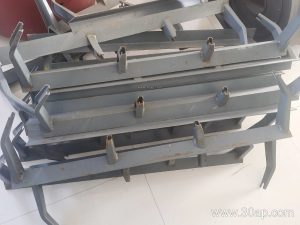
- Check that the face width exceeds the belt width and that the conveyor bracket and idler roller frame align with the drum centerline.
- Ask for balancing, runout and lagging bond details rather than assuming a standard.
At www.example.com/conveyor-pulley a buyer can compare drum positions and lagging options before finalizing a specification. Matching the drum to the conveyor belt and the surrounding conveyor pulley frame is the practical way to avoid premature cover wear and belt tracking problems.