What Is a Discharge-End Pulley?
The discharge-end pulley is the drum at the head of a conveyor where the belt unloads its material. Often called the head pulley or delivery pulley, it serves as both the drive point in many systems and the transition where the conveyor belt releases its load into a chute, stockpile, or downstream equipment. In a quarry or a coal handling plant, this pulley is the last component the material touches before it leaves the belt, so its design directly affects discharge trajectory, belt tracking, and wear life.
While drive, tail, and bend pulleys each have distinct roles, the discharge-end pulley is unique because it combines power transmission with material release. It is not interchangeable with a tail pulley or a bend pulley, and specifying one requires attention to both torque demands and discharge conditions.
Construction and Key Components
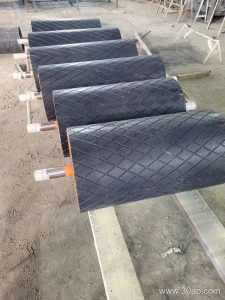
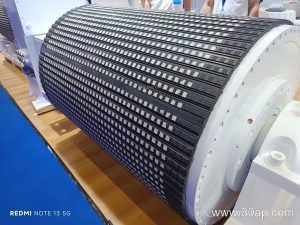
A typical discharge-end pulley consists of a cylindrical shell, end discs, a shaft, and bearing housings. The shell is usually made from rolled steel or seamless tube, machined for balance and concentricity. Shaft diameter is determined by torque and load, with common sizes ranging from Ø50 to Ø200 mm depending on the application. The pulley surface may be plain, lagged with rubber, or fitted with ceramic tiles to improve grip and extend service life.
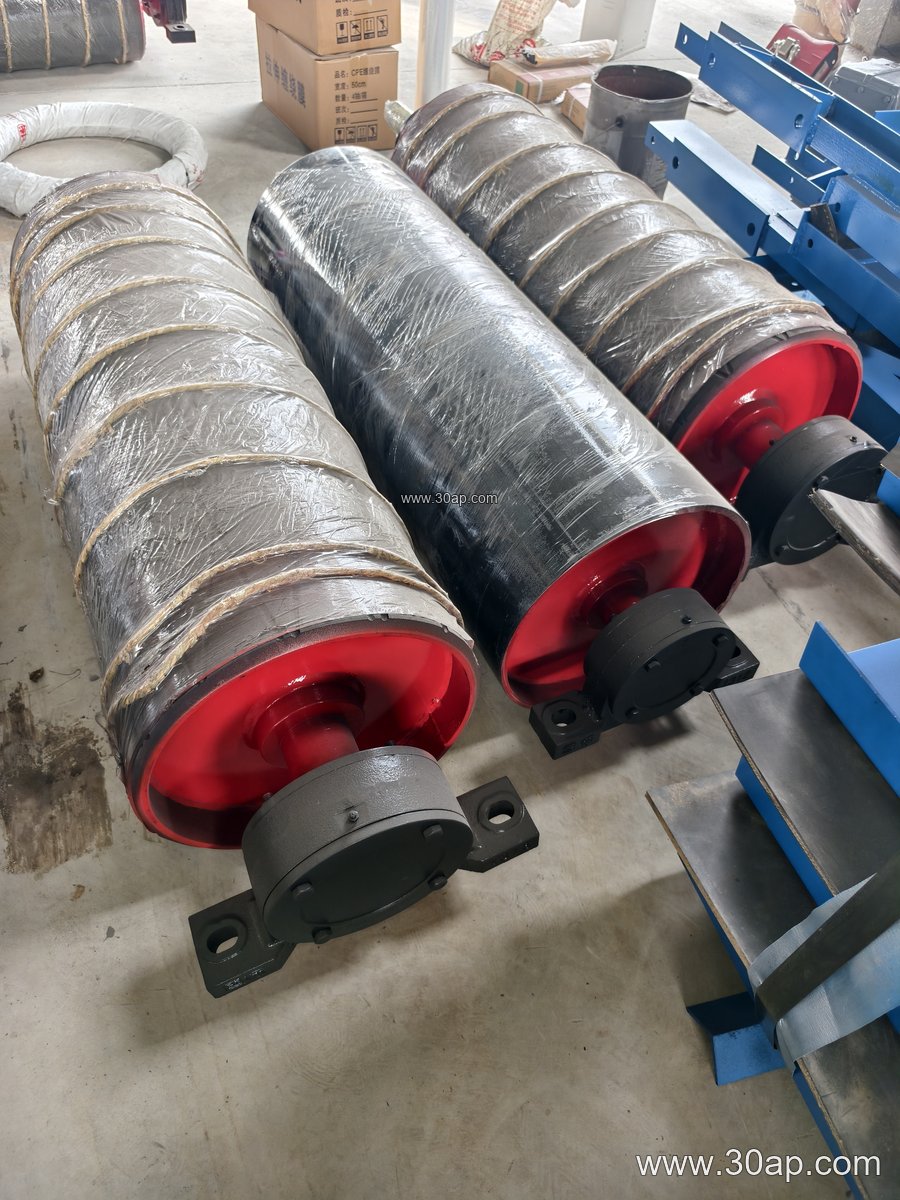
Lagging options include hot vulcanized rubber, cold-bonded rubber, diamond pattern, herringbone, and ceramic lagging, with thicknesses often 8, 10, 12, 15, or 20 mm. The pulley face width is normally wider than the belt to allow for modest misalignment; for example, a B800 belt might use a pulley face around 950 mm, while a B1200 belt could pair with a face width near 1400 mm. These are typical references, not fixed rules, and final dimensions are set by the conveyor designer.
Where It Fits in the Conveyor Layout
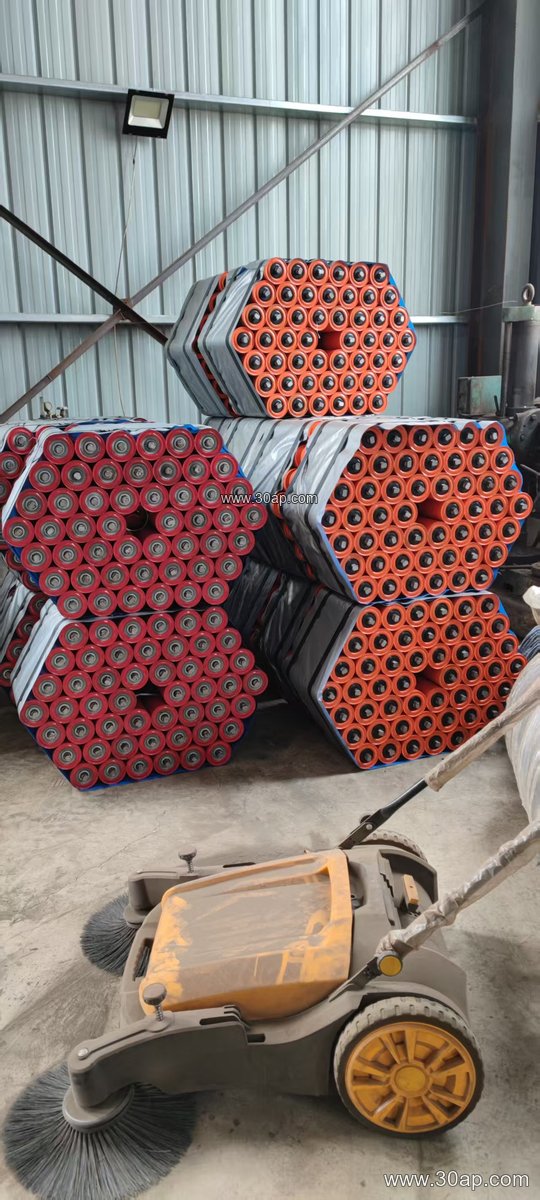
Discharge-end pulleys are found in bulk handling operations across mining, cement, power generation, and aggregate processing. In an iron ore concentrator, the pulley at the head end must withstand abrasive dust and high tension. In a coal-fired power plant, flame retardant and anti-static properties of the conveyor belt are critical, and the pulley lagging should be selected to avoid slippage without generating static. In a sand and gravel plant, the discharge pulley often works with an abrasion resistant conveyor belt and a series of idler rollers that support the belt on the carrying side.
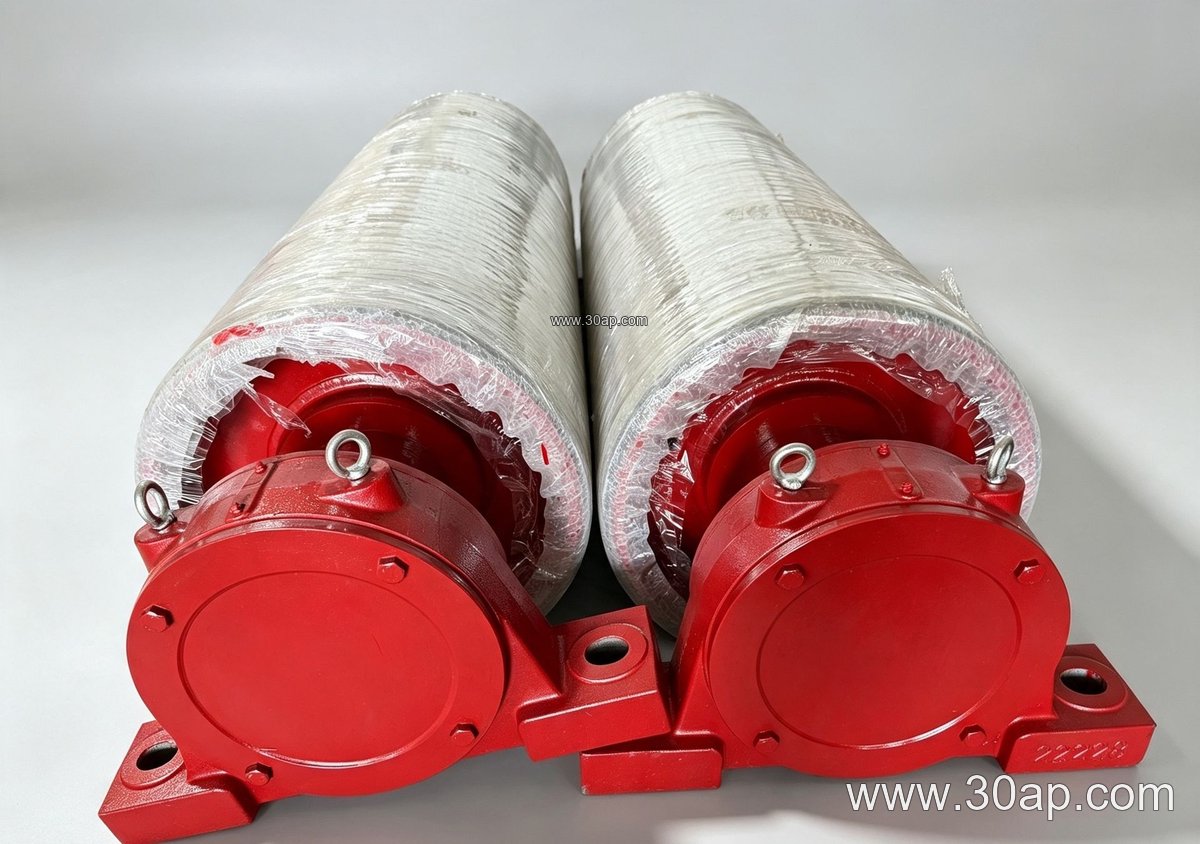
The pulley interacts closely with the conveyor bracket and the structure that holds the bearing housings. Proper alignment between the discharge pulley, the take-up system, and the following conveyor is essential to prevent belt mistracking and spillage at the transfer point.
Selecting the Right Pulley for the Duty
Buyers should consider several factors when specifying a discharge-end pulley. First, confirm the belt width and the corresponding pulley face width. Second, establish the required shaft diameter based on the actual torque and radial loads, not simply on belt width. Third, choose the lagging type and thickness to match the material and environmental conditions. For example, a high abrasion resistant conveyor belt in a quarry may benefit from ceramic lagging, while a food grade conveyor belt in a processing facility might require a smooth, cleanable surface.
Other selection criteria include bearing type and sealing, balance grade, and whether the pulley will be welded or bolted to the shaft. In many mining conveyor systems, the discharge pulley is also part of the drive arrangement, so motor and gearbox selection must be coordinated.
Maintenance and Operational Notes
Regular inspection of the discharge-end pulley helps avoid unplanned downtime. Check lagging wear, especially in the center where material impact is greatest. Verify that the pulley is running true and that bearings are properly lubricated. Keep the area around the discharge point clear to prevent buildup that can cause belt damage. When replacing lagging, ensure the new surface matches the original specification for friction and thickness.
Because the discharge-end pulley is often the most heavily loaded pulley in the system, its maintenance schedule should be tied to the overall conveyor inspection plan. In coal mining conveyor applications, for instance, fire resistant conveyor belt and flame retardant conveyor belt requirements mean that any hot work on the pulley must follow site safety procedures.
Buyer Checklist
- Confirm belt width and pulley face width (e.g., B650 with ~750 mm face, B1000 with ~1150 mm face).
- Specify shaft diameter from torque and load calculations, not from belt width alone.
- Select lagging type and thickness based on material abrasiveness and environmental conditions.
- Verify bearing size and sealing method for dust and moisture protection.
- Check compatibility with the conveyor bracket and take-up system.
Whether the application is a copper ore conveyor, a cement plant clinker line, or a port ship loading system, the discharge-end pulley deserves careful attention. It is the point where the conveyor belt hands off its load, and a well-chosen pulley keeps that handoff clean, efficient, and reliable.