What a Heavy-Duty Trough Idler Set Does on the Line
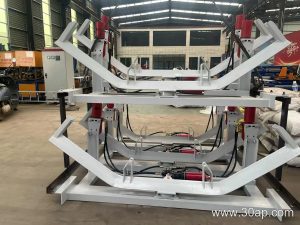
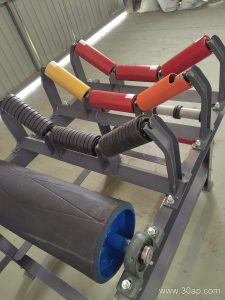
A Heavy-Duty Trough Idler Set is the carrying assembly that supports the loaded run of a conveyor belt and shapes it into a trough so bulk material stays centered. In a quarry or a limestone mine, the difference between a standard set and a heavy-duty trough idler set shows up in the frame, the roller wall thickness, the bearing protection, and the seal arrangement. The set is not a single roller but a matched group, usually three rolls on a common frame, with side rolls angled to lift the belt edges. That trough angle is what keeps coarse rock, ore, or clinker from spilling over the edges during travel.
The heavy-duty version is selected where impact, abrasion, and continuous running hours are high. It is common to see these sets under a Mining Conveyor Belt or a High Abrasion Resistant Conveyor Belt on the main haulage line, while the return side may use a different roller type entirely.
How the Set Is Put Together
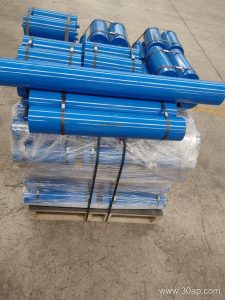
A typical assembly includes a steel frame, three idler rollers, shaft ends, bearing housings, and a sealing system. The rolls may be steel tube, nylon, or rubber-disc types depending on the duty. Rubber-disc rolls are often chosen at transfer points because they absorb impact from large lumps. The frame is usually bolted to the conveyor bracket, and the whole set can be lifted out for roller replacement without removing the belt structure. Bearing selection follows load and speed rather than a single fixed rule; common bearings include 6205, 6305, 6306, and 6308, and the same bearing size can appear on more than one roll diameter. Labyrinth seals and grease retention matter in dusty plants such as a cement plant or a coal-fired power station, where fine particles shorten bearing life if the seal is weak.
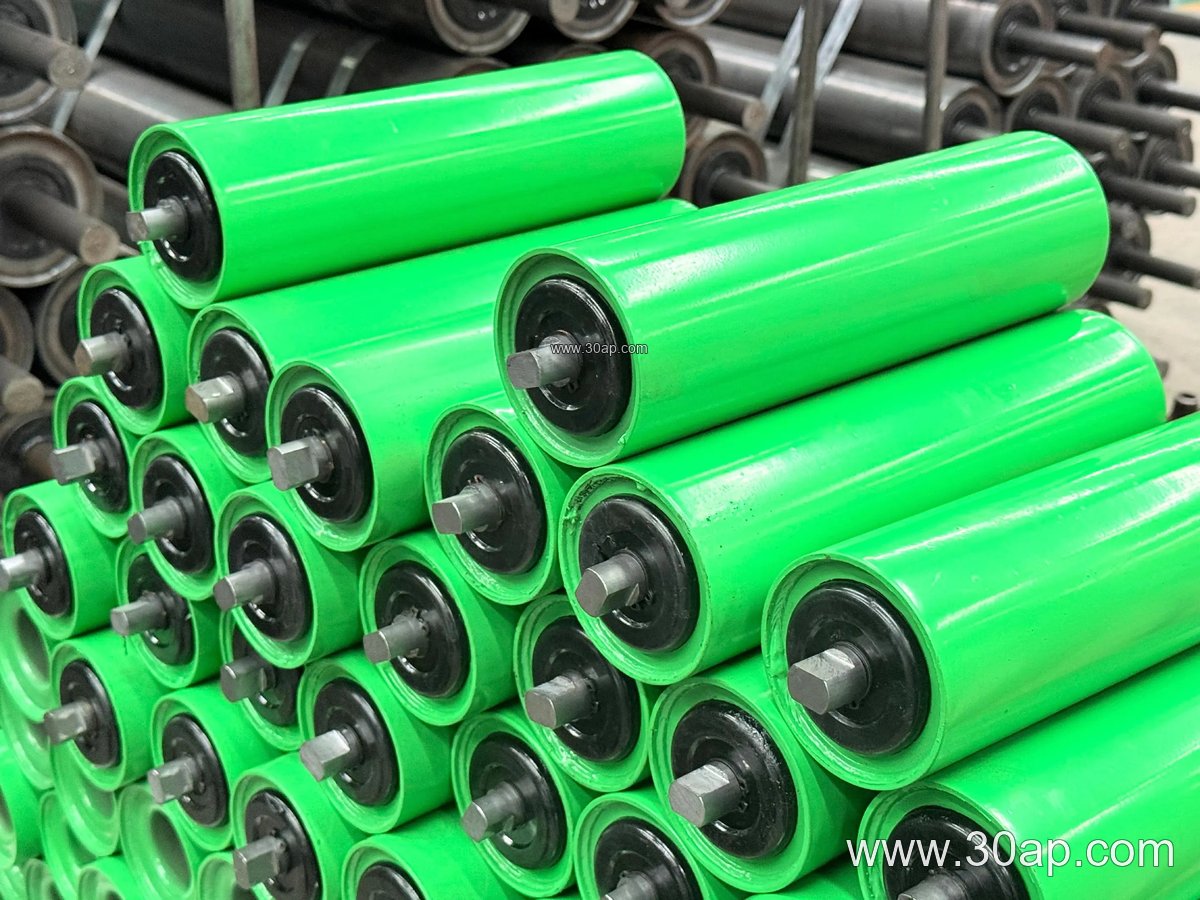
Where the Heavy-Duty Trough Idler Set Fits
These sets are used on the carrying side of a belt conveyor in applications where the belt is wide and the load is heavy. You will find them in iron ore and copper ore handling, in aggregate lines feeding a crusher, in ship loading at a port, and in sinter plants at a steel works. A Steel Cord Conveyor Belt on a long overland run also relies on trough idler sets to keep the belt profile stable. The trough angle is chosen to suit the material: 20 and 30 degrees are common for finer or more rounded material, while 35 and 45 degrees are used where the belt needs a deeper trough to hold a full load. Side rolls are sometimes tilted forward about 1.5 to 2 degrees to help belt tracking, but this is a design choice, not a universal rule.
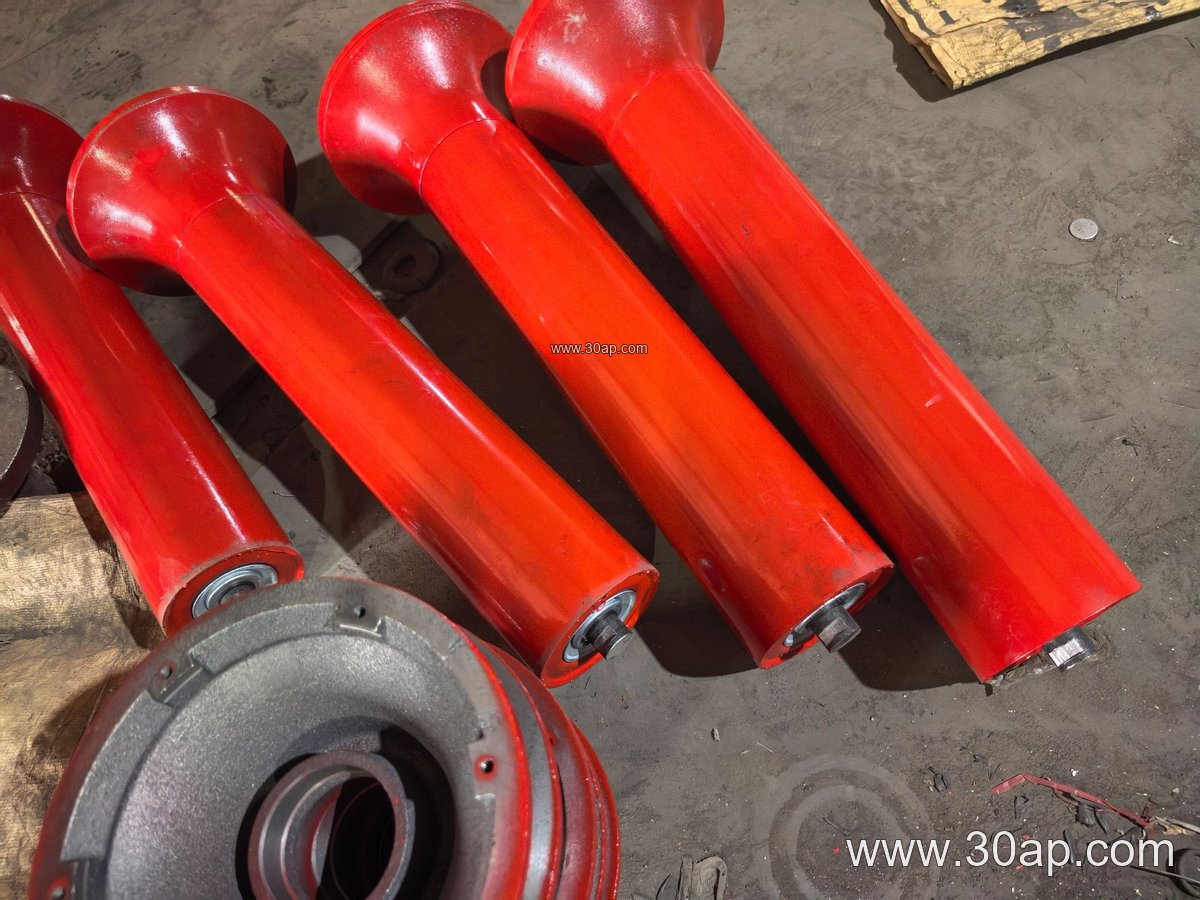
Common Reference Dimensions
The table below gives common reference values for trough idler sets. Roll length changes with belt width, trough angle, and the number of rolls in the set. The values are examples, not fixed combinations, and the center roll may differ from the side rolls.
| Belt width (B) | Typical roll length for a three-roll trough set | Common trough angles |
|---|---|---|
| B500 | about 200 mm | 20, 30, 35 degrees |
| B650 | about 250 mm | 20, 30, 35 degrees |
| B800 | about 315 mm | 20, 30, 35, 45 degrees |
| B1000 | about 380 mm | 30, 35, 45 degrees |
| B1200 | about 465 mm | 30, 35, 45 degrees |
| B1400 | about 530 mm | 30, 35, 45 degrees |
| B1600 | about 600 mm | 35, 45 degrees |
| B1800 | about 670 mm | 35, 45 degrees |
Roll diameters for heavy-duty trough sets often fall in the range of Ø89, Ø102, Ø108, Ø127, Ø133, Ø159, and Ø178 mm. Larger diameters are used where the belt is wide and the load is high. The shaft diameter is determined by the load calculation for the whole set, not by belt width alone.
Buyer Checklist Before Ordering
- Confirm the belt width and the existing trough angle so the set matches the frame.
- State the material type and lump size, because impact at the load point may call for rubber-disc rolls or a buffer set.
- Check the conveyor bracket spacing and mounting hole pattern on the existing structure.
- Ask about seal type and bearing size for dusty or wet conditions.
- For a coal mine or underground coal mining conveyor, confirm flame retardant and anti-static requirements for the belt and the compatibility of the idler set.
- Do not assume one belt width matches one pulley diameter or one shaft size; the full conveyor design governs the selection.
At a sand and gravel plant, a heavy-duty trough idler set that is correctly sized will wear evenly and keep the belt training well. At a power plant coal yard, the same set type may need a different seal and finish. Reviewing the whole conveyor, including the conveyor pulley and the conveyor bracket, before ordering saves rework later.