What the Conveyor Head Pulley Does
The conveyor head pulley is the drum at the discharge end of a belt conveyor. It turns the conveyor belt, carries the loaded belt through its final arc, and throws material off into the chute, stockpile or transfer point. Because it transmits the drive torque and sets belt speed, it is often the largest and most heavily built pulley on the machine. In a quarry, a coal preparation plant or a cement clinker line, this component is also called the head drum or discharge pulley, and those names describe the same product.
Its position matters. A drive pulley may sit elsewhere on the conveyor, and a bend pulley only changes belt direction. The head pulley combines the discharge function with the main drive duty in most single-drive layouts, so alignment and lagging quality directly affect belt tracking and belt life.
Construction and Surface Options
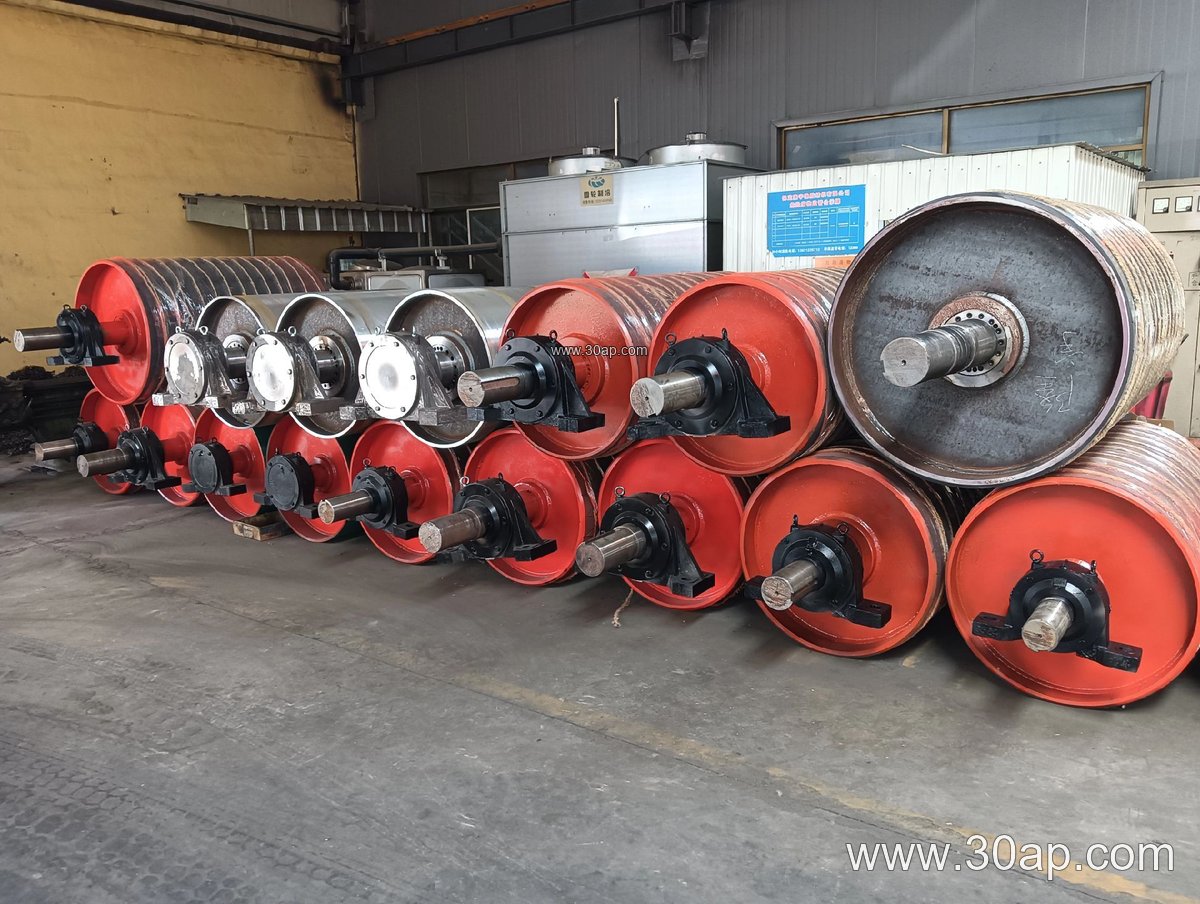
A typical head drum consists of a rolled steel shell, two end discs, a shaft, and bearing housings mounted on a sturdy frame. The shell is machined or balanced to run true at speed. The shaft diameter is determined by torque and load, not by belt width alone, so two conveyors with the same belt width can use different shafts.
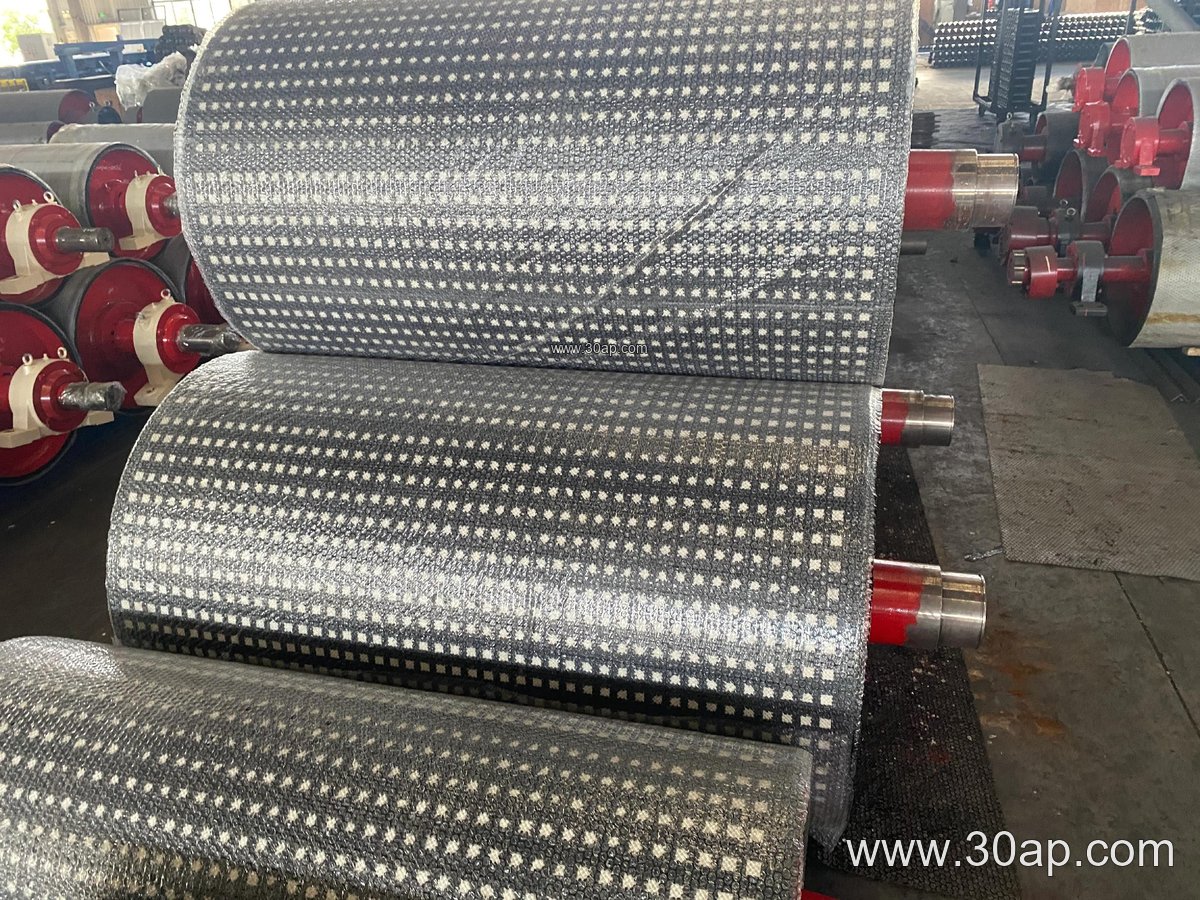
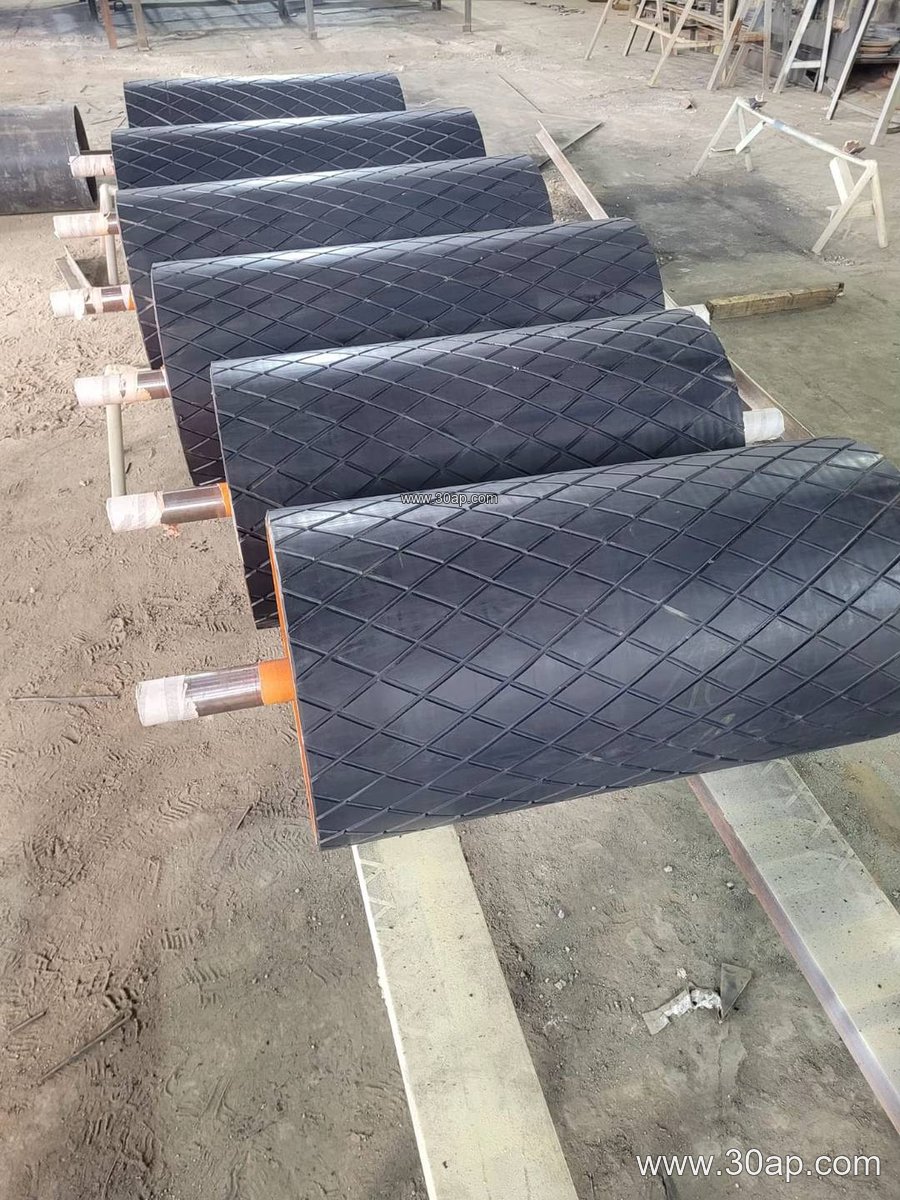
Lagging protects the shell and improves grip. Common surface forms include plain, hot vulcanized rubber, cold bonded rubber, diamond grooved, herringbone grooved and ceramic lagging. Lagging thickness is commonly 8, 10, 12, 15 or 20 mm depending on duty. For a wet or dusty discharge, diamond or ceramic lagging helps shed water and fines; for a high-tension long conveyor, hot vulcanized rubber is a frequent choice.
Matching Belt Width and Pulley Dimensions
The drum face is usually wider than the belt so the belt can train without edge damage. Reference combinations often follow a step of roughly 100 to 200 mm over the belt width. Typical examples are shown below; these are common reference values, not fixed rules.
| Belt width | Typical pulley face width | Example diameter |
|---|---|---|
| B500 | about 600 mm | Ø400 mm |
| B650 | about 750 mm | Ø500 mm |
| B800 | about 950 mm | Ø500 mm |
| B1000 | about 1150 mm | Ø630 mm |
| B1200 | about 1400 mm | Ø800 mm or Ø1000 mm |
| B1400 | about 1600 mm | Ø800 mm |
| B1600 | about 1800 mm | Ø1000 mm |
| B1800 | about 2000 mm | Ø1250 mm |
Diameter selection depends on belt speed, wrap angle, belt stiffness and the allowable bending stress in the belt carcass. A steel cord belt generally needs a larger drum than a fabric belt of the same width. Do not assume a fixed shaft size from belt width; shaft diameters such as Ø80, Ø100, Ø120, Ø140, Ø160 or Ø180 mm are chosen from torque and bearing load calculations.
Where It Fits in the Plant
In a stone crushing and screening line, the head pulley at the top of the discharge conveyor works in constant dust and often handles abrasive aggregate. In a power plant coal handling system, the same drum may face fine coal, moisture and a flame retardant belt requirement. In a port bulk terminal, large head drums on wide belts move ore or grain at high tonnage, and the pulley must be balanced and well lagged to keep the belt centred.
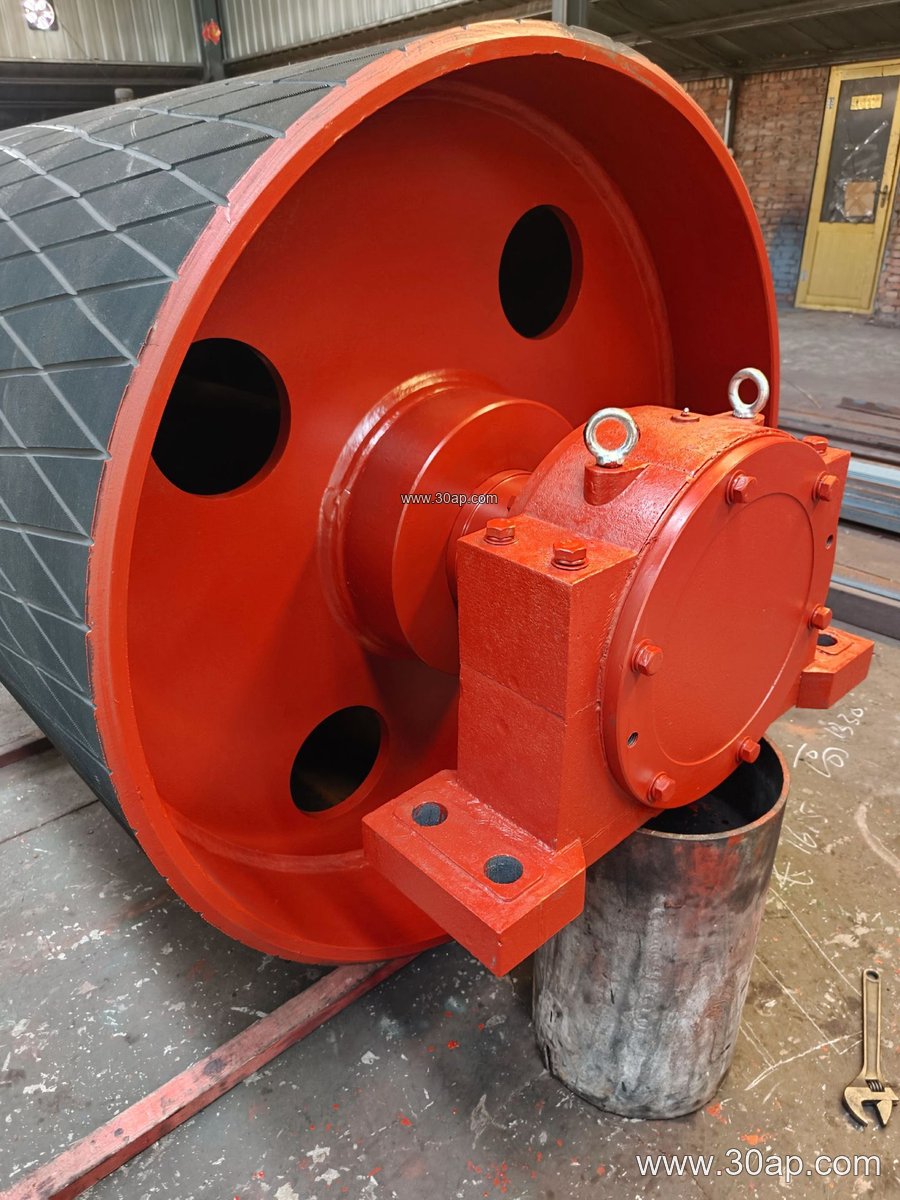
The belt itself matters too. A heavy-duty mining conveyor belt, an abrasion resistant conveyor belt or a heat resistant conveyor belt all place different demands on the drum surface. On a long overland system, an EP conveyor belt or steel cord conveyor belt may run at high tension, while a chevron conveyor belt on an incline needs a clean, well-aligned discharge. Matching the pulley to the belt carcass and the material is more useful than copying a catalogue number. Guidance on belt and pulley matching is available at brconveyor.com/conveyor-head-pulley.
Buyer Checklist
- Confirm belt width, belt type and belt tension so the drum diameter and shaft can be calculated properly.
- State the duty: hours per day, material, moisture, temperature and whether washdown is used.
- Choose lagging by grip and wear: plain for light duty, rubber for general use, ceramic for severe slip and abrasion.
- Check bearing type, housing position and take-up arrangement with the conveyor bracket layout.
- Ask for dynamic balancing and runout tolerances on high-speed or wide drums.
- Plan inspection of lagging wear, shaft seals and bearing temperature as part of routine maintenance.
A well-specified head drum keeps discharge clean, reduces belt slip and protects the conveyor belt from edge damage. For related components such as the idler roller, conveyor pulley and conveyor bracket, coordinate dimensions early so the whole conveyor line fits together. More selection notes can be found at brconveyor.com/conveyor-pulley and brconveyor.com/conveyor-belt.