What a Conveyor Support Leg Does
A conveyor support leg is the vertical or angled member that carries the weight of a conveyor frame down to the floor, foundation, or structural steel. It is not the same as the idler bracket that holds a roller in place, nor is it a pulley assembly. The support leg is the load path between the conveyor stringer and the ground. In a quarry conveyor line or a cement plant transfer tower, these legs are often the first part an installer sets before the stringers and idlers go on.
The same product is also called a conveyor stand leg or belt conveyor support leg. These names describe the same structural element. A leg may be fixed, height-adjustable, or fitted with a base plate for bolting. When the frame needs to follow a decline or a transfer point, the leg height changes, but the function stays the same.
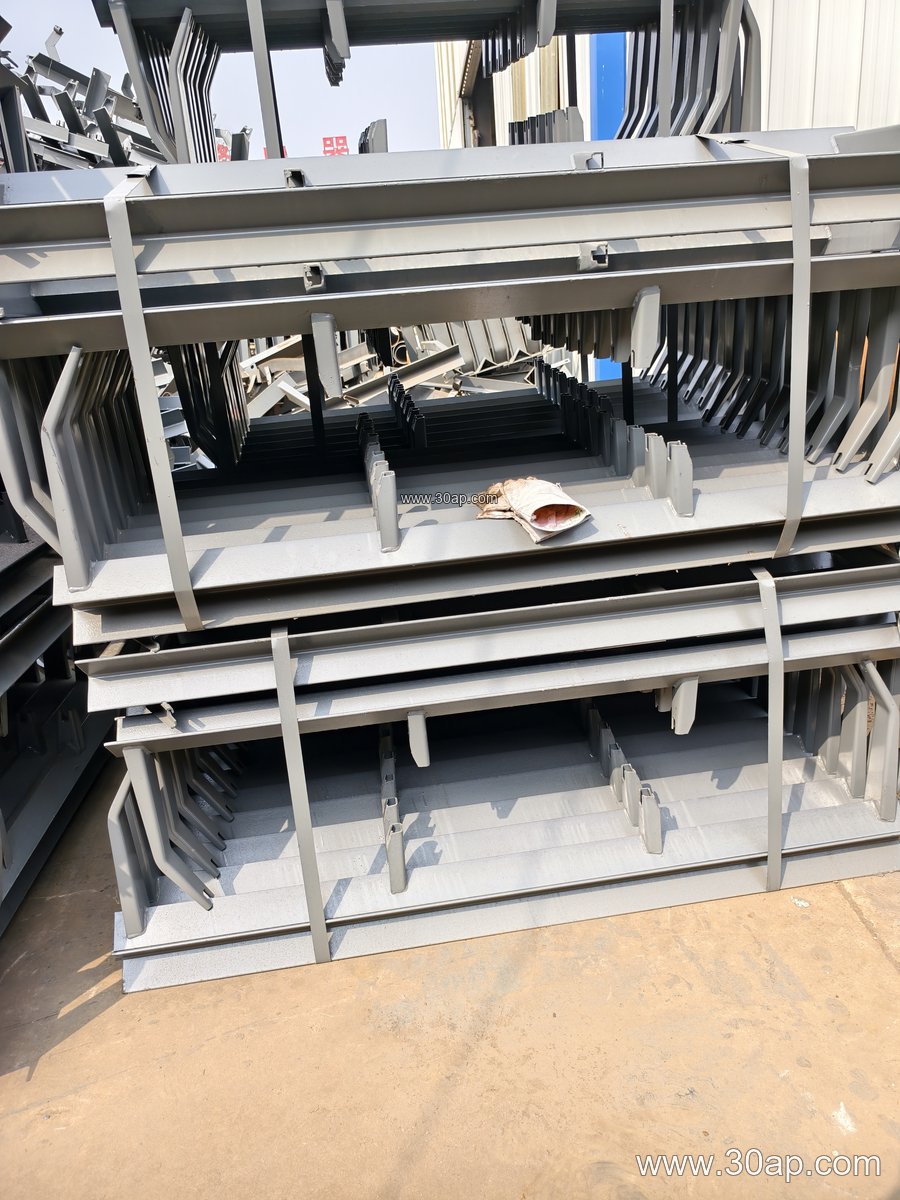
Construction and Materials
Most support legs are fabricated from angle steel, channel steel, or folded steel plate. The material choice depends on the load and the environment. In a coal mining conveyor structure, legs may be painted or galvanized; in a fertilizer plant, the coating needs to resist corrosion. A typical leg has a top plate or clevis that connects to the stringer, a vertical section, and a foot plate with bolt holes. Adjustable versions use slotted holes or a telescoping section so the frame height can be set on site.
Welds and bolt holes are the critical points. A leg that is too light for the span will deflect and misalign the idler roller, which in turn causes edge wear on the conveyor belt. Buyers should check the leg section size against the conveyor width and the expected load. For reference, a B800 frame with 35 degree troughing idlers may use a different leg than a B1200 frame with 45 degree idlers, because the wider frame and larger idler roller carry more weight. The leg spacing and base plate size are usually determined by the conveyor design, not by a single fixed rule.
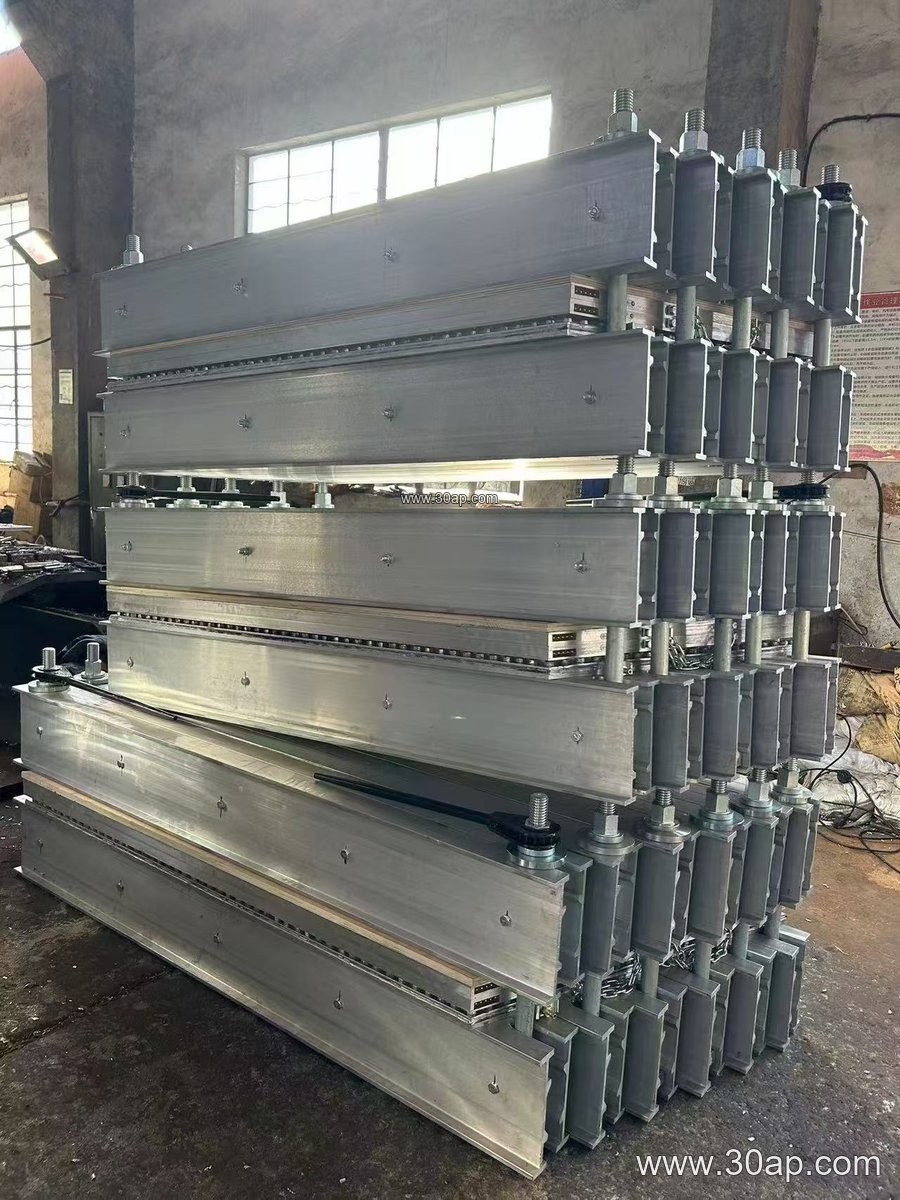
Where Support Legs Are Used
Support legs appear in almost every bulk handling line. In a limestone quarry, they hold up the incline section that feeds a crusher conveyor belt. In a power plant coal yard, they support the long overland conveyor that carries coal to the boiler bunker. In a sand and gravel plant, short legs under the screen discharge keep the belt line low and stable. In a port ship loading system, taller legs with cross bracing carry the conveyor over walkways.
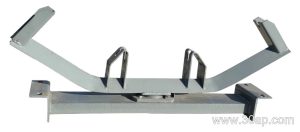
The leg also works with the rest of the frame. A conveyor bracket connects the idler to the stringer; the stringer sits on the leg; the leg transfers the load to the foundation. If the leg is out of alignment, the whole assembly suffers, and even a high abrasion resistant conveyor belt will wear unevenly. For this reason, support legs are often set with shims or adjustable feet before the final bolt torque is applied.
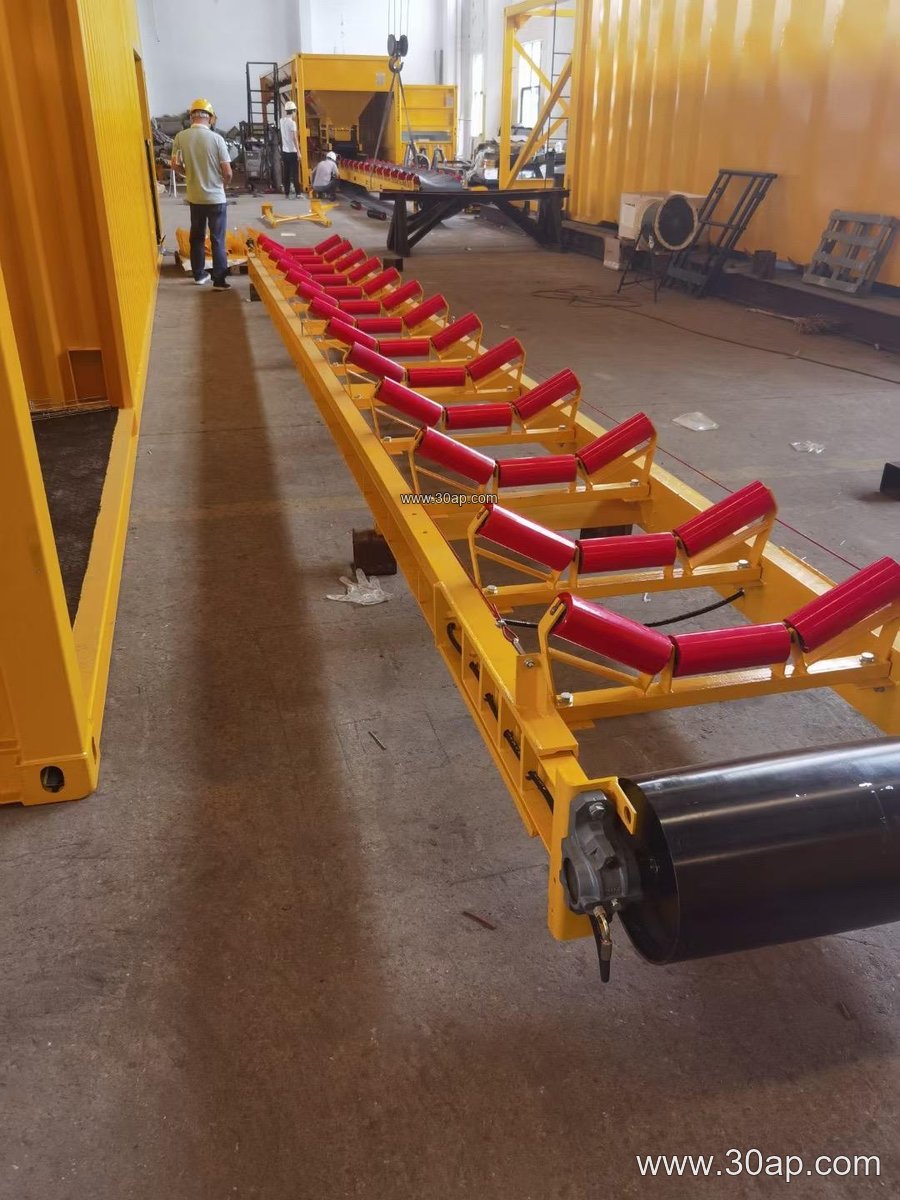
Types and Adjustability
Support legs are commonly grouped by how they connect and whether they adjust. Fixed legs are welded or bolted at a set height. Adjustable legs allow small height changes for slope transitions or for leveling on uneven ground. Some designs include a V-shaped or cross-braced leg for wider frames, while others use a simple single post. The leg top may be flat, angled, or fitted with a matching bracket for a troughing idler set.
When selecting a leg, consider the belt width and the idler configuration. A B650 frame with 30 degree troughing and Ø89 idlers has different load points than a B1400 frame with 35 degree troughing and Ø133 idlers. The leg should match the stringer hole pattern and the base plate footprint. For a transfer point with impact, a heavier leg section or a short, stiff leg under the impact idler support helps reduce vibration.
Buyer Checklist
- Confirm the frame width and the stringer hole spacing; leg top plates must match.
- Check the leg height range and whether adjustment is needed for slope changes.
- Match the leg material and coating to the site: washdown, coal dust, or chemical exposure.
- Verify the base plate and anchor bolt layout against the foundation drawing.
- Plan leg spacing with the conveyor designer; do not assume one spacing fits all belt widths.
A well-matched support leg keeps the idlers level and the belt tracking straight, which protects the conveyor belt and reduces downtime. Whether the line runs a fabric core conveyor belt or a steel cord conveyor belt, the legs are part of the same load path and deserve the same attention as the rollers and pulleys.