What a Conveyor Carrying Bracket Does
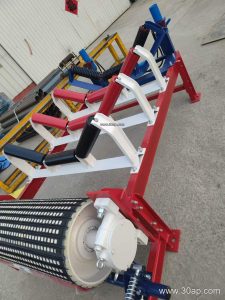
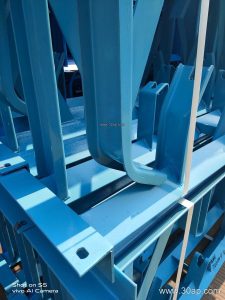
A conveyor carrying bracket is the structural support that holds the carrying-side idlers in position and sets the trough profile of the belt. In everyday plant language it is often called a carrying idler bracket, troughing bracket, or simply a conveyor bracket. It sits on the conveyor frame, carries the load transmitted through the idler roller, and keeps the belt aligned and supported between the head and tail stations.
The bracket belongs to the carrying side of the conveyor. It is not a drive pulley, tail pulley, or bend pulley, and it should not be confused with them. Those are rotating drums that transmit power or change belt direction. The carrying bracket is a static steel component whose geometry decides how the belt sits on its idlers.
Construction and Common Forms
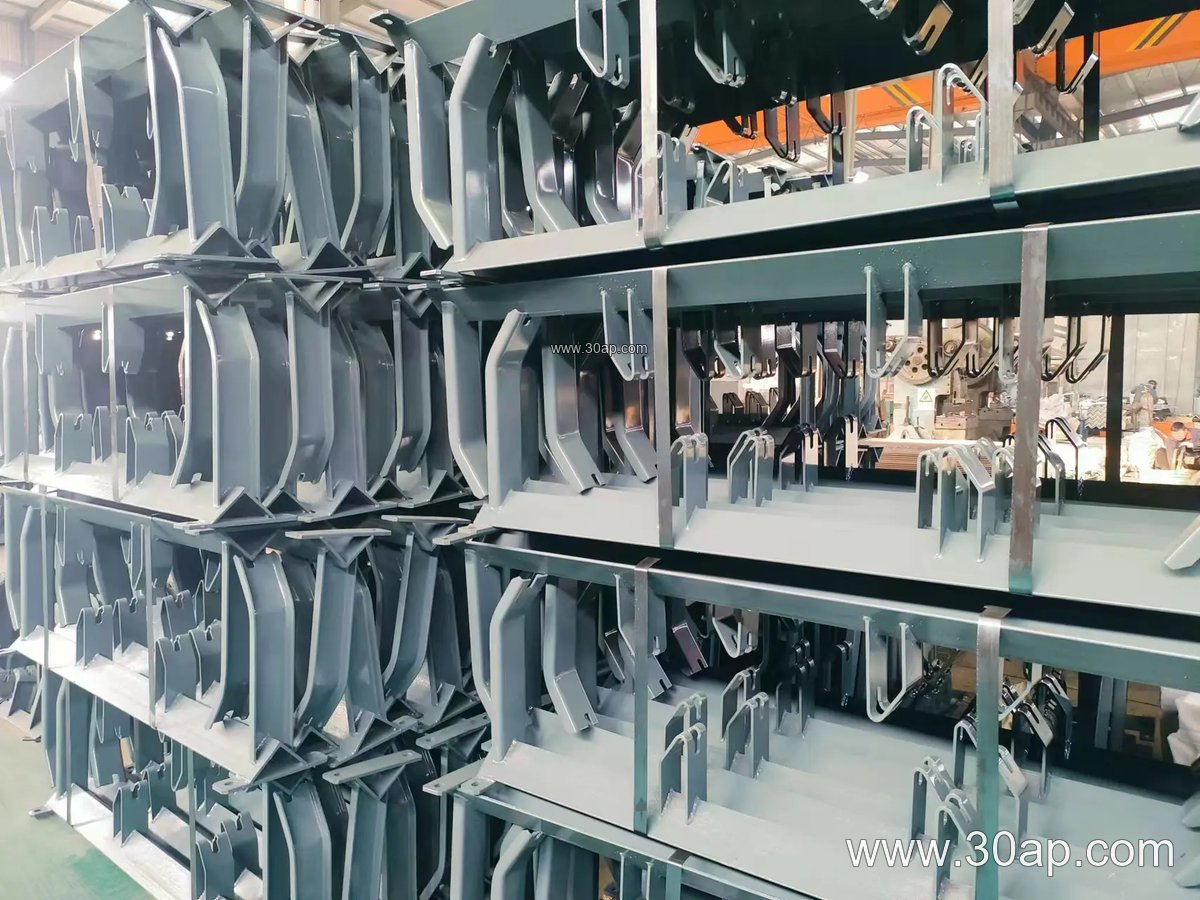
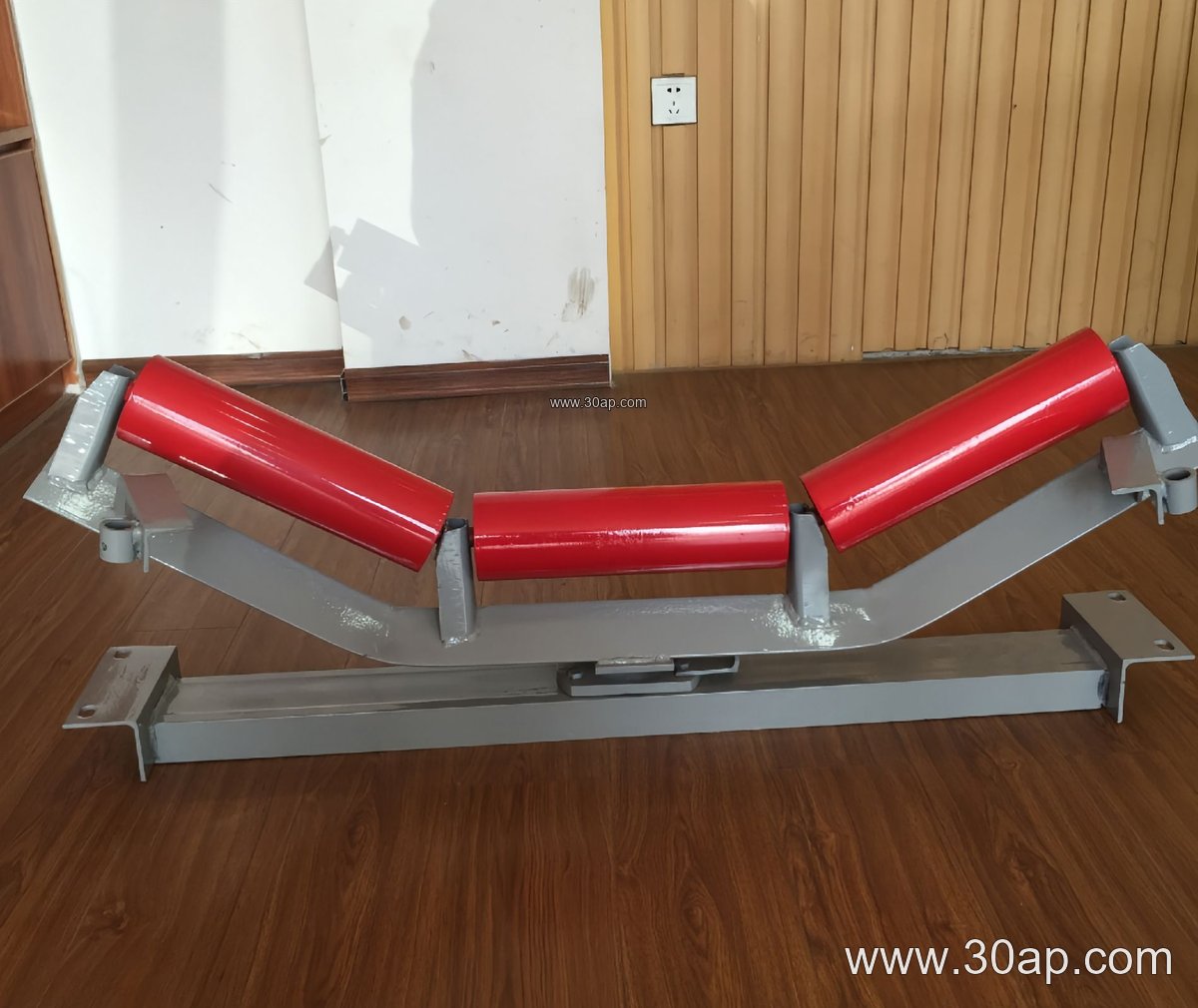
Most brackets are fabricated from angle steel, channel steel, or folded steel plate. The material and thickness are usually selected according to belt width, load, and the number of idler rollers supported. A three-roller troughing bracket is the most widespread form: the two side rollers are inclined while the center roller runs flat.
- Troughing carrying bracket – sets the trough angle for the carrying side.
- Transition bracket – used near the head and tail to ease the belt from flat to troughed.
- Impact bracket – supports impact idlers under loading points and chutes.
- Self-aligning bracket – works with training idlers to correct belt drift.
- Adjustable bracket – allows the trough angle to be changed on site.
Return-side brackets such as the V-type and flat return brackets are a separate family. They are worth mentioning only because they complete the conveyor line, not because they replace the carrying bracket.
Trough Angle, Belt Width and Roller Diameter
The trough angle strongly influences material containment and belt stress. Common values are 20 degrees, 30 degrees, 35 degrees, and 45 degrees. An adjustable design can move between these angles within its designed range. Forward-tilted brackets are also used, typically around 1.5 to 2 degrees, to help keep the belt centered.
Belt width and roller diameter are selected together with the bracket, but there is no fixed one-to-one rule. A B800 conveyor may run at 35 degrees with Ø108 idlers, while a B1200 line may use 45 degrees with Ø133 rollers. Wider installations such as B1600 or B1800 often use larger diameters to reduce rotation speed and bearing load. Hole spacing and crossbeam length change with belt width and trough angle, so they should be confirmed from the drawing rather than assumed.
| Item | Typical Reference Values |
|---|---|
| Belt width | B500, B650, B800, B1000, B1200, B1400, B1600, B1800, B2000 |
| Trough angle | 20°, 30°, 35°, 45°; adjustable within range |
| Roller diameter | Ø89, Ø108, Ø133, Ø159, Ø194 |
| Material | Angle steel, channel steel, folded steel plate |
These figures are reference data only. Final dimensions depend on the conveyor design and the load case.
Where Carrying Brackets Are Used
You will find them in almost any bulk handling line. In a limestone quarry or a crushing and screening plant, carrying brackets support the belt that moves blasted rock from the primary crusher to the stockpile. In a coal preparation plant or a power station coal yard, they carry the belt through long transfer galleries, often paired with a flame retardant conveyor belt where fire safety matters.
Heavy-duty mining conveyor belt systems handling iron ore or copper ore rely on sturdy brackets and abrasion resistant conveyor belt covers to survive constant loading. Cement plants use them along clinker and raw meal routes. Ports and ship loading terminals use wide belts, sometimes 1800mm wide conveyor belt or more, where the bracket must resist both load and wind exposure.
Buyer Checklist
Before ordering, confirm the belt width, trough angle, roller diameter, and mounting hole pattern. Check whether the frame is fixed or adjustable and whether impact or self-aligning behavior is needed at specific points. Ask for the steel grade, surface treatment, and welding quality, and make sure the bracket matches the idler roller series you already stock.
During operation, inspect for loose bolts, bent side plates, and worn mounting slots. A misaligned bracket quickly causes belt edge wear and material spillage. Replacing a damaged unit is usually straightforward, but it should be done with the belt stopped and the tension released.
For related components, see our conveyor belt, idler roller, and conveyor pulley ranges at ztconveyor.com. Matching the bracket to the rest of the conveyor frame is the simplest way to keep a bulk material conveyor belt running smoothly in mining, cement, and power plant service.