What a Ceramic Rubber Lagged Pulley Does
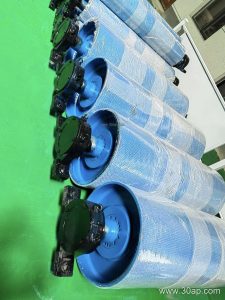
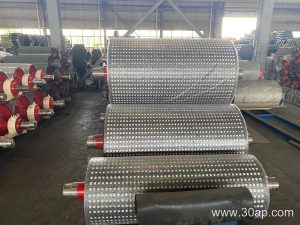
A ceramic rubber lagged pulley is a conveyor pulley whose shell is covered with a rubber layer embedded with ceramic tiles. The ceramic pieces sit slightly proud of the rubber surface and create a hard, textured grip that bites into the belt cover. This type of lagging is chosen when a drive pulley has to transmit high torque without slipping, especially where the belt is wet, dusty, or carrying abrasive bulk material. In many plants the pulley is simply called a ceramic lagged drum or ceramic lagged roller, but it is the same component: a conveyor pulley with a ceramic-in-rubber wear surface.
The ceramic tiles are the part that carries the load. Rubber alone can polish and lose friction on wet belts; the ceramic inserts keep a sharp, durable texture that resists abrasion far longer. The rubber body, meanwhile, absorbs shock and protects the pulley shell from direct impact.
How the Lagging Is Built
A ceramic rubber lagged pulley usually starts as a steel drum with welded end discs and a machined shaft. The shell is cleaned and primed, then the lagging is applied either as a pre-formed ceramic rubber sheet or as tiles set into an uncured rubber compound. Heat and pressure bond the rubber to the shell and lock the ceramic pieces in place. The surface often has a diamond or square pattern, with small gaps between tiles to let water and fines escape instead of building up under the belt.
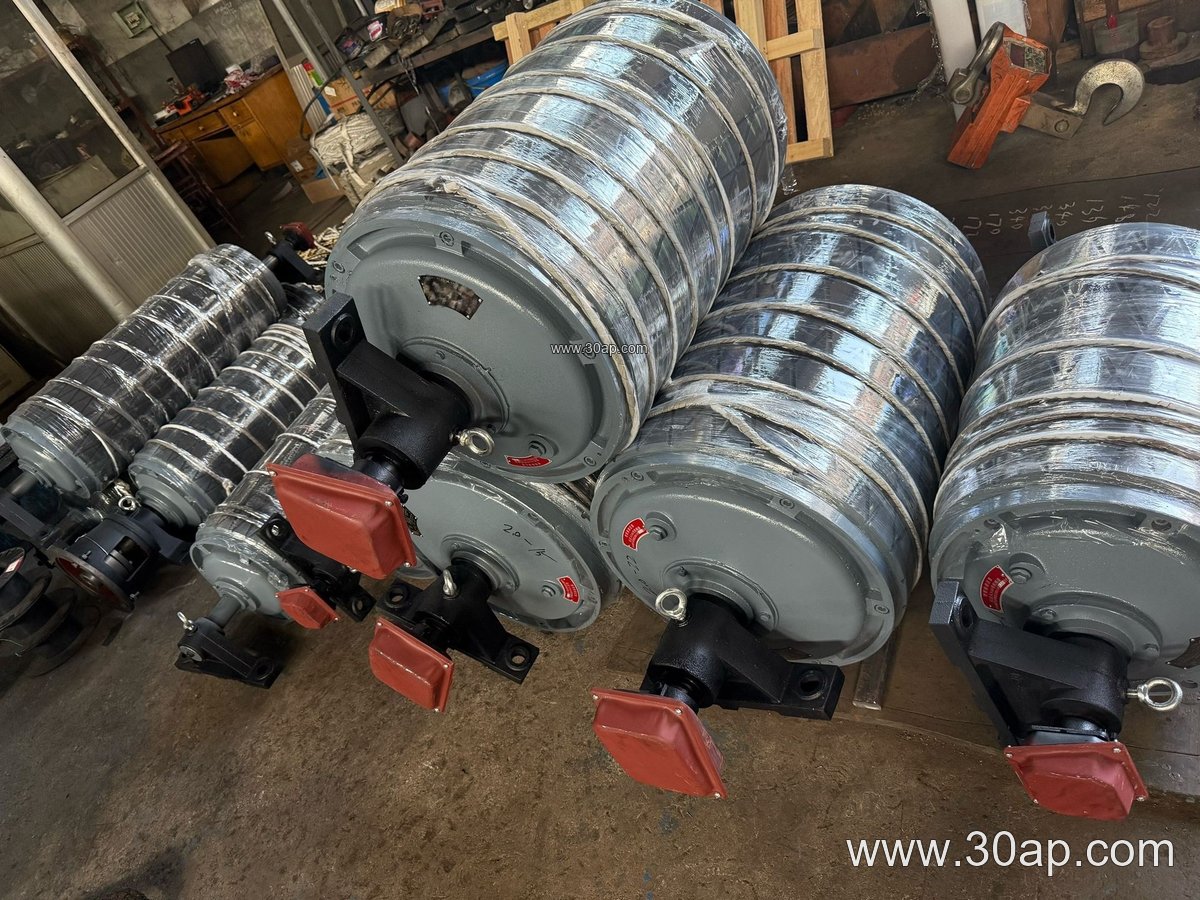
Common lagging thicknesses are 8, 10, 12, 15 and 20 mm, with thicker layers used on high-torque drives and large-diameter pulleys. The pulley face width is normally a little wider than the belt; for example, a B800 belt often runs on a pulley face around 950 mm, and a B1200 belt on roughly 1400 mm. Diameters range from small bend units near Ø200 up to large drive drums of Ø1000, Ø1250 or more. Shaft diameter depends on torque and bearing load, not on belt width alone, so a B1000 pulley may use Ø100, Ø120 or a larger shaft depending on the drive design.
Where It Fits on the Conveyor
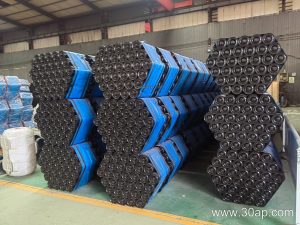
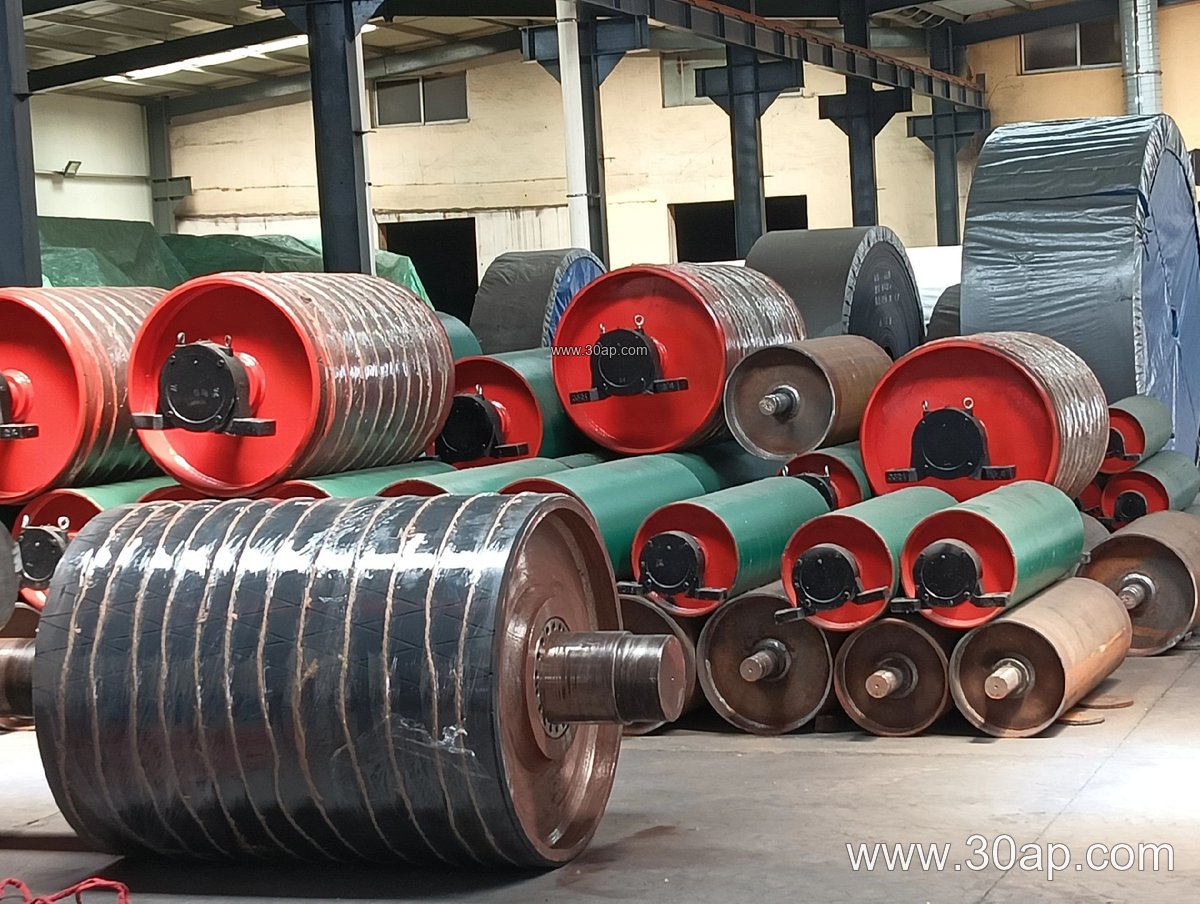
The ceramic lagged surface is most often specified for the drive pulley, which is also called the head pulley or head drum when it sits at the discharge end. It can also be used on a tension pulley or take-up drum where slip would upset belt tracking. A bend pulley or snub pulley usually does not need ceramic lagging because it transmits little torque; plain rubber or a smooth surface is enough there. That is a comparison of duty, not a swap of one subtype for another.
These pulleys appear across heavy bulk handling. In a coal washing plant, a drive drum with ceramic lagging keeps a thick, wet belt moving through slurry and fines. In a cement plant, the same lagging helps a clinker or limestone conveyor hold grip despite dust. Iron ore and copper ore operations, quarry and aggregate lines, power plant coal yards and port shiploading systems also use them where belt slip would stop production.
Matching the Pulley to the Belt and the Load
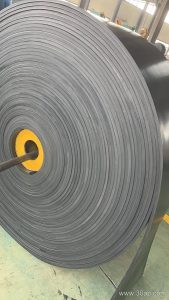
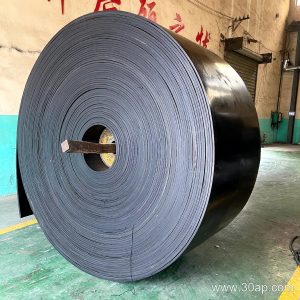
The pulley is only one part of the drive train, and the belt choice matters. A heavy-duty mining conveyor belt with a thick abrasion resistant cover can handle the pressure of ceramic tiles better than a thin cover. Where oil or heat is present, an oil resistant conveyor belt or heat resistant conveyor belt may be needed, but the pulley lagging should still be selected for grip and wear. On long overland or high-tonnage systems, a steel cord conveyor belt or a high-strength EP conveyor belt such as EP1000 or EP1250 may run over these drums, and the lagging helps transfer the drive force without polishing the belt surface.
For underground work, flame retardant conveyor belt grades are common, and the pulley lagging should be compatible with the mine’s fire-safety requirements. Ceramic lagging is not a substitute for correct belt tension, alignment or take-up travel; it works best when the conveyor is set up properly.
What Buyers Should Check
- Duty and position: confirm whether the pulley is a drive, head, tension or bend unit. Ceramic lagging is usually justified on the drive and tension positions, not on every drum.
- Belt width and face width: give the belt width and ask for the pulley face width, for example B650 with about 750 mm face or B1400 with about 1600 mm face.
- Diameter and shaft: state the required drum diameter and the shaft size determined by torque and bearing load. Do not assume a shaft size from belt width.
- Lagging thickness and pattern: 10 to 15 mm is common for general drive duty; thicker lagging and a deeper pattern suit high-torque or wet conditions.
- Environment: tell the supplier about water, dust, oil, heat or corrosive spray so the rubber compound and ceramic bonding suit the site.
- Balance and runout: a lagged drum must be balanced and machined true, or the belt will track poorly and the lagging will wear unevenly.
Inspection is simple: look for cracked or missing ceramic tiles, worn rubber between tiles, and polished or glazed areas that signal belt slip. Replacing lagging before the shell is exposed protects both the pulley and the conveyor belt. A ceramic rubber lagged pulley is a wear part with a clear job, and choosing it by duty, diameter, face width and environment gives the best service life.