What Conveyor Pulley Lagging Actually Does
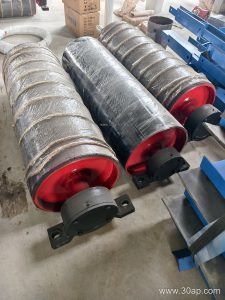
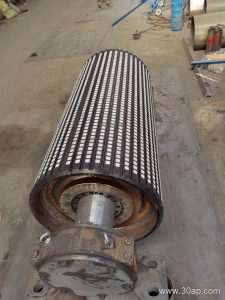
Conveyor pulley lagging is the rubber or ceramic layer bonded to the drum surface where the conveyor belt makes contact. Its job is simple to state and hard to do well: increase friction between the pulley and the belt so the drive can transmit torque without slipping, and protect the drum shell from wear and material build-up. In a quarry or a coal handling plant, a bare steel drive pulley often loses grip the moment the belt gets damp or dusty, and that is exactly the situation lagging is designed to solve.
The same layer also matters on a conveyor pulley at the tail end, where fines and water can pack onto the face and cause belt misalignment. When the lagging is grooved or patterned, it gives dirt somewhere to go instead of letting it polish the surface into a skating rink.
How the Lagging Is Built and Bonded
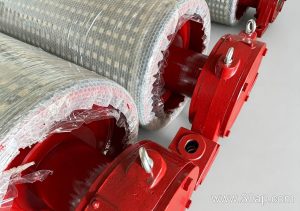
Most lagging starts as a rubber sheet with a defined hardness, thickness and surface pattern. Thickness options commonly range from 8 mm to 20 mm, with 10 mm and 12 mm being typical for medium-duty drives and 15 mm or 20 mm used on heavily loaded head pulleys. The bond to the shell is the critical part. Cold-bonded rubber uses an adhesive system applied at ambient temperature, while hot vulcanized lagging is cured under heat and pressure to form a stronger, more continuous joint. Ceramic lagging embeds tiles in a rubber matrix, which suits wet, abrasive service where plain rubber would wear through quickly.
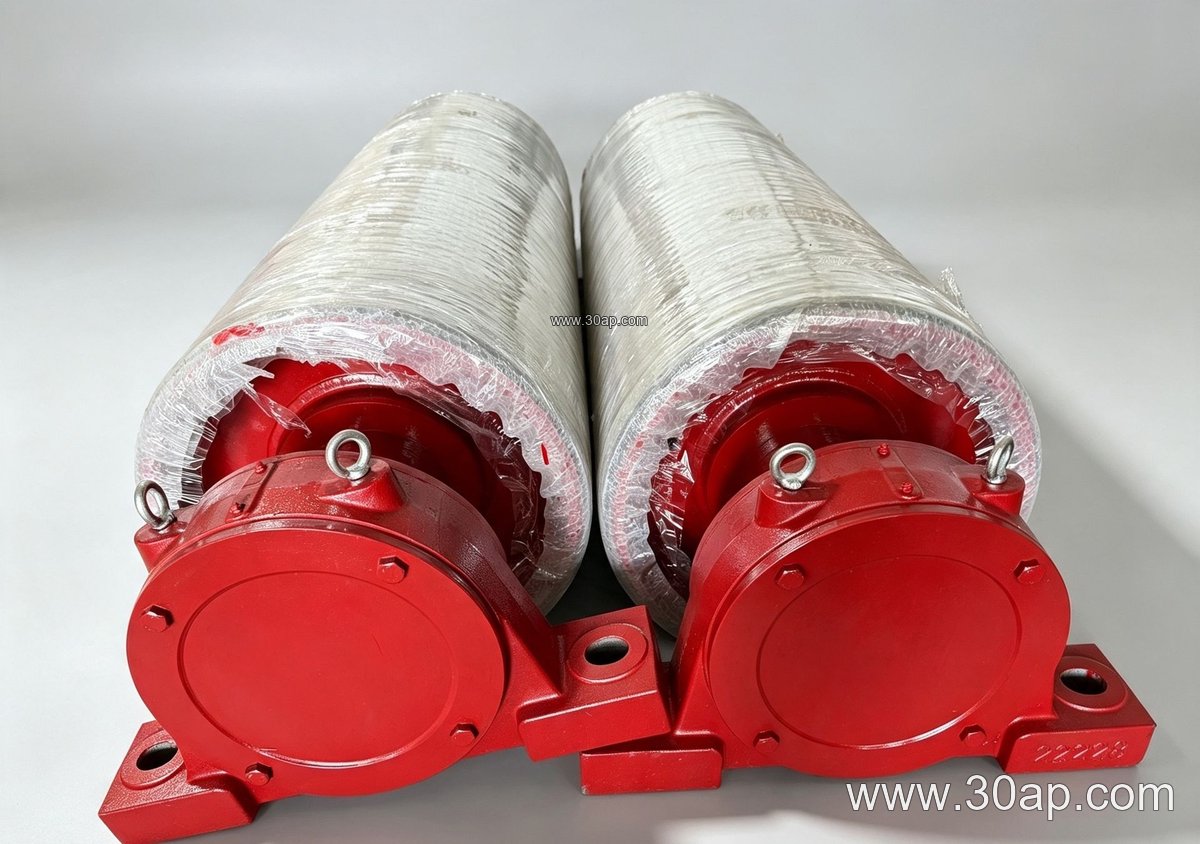
Surface forms include plain, diamond, herringbone, and ceramic tile. Diamond and herringbone patterns channel water away and improve grip in one direction; plain lagging is easier to clean and is often chosen where material carryback is sticky.
Matching Lagging to the Pulley Position
A drive pulley and a bend pulley do not ask the same thing of their lagging. The drive or head pulley carries the highest torque and benefits most from a high-friction diamond or ceramic surface. Tail pulleys are usually lagged for wear protection and self-cleaning rather than traction. A tension pulley may use plain rubber to allow the belt to slide slightly during take-up adjustment. Bend pulleys on a long overland system often run with thinner lagging because the contact pressure is lower.
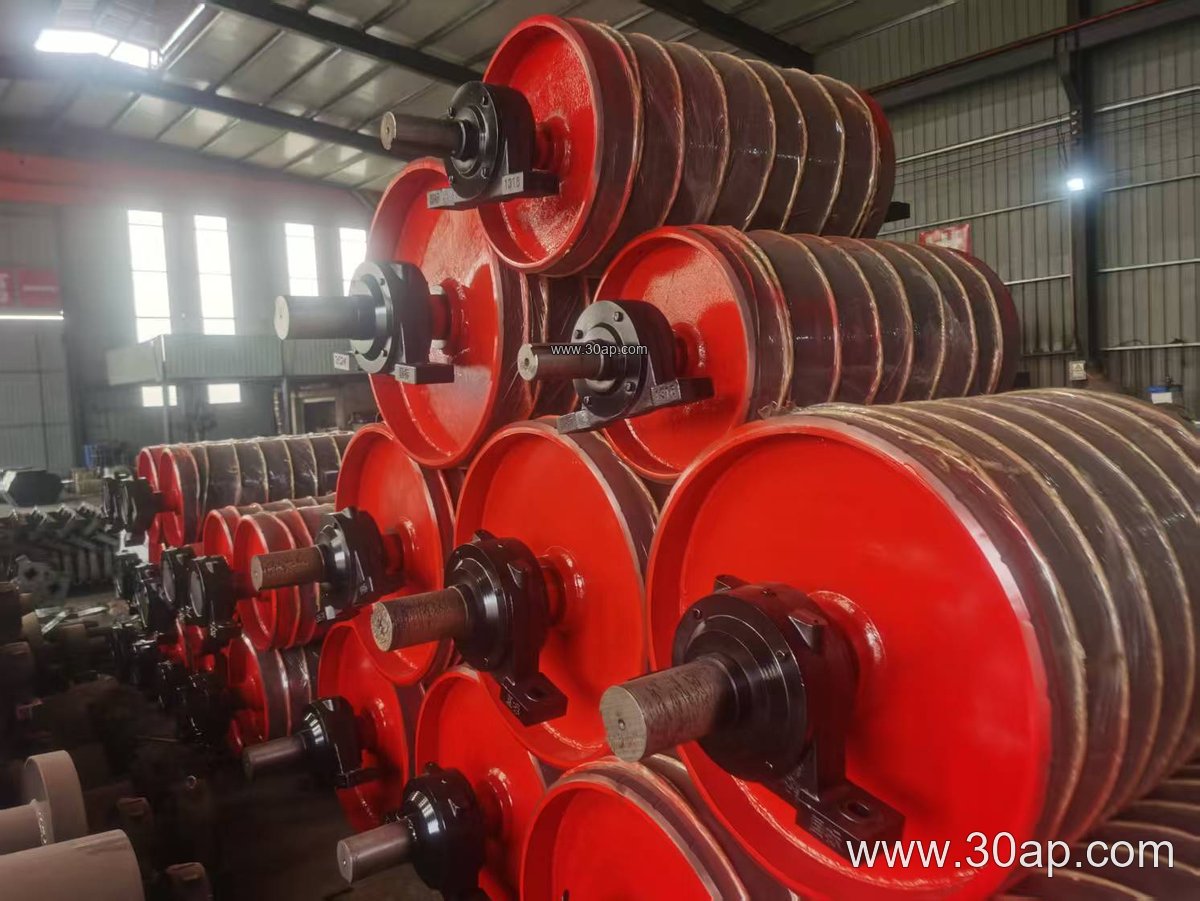
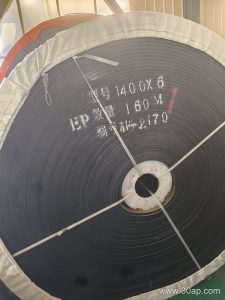
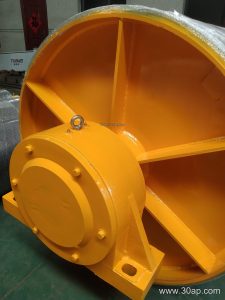
When specifying, match the drum to the belt rather than the other way round. A B800 belt commonly runs on a pulley face around 950 mm wide, and a B1200 belt on roughly 1400 mm. Diameter and shaft size follow the torque and bearing load, not the belt width alone, so a B1200 conveyor might use a Ø800 or Ø1000 drum depending on the drive design. Typical shaft diameters in these assemblies run from Ø80 to Ø160, but the final figure comes from the torque calculation.
Where It Shows Up in the Plant
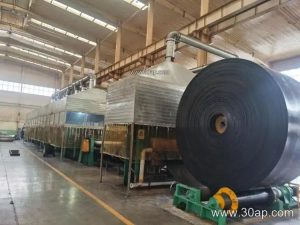
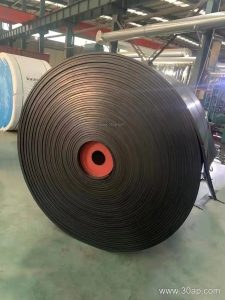
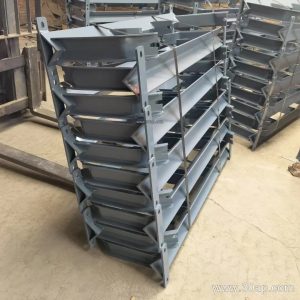
You will find lagged pulleys across bulk handling: a limestone quarry feeding a crusher, a cement plant moving clinker, a power station coal yard, a port ship loader, and a sand and aggregate washing line. In each case the lagging works alongside the conveyor belt, the idler roller frames, and the conveyor bracket that holds the bearing housings. A heavy-duty mining conveyor belt carrying iron ore puts far more demand on the drive pulley surface than a light aggregate belt, and the lagging specification should reflect that difference.
Buyer Checklist Before Ordering
- Shell dimensions: confirm drum diameter, face width, and whether the lagging is supplied as a kit or bonded by the workshop.
- Thickness and hardness: state the service conditions, not just a number. Wet, oily or abrasive material changes the recommendation.
- Surface pattern: diamond for general grip, herringbone for directional water shedding, ceramic for high abrasion, plain for easy cleaning.
- Bond method: hot vulcanized for maximum life on critical drives, cold bonded where on-site repair is needed.
- Balance and runout: lagging adds mass and must be applied evenly so the drum stays balanced at operating speed.
Ask for the lagging thickness, pattern, and bond method in writing, and check that the supplied face width suits the actual belt. A well-chosen lagging on a drive pulley will outlast two or three bare shells in a dusty quarry, and it keeps the belt tracking straight instead of wandering toward the conveyor bracket.