What an Idler Bracket Does on a Conveyor
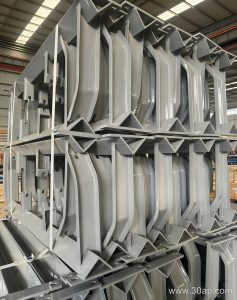
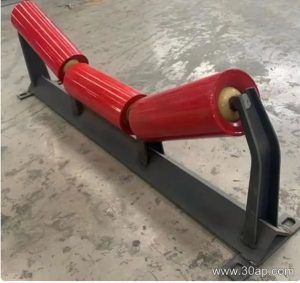
An idler bracket is the structural component that holds conveyor idlers at the correct position, angle and spacing along the conveyor frame. In a troughed carrying run, the bracket supports the three-roller set that shapes the conveyor belt into a trough; on the return run, a simpler bracket carries the flat or V-return rollers. Without a properly aligned bracket, the idler roller cannot hold its profile, the belt drifts, and the whole conveyor bracket assembly begins to wear unevenly.
The bracket is not a rolling part. It is the stationary interface between the frame and the rotating idler roller, so its geometry, hole spacing and stiffness directly influence belt tracking and idler life. In a quarry or a sand and gravel line, a loose or bent idler bracket often shows up first as a wandering belt rather than as a visible crack.
Construction and Common Materials
Most brackets are fabricated from angle steel, channel steel or folded steel plate, then drilled or punched for the idler shaft. A troughing bracket typically has two inclined arms set at the required trough angle, while a return bracket is usually a flat cross member. Bolted and welded designs both exist; bolted frames are easier to adjust on site, while welded frames are stiffer but less forgiving if the frame is out of line.
Because the bracket sits under constant load and dust, paint finish and drainage matter as much as steel thickness. In a coal preparation plant or a power plant coal yard, brackets should not create pockets where fines and water collect.
Matching Bandwidth, Trough Angle and Roller Diameter
Bracket dimensions follow the conveyor design, not a single fixed table. Common bandwidths include B500, B650, B800, B1000, B1200, B1400, B1600, B1800 and B2000, and trough angles of 20, 30, 35 and 45 degrees are frequently used. Roller diameters such as Ø89, Ø108, Ø133, Ø159 and Ø194 are selected from belt speed, load and belt stiffness. A combination like B800 with 35 degrees and Ø108 is common, but the same width can also run a different angle or roller size depending on the duty.
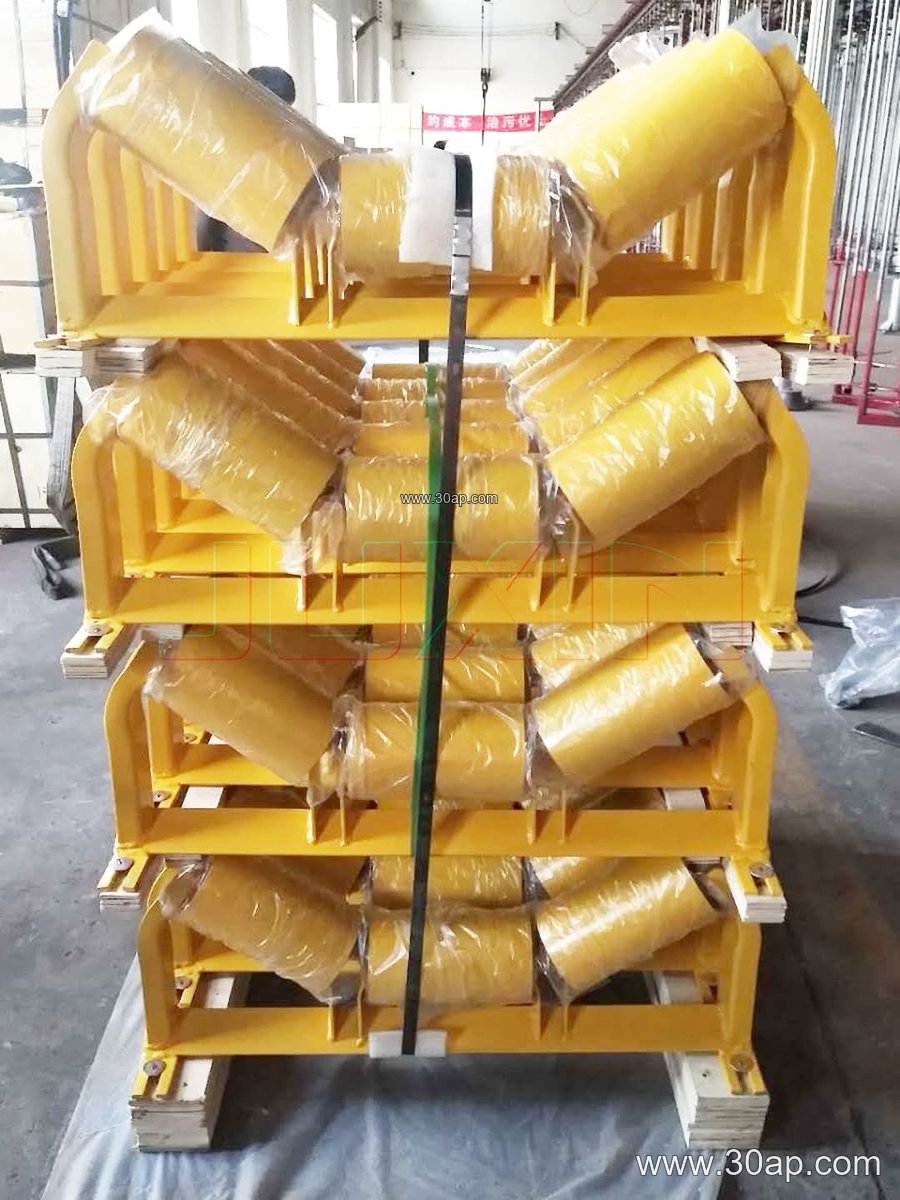
Mounting hole spacing and cross beam length change with bandwidth and trough angle, so these should be confirmed against the conveyor drawing rather than assumed. The table below shows typical reference combinations; treat the values as design guidance, not as a fixed catalogue promise.
| Bandwidth | Trough Angle | Roller Diameter | Typical Bracket Role |
|---|---|---|---|
| B650 | 30 degrees | Ø89 | Light-duty carrying bracket |
| B800 | 35 degrees | Ø108 | Standard troughed bracket |
| B1000 | 35 degrees | Ø133 | Main line carrying bracket |
| B1200 | 45 degrees | Ø133 | High-capacity troughing bracket |
| B1400 | 35 degrees | Ø159 | Heavy-duty carrying bracket |
| B1600 | 45 degrees | Ø159 | Bulk terminal bracket |
| B1800 | 35 degrees | Ø194 | Large-width carrying bracket |
Where the belt carries coarse rock from a crusher, a buffer or impact bracket is often placed at the load point, and a self-aligning bracket may be used to correct tracking. A transition bracket near the head or tail pulley gradually changes the belt from flat to troughed. These are different bracket functions and should not be mixed up with the main carrying bracket.
Where These Brackets Are Used
Idler brackets appear wherever a conveyor belt runs on rollers. In an iron ore or copper ore handling circuit, heavy-duty brackets support the loaded run and must resist abrasion and shock. In a cement plant, brackets along the clinker and raw material lines face heat and dust. In a limestone quarry or aggregate conveyor, brackets are exposed to grit and frequent washdown. Port ship loading conveyors, steel plant sinter lines, fertilizer plants and grain silos all rely on the same basic bracket logic, though the surface protection and stiffness change with the environment.
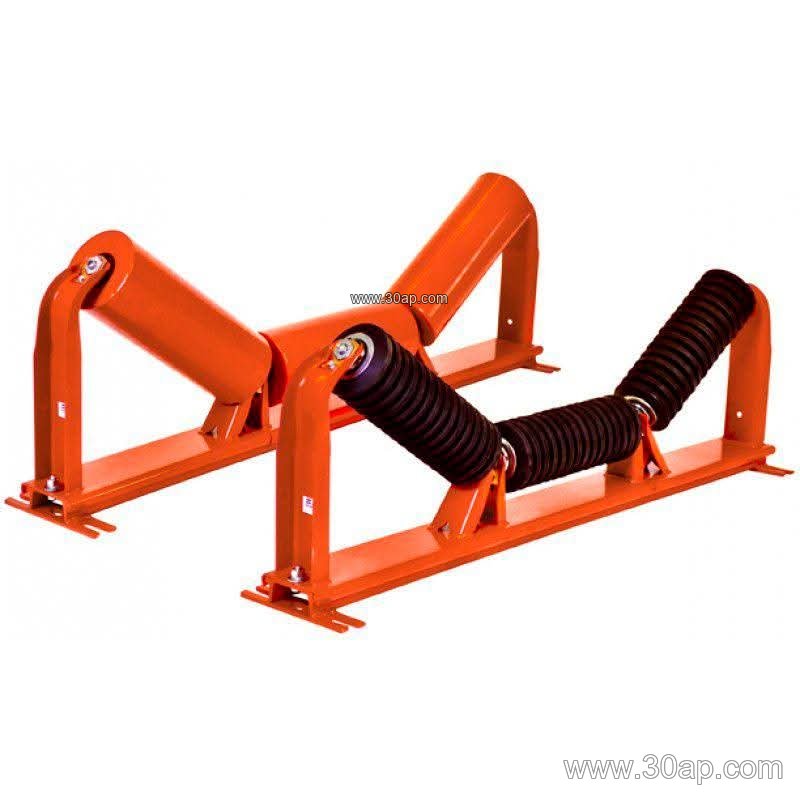
On long overland lines, the bracket spacing and alignment are critical because a small tracking error accumulates over distance. A misaligned conveyor bracket can wear the edge of a rubber conveyor belt, an EP conveyor belt or a steel cord conveyor belt long before the idler itself fails.
Fixed, Adjustable and Special Brackets
Fixed brackets hold one preset trough angle. Adjustable brackets allow the trough angle to be changed within a range, which is useful during commissioning or when the belt material changes. Forward-leaning brackets, usually tilted about 1.5 to 2 degrees, help keep the belt centered on the carrying side. V-return and flat return brackets serve the return strand. Hanging brackets suit certain frame layouts, and spiral roller brackets are used where material build-up on the return side is a concern.
Choosing between fixed and adjustable comes down to whether the conveyor will be tuned on site. For a stable, well-designed frame, fixed brackets are simpler and cheaper to maintain. For a rebuilt or upgraded conveyor, adjustable brackets reduce the risk of a mismatch between the frame and the new idler set.
What Buyers Should Check
Before ordering, confirm the bandwidth, trough angle, roller diameter and frame hole pattern. Check the steel section and finish against the site conditions, and confirm whether the bracket is for the carrying or return side. Ask how the bracket is packed and whether fasteners are included. For a coal mining conveyor belt or an underground coal mining conveyor belt application, flame retardant and anti-static properties matter for the belt, while the bracket must be robust enough for the same dusty, damp environment.
Finally, keep spare brackets on site. A bent bracket is quick to replace and cheap compared with the belt damage it can cause. Matching the bracket to the idler roller and the conveyor pulley layout is the simplest way to keep a conveyor running true.