What a Crusher Conveyor Belt Does
A crusher conveyor belt is the heavy-duty conveyor belt that carries crushed rock, ore, or aggregate away from a primary or secondary crusher and feeds the next stage of screening, stockpiling, or further reduction. Because it sits directly downstream of a crusher, the belt must absorb sharp edges, lumpy discharge, and frequent impact loading rather than a smooth, pre-screened material stream. In practice, this is a rock conveyor belt and an ore conveyor belt rolled into one duty: tough enough for quarry and mine feed, yet flexible enough to track cleanly around a head pulley, tail pulley, and bend pulley without misalignment.
The same belt often appears under several equivalent names — crusher discharge belt, stone crushing conveyor belt, or primary crusher belt — but the product is the same: a heavy-duty fabric or steel cord belt sized for crusher duty.
Construction and Common Specifications
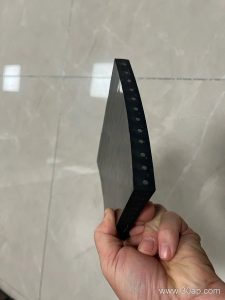
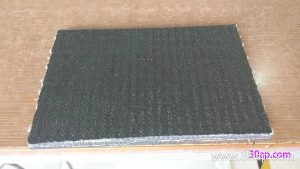
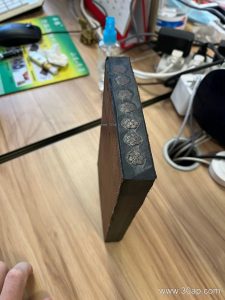
Crusher belts are usually built from a fabric core (EP or NN) or a steel cord carcass, with thick abrasion resistant covers on both faces. A multi-ply fabric core conveyor belt is common where impact resistance matters more than extreme tension; a steel cord conveyor belt is chosen for long, high-tension runs from a large primary crusher to a distant stockpile.
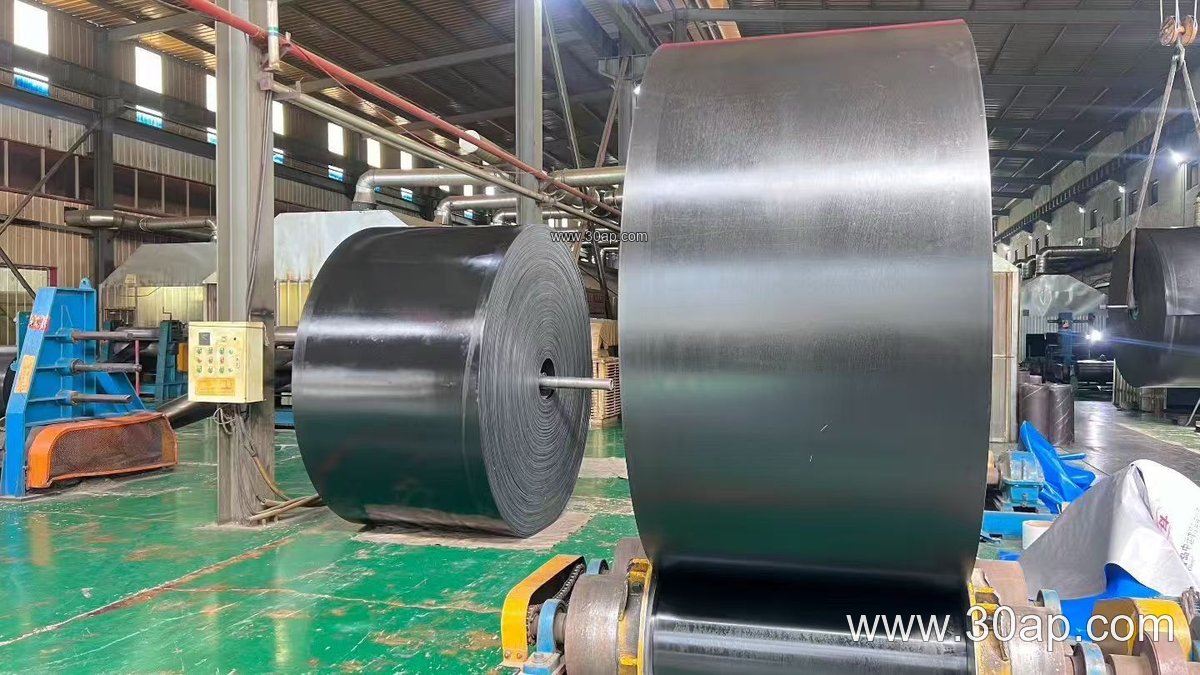
The table below shows typical reference values, not fixed supply commitments. Final construction is determined by the conveyor design and the material being handled.
| Parameter | Common reference range |
|---|---|
| Belt type | EP, NN, steel cord, PVG for underground use |
| Strength grade | EP200 to EP2000; ST1000 to ST3150 |
| Belt width | B650, B800, B1000, B1200, B1400, B1600, B1800 |
| Cover thickness | 4+2 mm, 5+2 mm, 6+2 mm, 8+3 mm |
| Carcass plies | 2 to 6 layers (fabric core) |
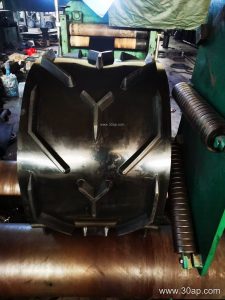
| Surface options | Smooth, chevron, skirted, corrugated sidewall |
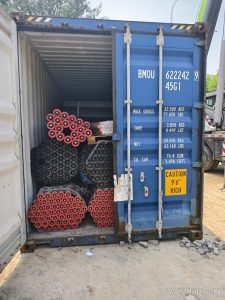
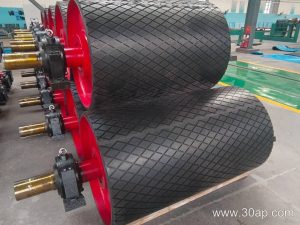
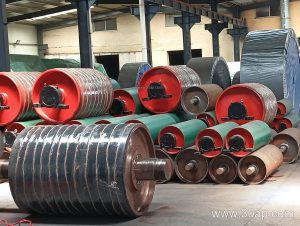
On a typical crusher discharge conveyor, the belt runs over a series of idler rollers supported by conveyor brackets, and is trained by a head pulley and tail pulley. A bend pulley may be added where the route changes direction. These components are not interchangeable, and each must be matched to the belt width and tension.
Where Crusher Belts Are Used
The duty appears across many industries. In a quarry or sand making plant, a quarry conveyor belt moves blasted rock from the primary jaw or impact crusher to a screen deck. In mining, an underground mining conveyor belt or coal mining conveyor belt carries run-of-mine material in confined galleries where flame retardant and anti-static properties are often required. Cement plants use crusher belts between the limestone crusher and the raw mill feed, while power plants and steel plants handle coal and coke with abrasion resistant and heat resistant grades.
Other common settings include aggregate plants, port and ship loading terminals, construction and demolition recycling lines, and iron ore or copper ore handling. In all of these, the belt links the crusher to the rest of the bulk material conveyor belt system.
Buyer Checklist
- Confirm the strength grade and carcass type against the actual conveyor tension calculation, not against belt width alone.
- Match cover thickness and rubber compound to the material: high abrasion resistant for sharp crushed stone, heat resistant near hot clinker or coke, oil resistant for oily feed, cold resistant for freezing climates.
- Check impact resistance at the loading point; crusher discharge often needs impact idlers or a short impact bed rather than standard carrying idlers.
- Verify belt width against the chute opening and the pulley face width, and confirm that the head pulley, tail pulley, and any bend pulley are sized for the same belt.
- For underground coal work, specify flame retardant and anti-static grades such as PVG800S where the site requires them.
- Ask for the splice method and edge condition, since crusher belts are frequently joined on site with mechanical fasteners or vulcanized splices.
Maintenance is mostly about alignment and loading. Keep idler rollers turning freely, inspect the tail pulley for buildup, and watch the discharge point for oversized lumps that can cut or gouge the cover. A belt that tracks well and is loaded centrally will usually outlast one that is repeatedly pinched or overloaded.
For more on matching belts, pulleys, and rollers, see the component notes at conveyorbeltingpro.com, where crusher conveyor belt, conveyor pulley, and idler roller selection are discussed together.