What a Conveyor Belt Pulley Does on a Conveyor
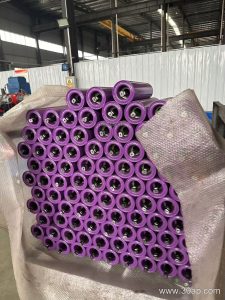
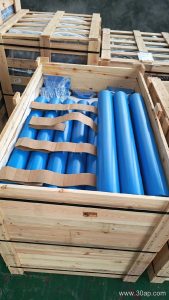
A conveyor belt pulley is the rotating drum that carries and drives the belt at key points along a conveyor. It is not a single-purpose part: the same basic component becomes a drive pulley at the head, a tail pulley at the loading end, or a bend pulley where the belt changes direction. Each position imposes different loads, so buyers should treat the pulley as an engineered assembly rather than a commodity drum.
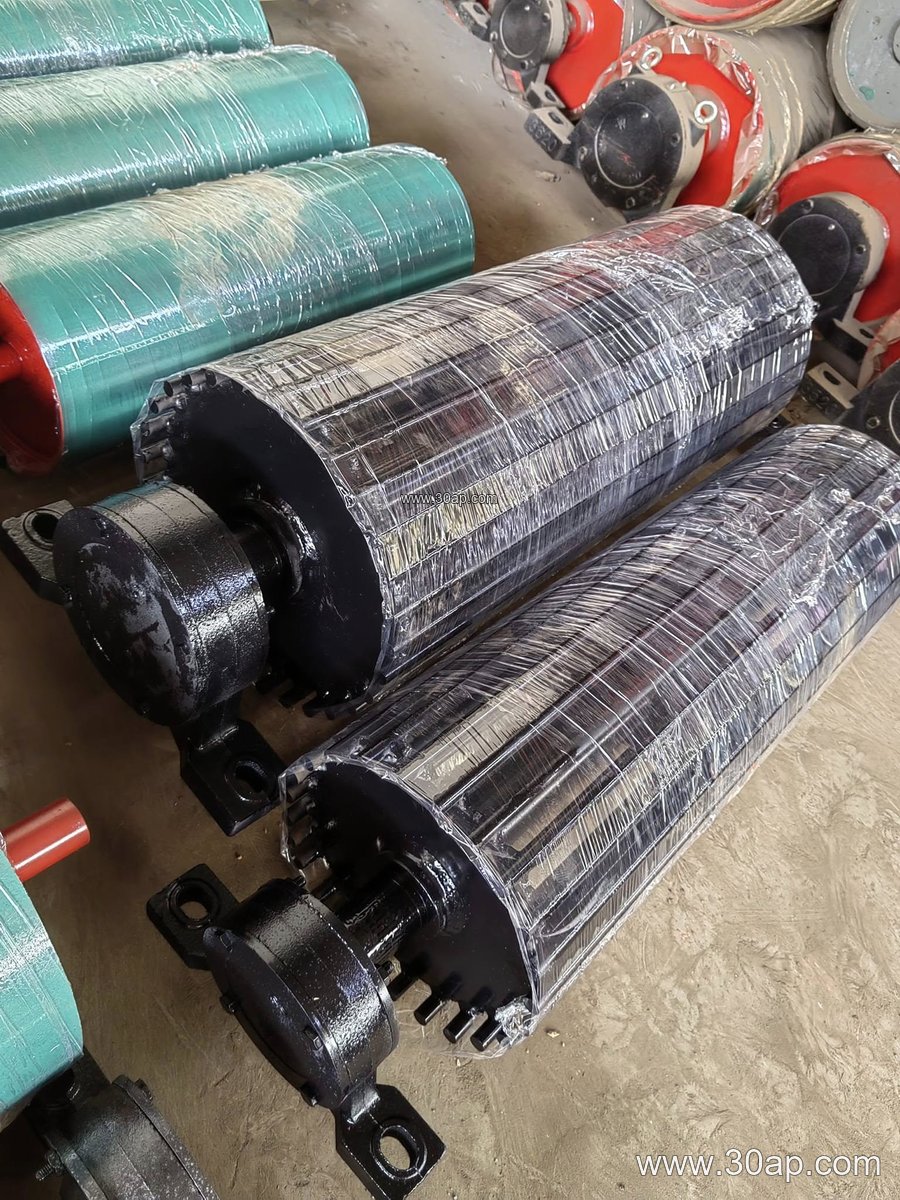
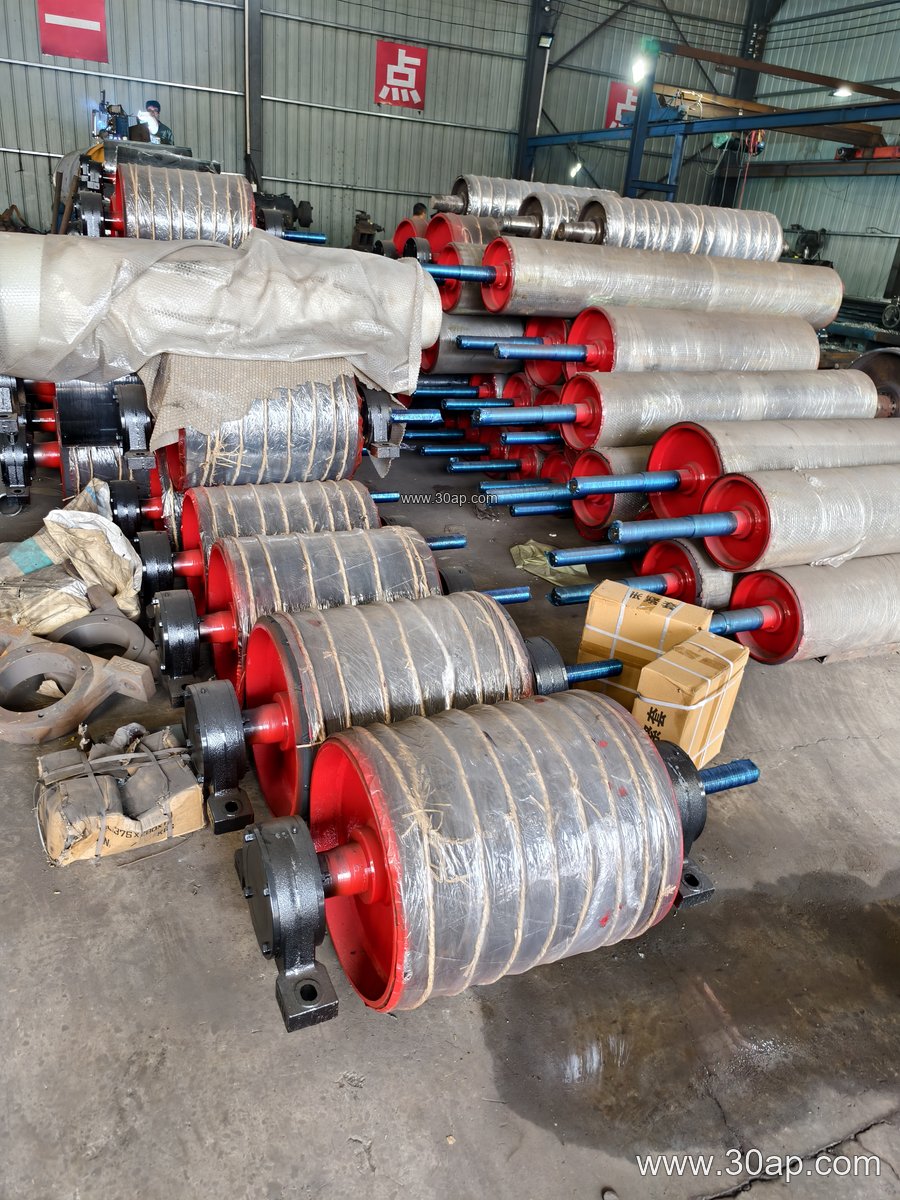
The assembly usually consists of a cylindrical shell, end discs, a shaft, bearing housings, and a lagging surface. The shell may be machined from seamless tube or rolled and welded plate, depending on diameter and duty. Shafts are sized by torque and radial load, not by belt width alone.
Drive, Tail, and Bend Positions Are Not Interchangeable
A drive pulley, also called a head pulley, transmits power from the gearbox to the belt. It needs a robust shaft, a solid connection to the drive, and a surface that grips. A tail pulley at the loading point mainly guides the belt and can be fitted with a self-cleaning or wing design to shed fines. A bend pulley redirects the belt without driving it, so its grip and torque requirements are different again. A take-up or tension pulley handles belt slack, while a snub pulley increases wrap angle on the drive pulley.
Because these roles differ, a spare drive pulley cannot simply replace a tail pulley of the same diameter. Load capacity, bearing selection, lagging, and shaft details all change with position. This is why drawings and duty data matter more than a size list.
Shell, Shaft, and Lagging Details
The shell wall thickness and diameter influence belt fatigue. Larger diameters reduce bending stress in the belt, which is relevant where a heavy-duty mining conveyor belt or steel cord conveyor belt runs at high tension. Surface form is often the first choice a buyer makes:
- Plain surface for light duty and non-drive positions
- Diamond or herringbone lagging for general grip and water shedding
- Ceramic lagging for wet, abrasive conditions in a quarry or aggregate line
- Rubber lagging in 8, 10, 12, 15, or 20 mm thickness, cold-bonded or hot-vulcanized
Plain, cast rubber, cold-bonded rubber, hot-vulcanized rubber, diamond, herringbone, ceramic, and flat rubber are common surface options. Thicker lagging is not automatically better; it must suit the belt cover and the risk of slip.
Common Reference Dimensions
The table below is a reference guide, not a fixed matching rule. Shell width is normally a little wider than the belt, and diameter is selected from belt tension, wrap angle, and space.
| Belt width | Typical shell width | Example diameter combinations |
|---|---|---|
| B400 | about 500 mm | Ø200, Ø250 |
| B500 | about 600 mm | Ø250, Ø315 |
| B650 | about 750 mm | Ø315, Ø400 |
| B800 | about 950 mm | Ø400, Ø500 |
| B1000 | about 1150 mm | Ø500, Ø630 |
| B1200 | about 1400 mm | Ø630, Ø800, Ø1000 |
| B1400 | about 1600 mm | Ø800, Ø1000 |
| B1600 | about 1800 mm | Ø1000, Ø1250 |
| B1800 | about 2000 mm | Ø1250, Ø1400 |
| B2000 | about 2200 mm | Ø1400, Ø1600 |
Shaft diameters commonly fall in the range Ø50 to Ø200 mm, but the final value follows torque and bearing load calculations. A B1200 x Ø1000 drive pulley and a B800 x Ø500 tail pulley are normal combinations, while the same belt width may use different diameters at different positions.
Matching the Pulley to the Belt and the Plant
In a coal mining conveyor or underground coal mining conveyor, flame retardant and anti-static properties of the belt are critical, and the pulley lagging should be chosen to avoid spark risk and slip. In a cement plant or power plant coal yard, abrasive dust calls for ceramic or thick rubber lagging and effective cleaning. At a port ship loading conveyor, high tension and long centers favor large-diameter pulleys and steel cord belt constructions. Quarry and crusher discharge points often pair impact-resistant belt with a robust tail pulley.
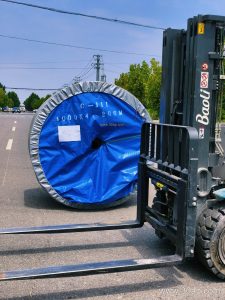
An EP conveyor belt or multi-ply fabric core belt generally tolerates smaller pulley diameters than a high-strength steel cord belt of the same width, because fabric belts are more flexible. A pipe conveyor belt or corrugated sidewall belt needs special attention to pulley face and edge clearance. Buyers should confirm belt thickness, cover grade, and splice type before finalizing the drum.
Buyer Checklist Before Ordering
- State the position: drive, tail, bend, take-up, or snub
- Provide belt width, belt type, and maximum operating tension
- Confirm required diameter and available space for the belt path
- Specify lagging type and thickness, plus whether it is cold-bonded or hot-vulcanized
- Give shaft dimensions, bearing type, and coupling details
- Mention environment: wet, dusty, corrosive, or high temperature
- Check balance and runout requirements for high-speed drives
For plant retrofits, photograph the existing conveyor bracket and bearing housing arrangement. A pulley that fits the shaft but not the bracket can stall a shutdown. Maintenance teams should also inspect lagging wear, bearing temperature, and shell cracks at each scheduled stop, since a worn pulley surface accelerates belt cover wear and tracking problems.
Choosing a conveyor belt pulley by belt width alone is a common mistake. The reliable approach is to combine position, tension, belt construction, and environmental conditions, then confirm the final dimensions with the conveyor designer.