What a Q355 Conveyor Bracket Does on a Conveyor Line
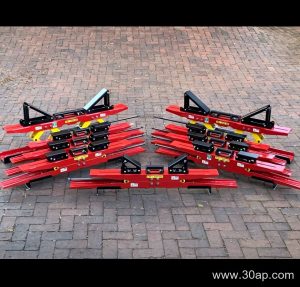
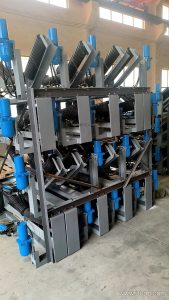
A Q355 Conveyor Bracket is the steel support frame that holds idler rollers in the correct position under and along a conveyor belt. It is usually fabricated from Q355 low-alloy structural steel, a grade known for a good balance of yield strength and weldability, which suits the steady loads and vibration found on bulk handling lines. The bracket does not move material itself; its job is to keep every idler roller aligned so the belt runs true, keeps its trough shape, and wears evenly.
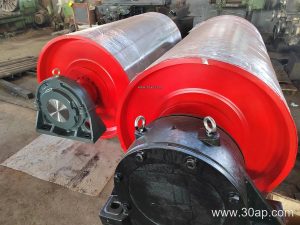
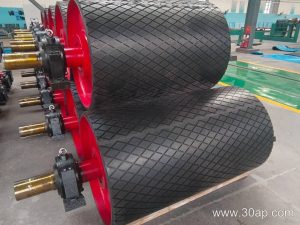
Because the bracket is a structural part, buyers often treat it as a simple accessory. In practice, a poorly matched bracket can cause misalignment, edge damage, and premature idler failure. For this reason, specifiers usually look at the bracket together with the conveyor pulley layout, the belt type, and the duty level of the whole system. Learn more about matching components at cxmfbelt.com/conveyor-bracket.
How the Bracket Is Built
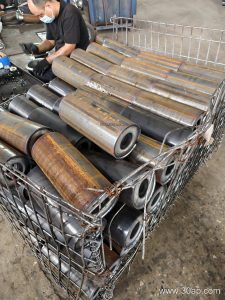
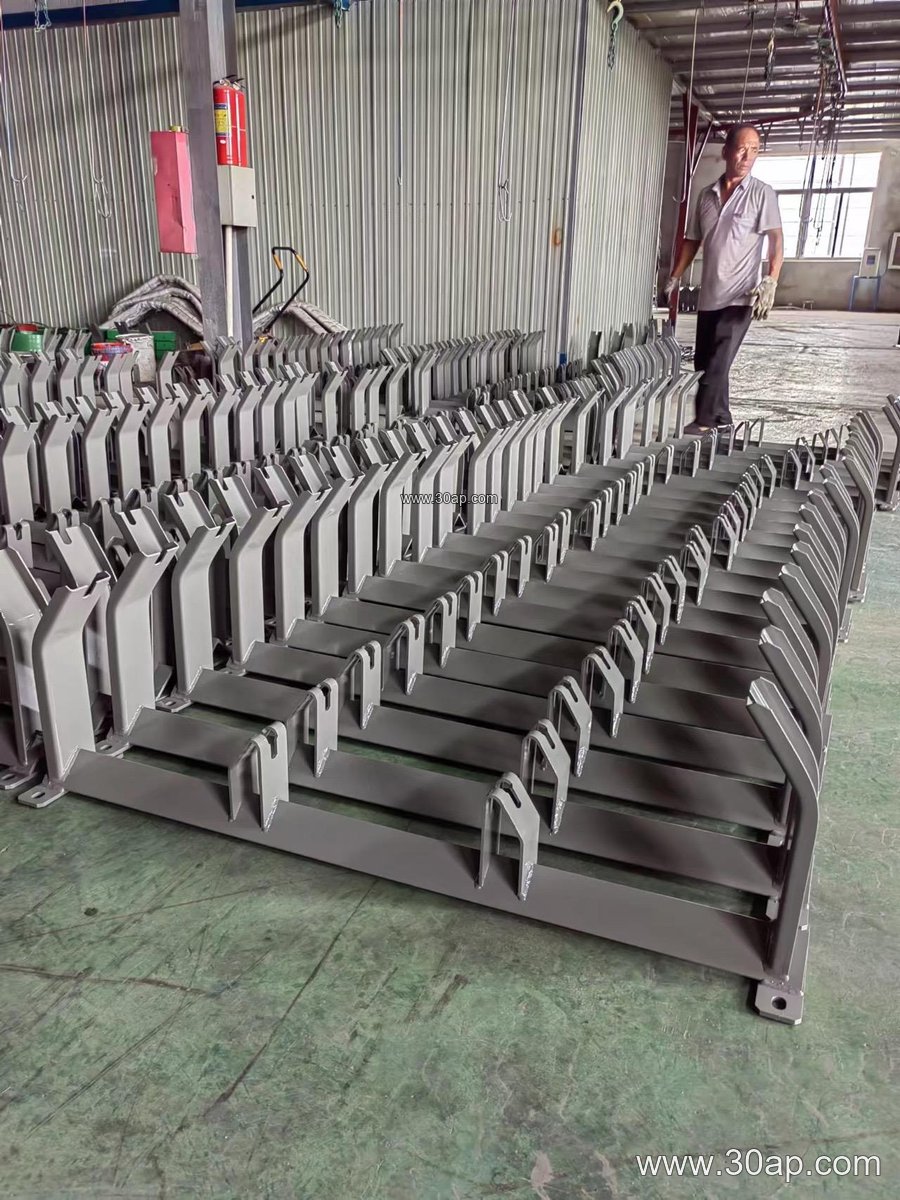
Most Q355 conveyor brackets are formed from angle steel, channel steel, or folded steel plate. The fabrication route is straightforward: cutting, drilling or punching mounting holes, bending to the required trough angle, and welding where a multi-part frame is needed. A well-made bracket has clean mounting slots, consistent hole spacing, and a flat base that sits squarely on the conveyor stringer.
Surface treatment matters in dusty and humid plants. Common finishes include painted, galvanized, or powder-coated versions. In a coal preparation plant or a power station coal yard, the finish and the drainage around the frame often decide how long the bracket lasts before corrosion becomes a maintenance issue.
Common Bracket Types and Where They Sit
The bracket family covers several positions along the conveyor. Troughing brackets carry the loaded side of the belt, return brackets support the empty side, and transition or impact positions use their own frames. The table below gives typical reference ranges; actual values follow the conveyor design.
- Troughing and upper brackets: carry the carrying run, commonly set at 20, 30, 35, or 45 degrees.
- Return and flat brackets: support the return run, with V-return frames used where belt tracking needs help.
- Transition brackets: ease the belt from flat to troughed shape near a conveyor pulley.
- Impact brackets: placed under loading points to absorb falling material energy.
- Self-aligning and forward-tilt brackets: assist belt centering on long or uneven routes.
- Adjustable brackets: allow the trough angle to be changed within a range on site.
| Reference item | Typical range |
|---|---|
| Belt width | B500 to B2200 |
| Trough angle | 20, 30, 35, 45 degrees |
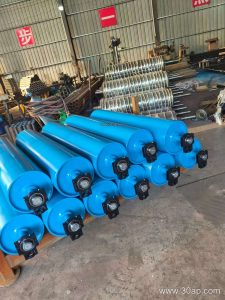
| Idler diameter | Ø89, Ø108, Ø133, Ø159, Ø194 |
| Frame material | Q355 angle, channel, or folded plate |
These figures are reference data, not fixed pairings. A B800 frame at 35 degrees with Ø108 idlers is a common combination, but a B1200 line at 45 degrees with Ø133 idlers is equally normal. Hole spacing and beam length change with belt width and trough angle, so they are always confirmed against the drawing.
Where Q355 Conveyor Brackets Are Used
These brackets appear wherever a belt conveyor moves bulk material. In a limestone quarry or a crushing and screening line, they support the troughed run that carries blasted rock and graded aggregate. In a cement plant, they sit under clinker and raw meal belts. In a steel works sinter plant or a port ship loader, heavier frames carry the load of a high-tension belt.
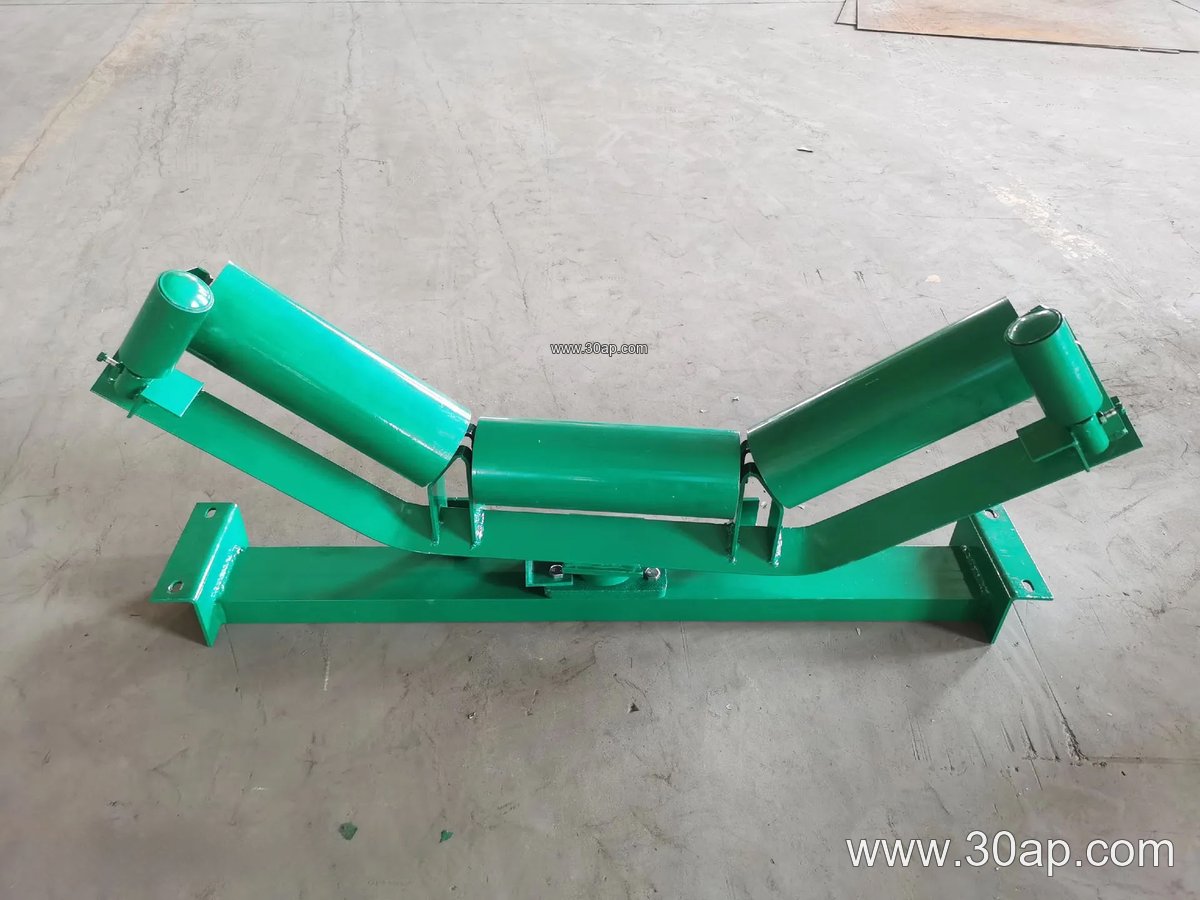
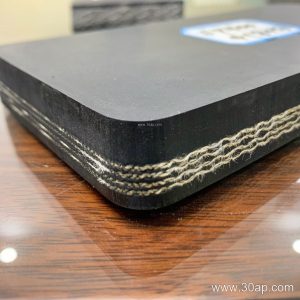
The surrounding equipment matters. A heavy-duty mining conveyor belt, a heat resistant conveyor belt near a kiln discharge, or a flame retardant conveyor belt in an underground coal mine all place different demands on the idler rollers and therefore on the bracket that holds them. Matching the bracket grade and finish to the belt duty and the environment is more useful than choosing by price alone.
Selecting and Maintaining the Right Bracket
Selection starts with the conveyor drawing: belt width, trough angle, idler diameter, and the load per station. From there, confirm the frame material, the mounting hole pattern, and the surface finish. Adjustable frames are worth considering where the belt may need re-troughing after installation or where material characteristics change seasonally.
Maintenance is mostly inspection. Check for loose bolts, bent frames, worn mounting slots, and corrosion at the base. A bracket that has shifted will push the belt off center, which then loads the conveyor pulley and belt edges unevenly. Replacing a distorted frame early is cheaper than replacing the idlers and belt it damages.
For buyers comparing support components, the practical rule is simple: treat the Q355 conveyor bracket as part of the whole conveyor structure, not as an isolated part. Correct grade, correct angle, and correct hole pattern keep the belt, the idler roller, and the conveyor pulley working together. More reference details are available at cxmfbelt.com/conveyor-idler and cxmfbelt.com/conveyor-pulley.