What a Stainless Steel Pulley Is
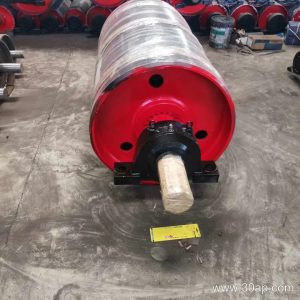
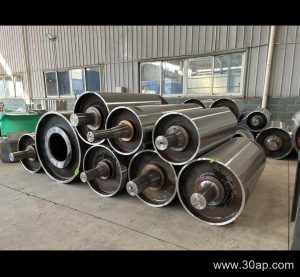
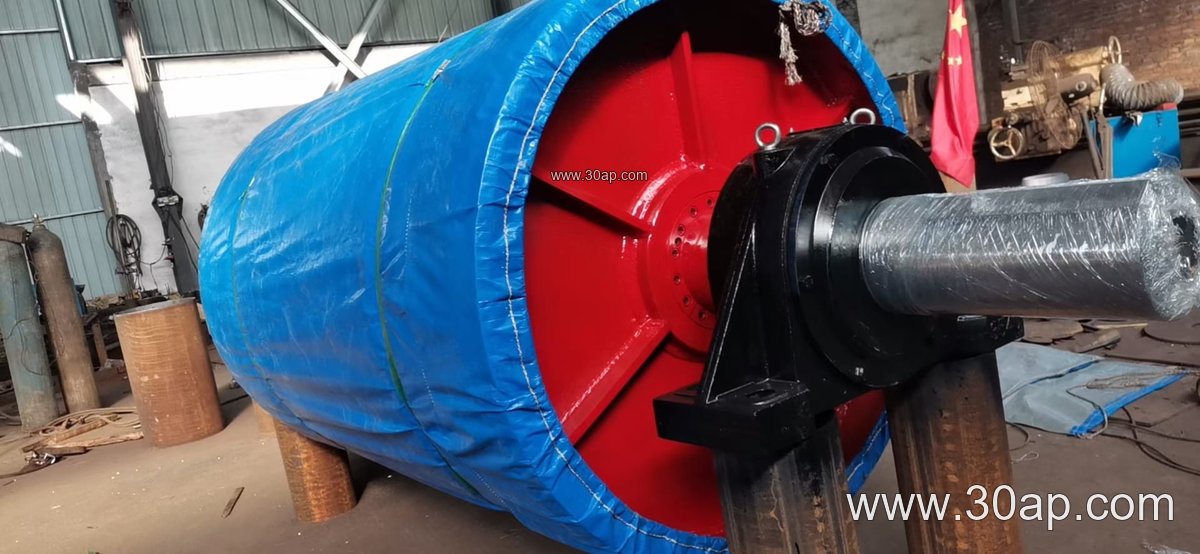
A stainless steel pulley is a conveyor pulley whose shell, end discs and often the hub assembly are fabricated from stainless steel rather than carbon steel. In a conveyor line it works as a rotating drum that supports the conveyor belt, sets its travel path and transmits or redirects motion. The stainless steel body is the defining feature: it resists corrosion and keeps a cleaner surface than painted carbon steel, which matters in wet, salty or hygienic environments. Depending on its position in the conveyor frame, the same basic drum can serve as a drive pulley, tail pulley, bend pulley or take-up pulley, and each position imposes different loads and surface requirements.
How the Pulley Is Built
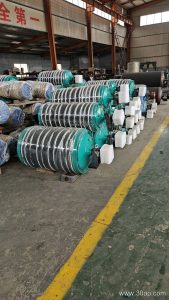
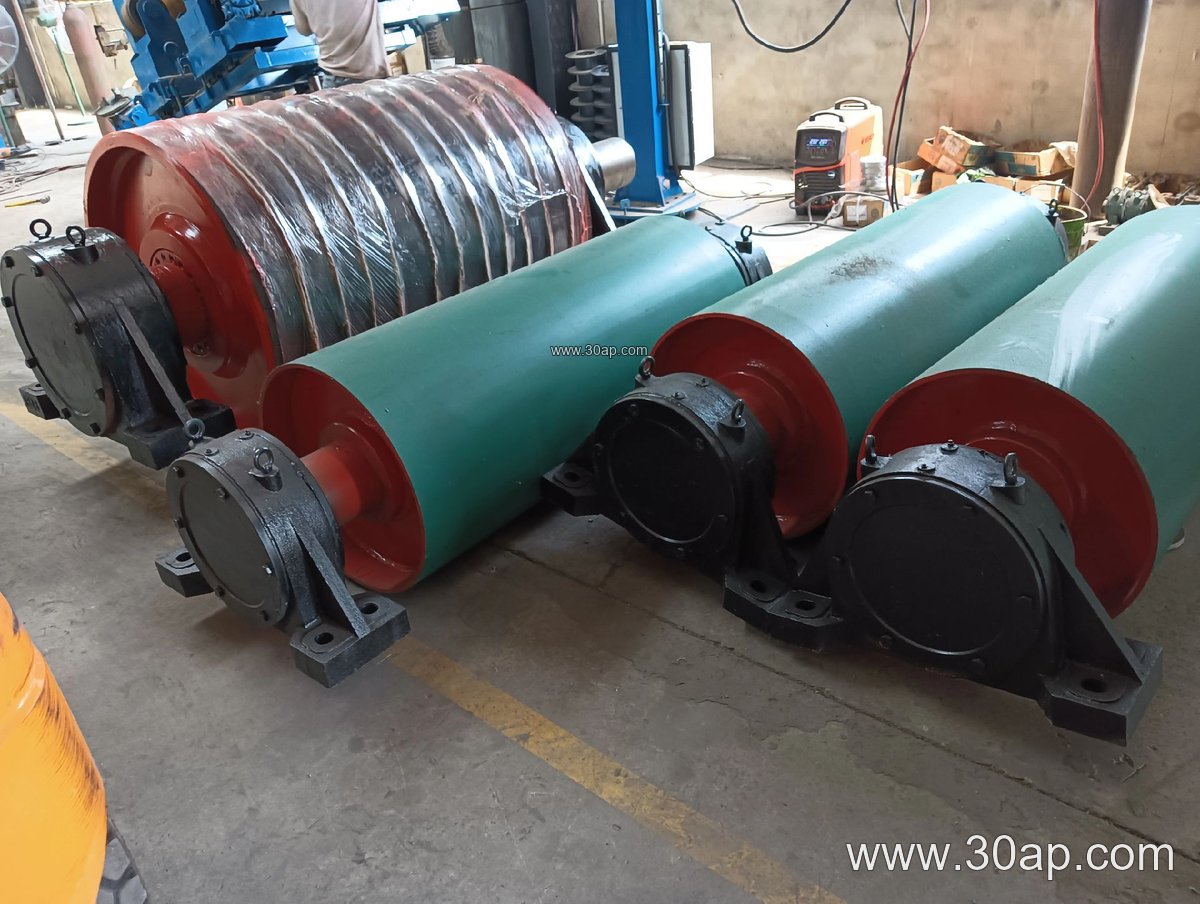
A typical unit combines a rolled or machined stainless shell, welded end discs, a shaft and bearing housings. The shell may be smooth or covered with rubber, and the lagging can be flat, diamond pattern or ceramic. Shaft diameter is not fixed by belt width; it is determined by torque, radial load and bearing selection, with common shaft sizes including Ø50, Ø60, Ø80, Ø100, Ø120 and larger.
- Shell: stainless steel, smooth or lagged
- End discs: welded or bolted to the shell
- Shaft: sized by torque and load, not by belt width alone
- Bearings: housed in sealed, bolted bearing blocks
- Surface options: plain, cast rubber, cold-bonded rubber, hot-vulcanized rubber, diamond lagging, ceramic lagging
Lagging thickness commonly ranges from 8 mm to 20 mm, selected according to grip requirements and belt tension.
Where It Fits in a Conveyor
Position determines duty. A drive or head pulley transmits power and usually needs lagging for grip. A tail pulley at the loading end guides the returning belt and may be fitted with a wing or self-cleaning form. A bend pulley changes belt direction, while a take-up pulley maintains tension. These roles are not interchangeable, and a stainless steel bend pulley should not be specified where a drive pulley is required.
Stainless construction suits wash-down plants, fertilizer handling, food-grade lines and coastal ports where salt spray attacks carbon steel. In a quarry or aggregate line, a stainless steel pulley may be chosen for wet dust suppression zones, while the rest of the conveyor uses a heavy-duty abrasion resistant conveyor belt and sealed idler rollers. In a coal preparation plant, flame retardant conveyor belt grades are common, and pulley surfaces must be matched to the belt cover rather than chosen in isolation.
Matching Pulley and Belt
Belt width and pulley face width are related but not identical. The pulley face is usually wider than the belt so the belt can track without edge damage. Common combinations include B800 with a Ø500 drum, B1200 with a Ø1000 drum and B1400 with a Ø800 drum, but these are examples, not fixed pairings. A wider belt does not automatically require a larger diameter; belt tension, wrap angle and space constraints drive the choice.
| Belt width | Typical pulley face width | Example diameter |
|---|---|---|
| B400 | about 500 mm | Ø250–Ø400 |
| B650 | about 750 mm | Ø315–Ø500 |
| B800 | about 950 mm | Ø400–Ø630 |
| B1000 | about 1150 mm | Ø500–Ø800 |
| B1200 | about 1400 mm | Ø630–Ø1000 |
| B1400 | about 1600 mm | Ø800–Ø1250 |
| B1600 | about 1800 mm | Ø1000–Ø1400 |
Values are typical references and should be confirmed against the actual conveyor design.
Buyer Checklist
Before ordering, confirm the pulley’s duty position, shell diameter, face width, shaft size and lagging type. Check the belt grade it will run against, since a heat resistant conveyor belt, oil resistant conveyor belt or chemical resistant conveyor belt may call for a different lagging compound. Ask how the bearing housings are sealed and whether the shaft is stainless or carbon steel with a corrosion-resistant coating. For a stainless steel pulley used with a steel cord conveyor belt or a multi-ply fabric core conveyor belt, verify the tension and wrap angle so the drum is not undersized.
Also consider maintenance access, spare lagging availability and whether the pulley sits near a conveyor bracket that limits removal clearance. For more conveyor components, visit www.beltconveyorparts.com for pulley and roller information.