What a Belt Conveyor Drive Pulley Does
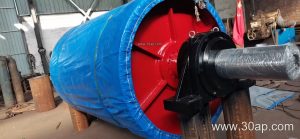
The belt conveyor drive pulley is the powered drum at the head of a conveyor that transfers torque from the gearbox or motor to the conveyor belt. It is often called the head pulley or drive drum, and it is the component that actually pulls the loaded belt forward. Unlike a tail pulley or a bend pulley, which rotate freely to guide or return the belt, the drive pulley is connected to the drive train and must grip the belt firmly enough to move the entire load without slipping.
In a quarry, cement plant, or coal handling system, this pulley is where the conveyor’s pulling force is generated. If it loses traction, the belt stalls, the motor overheats, and production stops. That is why the design of the drive pulley, its diameter, lagging, and shaft, matters as much as the belt itself.
How the Drive Pulley Is Built
Most drive pulleys consist of a cylindrical shell, two end discs, a hub, and a shaft. The shell is usually made from rolled steel plate and machined to a true round profile so the belt tracks evenly. The shaft is sized by torque and radial load rather than by belt width alone, and common shaft diameters range from Ø50 up to Ø200 depending on the duty. Larger drives on overland or high-tonnage lines may use diameters from Ø630 to Ø1250 or more.
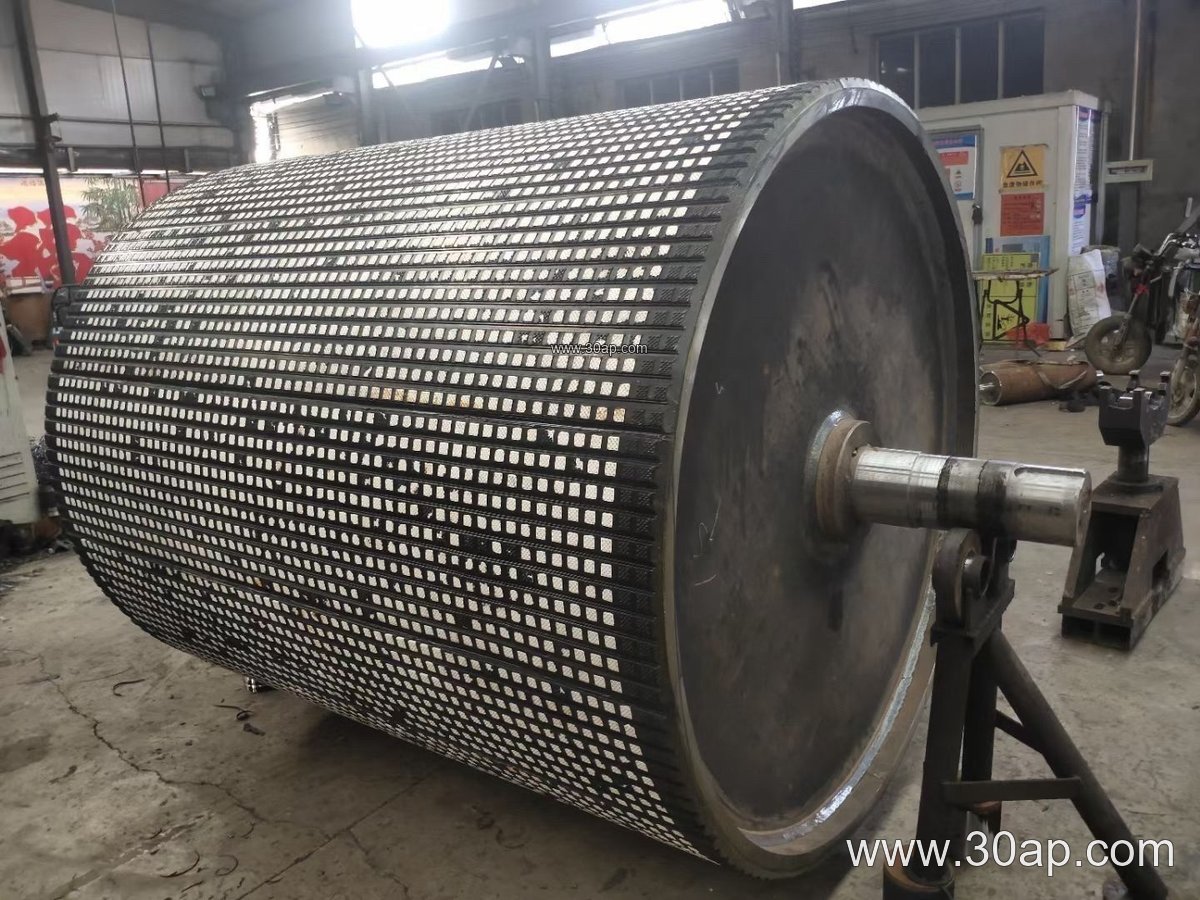
The surface of the pulley is where grip is created. A plain finish is used on light-duty or clean applications, while lagging is added for traction and wear protection. Common surface options include:
- Plain machined shell
- Cold-bonded rubber lagging
- Hot vulcanized rubber lagging
- Diamond grooved lagging
- Herringbone lagging
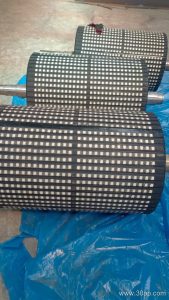
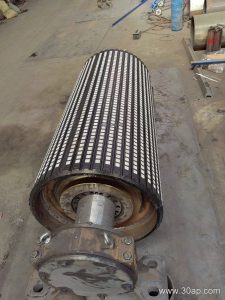
- Ceramic lagging
Lagging thickness is commonly 8, 10, 12, 15, or 20 mm. Diamond and herringbone patterns help shed water and fines, which is useful in wash plants and outdoor yards. Ceramic tiles are chosen where abrasive rock or ore causes rapid wear.
Matching the Pulley to the Belt and the Job
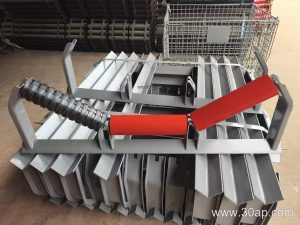
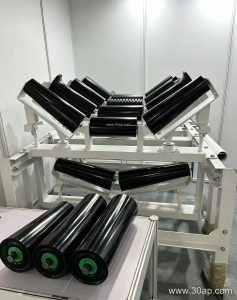
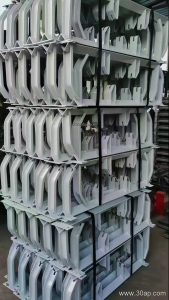
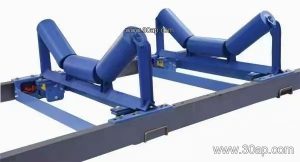
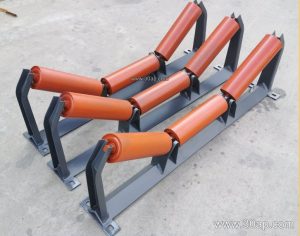
The drive pulley works together with the conveyor belt, idler rollers, and conveyor brackets to keep the line running straight and efficient. A few practical points guide selection:
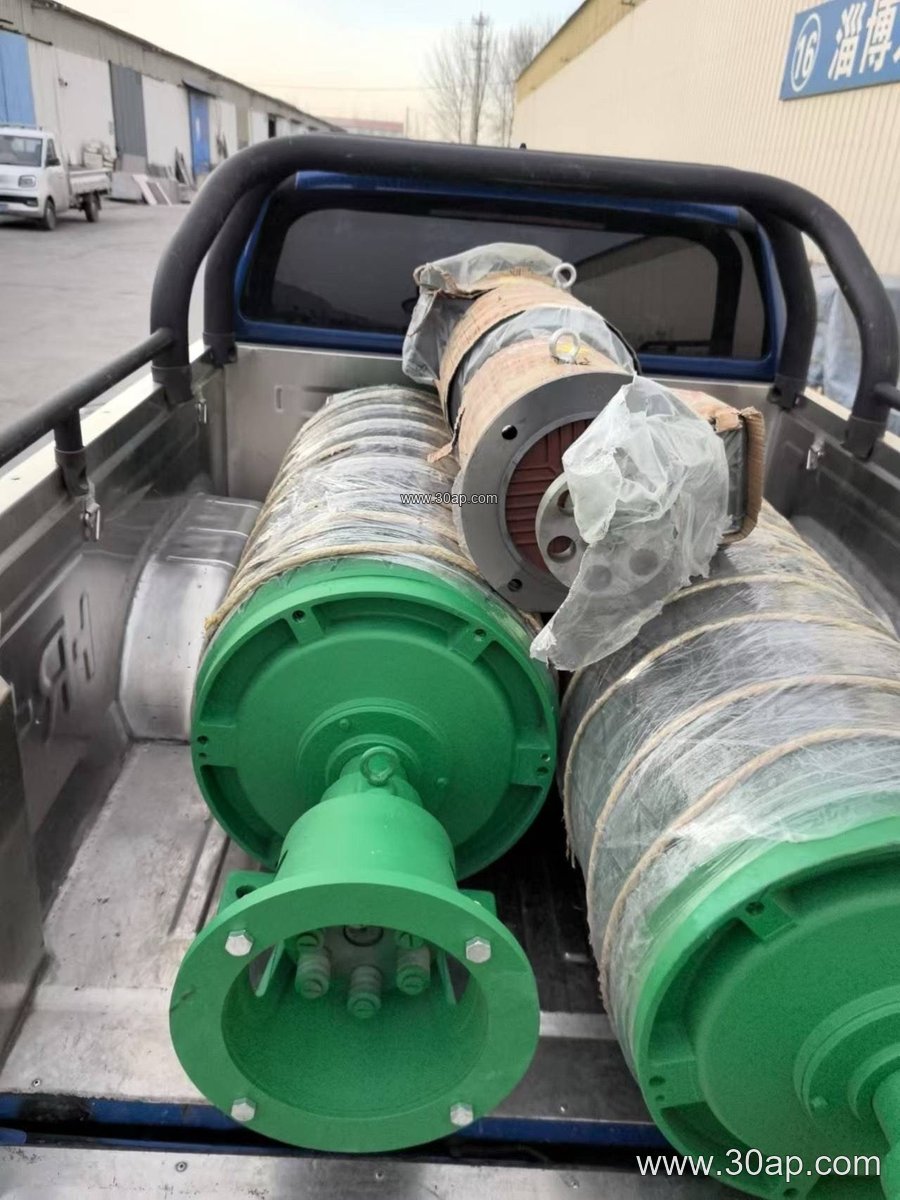
- Pulley face width is usually slightly wider than the belt. For example, a B800 belt often runs on a pulley with a face around 950 mm, and a B1200 belt on a face near 1400 mm.
- Diameter is chosen from belt speed, tension, and the allowable wrap angle, not from width alone. A B800 belt might use a Ø500 or Ø630 pulley depending on the drive layout.
- The shaft diameter follows calculated torque and bearing loads. A Ø100 shaft on one B1000 drive may become Ø140 or larger on a heavier, longer conveyor.
- Lagging type should suit the material. A high abrasion resistant conveyor belt in an iron ore yard pairs well with ceramic or thick rubber lagging.
It is common to see combinations such as B1200 × Ø1000 or B1400 × Ø800 in plant drawings, but these are design choices, not fixed rules. The same belt width can run on several pulley diameters.
Where It Fits in the Plant
The drive pulley sits at the discharge end of most conveyors. In a limestone quarry it may handle crushed rock at high tonnage; in a power plant coal yard it moves fuel to the boiler bunkers; in a cement plant it carries clinker or raw meal. Underground coal mining conveyors use flame retardant and anti-static belts, and the drive pulley there must be robust enough for continuous operation in dusty, damp conditions.
On long overland lines, a single head drive may be replaced by a dual or tripper arrangement, but the principle is the same: the powered drum creates the belt tension that moves the load. The tail pulley and bend pulleys simply guide the return strand.
Buyer Checklist
Before ordering a belt conveyor drive pulley, confirm the belt width, the required diameter, the shaft size, the lagging type and thickness, and the bearing arrangement. Ask for the calculated torque and the wrap angle so the supplier can verify grip. Check that the pulley face width suits the belt and that the lagging is appropriate for the material, whether that is abrasive ore, hot clinker, or oily scrap. A well-matched drive pulley keeps the belt, the idler rollers, and the whole conveyor frame working together for years.