What a Belt Conveyor Idler Frame Does
A belt conveyor idler frame is the structural support that holds the idler rollers in the correct position beneath the conveyor belt. It sets the trough angle, keeps roller spacing consistent, and transfers the load of the belt and material into the conveyor stringer or frame. On a quarry conveyor or a cement plant transfer line, the idler frame is a small component with a large effect on belt tracking, idler life, and energy use. The same assembly is often called a conveyor idler bracket or idler support frame, and those terms describe the same product.
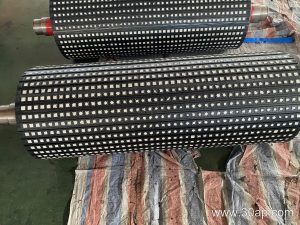
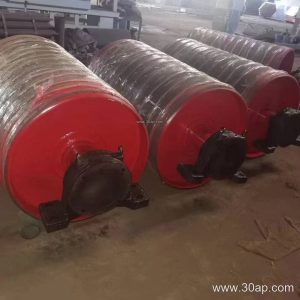
The frame should not be confused with the pulleys at the ends of the conveyor. Drive pulleys, tail pulleys, and bend pulleys each have their own function and are not interchangeable with idler frames. A belt conveyor idler frame simply carries the idler roller; it does not drive or redirect the belt.
How the Frame Is Built
Most frames are fabricated from angle steel, channel steel, or folded steel plate. The crossbeam length and mounting hole spacing are determined by belt width and trough angle, so they change with the design rather than following one fixed number. Roller seats are usually slotted or adjustable so the idler roller can be positioned accurately and replaced without cutting the frame.
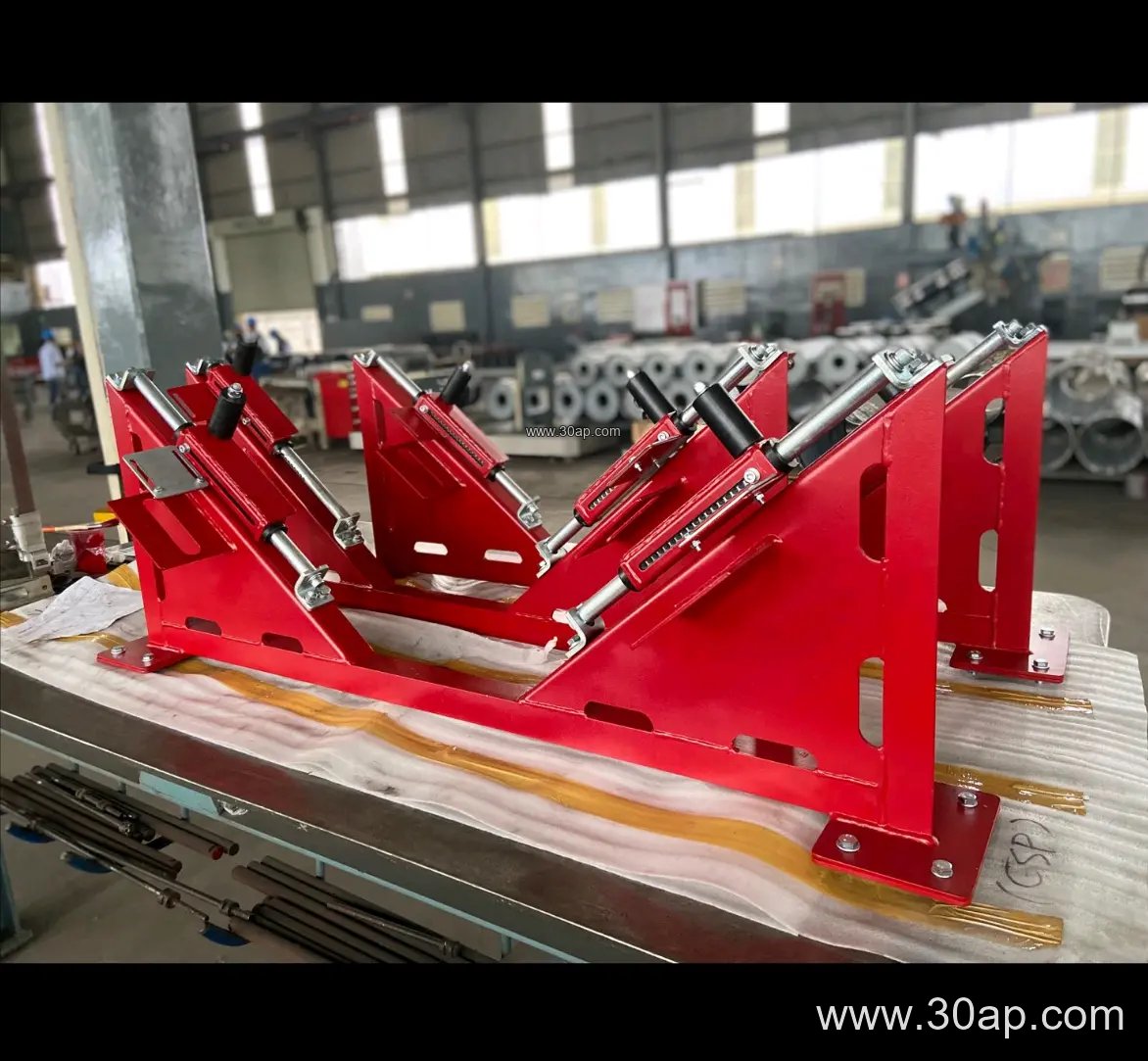
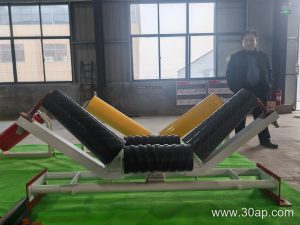
Common frame arrangements include:
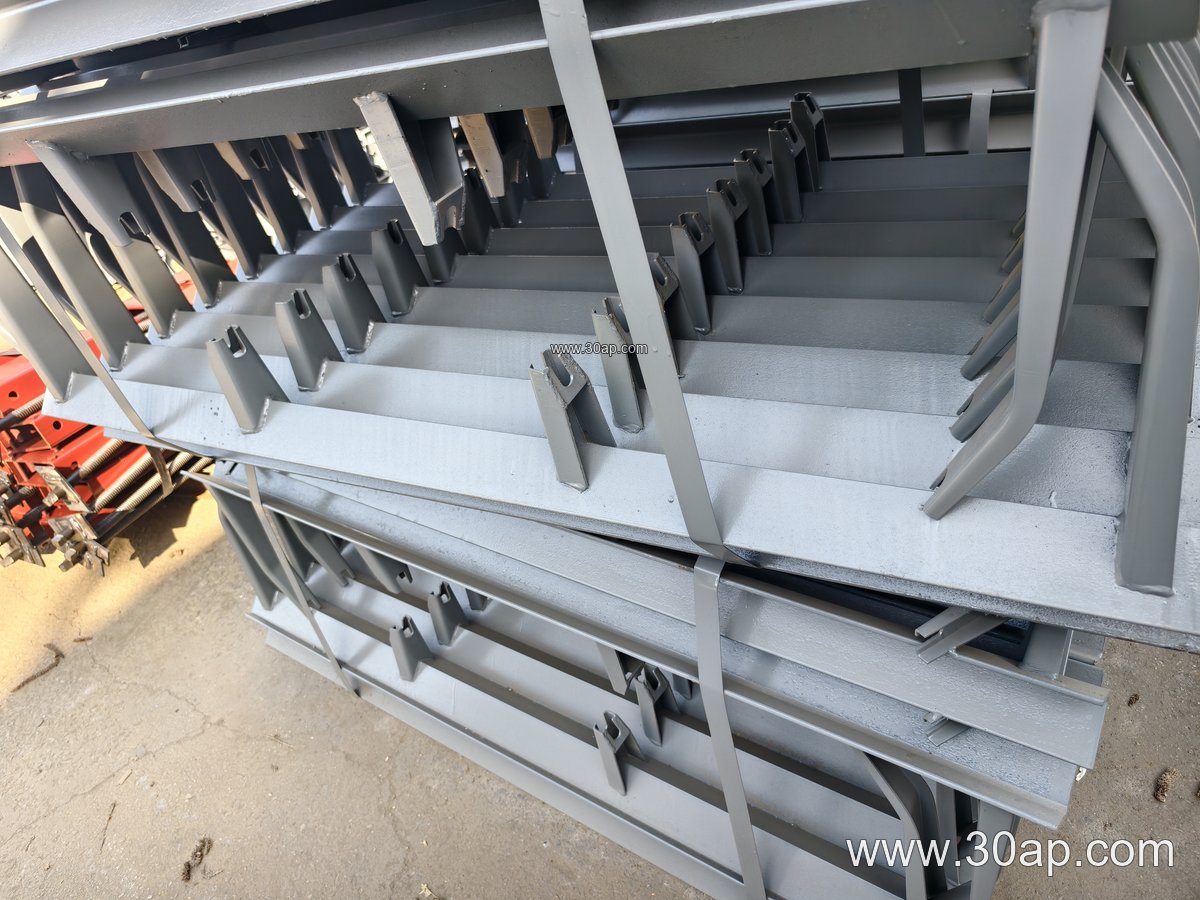
- Carrying side troughing frames with two or three roller positions
- Transition frames used where the belt changes from flat to troughed
- Return frames, including flat return and V-return designs
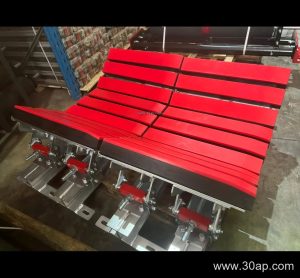
- Impact frames for loading points, normally paired with impact idlers
- Self-aligning and forward-tilted frames for belt tracking control
- Adjustable frames that allow the trough angle to be changed on site
Materials and welds should suit the duty. In a coal mining conveyor or an iron ore plant, dust, moisture, and heavy loads put more demand on the frame than a light bulk material line in a grain silo. Galvanized or painted finishes are common where corrosion is a concern.
Matching Belt Width, Trough Angle, and Roller Diameter
Selection starts with the conveyor belt width and the required trough angle. Typical belt widths include B500, B650, B800, B1000, B1200, B1400, B1600, B1800, B2000, B2200, but the frame must be ordered for the actual belt width used. Trough angles are commonly 20, 30, 35, or 45 degrees, and adjustable frames can move between these angles. Forward-tilted frames often use about 1.5 to 2 degrees of tilt to help centering.
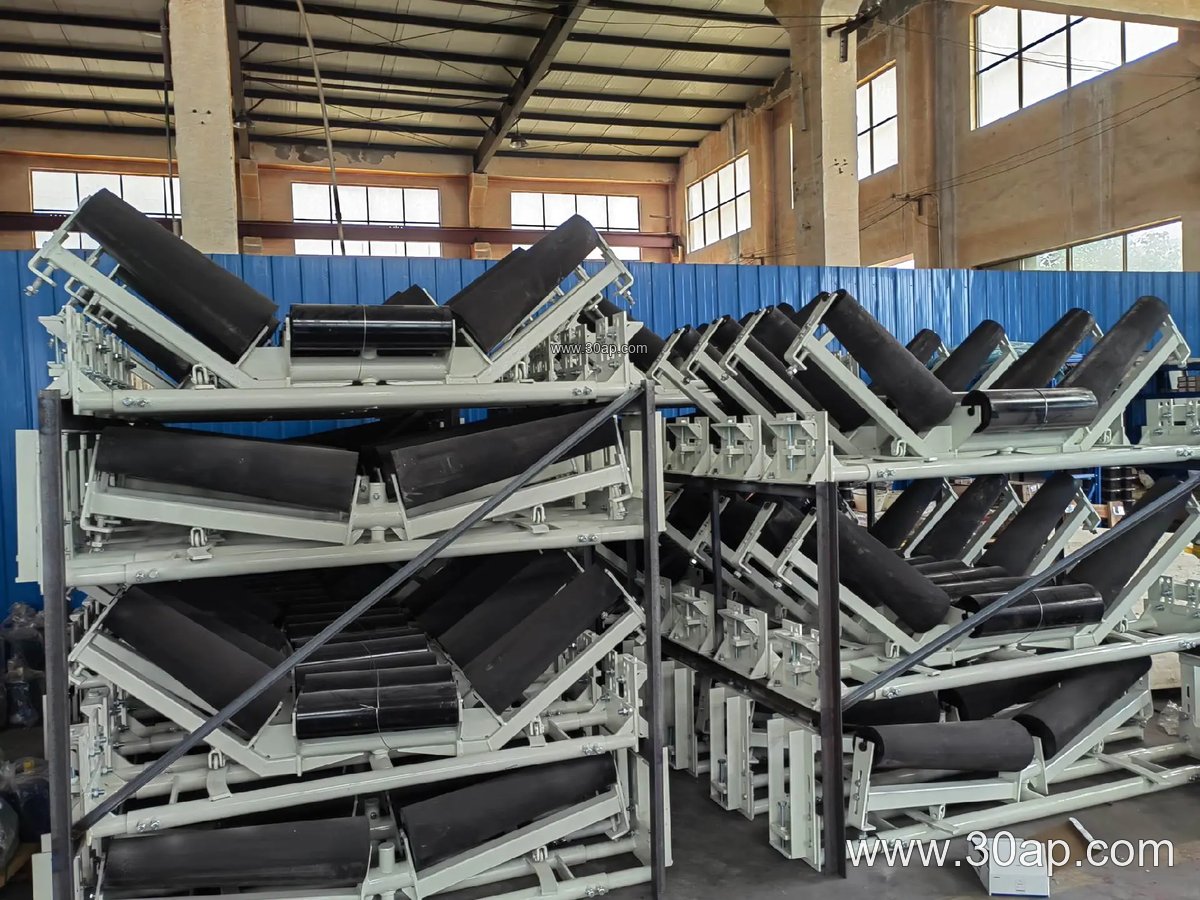
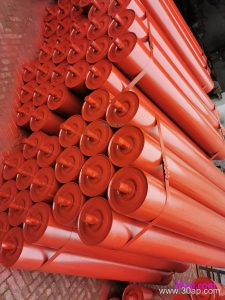
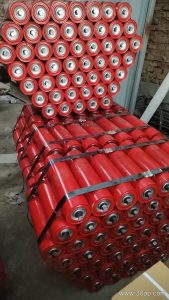
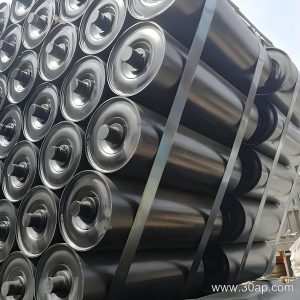
Roller diameter is chosen from load, belt speed, and idler series. Common diameters include Ø89, Ø108, Ø133, Ø159, and Ø194. A combination such as B800, 35 degrees, Ø108 or B1200, 45 degrees, Ø133 is a normal way to describe a frame, but no single belt width is limited to one trough angle or one roller diameter.
| Reference item | Typical range |
|---|---|
| Belt width | B500 to B2200 |
| Trough angle | 20, 30, 35, 45 degrees |
| Roller diameter | Ø89, Ø108, Ø133, Ø159, Ø194 |
| Frame material | Angle steel, channel steel, folded plate |
These values are reference data for discussion, not a fixed supply promise. Final dimensions should follow the conveyor design drawing.
Where Idler Frames Are Used
Idler frames appear wherever a belt conveyor moves bulk material. In a limestone mine or crushing and screening line, carrying frames support a heavy-duty mining conveyor belt under sharp rock. In a power plant coal yard, flame retardant conveyor belt and anti-static conveyor belt may run on troughing frames with impact idlers at the loading point. A port ship loading conveyor often uses wide belts and robust frames, while a fertilizer or food grade conveyor belt line may need cleaner, corrosion-resistant frames.
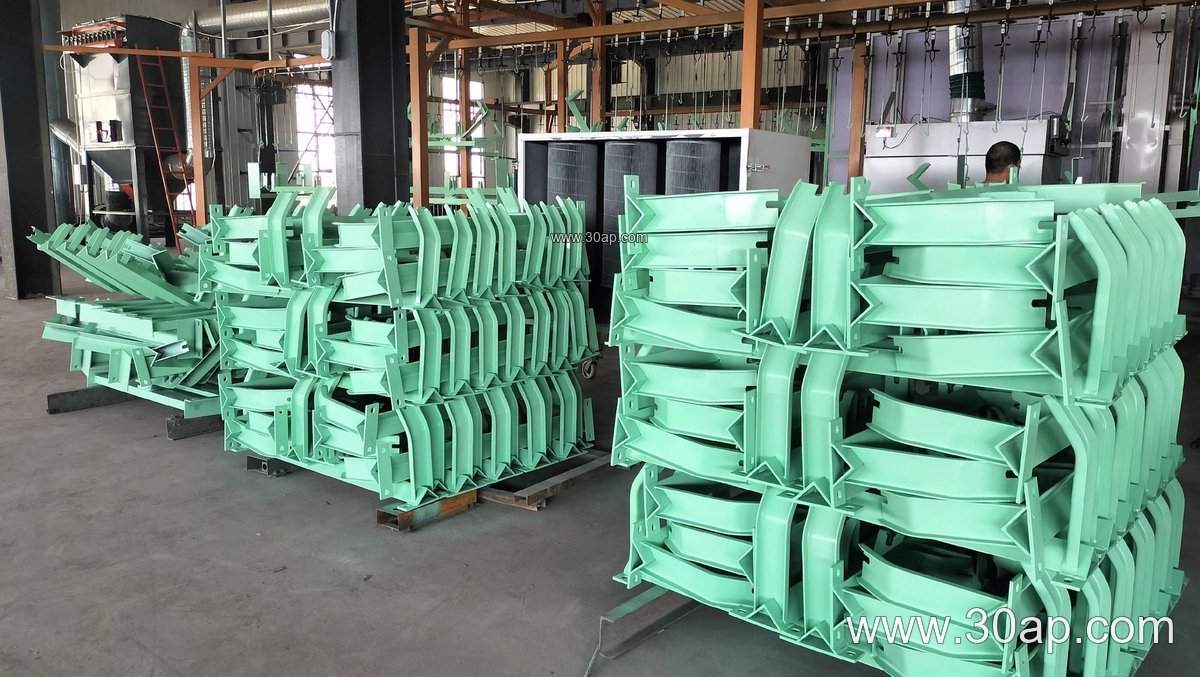
The frame also works together with the belt and rollers. A poorly aligned frame can cause edge wear on an EP conveyor belt or a steel cord conveyor belt, and it can shorten idler roller life. Good alignment helps an abrasion resistant conveyor belt run straight and reduces spillage.
Buyer Checklist
Before ordering, confirm the belt width, trough angle, roller diameter, mounting hole spacing, and frame material. Ask whether the frame is fixed or adjustable, and check the return side arrangement separately. For a coal mining conveyor belt or underground mining conveyor belt, confirm that the frame finish and fittings suit the environment. For a heat resistant conveyor belt application, check that the frame and idlers are rated for the working temperature.
Also confirm the connection to the conveyor bracket or stringer, the required beam length, and the replacement strategy for idlers. Spare frames should match the existing hole pattern so maintenance does not require re-drilling. A clear drawing and a consistent naming convention between buyer and supplier prevent most installation problems.