What a Large-Diameter Pulley Does on a Conveyor
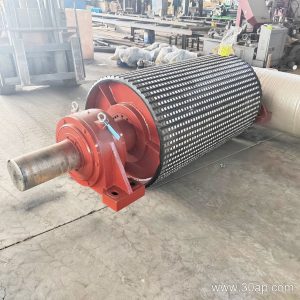
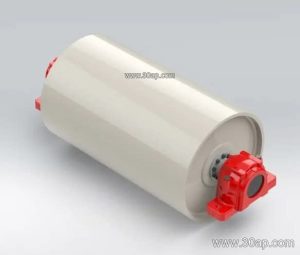
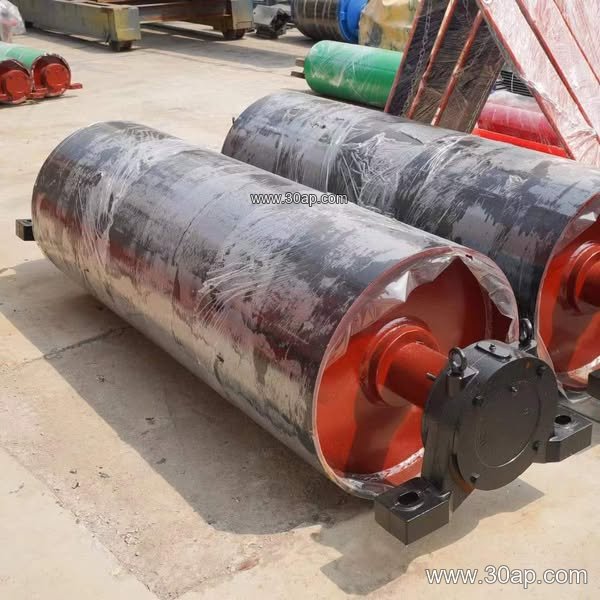
A large-diameter pulley is a conveyor pulley whose shell diameter is sized well above the minimum needed for a given belt width. In practice, these pulleys are built to handle high belt tensions, thick belts and abrasive bulk materials without over-stressing the belt carcass. The larger the shell, the lower the bending stress on the belt as it wraps around the drum, and the more contact area is available for grip. This is why heavy-duty mining conveyor belts and long overland lines often rely on a large-diameter pulley at the drive or tensioning position.
The same product is also called a large-size conveyor pulley or heavy-duty conveyor drum. It is not a substitute name for a drive pulley, tail pulley or bend pulley; those describe the pulley’s role in the conveyor, while “large-diameter” describes its size class. A large-diameter pulley can serve in any of those positions, but the position still determines its design details.
Construction and Surface Options
A typical unit starts with a rolled steel shell, welded to end discs and a hub, then machined for balance and concentricity. Shafts are sized by torque and load, not by belt width alone, so a B1200 belt might use a Ø100 mm or Ø120 mm shaft depending on the drive duty. Common shaft diameters include Ø50, Ø60, Ø70, Ø80, Ø90, Ø100, Ø120, Ø140, Ø160, Ø180 and Ø200 mm.
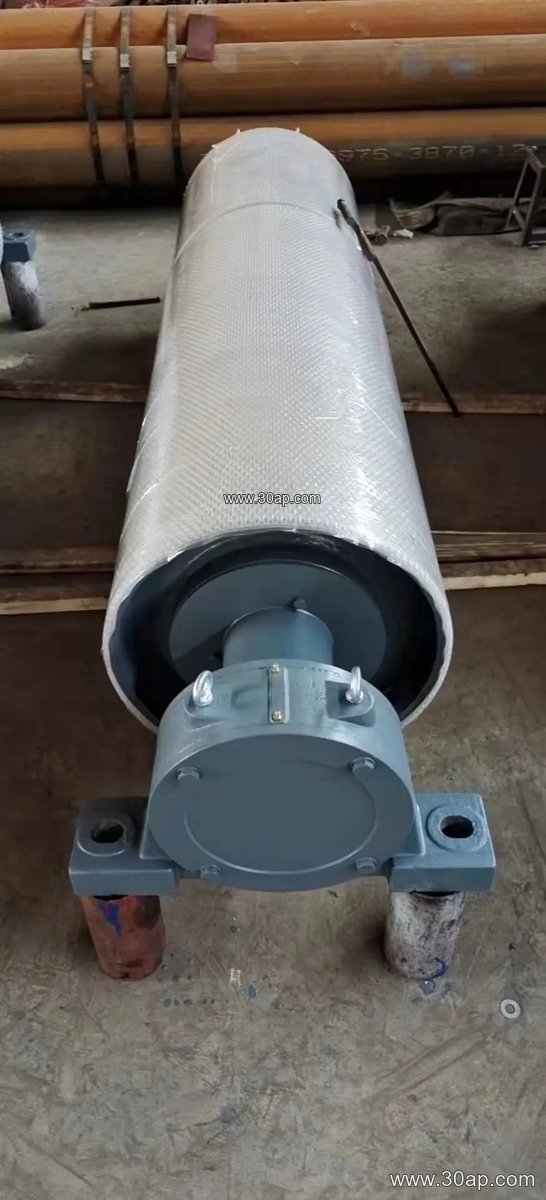
Surface treatment matters as much as shell size. Plain finish suits light duty, while rubber lagging improves grip in wet or dusty conditions. Ceramic lagging is chosen where abrasion is severe, and diamond or herringbone patterns help shed water and fines. Lagging thickness is commonly 8, 10, 12, 15 or 20 mm, selected by the duty rather than by the pulley diameter alone.
| Parameter | Common Reference Range |
|---|---|
| Shell diameter | Ø200 to Ø1800 mm |
| Belt width matched | B400 to B2400 mm |
| Face width | Usually wider than belt, e.g. B800 about 950 mm |
| Lagging thickness | 8, 10, 12, 15, 20 mm |
| Shaft diameter | Ø50 to Ø200 mm, by torque and load |
Face width is normally a little wider than the belt so the belt stays centered. A B1000 belt might run on a pulley with about 1150 mm face width, while a B1400 belt might use about 1600 mm. These are reference values, and final dimensions follow the conveyor design.
Where Large-Diameter Pulleys Are Used
In a limestone quarry or aggregate crushing line, a large-diameter pulley at the head end helps discharge sticky, abrasive rock without belt slip. In a coal preparation plant, flame retardant conveyor belts and abrasion resistant conveyor belts run over lagged pulleys that must grip in damp conditions. Power plant coal handling and port bulk terminals also use large pulleys where belt tensions are high and downtime is costly.
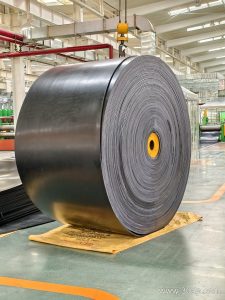
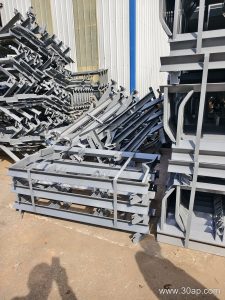
At the tail or tensioning position, a large-diameter pulley reduces belt flex fatigue, which matters for steel cord conveyor belts and thick EP conveyor belts. A bend pulley with a larger shell can also ease the wrap angle in tight transfer towers. Matching the pulley to the belt, the idler roller spacing and the conveyor bracket layout keeps the whole line running smoothly.
Buyer Checklist
- Confirm the pulley’s role: drive, tail, bend, tension or snub, since each has different load and lagging needs.
- State the belt type and tension, such as EP1000, NN300 or ST1600, so the shell and shaft can be sized correctly.
- Give belt width and required face width, for example B1200 with about 1400 mm face.
- Specify lagging pattern and thickness for the material and environment.
- Check shaft diameter against torque and bearing load, not against belt width alone.
- Plan lifting, alignment and bearing access before installation.
A large-diameter pulley is a long-life component when sized to the actual duty. Buyers who share belt data, tonnage and site conditions early usually get a better match than those who order by diameter alone. For related conveyor components such as the conveyor belt, idler roller and conveyor bracket, keep the same data sheet on hand so the pulley, belt and frame work as one system.