What a Ceramic Lagged Pulley Does
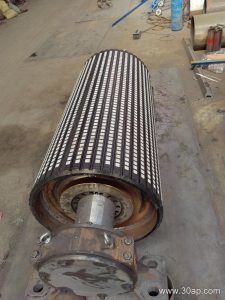
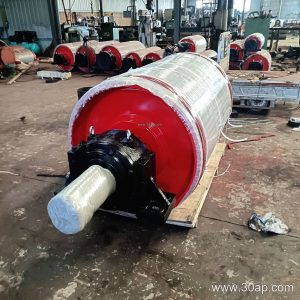
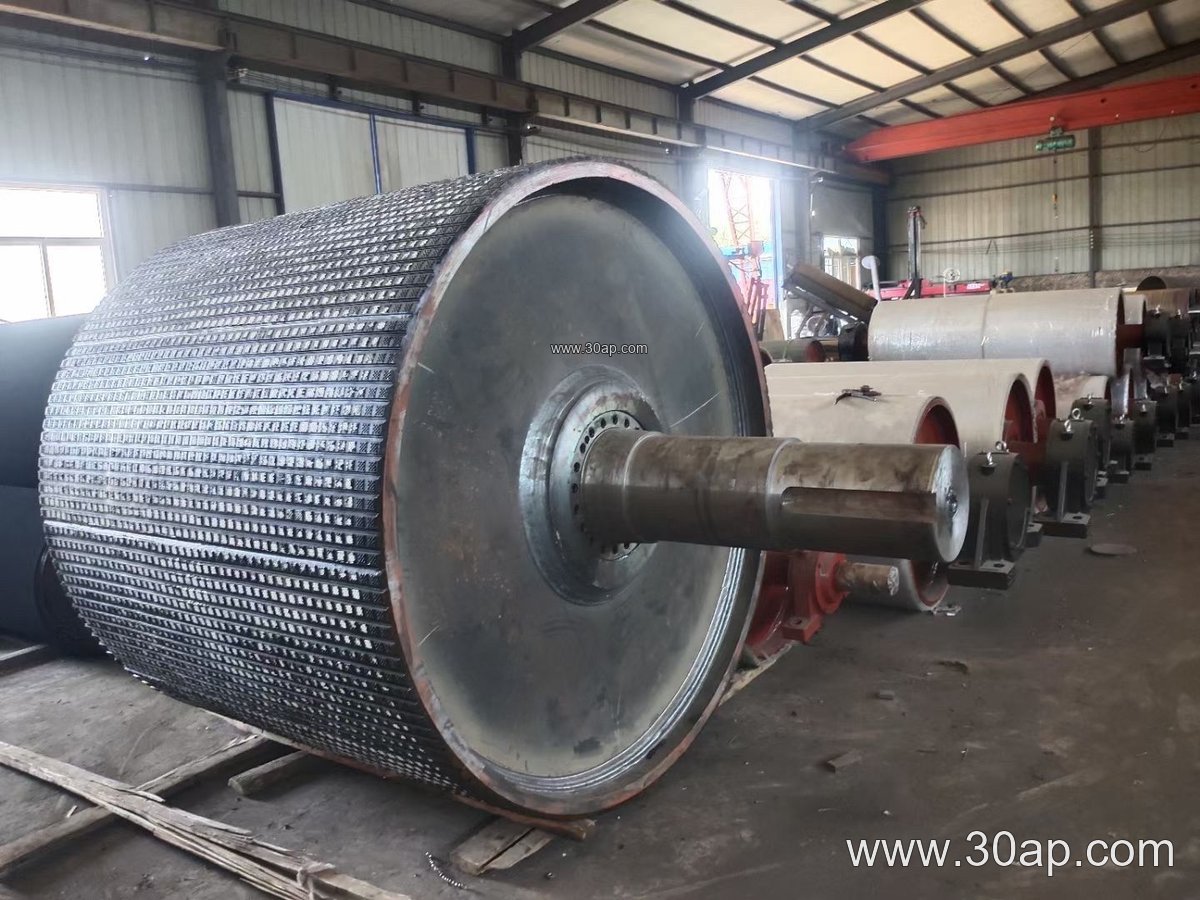
A wear-resistant ceramic lagged pulley is a conveyor pulley whose shell is covered with ceramic tiles set in a rubber or polymer backing. The ceramic studs bite into the conveyor belt surface, raising the friction coefficient between drum and belt so that torque is transmitted with less slip. In practice this is a ceramic rubber lagged drum, and operators often shorten it to ceramic lagging pulley. It is a surface treatment applied to a drive, tail or bend pulley, not a separate pulley family.
Slip is expensive. On a heavily loaded incline, a smooth or worn rubber surface lets the belt creep, which heats the lagging, polishes the shell and eventually stalls the line. The ceramic layer keeps grip even when the belt is damp, dusty or coated with fine slurry.
How the Ceramic Layer Is Built
The pulley body is usually a welded steel shell with dished ends and a shaft sized by torque and load. Before lagging, the surface is prepared and a rubber or polymer bonding layer is applied. Ceramic tiles, typically with raised studs or dimples, are then vulcanised or bonded into that layer in a staggered pattern.
- Tile pattern and stud height affect grip and how readily the belt sheds carryback.
- Bonding quality matters more than tile hardness; a poorly bonded tile can lift and damage the belt edge.
- Lagging thickness commonly runs 8, 10, 12, 15 or 20 mm depending on duty.
Because the ceramic sits proud of the rubber, water and fines are pushed aside at the nip point. That is why this surface is popular where a rubber lagged pulley alone would lose traction.
Where It Fits in the Line
The main home for this drum is the drive position on inclined or high-tension conveyors. A quarry conveyor lifting crushed rock, an iron ore plant feeding a grinding circuit, or a power plant coal handling line all benefit when the head pulley must grip a wet belt. It also appears on bend and snub positions where wrap angle is small and slip risk is high.
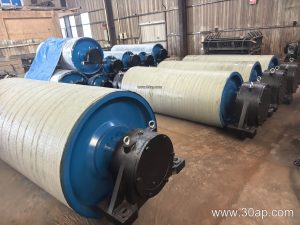
It is not a universal answer. A plain tail pulley at low tension rarely needs ceramic, and a bend pulley with a light load may be fine with standard rubber. The choice follows the duty, not the position name.
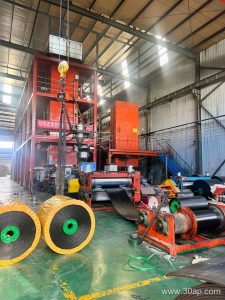
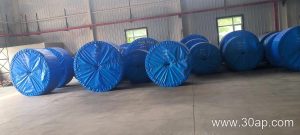
Belt selection interacts with the lagging. A stiff Steel Cord Conveyor Belt and a flexible Multi-Ply Fabric Core Conveyor Belt load the drum differently, and an Abrasion Resistant Conveyor Belt carrying sharp aggregate places different demands on the surface than a heat-rated belt in a cement kiln line. Where the belt is very abrasive, check that ceramic studs will not accelerate cover wear at the edges.
Sizing Notes for Buyers
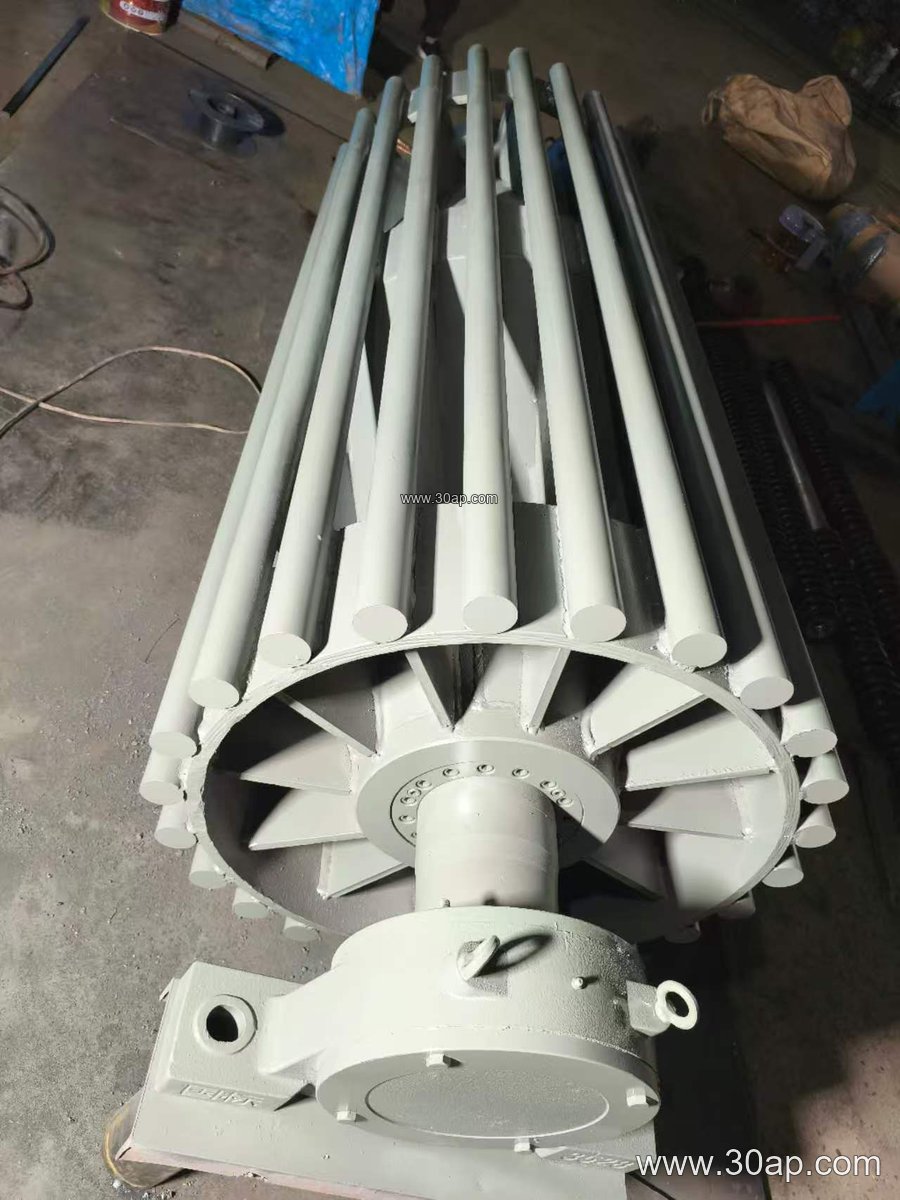
Diameter and face width follow belt width and tension, not a fixed rule. Face width is normally slightly greater than belt width, for example B800 around 950 mm or B1200 around 1400 mm. Common combinations such as B800 × Ø500 or B1200 × Ø1000 appear in designs, but a given belt width can work with more than one diameter. Shaft diameter is set by torque and bearing load, commonly Ø80 to Ø200 on medium and large drums.
| Parameter | Typical Range | Note |
|---|---|---|
| Belt width | B400 to B2400 | Face width slightly larger |
| Pulley diameter | Ø200 to Ø1800 | By belt tension and wrap |
| Lagging thickness | 8 to 20 mm | Duty dependent |
| Shaft diameter | Ø50 to Ø200 | By torque and load |
Ask for the tile pattern drawing, bonding method and shell thickness, not just the diameter. Confirm whether the drum is a drive, tail or bend unit, since the same shell size can be built for different loads.
Installation and Care
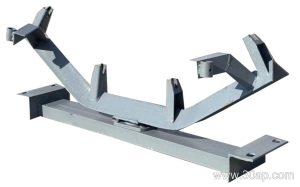
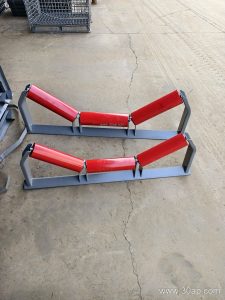
Alignment decides how long the ceramic lasts. A belt tracking hard to one side will wear tiles and rubber unevenly. Check conveyor brackets and idler roller frames for squareness before commissioning. Keep the belt cleaner working; carryback packed into the lagging reduces grip and can pry tiles loose. Inspect for missing tiles at each shutdown and replace them before the exposed rubber wears through.
For more on matching drums with belts and conveyor components, see our notes at beltconveyorequipment.com on pulley lagging and belt selection.