What a Conveyor Belt Support Frame Does
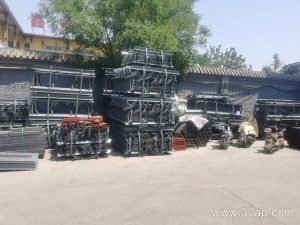
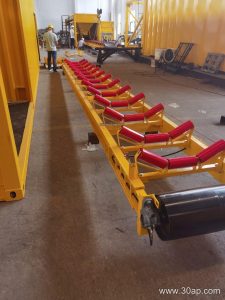
A conveyor belt support frame is the steel structure that holds the idlers in position along a conveyor. It carries the weight of the belt, the material on it, and the idlers themselves, and it keeps the belt profile stable from the loading point to the discharge end. In a quarry, a coal preparation plant, or a cement plant, the frame is usually the most repeated steel item on the line, so its design has a direct effect on belt tracking, idler life, and maintenance time.
Frames are commonly made from angle steel, channel steel, or folded steel plate, welded or bolted into a crossbeam that spans between the conveyor stringers. The same basic product is often called an idler support frame or a conveyor idler frame, and these names refer to the same item. On a typical installation, the frame works together with the conveyor belt, the idler roller set, and the conveyor pulley at each end of the run.
Troughing Frames and Their Slot Angles
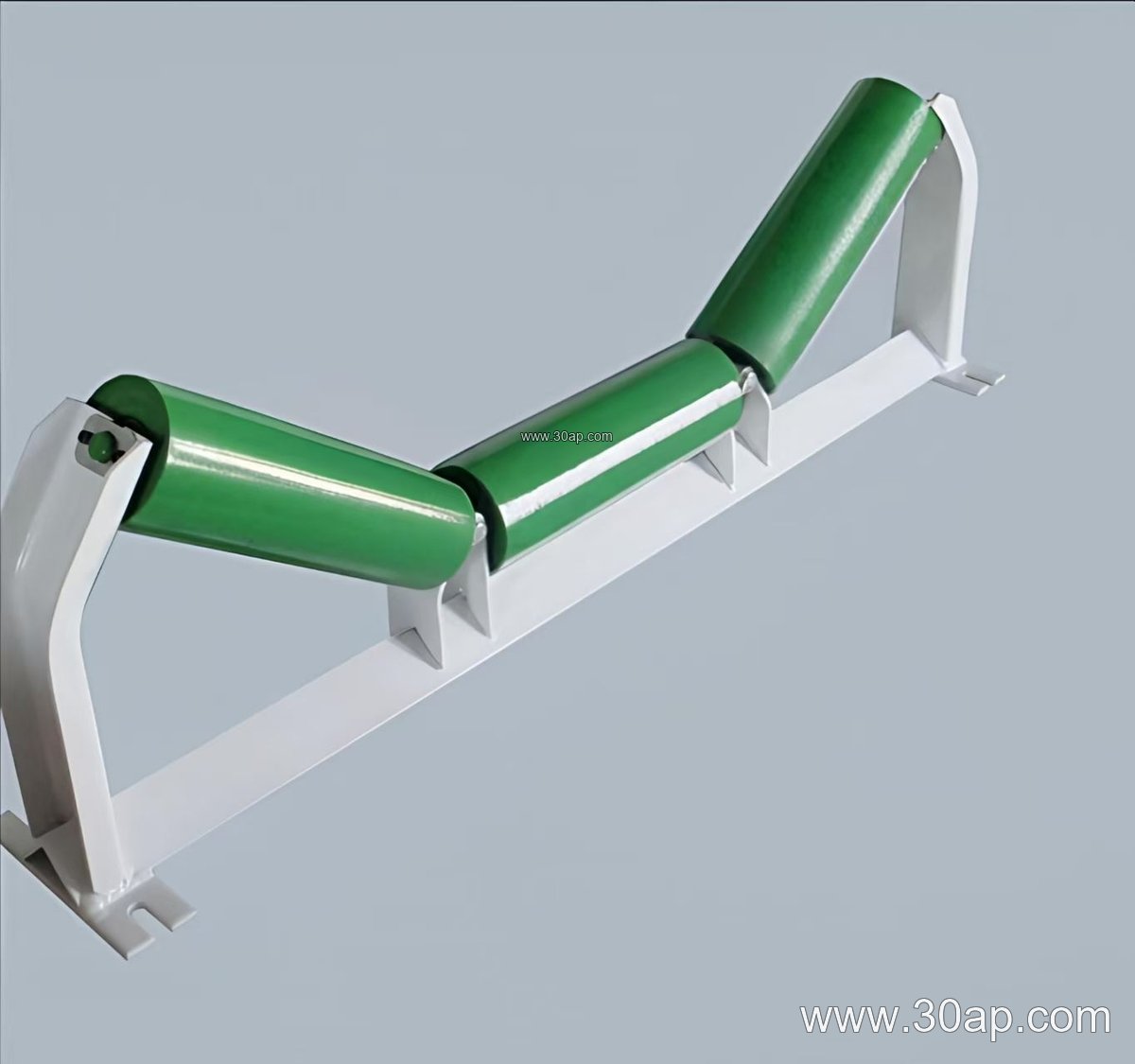
On the carrying side, the troughing frame sets the trough angle that shapes the belt into a channel. Common trough angles are 20, 30, 35, and 45 degrees. A 30 or 35 degree frame is a frequent choice for bulk material such as ore, aggregate, or clinker, while a 45 degree frame gives a deeper trough for higher capacity where the belt and material allow it. Adjustable frames let the maintenance team change the trough angle within that range without replacing the crossbeam.
Forward Tilt and Self-Aligning Variants
Some troughing frames mount the side idlers at a slight forward tilt, typically about 1.5 to 2 degrees, to help the belt stay centered. Self-aligning frames go further and pivot to steer the belt back on track. Both are still support frames; they differ in how the idler mounts are arranged, not in their basic job.
Return Side Frames
Under the belt, the return frame supports the belt on its way back to the tail. A flat return frame carries a single idler row, while a V-return frame uses two idlers set in a V to train the belt and shed loose material. Impact frames with cushion idlers are placed below the loading chute, where falling rock from a crusher or a truck dump would otherwise damage a standard idler. Transition frames sit between the pulley and the first full trough, easing the belt from flat to troughed without over-stressing the edges.
Matching Frame Size to Belt Width and Idler Diameter
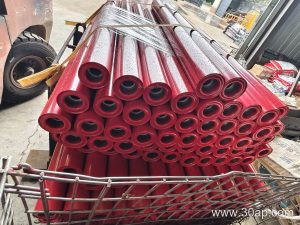
Frame length and mounting hole spacing follow the belt width and the trough angle, so they are determined by design rather than fixed by a single number. Common belt widths on bulk handling lines include B500, B650, B800, B1000, B1200, B1400, B1600, and B1800, with wider belts available for large port and power plant installations. Idler diameters such as Ø89, Ø108, Ø133, Ø159, and Ø194 are selected from belt speed, load, and the frame’s mounting height.
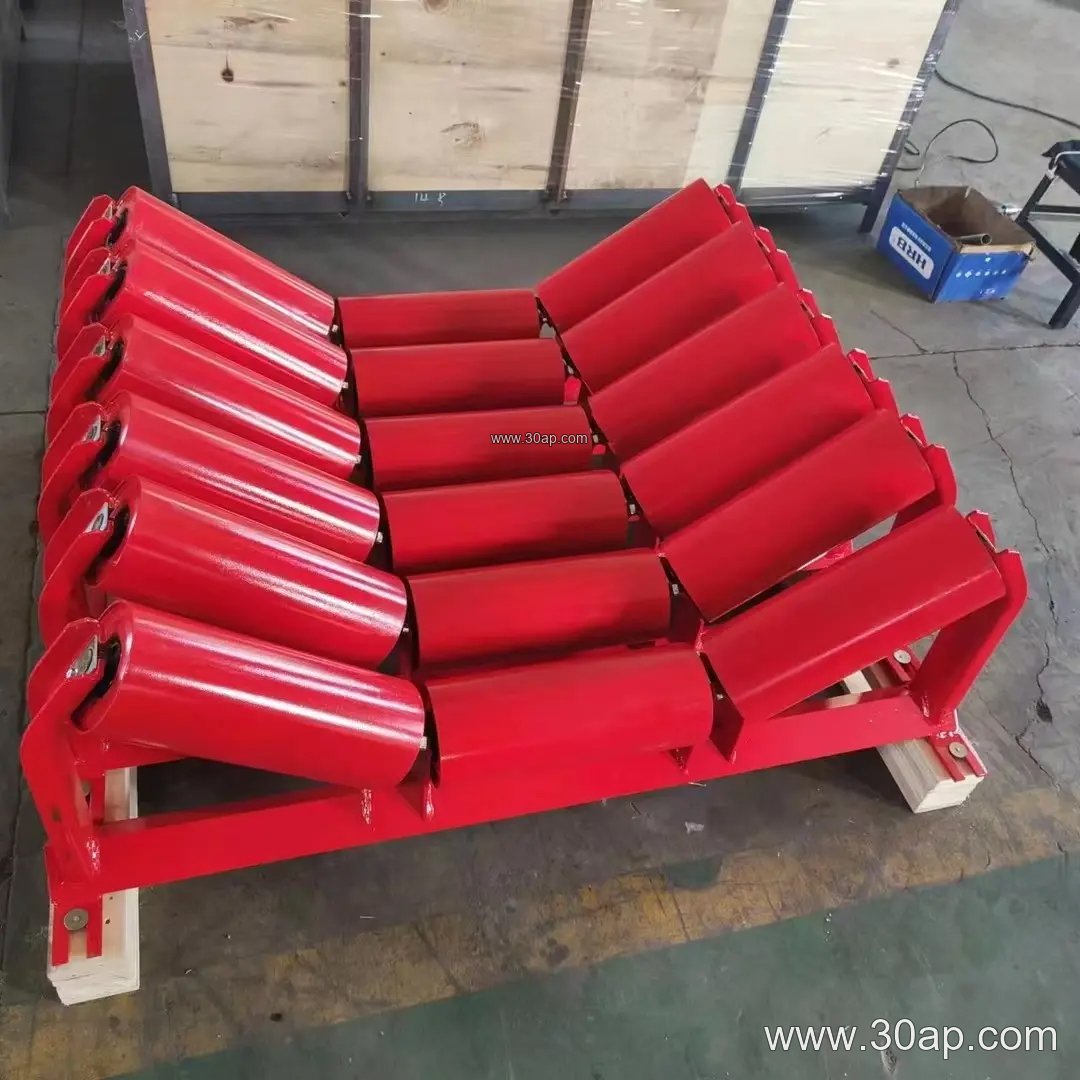
The table below shows typical combinations used as reference during layout work. It is not a rule that one belt width fits only one angle or one roller size.
| Belt Width | Typical Trough Angle | Typical Idler Diameter | Frame Example |
|---|---|---|---|
| B650 | 30 degrees | Ø89 | B650, 30 degrees, Ø89 |
| B800 | 35 degrees | Ø108 | B800, 35 degrees, Ø108 |
| B1200 | 45 degrees | Ø133 | B1200, 45 degrees, Ø133 |
| B1400 | 35 degrees | Ø159 | B1400, 35 degrees, Ø159 |
| B1600 | 45 degrees | Ø159 or Ø194 | B1600, 45 degrees, Ø194 |
How the Frame Fits the Whole Conveyor
A support frame does not work alone. A heavy-duty mining conveyor belt running at high tension needs frames with enough stiffness to hold the trough angle under load, and a steel cord conveyor belt on a long overland run needs consistent frame alignment along the whole route. In a coal mining application, a flame retardant conveyor belt is often paired with anti-static idlers and grounded frames. In a cement plant, a heat resistant conveyor belt on clinker duty may sit on frames fitted with heat-tolerant idler bearings. For a food or fertilizer line, a rubber conveyor belt or an oil resistant belt may call for frames with better corrosion protection.
Where the belt is a pipe conveyor belt or a corrugated sidewall belt, the frame arrangement changes to suit the panel or pipe idler layout, so the frame drawing should always come from the conveyor designer rather than from a stock list. The same applies to a chevron conveyor belt or a skirted belt at a transfer point, where clearances around the frame matter.
Buyer Checklist
- Confirm belt width, trough angle, and idler diameter, and state them on the order as a combination, for example B1000, 35 degrees, Ø133.
- Ask for the mounting hole spacing and crossbeam length, since these follow belt width and angle and are not universal.
- Choose fixed or adjustable frames based on whether the trough angle may need tuning after commissioning.
- Check the steel section and surface treatment against the site conditions, such as wet coal handling or dusty aggregate production.
- Keep a small stock of spare frames for the loading zone, where impact damage is most likely.
Whether the line handles iron ore, limestone, grain, or tunnel spoil, the support frame is a low-cost part that decides how well the belt and idlers perform. Get the frame drawing right at the design stage, and the conveyor will track straighter and need fewer stops.