What a Self-Aligning Idler Bracket Does
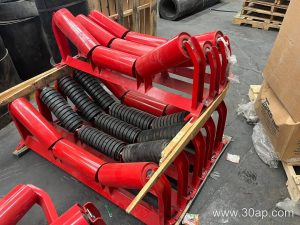
A self-aligning idler bracket is a pivoting support that carries the idler roller and reacts to belt misalignment. Instead of being fixed to the conveyor frame, this bracket is mounted on a vertical pivot or a swivel bearing. When the conveyor belt drifts sideways, it contacts the edge of the idler and creates a small turning moment. The bracket swings slightly, angling the idler so that it steers the belt back toward the center line. In a quarry or a cement plant, this automatic correction reduces edge damage and spillage without constant manual adjustment.
The same product is also called a self-tracking idler bracket or a self-aligning roller bracket. It is a distinct subtype of conveyor bracket, not a replacement for a fixed troughing bracket or a transition bracket.
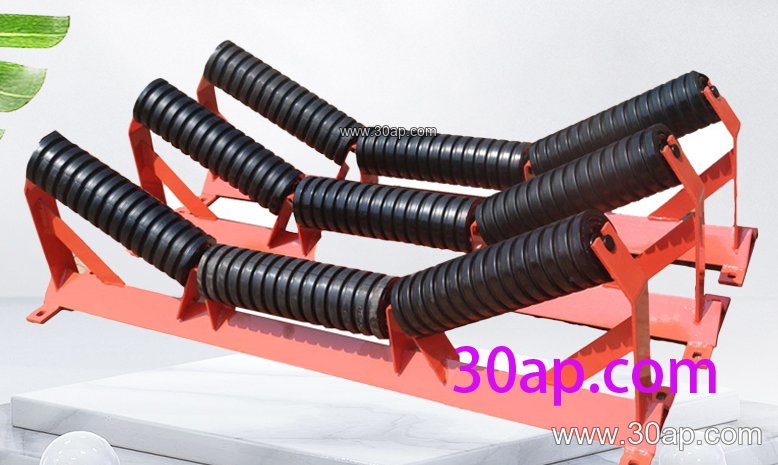
How the Bracket Is Built
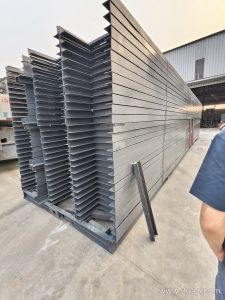
Most self-aligning idler brackets are fabricated from angle steel, channel steel, or bent steel plate. The frame holds one or more idler rollers, and the pivot assembly allows a few degrees of rotation. Common configurations include a single center pivot for a return-side training bracket and a double-pivot design for carrying-side training. The bracket may be supplied with a fixed trough angle or with slotted holes for adjustment. Typical trough angles for training brackets are 20 degrees, 30 degrees, 35 degrees, and 45 degrees, while the pivot axis is set perpendicular to the belt travel.
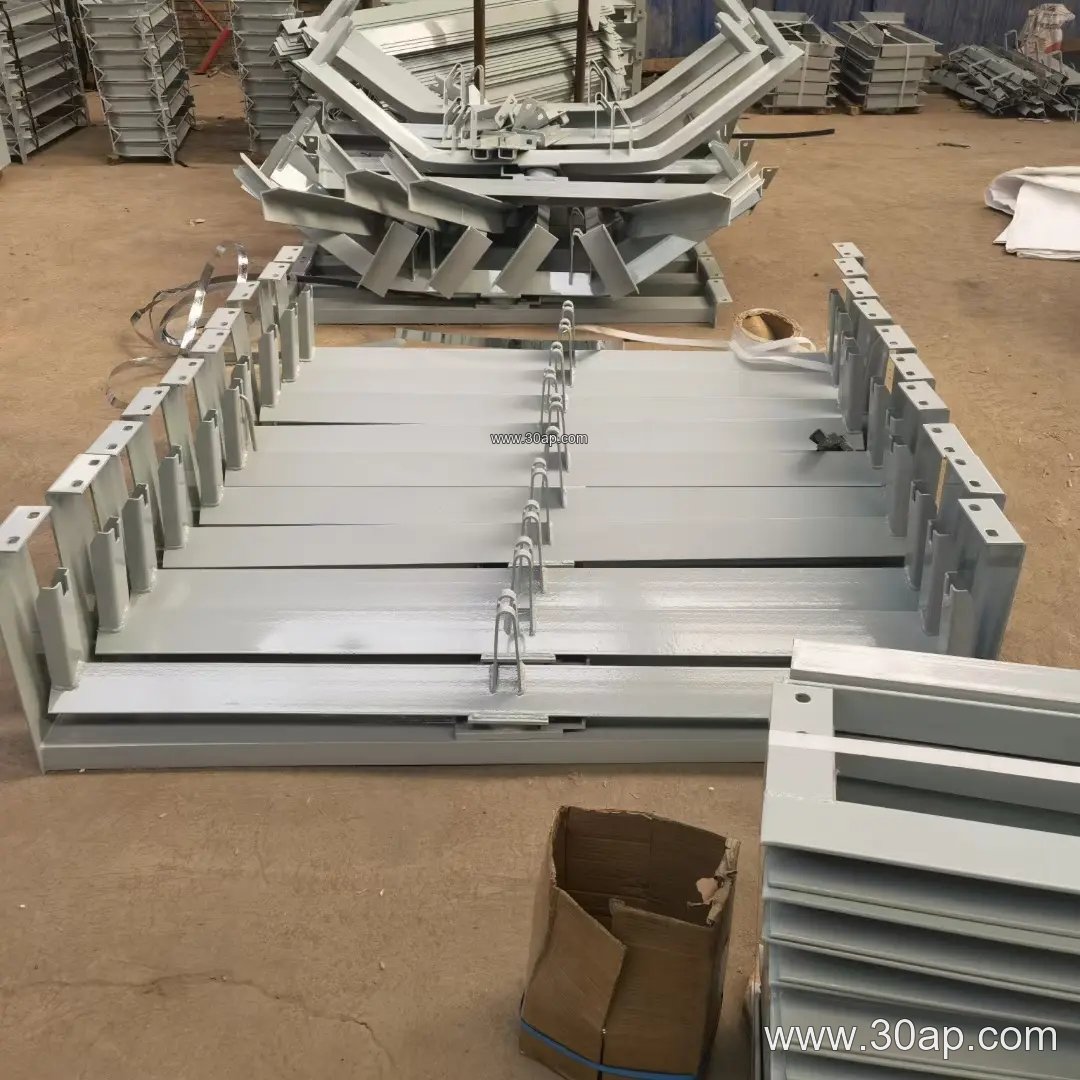
Surface treatment is usually painted or galvanized, depending on the environment. In a coal mining conveyor system, the bracket may be specified with a sealed pivot to resist dust and moisture. The bracket does not generate tracking force by itself; it relies on the friction between the belt and the idler roller to create the correcting angle. For this reason, the idler must rotate freely and the pivot must not bind.
Where It Fits on the Conveyor
Self-aligning idler brackets are installed on the carrying side and the return side of a belt conveyor. On the carrying side, they are often placed after the loading point, before the head pulley, and at intervals along long runs. On the return side, a V-return self-aligning bracket helps keep the belt centered between the carrying and return strands. In a power plant coal handling line or a limestone crushing circuit, these brackets are common where the belt is exposed to uneven loading or crosswinds.
They are not a substitute for a drive pulley, a tail pulley, or a bend pulley. Those pulleys transmit power and change belt direction, while the self-aligning bracket only controls belt position. A conveyor pulley and a self-aligning bracket work together but serve different functions.
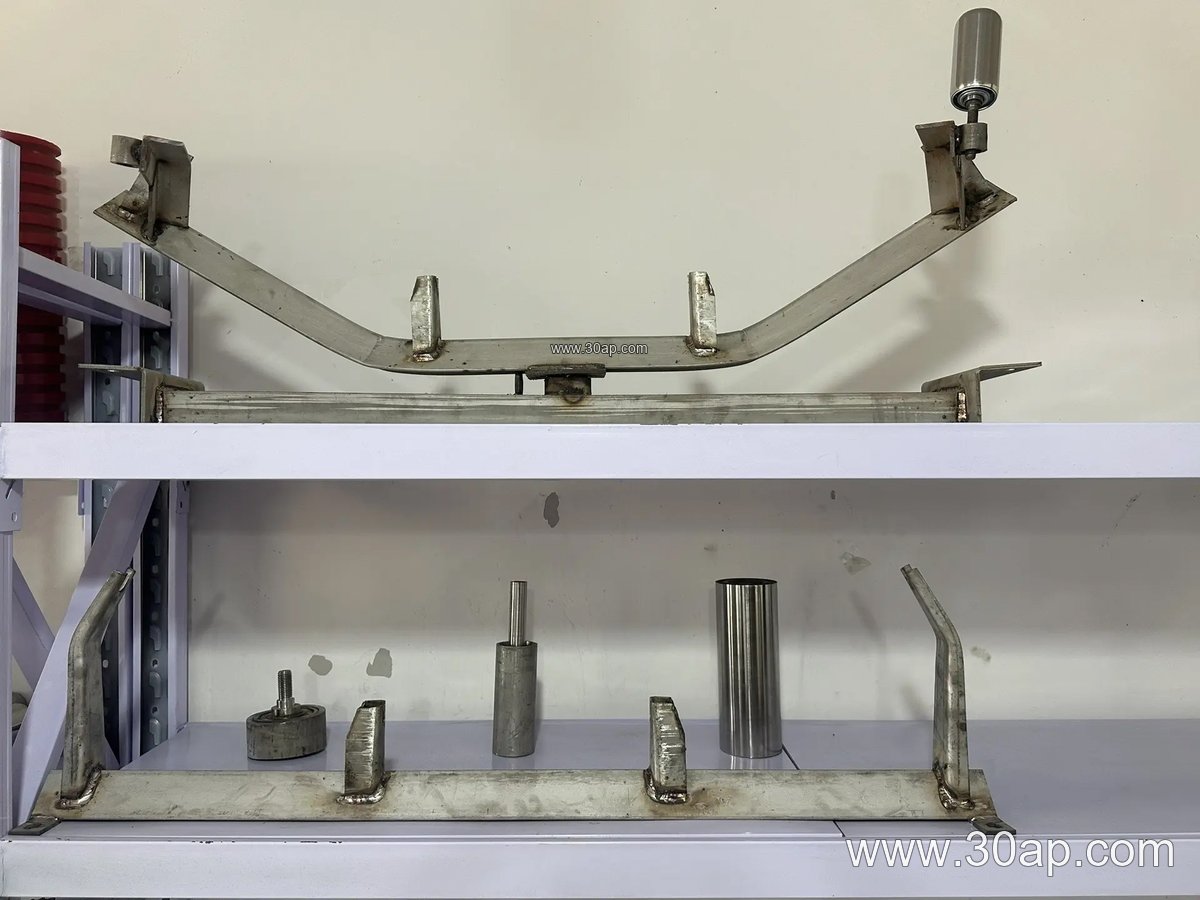
Matching Bracket, Belt, and Idler
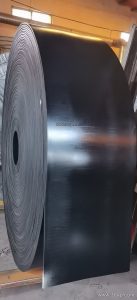
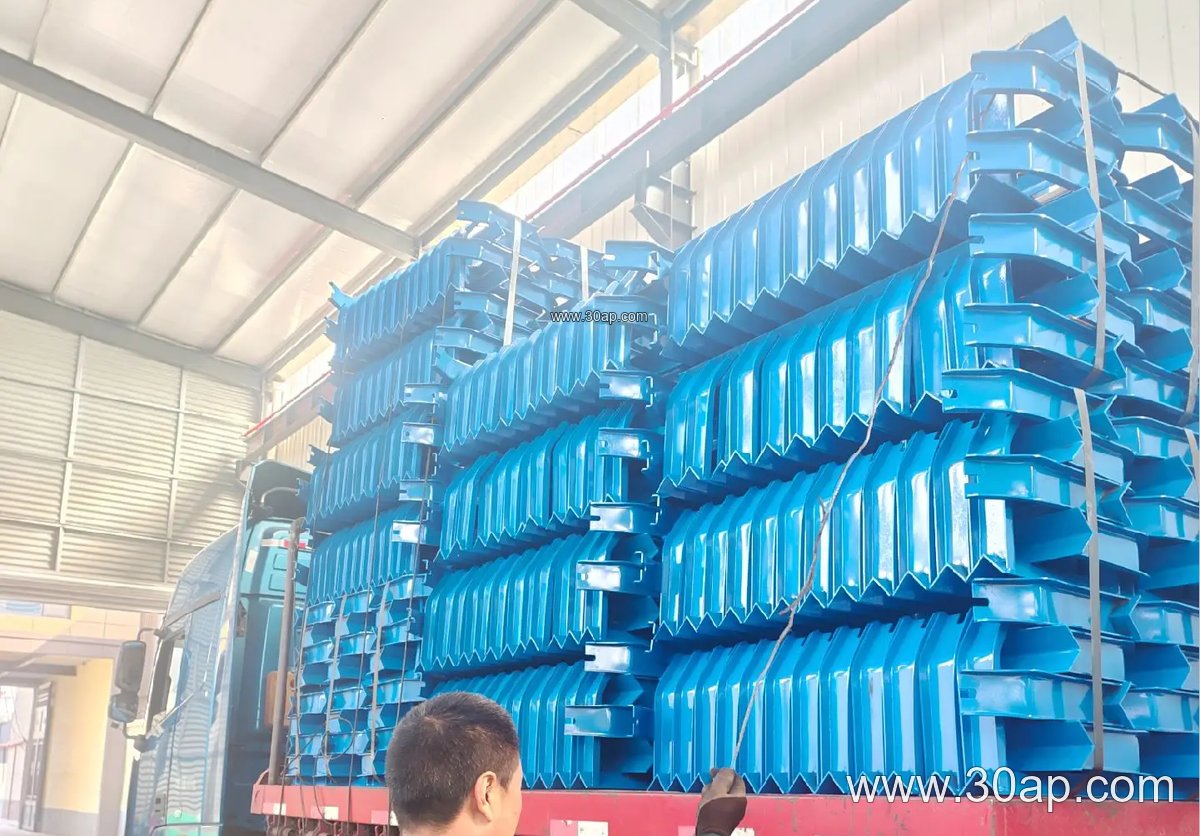
Selection starts with the belt width and the idler diameter. A self-aligning bracket for a B800 belt with a 35-degree trough and Ø108 idler is a common combination in aggregate plants, but it is not the only option. Wider belts such as B1200 or B1400 may use a 45-degree trough and Ø133 or Ø159 idlers. The bracket mounting hole spacing and crossbeam length are determined by the belt width and trough angle, so they should be confirmed with the conveyor design rather than assumed.
The table below shows reference examples only. Actual dimensions depend on the conveyor frame and the idler manufacturer.
| Belt Width | Typical Trough Angle | Common Idler Diameter | Bracket Style |
|---|---|---|---|
| B650 | 30 degrees | Ø89 | Self-aligning carrying bracket |
| B800 | 35 degrees | Ø108 | Self-aligning carrying bracket |
| B1000 | 35 degrees | Ø133 | Self-aligning carrying bracket |
| B1200 | 45 degrees | Ø133 | Self-aligning carrying bracket |
| B1400 | 45 degrees | Ø159 | Self-aligning carrying bracket |
For the return strand, a V-return self-aligning bracket with two idler rollers is often used. The idler diameter may be smaller than on the carrying side, but the pivot mechanism remains the same. When selecting a bracket for a heavy-duty mining conveyor belt or an abrasion resistant conveyor belt, check that the pivot has enough clearance for dust and fines.
Buyer Checklist
- Confirm the belt width and the required trough angle before ordering.
- Match the bracket to the idler roller diameter and the mounting hole pattern on the conveyor frame.
- Decide between a fixed-angle and an adjustable self-aligning bracket. Adjustable types allow fine tuning on site.
- Check the pivot material and sealing for the site conditions, such as washdown, coal dust, or high temperature.
- Ask for the bracket drawing with hole spacing and crossbeam length, since these vary with belt width and trough angle.
A self-aligning idler bracket is a small component, but it affects belt life and downtime. In a sand and gravel plant or a fertilizer handling facility, a properly selected bracket can reduce edge wear on the conveyor belt and keep the material stream centered. For more information on conveyor brackets and related components, visit beltconveyorparts.com or check our guide on self-aligning idler brackets at conveyorcomponents.net.